Quick Answer: Is the Nissan Ariya EV Worth Buying in 2026?
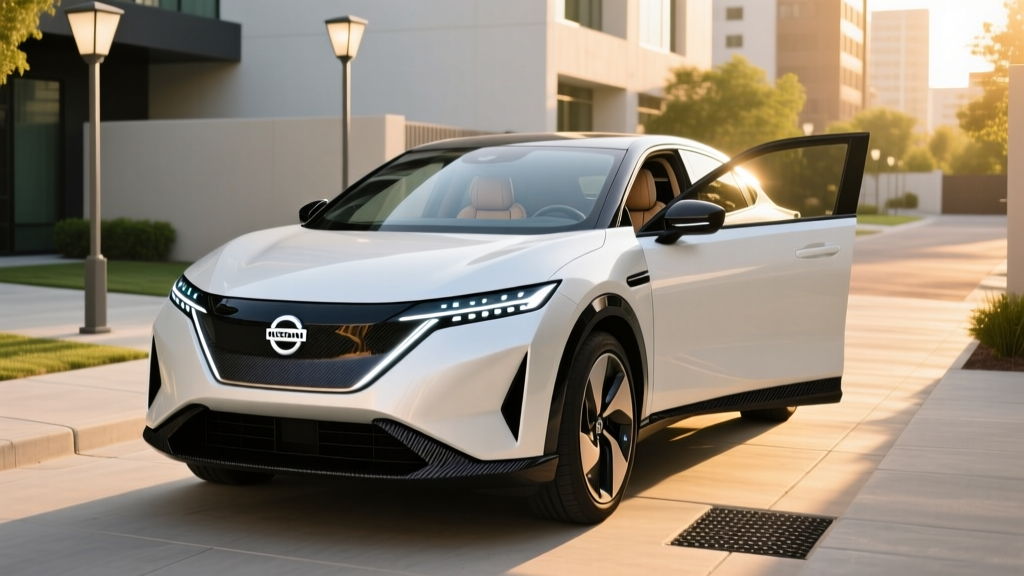
The 2026 Nissan Ariya delivers up to 304 miles of EPA-estimated range (FWD Engage trim with 87 kWh usable battery) and starts around $39,590 before incentives. It charges at a peak of 130 kW DC, reaching 10–80% in roughly 35 minutes. Compared to a similarly sized gas crossover getting 26 MPG combined, an Ariya driver covering 12,000 miles/year saves approximately $900–$1,300 annually on fuel at national-average electricity and gas prices. The Ariya is a strong pick for buyers wanting a comfortable, tech-forward electric crossover with competitive range — but its DC charging speed trails rivals like the Hyundai Ioniq 5 and Tesla Model Y, making it better suited to owners with reliable home Level 2 charging than frequent road-trippers.
2026 Nissan Ariya: Range, Battery, and Efficiency by Trim
Nissan offers the 2026 Ariya in multiple trims with two battery sizes and two drivetrain options. The smaller 63 kWh battery (Venture+ and base trims) is paired with front-wheel drive, while the larger 87 kWh battery powers both FWD and e-4ORCE all-wheel-drive configurations. All Ariya models use NMC (nickel manganese cobalt) lithium-ion chemistry, which delivers higher energy density than LFP but benefits from charging to 80% for daily use to maximize long-term battery health.
| Trim / Drivetrain | Battery (kWh usable) | EPA Range (mi) | MPGe (combined) | HP / Torque | 0–60 mph | Base MSRP |
|---|---|---|---|---|---|---|
| Venture+ (FWD) | 63 | 216 | 109 | 214 hp / 221 lb-ft | ~7.5s | ~$39,590 |
| Engage+ (FWD) | 87 | 304 | 105 | 238 hp / 221 lb-ft | ~7.2s | ~$43,190 |
| Engage+ (e-4ORCE AWD) | 87 | 272 | 101 | 389 hp / 443 lb-ft | ~4.8s | ~$46,790 |
| Empower+ (FWD) | 87 | 289 | 103 | 238 hp / 221 lb-ft | ~7.2s | ~$48,590 |
| Evolve+ (e-4ORCE AWD) | 87 | 267 | 98 | 389 hp / 443 lb-ft | ~4.8s | ~$52,190 |
| Platinum+ (e-4ORCE AWD) | 87 | 257 | 95 | 389 hp / 443 lb-ft | ~4.8s | ~$58,590 |
Real-World Range vs. EPA Sticker
EPA: 304 mi (Engage+ FWD) — In mixed driving at moderate temperatures (60–80°F), expect 270–290 miles. On sustained highway driving at 75+ mph, plan for 240–260 miles. In freezing temperatures (below 32°F), range can drop to 200–230 miles due to battery chemistry resistance and cabin heating demand. The Ariya's heat pump (standard on most trims) helps mitigate cold-weather losses compared to EVs without one, but expect a 15–25% reduction in winter conditions.
Charging Speed: Where the Ariya Stands
Charging performance is one area where the Ariya invites scrutiny. Its peak DC fast-charge rate of 130 kW is respectable but trails competitors: the Hyundai Ioniq 5 peaks at 240 kW (via 800V architecture), and the Tesla Model Y sustains higher rates on V3 Superchargers. This matters most on road trips where you're charging from 10–80% repeatedly.
| Charging Level | Power | Connector | Miles Added per Hour | Typical Use Case |
|---|---|---|---|---|
| Level 1 (120V) | ~1.4 kW | NACS (2026+ models) | ~4 mi/hr | Overnight trickle, emergencies |
| Level 2 (240V, 32A) | ~7.7 kW | NACS | ~25 mi/hr | Home daily charging, workplace |
| Level 2 (240V, 48A) | ~11.5 kW | NACS | ~37 mi/hr | Faster home refill, full overnight |
| DC Fast Charge | Peak 130 kW | NACS (Supercharger adapter or native) | ~200 mi in 30 min (10–80%) | Road trips, en-route top-ups |
The Ariya's onboard charger handles up to 7.7 kW on Level 2 AC (some trims support up to 11.5 kW with a 48-amp circuit). A full 0–100% charge on a home Level 2 at 7.7 kW takes roughly 11.5 hours for the 87 kWh battery — meaning overnight charging easily covers daily needs. On DC fast charging, the 10–80% session takes approximately 35 minutes. Note that the charge curve tapers significantly above 80% SoC; charging from 80–100% can add another 20+ minutes, so plan stops to 80% for efficiency.
Connector note for 2026: Nissan has transitioned the Ariya to the NACS (North American Charging Standard) port, granting native access to Tesla Supercharger stations without an adapter. This significantly expands the Ariya's usable fast-charging network — a major practical advantage over CCS-only EVs. For legacy Electrify America or EVgo CCS stations, a CCS-to-NACS adapter may be needed; check with your dealer.
Ariya EV vs. Gas Crossover: The Real Cost Breakdown
How does the Ariya stack up against a conventional gas crossover like the Nissan Rogue or Toyota RAV4? The purchase price is higher, but operating costs tell a different story over five years.
| Cost Category | 2026 Nissan Ariya Engage+ (FWD) | 2026 Nissan Rogue SV (AWD Gas) |
|---|---|---|
| Base MSRP | $43,190 | $32,500 |
| Est. Federal Tax Credit (§30D) | Up to $7,500* | $0 |
| Effective Purchase Price | ~$35,690* | $32,500 |
| Annual Fuel / Electricity (12,000 mi) | ~$540 (at $0.16/kWh) | ~$1,680 (at $3.50/gal, 26 MPG) |
| Annual Maintenance | ~$150 (no oil, fewer fluids) | ~$450 (oil, filters, brakes) |
| Annual Insurance (est. average) | ~$1,850 | ~$1,500 |
| 5-Year Fuel/Energy Cost | ~$2,700 | ~$8,400 |
| 5-Year Maintenance Cost | ~$750 | ~$2,250 |
| 5-Year Insurance Cost | ~$9,250 | ~$7,500 |
| 5-Year Total Operating Cost | ~$12,700 | ~$18,150 |
*Federal §30D tax credit eligibility depends on buyer income caps ($150K single / $300K joint), vehicle MSRP caps ($80K for SUVs), and battery component/critical mineral sourcing requirements. The credit may be transferred to the dealer as a point-of-sale discount. Verify current eligibility at IRS.gov and fueleconomy.gov. State incentives may apply additionally.
The Ariya's operating-cost advantage is clear: roughly $5,450 saved over five years in fuel and maintenance alone, partially offset by ~$1,750 higher insurance. Net savings of ~$3,700 over five years — and that's before factoring in any state rebates, utility off-peak charging discounts, or free workplace charging.
First-Time EV Buyer: What You Must Know Before Purchasing the Ariya
If the Ariya is your first electric vehicle, several ownership realities deserve upfront attention:
Home Charging Is the Foundation
Over 80% of EV charging happens at home. For the Ariya's 87 kWh battery, a Level 2 home charger (240V, 32–48 amp) is strongly recommended. Budget $500–$1,500 for the charger hardware and $800–$2,500 for professional electrical installation (potentially more if your panel needs a 200-amp upgrade). Without home charging, you'll rely entirely on public infrastructure, which adds time and cost.
Public Charging Is Available but Variable
With the NACS port, the Ariya accesses Tesla Superchargers — the most reliable DC network in the US. However, rural charging deserts still exist. Before buying, map your typical routes and check coverage on the Tesla Supercharger map and PlugShare. If you regularly drive 200+ miles into rural areas, plan charging stops carefully.
Battery Longevity and Warranty
Nissan backs the Ariya's battery with an 8-year / 100,000-mile warranty covering capacity loss below 70% of original. Real-world NMC degradation data from similar Nissan platforms suggests 8–12% capacity loss over 8 years under normal use — meaning a 304-mile Ariya might realistically deliver ~270 miles when new-equivalent after 8 years. To maximize longevity, charge to 80% for daily use, use DC fast charging sparingly (it generates heat), and avoid leaving the battery at 100% SoC for extended periods.
Common Ariya Myths — Fact-Checked
| Myth | Fact |
|---|---|
| "The Ariya can't road trip — charging is too slow." | At 130 kW peak, 10–80% takes ~35 min. That's a meal or restroom break. It's slower than an Ioniq 5 (~18 min) but entirely workable with NACS Supercharger access. |
| "EV batteries need replacing every few years at huge cost." | Nissan's 8yr/100k-mi warranty covers premature degradation. Full replacement (rare) runs $8,000–$14,000, but most EV batteries outlast the vehicle. Data shows >90% capacity retention at 100K miles for modern NMC packs. |
| "The Ariya qualifies for the full $7,500 tax credit for everyone." | Eligibility requires meeting IRS income caps, MSRP limits, AND battery sourcing rules that change annually. Some trims may qualify for $3,750 (partial) or $0 depending on current critical-mineral requirements. Always check fueleconomy.gov before purchasing. |
| "ProPILOT Assist is self-driving." | ProPILOT Assist 2.0 is a SAE Level 2 driver-assistance system. It handles lane centering and adaptive cruise, including hands-off in certain conditions, but the driver must remain attentive and ready to intervene at all times. It is not autonomous. |
| "The Ariya will lose most of its value in 2 years." | EV depreciation has normalized. The Ariya holds value comparably to other mainstream EVs. Early 2023–2024 Ariya models have retained ~55–65% of value at 2 years, competitive with the segment. |
SAE Automation Level: ProPILOT Assist 2.0
Level 2 — Partial Driving Automation. The system can control steering, acceleration, and braking under specific conditions (including limited hands-off on divided highways with driver monitoring). The driver must continuously supervise and can be required to resume full control at any moment. This is not "self-driving" (Level 4/5). Always keep eyes on the road.
Decision Framework: Should You Buy the Ariya?
Choose the Nissan Ariya If:
- You have (or can install) home Level 2 charging and want a comfortable, well-equipped electric crossover
- You value a refined, quiet ride and premium interior materials over outright sportiness
- You want NACS Supercharger access without an adapter for road trips
- Your daily commute is under 80 miles round-trip and you road-trip 2–4 times per year
- You want a mainstream brand with established dealer service infrastructure
Look Elsewhere If:
- You take frequent 400+ mile road trips and want the fastest possible DC charging (consider Hyundai Ioniq 5 or Kia EV6 with 800V / 240+ kW)
- You need third-row seating or maximum cargo space (consider Kia EV9 or Rivian R1S)
- You're on a strict sub-$35K budget and need the lowest possible entry price (consider used EV market or Chevrolet Equinox EV)
- You cannot install home charging and have limited public DC charging near your home or workplace
Frequently Asked Questions
What is the real-world range of the Nissan Ariya in winter?
In sustained temperatures below 32°F, expect the 87 kWh FWD Ariya to deliver 200–230 miles — a 20–25% reduction from the 304-mile EPA estimate. The standard heat pump helps, but battery chemistry and cabin heating draw are unavoidable physics. Preconditioning the battery while plugged in (using the Nissan app) can recover 10–15 miles of range.
How long does it take to charge the Ariya at home?
On a 7.7 kW Level 2 home charger, a full 0–100% charge of the 87 kWh battery takes about 11.5 hours. In practice, most owners plug in nightly and charge from 30–80%, which takes roughly 5–6 hours — easily completed overnight. On a standard 120V outlet (Level 1), expect ~4 miles of range per hour, suitable only for low-mileage days or emergencies.
Does the 2026 Ariya qualify for the federal EV tax credit?
Potentially, but eligibility is nuanced. Under current IRS §30D rules, the buyer must meet income thresholds (AGI ≤$150K single, $225K head of household, $300K joint), the vehicle MSRP must be ≤$80,000 (SUV classification), and the battery must meet critical-mineral and component sourcing thresholds that tighten annually. Some Ariya trims may qualify for the full $7,500, a partial $3,750, or $0 depending on the model year's sourcing compliance. The credit can be transferred to the dealer as a point-of-sale price reduction. Confirm at IRS.gov before purchase.
How does the Ariya compare to the Tesla Model Y?
The Model Y Long Range AWD offers ~310 miles EPA range, faster DC charging (~250 kW peak, 10–80% in ~20 min), and access to the full Supercharger network natively. The Ariya counters with a more traditional crossover interior, physical buttons alongside touchscreens, a quieter ride, and competitive range. If charging speed and software ecosystem matter most, the Model Y leads. If interior comfort, ride quality, and mainstream-brand ownership appeal, the Ariya holds its own.
What maintenance does the Ariya require?
Minimal compared to a gas vehicle: cabin air filter replacement (~$30–50 every 15–20K miles), tire rotation every 5,000–7,500 miles (EVs wear tires faster due to instant torque and higher weight), brake fluid check every 2 years, and windshield washer fluid. There are no oil changes, spark plugs, timing belts, or transmission fluid services. Regenerative braking significantly extends brake pad life — many EV owners report original pads at 80,000+ miles.
Can I tow with the Nissan Ariya?
The e-4ORCE AWD Ariya is rated for up to 1,500 pounds of towing capacity — enough for a small utility trailer or a pair of dirt bikes, but not a camper or boat. FWD trims are not rated for towing. Keep in mind that towing will reduce range by 30–50% depending on trailer weight and aerodynamics.