The Short Answer: Is the Nissan Ariya Being Discontinued?
As of early 2026, Nissan has not officially announced a full discontinuation of the Ariya electric SUV in the United States. However, persistent industry reports and sluggish sales figures have fueled speculation that Nissan may sunset the current-generation Ariya or significantly restructure its EV lineup as part of a broader corporate turnaround plan. The Ariya remains available at US dealerships for the 2025 model year (carried into early 2026), but production volumes have been reduced and Nissan's next EV strategy is expected to pivot toward new models built on a revised platform.
What this means for buyers: If you want an Ariya, current inventory is your window — and it may come with significant dealer discounts. If you're weighing it against competitors, the Ariya's uncertain future affects resale value and long-term parts support.
Where the Nissan Ariya Stands in 2026
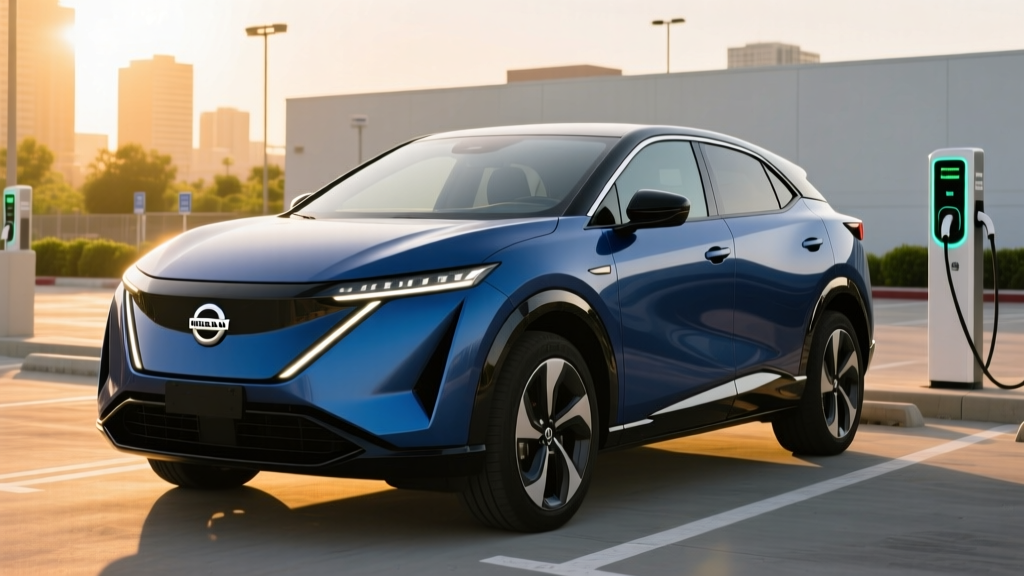
The Nissan Ariya launched in the US for the 2023 model year as Nissan's flagship electric crossover, slotting above the Leaf in the brand's EV lineup. Built on the Renault-Nissan-Mitsubishi Alliance CMF-EV platform, it offered a compelling package: up to 304 miles of EPA-estimated range, available all-wheel drive, and a well-appointed interior. But sales never matched the volume of rivals like the Tesla Model Y, Hyundai Ioniq 5, or Ford Mustang Mach-E.
Nissan's global restructuring announcements in late 2024 and 2025 — including plant consolidations and a shift in EV investment priorities — raised questions about the Ariya's longevity. While Nissan has committed to launching new EVs through 2028, the current Ariya's platform and supply chain position make it a candidate for replacement rather than continuation.
| Specification | Venture+ (FWD) | Evolve+ (FWD) | Platinum+ e-4ORCE (AWD) |
|---|---|---|---|
| EPA Range | 304 mi | 289 mi | 267 mi |
| Battery (Usable) | 87 kWh (NMC) | 87 kWh (NMC) | 87 kWh (NMC) |
| Horsepower | 238 hp | 238 hp | 389 hp |
| 0-60 mph | ~7.5 sec | ~7.5 sec | ~4.8 sec |
| Peak DC Fast Charge | 130 kW | 130 kW | 130 kW |
| 10-80% DC Charge | ~35 min | ~35 min | ~35 min |
| Level 2 Charge Rate | 7.2 kW | 7.2 kW | 7.2 kW |
| MPGe (Combined) | 101 MPGe | 98 MPGe | 93 MPGe |
| Base MSRP | ~$39,590 | ~$43,190 | ~$53,190 |
| Battery Warranty | 8 yr / 100,000 mi | 8 yr / 100,000 mi | 8 yr / 100,000 mi |
Source: EPA Fuel Economy, Nissan USA specifications.
Real-World Range vs. EPA Sticker
The Ariya Venture+ carries a 304-mile EPA estimate — respectable on paper. In real-world highway driving at 70-75 mph, expect 250-270 miles in mild weather. In cold conditions (below 30°F), range can drop to 210-230 miles due to battery heating demands and cabin climate load. The Ariya uses a resistive PTC heater rather than a heat pump on most trims, which increases winter energy consumption compared to competitors like the Ioniq 5 or Model Y.
Ariya vs. the Competition: How Does It Compare?
If discontinuation concerns are giving you pause, here's how the Ariya stacks up against its key rivals in the electric compact/midsize SUV segment — and against a popular gas alternative for cost context.
| Metric | Nissan Ariya Venture+ | Hyundai Ioniq 5 SEL | Tesla Model Y LR | Toyota RAV4 (Gas AWD) |
|---|---|---|---|---|
| EPA Range / Tank Range | 304 mi | 303 mi | 320 mi | 385 mi (14.5 gal) |
| Battery / Engine | 87 kWh NMC | 77.4 kWh NMC | ~75 kWh NMC | 2.5L I4 |
| Peak DC Charge | 130 kW | 238 kW (CCS) | 250 kW (NACS) | N/A |
| 10-80% Charge Time | ~35 min | ~18 min | ~22 min | ~5 min (fuel) |
| Base MSRP | $39,590 | $42,600 | $44,990 | $32,675 |
| Fuel/Energy Cost per Mile | ~$0.045 | ~$0.045 | ~$0.040 | ~$0.13 |
| Federal Tax Credit (§30D) | Not eligible* | Up to $7,500 | Up to $7,500 | None |
*The Ariya is assembled in Japan and does not meet §30D North American assembly requirements for the new-vehicle credit. Check IRS.gov for current rules.
The Real Cost of Owning an Ariya (or Any EV)
Whether the Ariya continues or not, ownership economics matter. Here's a five-year cost projection comparing the Ariya to a gas RAV4, factoring in purchase price, energy/fuel, maintenance, and insurance.
| Cost Category | Nissan Ariya Venture+ | Toyota RAV4 AWD (Gas) |
|---|---|---|
| Purchase Price (MSRP) | $39,590 | $32,675 |
| Federal Tax Credit | $0 (imported) | $0 |
| Energy/Fuel (75k mi) | $3,375 | $9,750 |
| Maintenance (5 yr) | $1,200 | $3,500 |
| Insurance (5 yr est.) | $9,500 | $7,200 |
| Estimated Depreciation | $18,000 | $13,500 |
| Total 5-Year Cost | $71,665 | $66,625 |
Assumptions: $0.135/kWh home charging average, $3.25/gal gas, 27 MPG combined for RAV4. Insurance premiums vary significantly by state and driver profile. Depreciation estimates account for Ariya's uncertain resale outlook.
The Ariya's higher purchase price (without a federal tax credit offset) and steeper insurance premiums mean it costs roughly $5,000 more over five years than the RAV4 in this scenario. However, if you secure a strong dealer discount — increasingly likely as inventory sits — or if your state offers additional EV incentives, the gap narrows substantially. The EV also eliminates oil changes, transmission fluid, and exhaust maintenance entirely.
What Discontinuation Would Mean for Current & Future Owners
If Nissan does discontinue or replace the Ariya, here's what realistically changes — and what doesn't:
| Myth | Fact |
|---|---|
| "Parts will become impossible to find." | Federal law requires manufacturers to supply parts for at least 10 model years after production ends. Nissan's dealer network will continue servicing Ariyas. |
| "The battery warranty becomes void." | The 8-year/100,000-mile battery warranty is a binding contract. Nissan remains obligated to honor it regardless of model status. |
| "Resale value will crash immediately." | Discontinued models typically see a 5-15% additional depreciation hit in the first year of announcement, but stabilize as parts availability remains confirmed. |
| "Software updates will stop." | OTA updates may slow, but critical safety recalls and firmware patches are legally mandated. Infotainment updates may cease sooner. |
| "I should avoid buying one at any price." | A heavily discounted Ariya could be a strong value buy if you accept slightly elevated depreciation risk. The vehicle itself is well-engineered. |
Who Should Still Consider the Ariya — And Who Shouldn't
The discontinuation question doesn't make the Ariya a bad vehicle. It makes it a calculated decision. Here's a practical framework:
Decision Framework: Should You Buy the Nissan Ariya?
Buy the Ariya if:
- You find a dealer discount of $5,000+ off MSRP (offsetting the lost tax credit)
- You prioritize ride comfort and cabin quietness over sporty handling or peak charging speed
- You drive under 250 miles daily and have reliable Level 2 home charging
- You want a non-Tesla EV with a traditional dealership service experience
- You plan to keep the vehicle 7+ years (depreciation matters less if you drive it into the ground)
Look at competitors instead if:
- You need the fastest possible DC charging (Ioniq 5 at 238 kW, Model Y at 250 kW vs. Ariya's 130 kW)
- You want federal §30D tax credit eligibility (Ariya doesn't qualify; Ioniq 5 and Model Y can)
- Resale value is a top priority — uncertain model futures hurt trade-in values
- You regularly drive in cold climates (Ariya lacks a heat pump, increasing winter energy use by 15-25%)
- You want access to the Tesla Supercharger network without adapters (Model Y native NACS; Ariya uses CCS1)
Charging the Ariya: What You Need to Know
The Ariya's 130 kW peak DC fast-charging rate is its most significant competitive weakness in 2026. While rivals routinely charge at 200-350 kW on capable stations, the Ariya's curve peaks briefly and tapers early. On a road trip, this means 35-minute stops where competitors finish in 18-22 minutes.
| Charging Level | Power | Miles Added per Hour | Use Case |
|---|---|---|---|
| Level 1 (120V household) | 1.4 kW | ~4 mi/hr | Emergency/overnight trickle only |
| Level 2 (240V home) | 7.2 kW | ~22 mi/hr | Daily home charging; full charge in ~13 hr |
| DC Fast Charge (CCS1) | 130 kW peak | ~170 mi/hr (peak) | Road trips; 10-80% in ~35 min |
Home charging reality: A Level 2 home charger is practically essential for Ariya ownership. Budget $800-$2,200 for a quality Level 2 station (e.g., ChargePoint Home Flex, Emporia Level 2) plus $500-$2,500 for electrician installation depending on whether your panel needs a 240V/50A circuit added. If your home has a 200-amp panel with spare capacity, expect the lower end. Older 100-amp panels may require a $1,500-$3,000 upgrade.
Key Takeaways for First-Time EV Buyers
If the Ariya is your first EV — or if discontinuation fears are steering you toward your first EV purchase elsewhere — these fundamentals apply regardless of which model you choose:
- kW vs. kWh: kW measures charging power (how fast energy flows); kWh measures battery capacity (how much energy is stored). The Ariya's 87 kWh battery stores energy; its 130 kW charger determines fill speed.
- Home charging is king: Over 80% of EV charging happens at home. Without Level 2 access, EV ownership becomes significantly less convenient. Confirm your home's electrical capacity before buying.
- EPA range is a best-case estimate: Plan for 80-85% of the EPA sticker on highway trips and 65-75% in freezing weather.
- Tax credits aren't guaranteed: The §30D federal credit requires North American assembly, MSRP caps ($55,000 for SUVs), buyer income limits ($300K joint / $150K single), and battery mineral sourcing compliance. Always verify on IRS.gov before counting on $7,500.
- Insurance costs more for EVs: Expect 15-25% higher premiums vs. comparable gas vehicles due to higher repair costs and battery replacement risk. Get quotes before signing a purchase agreement.
Frequently Asked Questions
Has Nissan officially confirmed the Ariya discontinuation?
No. As of early 2026, Nissan has not issued a formal discontinuation notice for the Ariya in the US market. The vehicle remains listed on Nissan's website and available through dealers, though reduced production volumes and Nissan's restructuring announcements have fueled industry speculation about its future.
Will I still get warranty service if the Ariya is discontinued?
Yes. Nissan's 8-year/100,000-mile battery warranty and 5-year/60,000-mile basic warranty remain legally binding regardless of the model's production status. Federal regulations also require parts availability for a minimum period after discontinuation.
Does the Nissan Ariya qualify for the $7,500 federal tax credit?
No. The Ariya is manufactured in Japan and does not meet the §30D North American final assembly requirement. It is not eligible for the new clean vehicle credit. However, if purchased used, it may qualify for the up-to-$4,000 used EV credit (30% of sale price, capped at $4,000) if all other income and price requirements are met.
What's a good alternative if I'm worried about Ariya discontinuation?
The Hyundai Ioniq 5 (303 mi range, 238 kW charging, §30D eligible) and Tesla Model Y Long Range (320 mi, 250 kW charging, Supercharger access) are the strongest direct alternatives. The Ford Mustang Mach-E and Volkswagen ID.4 are also competitive options in this segment with confirmed production commitments through 2027+.
Is the Ariya's 130 kW charging speed a dealbreaker?
It depends on your driving patterns. If you take road trips of 300+ miles regularly, the Ariya adds roughly 10-15 extra minutes per charging stop compared to a 238 kW Ioniq 5. For daily commuting with home charging, the slower DC rate has zero impact on your experience.