Nissan Ariya e-4ORCE Review: Real-World Range, Tech & Driving Dynamics
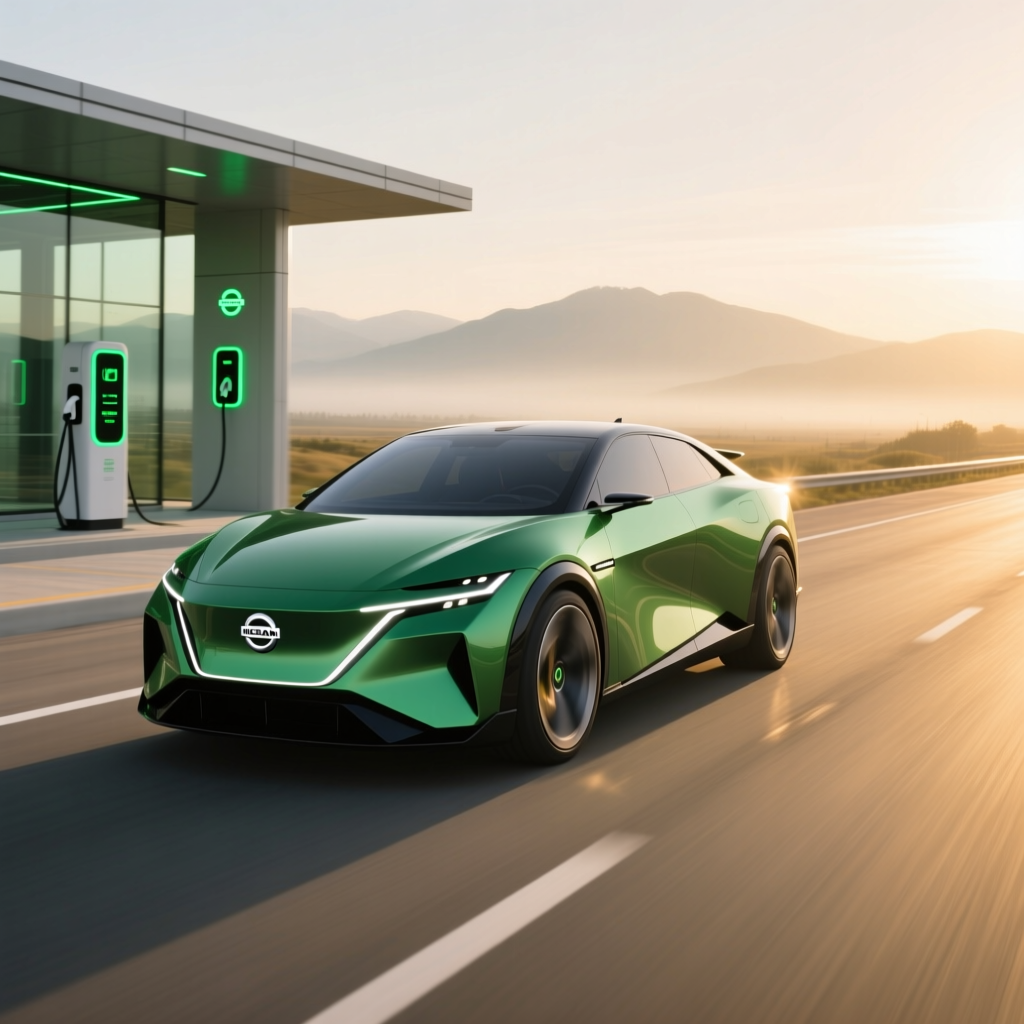
The electric vehicle market is saturated with compelling crossovers, but the Nissan Ariya e-4ORCE stands out as a sophisticated, premium offering that bridges the gap between mainstream affordability and luxury refinement. As Nissan’s flagship electric crossover, the Ariya represents a massive leap forward from the brand’s early EV days, utilizing the highly modular CMF-EV platform to deliver a spacious cabin, cutting-edge technology, and a remarkably smooth ride. For buyers seeking an all-wheel-drive electric vehicle that prioritizes comfort and daily usability over sheer track performance, the dual-motor e-4ORCE variants are particularly appealing.
In this in-depth review, we will explore the real-world range, charging capabilities, interior technology, and driving dynamics of the Nissan Ariya e-4ORCE. Whether you are cross-shopping against segment benchmarks or simply looking to understand what this electric crossover brings to the table, our analysis covers everything you need to know. If you are currently weighing your options in this highly competitive segment, be sure to check out our curated list of the best electric crossovers on the market today.
Real-World Range & Efficiency
Range anxiety remains a primary concern for many EV adopters, and the Nissan Ariya e-4ORCE addresses this with a robust battery package and efficient powertrain management. The e-4ORCE models are equipped exclusively with Nissan’s larger 91 kWh battery pack (yielding approximately 87 kWh of usable capacity). This liquid-cooled lithium-ion battery is designed to balance energy density with long-term thermal stability.
According to the EPA, the Ariya e-4ORCE achieves an estimated range between 267 and 289 miles, depending on the specific trim level and wheel size. The Evolve+ and Empower+ trims, which ride on 19-inch wheels, maximize efficiency to hit the upper end of that spectrum. Meanwhile, the range-topping Platinum+ trim, equipped with larger 20-inch alloy wheels and a slightly more aggressive aerodynamic profile, sees a modest reduction in its official EPA rating.
However, EPA estimates only tell part of the story. Independent real-world testing by automotive evaluators has shown that the Ariya e-4ORCE is highly capable of meeting, and occasionally exceeding, its EPA estimates in mixed city and suburban driving. The regenerative braking system, particularly when utilizing the e-Pedal Step mode, allows for significant energy recapture in stop-and-go traffic. On the highway, where aerodynamic drag heavily impacts all electric crossovers, the Ariya maintains a respectable efficiency rate, though drivers can expect a drop of roughly 10% to 15% compared to city driving when sustaining speeds above 70 mph.
Thermal management plays a crucial role in these real-world results. The Ariya’s active battery cooling system ensures that the battery operates within its optimal temperature window, preserving range during extreme heat and mitigating degradation over time. In colder climates, the system works in tandem with the cabin’s highly efficient heat pump to minimize the range penalty typically associated with winter driving. For a deeper dive into how weather impacts EV batteries, our comprehensive EV charging guide offers excellent tips on maximizing efficiency year-round.
Charging Speed & Infrastructure
When it comes to replenishing the battery, the Nissan Ariya e-4ORCE utilizes a CCS (Combined Charging System) port, ensuring compatibility with the vast majority of public DC fast-charging networks. The vehicle supports a peak DC fast-charging rate of up to 130 kW. While this figure may seem conservative compared to the 250 kW or 350 kW architectures found on some rival platforms, Nissan has engineered the charging curve to prioritize battery longevity and consistent charging speeds.
In real-world DC fast-charging scenarios, the Ariya e-4ORCE can charge from 10% to 80% in approximately 35 to 40 minutes under optimal conditions. The charging curve is relatively flat, meaning the vehicle sustains near-peak charging rates for a longer portion of the session before tapering off as the battery approaches full capacity. This design choice reduces the thermal stress on the battery cells, aligning with Nissan’s reputation for building durable, long-lasting EV powertrains.
For Level 2 AC charging at home or at public destinations, the Ariya offers robust options. Standard trims come equipped with a 7.2 kW onboard charger, which can fully replenish the 91 kWh battery in roughly 12.5 hours. However, higher trims and specific packages offer an upgraded 19.2 kW onboard charger. When paired with a high-amperage home wall connector or a capable public Level 2 station, this upgraded charger can cut home charging times down to under 5 hours, making it incredibly convenient for daily top-ups. For a direct rivalry breakdown regarding charging networks and efficiency, read our Tesla Model Y vs Nissan Ariya comparison.
Interior Tech & Cabin Comfort
Stepping inside the Nissan Ariya e-4ORCE reveals a cabin that punches well above its weight class, drawing heavy inspiration from Japanese minimalism and the concept of ‘Engawa’ (the seamless transition between interior and exterior spaces). The dashboard is dominated by a seamless, dual 12.3-inch high-definition display setup that handles both the digital instrument cluster and the infotainment system. The user interface is crisp, responsive, and features native wireless Apple CarPlay and Android Auto integration.
One of the most striking interior features is the use of laser-cut woodgrain trim that integrates hidden, haptic-feedback controls. When the vehicle is turned on, illuminated icons emerge through the wood veneer, providing a futuristic yet elegant aesthetic. The haptic feedback ensures that drivers receive a tactile confirmation when adjusting climate or media settings, reducing the need to look away from the road.
Comfort is paramount in the Ariya. The front seats are Nissan’s acclaimed Zero Gravity seats, inspired by NASA research to reduce fatigue by supporting the body in a neutral posture. The cabin is exceptionally quiet, thanks to acoustic laminated glass, extensive sound-deadening materials, and the inherent silence of the electric powertrain. Rear passengers are treated to a completely flat floor (a benefit of the dedicated EV platform), generous legroom, and excellent outward visibility.
On the advanced driver assistance systems (ADAS) front, the Ariya offers ProPILOT Assist 2.0. This system allows for true hands-off driving on pre-mapped, divided highways, provided the driver remains attentive. An infrared driver-monitoring camera tracks eye movement and head position, ensuring the driver is ready to take over if the system encounters a complex construction zone or requires a lane change. The integration of navigation-linked adaptive cruise control further enhances the tech suite, automatically adjusting vehicle speed for upcoming curves and toll booths.
Driving Dynamics & e-4ORCE Performance
The ‘e-4ORCE’ badge signifies much more than a traditional all-wheel-drive system; it represents Nissan’s most advanced electric torque-vectoring technology. Utilizing dual electric motors that produce a combined 389 horsepower and 443 lb-ft of torque, the Ariya e-4ORCE can sprint from 0 to 60 mph in a brisk 4.8 seconds. However, straight-line acceleration is only a fraction of the e-4ORCE story.
The system monitors wheel slip, steering input, and vehicle pitch thousands of times per second. By precisely modulating the torque sent to each individual wheel, e-4ORCE virtually eliminates the nose-dive during hard braking and the squat during heavy acceleration. This results in a remarkably flat, composed ride that reduces passenger motion sickness and enhances overall stability. Whether navigating tight city corners or cruising on a winding mountain pass, the Ariya feels planted, predictable, and exceptionally refined.
The steering is weighted perfectly for a comfort-oriented crossover, offering a relaxed feel on the highway while providing adequate feedback during spirited driving. The suspension tuning leans heavily toward comfort, absorbing potholes, expansion joints, and rough pavement with a maturity that rivals luxury European alternatives. Furthermore, the e-Pedal Step feature allows for intuitive one-pedal driving, utilizing aggressive regenerative braking to bring the vehicle to a complete halt without touching the friction brakes, a feature that significantly reduces driver fatigue in heavy traffic.
Ownership Costs & Value Proposition
Evaluating the total cost of ownership is critical when purchasing an electric vehicle. The Nissan Ariya e-4ORCE is positioned in the premium mainstream tier, with pricing that reflects its advanced technology, dual-motor drivetrain, and high-quality interior materials. While the initial MSRP may be higher than some entry-level EVs, the value proposition is strengthened by generous standard equipment, meaning buyers rarely need to tick expensive option boxes to get a fully loaded vehicle.
Ownership costs are further mitigated by the significant reduction in routine maintenance. Without an internal combustion engine, there are no oil changes, spark plugs, or transmission fluid replacements to worry about. Regenerative braking also drastically extends the life of the brake pads and rotors. Additionally, depending on your location and current legislation, buyers may be eligible for substantial federal, state, and local tax incentives or rebates, which can dramatically lower the effective purchase price.
Nissan backs the Ariya’s battery and electric powertrain components with an 8-year/100,000-mile warranty, providing long-term peace of mind regarding battery degradation. When factoring in the savings on fuel (electricity vs. premium gasoline) and reduced maintenance, the Ariya e-4ORCE presents a compelling financial argument for families and commuters looking to transition to electric mobility without sacrificing luxury or capability.
Pros & Cons
To summarize the Nissan Ariya e-4ORCE experience, here are the standout advantages and the areas where it faces stiff competition:
- Pros:
- Exceptional cabin quietness and premium, minimalist interior design.
- Smooth, composed ride quality enhanced by e-4ORCE pitch control.
- Highly accurate EPA range estimates with excellent real-world efficiency.
- ProPILOT Assist 2.0 offers reliable, hands-off highway driving capabilities.
- Standard 19.2 kW AC charging on higher trims is a class-leading feature.
- Cons:
- Peak DC fast-charging speed (130 kW) is slower than some 800-volt rivals.
- Lacks a front trunk (frunk) for additional cargo storage.
- Infotainment system, while good, lacks the sheer processing speed of some tech-focused competitors.
- Towing capacity is limited to 1,500 pounds, which trails some gas-powered crossovers.
Key Specifications Comparison Table
How does the Nissan Ariya e-4ORCE stack up against the heavyweights in the electric crossover segment? Below is a comparison of key specifications against two of its most prominent rivals.
| Specification | Nissan Ariya e-4ORCE | Tesla Model Y Long Range AWD | Hyundai Ioniq 5 AWD |
|---|---|---|---|
| Drivetrain | Dual-Motor AWD | Dual-Motor AWD | Dual-Motor AWD |
| Battery Capacity (Usable) | 87 kWh | ~75 kWh | 77.4 kWh |
| EPA Estimated Range | 267 - 289 miles | 300+ miles | 260 - 290 miles |
| Horsepower | 389 hp | 384 hp | 320 hp |
| Torque | 443 lb-ft | 376 lb-ft | 446 lb-ft |
| Peak DC Fast Charge | 130 kW | 250 kW | 235 kW (up to 350 kW on N) |
| Max AC Charging | Up to 19.2 kW | 11.5 kW | 10.9 kW |
Frequently Asked Questions
Does the Nissan Ariya e-4ORCE have a front trunk (frunk)?
No, the Nissan Ariya does not feature a front trunk. The space under the hood is entirely occupied by the vehicle’s power electronics, HVAC system, and other mechanical components. While this is a drawback for buyers accustomed to the extra storage found in the Tesla Model Y or Ford Mustang Mach-E, the Ariya compensates with a spacious rear cargo area and clever under-floor storage compartments in the trunk.
How does the e-4ORCE system perform in snow and ice?
The e-4ORCE system is exceptional in adverse weather conditions. Because electric motors can adjust torque delivery in fractions of a millisecond, the system can instantly redirect power away from slipping wheels and toward those with grip. Combined with the vehicle’s low center of gravity and sophisticated traction control algorithms, the Ariya e-4ORCE provides confidence-inspiring stability and traction in snow, ice, and heavy rain.
Can the Nissan Ariya tow a trailer?
Yes, when properly equipped with the factory towing package, the Nissan Ariya e-4ORCE has a maximum towing capacity of 1,500 pounds. This is sufficient for hauling a small utility trailer, a couple of dirt bikes, or a lightweight teardrop camper. However, buyers should note that towing will significantly reduce the vehicle’s real-world range due to the increased aerodynamic drag and weight.
Is the ProPILOT Assist 2.0 system truly hands-free?
Yes, ProPILOT Assist 2.0 allows for hands-free driving on compatible, pre-mapped divided highways. The system uses a combination of radar, cameras, and GPS data to keep the vehicle centered in its lane and maintain a safe following distance. However, it is not an autonomous system; the infrared driver-monitoring camera requires the driver to keep their eyes on the road and be prepared to resume manual control at any moment.
Does the Ariya support over-the-air (OTA) software updates?
Absolutely. The Nissan Ariya is built with a connected architecture that supports comprehensive over-the-air software updates. This means the vehicle can receive improvements to its infotainment system, battery management protocols, and even ADAS features without requiring a trip to the dealership, ensuring the crossover remains up-to-date with the latest technological advancements throughout its lifespan.