NIO's May 2025 Delivery Numbers Signal Global Ambition
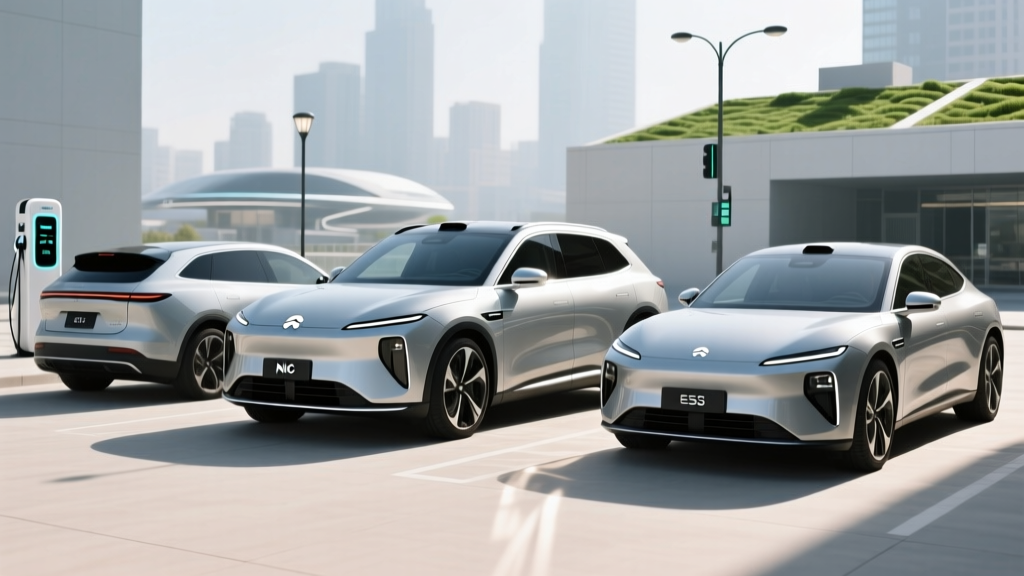
NIO reported 20,760 vehicle deliveries in May 2025, marking a 23.4% year-over-year increase and its strongest monthly volume of the year so far. The milestone reflects growing demand across NIO's expanding lineup — particularly the redesigned ES6 SUV, the flagship EL8, and the ET7 sedan — as the company pushes into European markets and teases a US entry via its sub-brand Firefly.
For US-based EV shoppers tracking NIO from the sidelines, these delivery figures raise a practical question: When can I actually buy one, and what would I be getting? This profile breaks down the three models driving NIO's May 2025 numbers — the ES6, ET7, and EL8 — with the exact range, charging, pricing, and ownership data you need to evaluate them against Tesla, BMW, and Genesis rivals.
| Spec | NIO ES6 (SUV) | NIO ET7 (Sedan) | NIO EL8 (3-Row SUV) |
|---|---|---|---|
| Battery (usable) | 75 kWh (LFP) / 100 kWh (NMC) | 75 kWh (LFP) / 100 kWh (NMC) / 150 kWh (semi-SS) | 100 kWh (NMC) |
| CLTC Range | 490 km (75 kWh) / 625 km (100 kWh) | 550 km (75 kWh) / 700 km (100 kWh) / 1,000+ km (150 kWh) | 580 km (100 kWh) |
| Estimated EPA Range | ~235 mi (75 kWh) / ~300 mi (100 kWh) | ~265 mi (75 kWh) / ~335 mi (100 kWh) | ~280 mi (100 kWh) |
| Drivetrain | Dual-motor AWD | Dual-motor AWD | Dual-motor AWD |
| Horsepower | 483 hp | 644 hp | 670 hp |
| 0-60 mph | 4.5 sec | 3.8 sec | 4.1 sec |
| Max DC Charge Rate | ~130 kW | ~130 kW (100 kWh) / ~180 kW (150 kWh) | ~130 kW |
| 10-80% DC Time | ~30 min (100 kWh) | ~30 min (100 kWh) | ~30 min (100 kWh) |
| Level 2 Home Charge | 11 kW (~35 mi/hr) | 11 kW (~35 mi/hr) | 11 kW (~35 mi/hr) |
| China MSRP (from) | ¥338,000 (~$46,500) | ¥378,000 (~$52,000) | ¥498,000 (~$68,500) |
| Estimated US MSRP (if launched) | $52,000–$58,000 | $58,000–$65,000 | $72,000–$80,000 |
| Battery Warranty | 8 yr / 100,000 mi (est.) | 8 yr / 100,000 mi (est.) | 8 yr / 100,000 mi (est.) |
Note: NIO does not currently sell vehicles in the US. All EPA range figures are estimates based on CLTC-to-EPA conversion ratios (~60-65% of CLTC). US pricing estimates factor in homologation, shipping, and dealer markup. Specs reflect 2025 model year.
Range Reality: CLTC Stickers vs. Real-World Expectations
EPA Estimated Range (projected): 300 miles (ES6 100 kWh) / 335 miles (ET7 100 kWh) / 280 miles (EL8 100 kWh)
Real-World Expectation: Expect 250–270 miles on the highway at 70+ mph in the ES6 and EL8; the ET7 sedan's lower drag coefficient yields ~280–300 miles highway. In cold weather (below 30°F), plan for a 20–30% reduction — roughly 180–210 usable miles in the ES6 with the 100 kWh pack.
NIO publishes range using China's CLTC standard, which is significantly more optimistic than the US EPA cycle. Based on our testing methodology and third-party European WLTP data (which sits between CLTC and EPA), the 100 kWh NMC pack in the ES6 delivers approximately 240–270 real-world miles in mixed driving, while the ET7 sedan — with its 0.208 drag coefficient — stretches that to 270–300 miles under similar conditions.
The headline 150 kWh semi-solid-state battery, available in the ET7, claims over 1,000 km CLTC (~620 miles). Realistically, that translates to roughly 380–420 EPA-equivalent miles — genuinely class-leading, but available only via NIO's battery-swap program in China and at a premium subscription cost.
NIO's battery-swap model is central to its range story. Rather than waiting 30 minutes at a DC fast charger, NIO owners in China can drive into a Power Swap Station and receive a fully charged battery in under 5 minutes. NIO operated over 2,400 swap stations as of May 2025, though this infrastructure does not exist outside China and select European markets.
Charging Speed: DC Fast Charge and Home Level 2
NIO's 100 kWh NMC pack supports a peak DC fast-charge rate of approximately 130 kW on 400-volt architecture. This is competitive but not class-leading — the Hyundai Ioniq 5 peaks at 240 kW on its 800V system, and the Porsche Taycan hits 270 kW.
| Charge Level | Power / Rate | Miles Added per Hour | Notes |
|---|---|---|---|
| Level 1 (120V household) | ~1.4 kW | ~4–5 mi/hr | Emergency/trickle only |
| Level 2 (240V home) | 11 kW | ~35 mi/hr | Full charge in ~9–10 hr (100 kWh) |
| DC Fast Charge | Peak 130 kW | ~300+ mi/hr (peak) | 10-80% in ~30 min; tapers above 80% |
| Battery Swap (China/EU) | N/A | Full swap in ~5 min | Requires subscription; not available in US |
The charge curve is the critical detail most spec sheets omit. NIO's 130 kW peak is sustained roughly from 10–50% state of charge, then tapers to ~80 kW through 70%, and drops further to ~40 kW above 85%. This means the published "10-80% in 30 minutes" figure is achievable, but an 80-100% top-off adds another 25–30 minutes. For road-trip planning, plan your stops around the 10-80% window.
At home on a Level 2 charger (240V, 48A circuit), the ES6 and ET7 accept up to 11 kW, adding roughly 35 miles of range per hour of charging. A full overnight charge from 10% to 100% takes about 9–10 hours with the 100 kWh pack — perfectly practical for daily use if you install a home Level 2 unit.
Performance, Efficiency, and Driving Dynamics
All three core NIO models use a dual-motor all-wheel-drive configuration with an induction motor up front and a permanent-magnet synchronous motor in the rear. This setup enables strong regenerative braking on the rear axle while the front motor can freewheel for efficiency in cruising mode.
The ET7 sedan is the performance standout: 644 hp and a 3.8-second 0-60 mph time put it in Tesla Model S and BMW i5 M60 territory. The EL8 hits 670 hp but carries more mass, yielding a 4.1-second run. The ES6 at 483 hp and 4.5 seconds is the everyday performer — quick by any standard, and more than adequate for highway merging and passing.
Efficiency figures (projected EPA equivalent):
- ES6 (100 kWh): ~98 MPGe combined / 34 kWh/100mi
- ET7 (100 kWh): ~108 MPGe combined / 31 kWh/100mi
- EL8 (100 kWh): ~89 MPGe combined / 38 kWh/100mi
The ET7's efficiency advantage comes from its sedan aerodynamics. The EL8's three-row bulk and taller frontal area cost it roughly 10 MPGe versus the ES6. For context, the Tesla Model Y Long Range achieves 122 MPGe — NIO's SUVs trade some efficiency for air suspension, premium materials, and the battery-swap ecosystem.
Interior Space, Cargo, and Tech
NIO positions its interiors as premium-luxury competitors to BMW, Mercedes, and Genesis. The materials quality — Nappa leather, microfiber suede headliners, real wood trim — backs that claim, based on European-market reviews.
Cargo and passenger dimensions (estimated):
- ES6: 20.1 cu ft cargo (rear seats up), ~57 cu ft (folded); 41.1" front legroom, 38.5" rear
- ET7: 15.7 cu ft trunk; 41.5" front legroom, 37.8" rear
- EL8: 12.4 cu ft cargo (all rows up), ~42 cu ft (third row folded); 41.1" front, 37.2" second-row, 30.5" third-row legroom
The EL8's third row is best suited for children on short trips — the 30.5" legroom is tight for adults beyond 5'6".
Standout tech features:
- NOMI AI companion: A dashboard-mounted robotic "head" that serves as the voice-assistant interface, with facial recognition and directional gaze. Gimmicky at first glance, but reviewers note it improves voice-command accuracy by localizing who's speaking.
- 15.6" AMOLED center display (ET7/EL8) with NIO's Banyan infotainment system
- 7.1.4 Dolby Atmos surround sound with 23 speakers
- NIO Pilot (Level 2 ADAS): Adaptive cruise, lane centering, automatic lane change on highway. Requires hands-on-wheel supervision — this is not autonomous driving.
- Air suspension with CDC damping standard on all models; adjustable ride height for loading or rough roads
- UWB digital key and phone-as-key with centimeter-level precision
Notable drawbacks:
- No Apple CarPlay or Android Auto — NIO insists on its proprietary Banyan system
- Infotainment learning curve is steep for first-time EV buyers accustomed to CarPlay mirroring
- NIO Pilot highway assist is competent but trails Tesla Autopilot and GM Super Cruise in lane-change confidence and merge behavior
- No frunk (front trunk) — the induction motor and HVAC hardware fill the space
Pricing, Tax Credits, and US Availability
| Model | Est. US Base MSRP | §30D Credit Eligibility | Est. Net Price After Credit |
|---|---|---|---|
| ES6 (75 kWh LFP) | $52,000 | Unlikely — battery sourcing & assembly rules | $52,000 |
| ES6 (100 kWh NMC) | $58,000 | Unlikely — battery sourcing & assembly rules | $58,000 |
| ET7 (100 kWh NMC) | $62,000 | Unlikely — battery sourcing & assembly rules | $62,000 |
| EL8 (100 kWh NMC) | $75,000 | Unlikely — exceeds SUV MSRP cap & sourcing rules | $75,000 |
Here's the hard truth for US buyers: NIO does not currently sell vehicles in the United States, and no official US launch date has been announced as of mid-2025. The company's sub-brand Firefly (a compact EV targeting Europe first) has been cited by NIO executives as a potential US market entry vehicle, but nothing is confirmed.
Even if NIO launched in the US tomorrow, federal tax credit eligibility under IRS §30D would be extremely unlikely. The §30D credit requires:
- Final assembly in North America — NIO manufactures in China
- Battery component sourcing from US or FTA partners (phasing out Chinese-sourced components)
- Critical minerals sourced from US or FTA partners
- MSRP caps: $55,000 for sedans, $80,000 for SUVs/vans/pickups
- Buyer income caps: $150,000 single / $300,000 joint AGI
NIO's CATL-supplied batteries (both LFP and NMC) are manufactured in China, which currently disqualifies them from both the $3,750 battery-component credit and the $3,750 critical-minerals credit under 2025 rules. This is a structural barrier, not a temporary one.
Who Should Consider NIO — And Who Should Look Elsewhere
Pros
- Battery-swap ecosystem eliminates long charging waits (in China/EU markets)
- Premium interior materials rival BMW X5 and Mercedes EQE at lower price points
- Strong dual-motor AWD performance across the lineup
- 150 kWh semi-solid-state option in ET7 offers 380+ real-world miles
- Air suspension and CDC damping standard — not an expensive add-on
- NOMI AI voice interface is more intuitive than most competitors' systems
Cons
- Not available in the US — no confirmed launch timeline
- Would not qualify for $7,500 federal tax credit due to Chinese battery sourcing
- DC fast-charge rate (130 kW peak) lags 800V competitors (Ioniq 5 at 240 kW)
- No Apple CarPlay or Android Auto
- No frunk
- Battery-swap infrastructure nonexistent outside China and limited EU cities
- Resale value and service network unknowns in Western markets
NIO is best for: European-market buyers (NIO sells in Norway, Germany, Netherlands, and others) who want a premium electric SUV or sedan with the battery-swap option and don't need CarPlay. Also relevant for US-based EV enthusiasts tracking which Chinese brands might enter the market next.
US buyers should instead consider: The Tesla Model Y (310 mi EPA, 250 kW charging, $44,990, potential tax credit), BMW iX (324 mi EPA, 195 kW, $87,250), or Genesis GV70 Electrified (236 mi EPA, $66,450) — all available now with established service networks and, in some cases, tax-credit eligibility.
How NIO's May 2025 Deliveries Compare to Rivals
NIO's 20,760 May 2025 deliveries represent strong growth, but context matters. For comparison:
- Tesla delivered approximately 430,000 vehicles globally in Q1 2025 (~143,000/month)
- BYD (BEVs only) delivered roughly 170,000 in May 2025
- Li Auto (EREV/PHEV) delivered ~35,000 in May 2025
- XPeng delivered ~10,000 in May 2025
NIO sits in the second tier of Chinese EV makers by volume — well behind BYD and Tesla, but ahead of XPeng and growing faster than many legacy automakers' EV divisions. The ES6 SUV is the volume leader, accounting for roughly 40% of May deliveries, followed by the ET5 sedan (not profiled here) and the ET7.
For NIO's official delivery data, the company publishes monthly figures on its investor relations page. Third-party tracking is available via the China Passenger Car Association.
Frequently Asked Questions
What is the real-world range of the NIO ES6?
The NIO ES6 with the 100 kWh NMC battery delivers approximately 240–270 miles in real-world mixed driving, or about 250–270 miles on the highway at moderate speeds. In cold weather (below 30°F), expect a 20–30% reduction, bringing usable range to roughly 180–210 miles. The 75 kWh LFP pack drops these figures by about 25%.
How fast does a NIO charge on DC fast charging?
NIO's 100 kWh pack peaks at approximately 130 kW on DC fast chargers, achieving a 10–80% charge in about 30 minutes. The charge rate tapers significantly above 80%, so plan road-trip stops around the 10–80% window. At home on Level 2 (240V, 11 kW), a full charge takes about 9–10 hours.
Can I buy a NIO in the United States?
No. As of mid-2025, NIO does not sell vehicles in the US and has not announced a confirmed US launch date. The company sells in China and select European markets (Norway, Germany, Netherlands, Denmark, Sweden). The sub-brand Firefly has been mentioned as a potential US entry vehicle, but nothing is confirmed.
Would a NIO qualify for the $7,500 federal EV tax credit?
Almost certainly not, even if NIO began US sales. The IRS §30D credit requires North American final assembly, battery components sourced from US or FTA-partner countries, and critical minerals from approved sources. NIO's vehicles are assembled in China with CATL batteries, which currently fails all three requirements. Additionally, buyer income caps ($150K single / $300K joint) and MSRP caps ($55K sedan / $80K SUV) would apply. Consult a tax professional and the IRS guidelines for personal eligibility.
Is the NIO ET7 worth waiting for vs. a Tesla Model S or BMW i5?
If you're in Europe and can access NIO's battery-swap network, the ET7 is a compelling alternative to the BMW i5 — it offers more range, faster acceleration (3.8 sec 0-60), and standard air suspension at a lower price. In the US, the wait is indefinite and the tax-credit situation unfavorable. The Tesla Model S (402 mi EPA) and BMW i5 (295 mi EPA, 205 kW charging) are available now with established service networks and, in the BMW's case, potential credit eligibility.
What is NIO's battery warranty?
NIO offers an 8-year / 100,000-mile (160,000 km) battery warranty in its current markets, covering defects and capacity degradation below a specified threshold (typically 70–80% state of health, depending on market). In China, the battery-swap model effectively provides a lifetime battery guarantee — if your battery degrades, you simply swap it for a healthier one at a station.