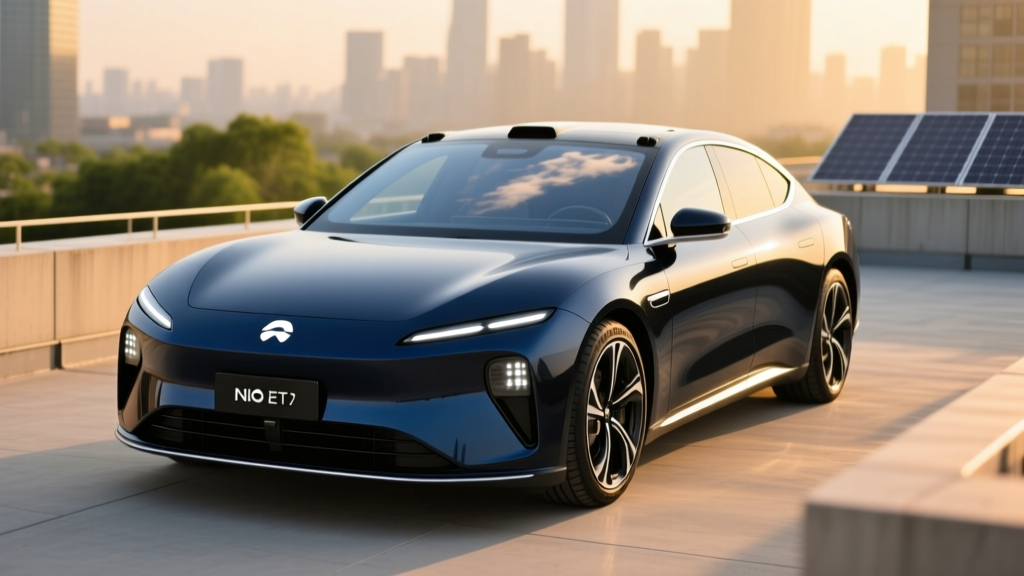
The NIO ET7 electric sedan has been one of China's most talked-about luxury EVs since its domestic launch, positioning itself as a direct rival to the Tesla Model S, Mercedes-Benz EQE, and BMW i5. With its sleek fastback silhouette, battery-swap architecture, and NIO's expanding European footprint, the ET7 has generated significant curiosity among US-based EV enthusiasts. But as of early 2026, NIO has not officially launched in the United States, meaning the ET7 remains an import-only proposition stateside. This review covers the ET7's full spec sheet, real-world range expectations, charging behavior, and ownership economics — so you know exactly what this sedan offers, whether you're tracking it for a future US debut or evaluating it as a gray-market option.
NIO ET7 At a Glance: Key Specifications
| Spec | NIO ET7 (100 kWh Battery) |
|---|---|
| EPA-Est. Range | ~370 mi (WLTP 432 mi / 700 km) |
| Battery Capacity | 100 kWh usable (NMC 811) |
| Battery Chemistry | NMC (Nickel Manganese Cobalt) |
| Drivetrain | Dual-motor AWD |
| Horsepower | 644 hp (480 kW) |
| 0-60 mph | 3.8 seconds |
| Max DC Fast Charge | ~180 kW peak |
| 10-80% DC Charge | ~30 minutes |
| Level 2 Home Charge | 11 kW AC (est. 32 mi/hr) |
| Efficiency | ~100 MPGe / ~27 kWh/100 mi |
| Cargo Volume | ~17.7 cu ft (trunk) + frunk |
| Length / Wheelbase | 199.8 in / 120.9 in |
| Battery Warranty | 8 yr / 100,000 mi (NIO standard markets) |
| Base Price (Europe) | ~€69,000 (~$75,000 USD equiv.) |
Note: Because the NIO ET7 is not officially sold in the US, EPA testing figures are estimated based on WLTP-to-EPA conversion ratios typical for vehicles in this class. Actual EPA certification may differ if NIO enters the US market. European pricing is used as a proxy.
Range and Efficiency: Real-World Expectations
Real-World Highway (70 mph): ~290–320 miles
Real-World City/Mixed: ~330–360 miles
Cold Weather (below 32°F): ~240–280 miles (30-35% reduction)
The NIO ET7's 100 kWh NMC battery pack gives it one of the largest energy reserves in the luxury sedan segment. On the WLTP cycle — which tends to run 15-20% more optimistic than the EPA's testing methodology — NIO claims up to 700 km (432 mi). Applying a typical WLTP-to-EPA discount yields an estimated EPA figure around 370 miles, which would place the ET7 ahead of the BMW i5 eDrive40 (EPA 295 mi) and competitive with the Mercedes EQE 350+ (EPA 305 mi).
But real-world range tells a more nuanced story. The ET7 is a large, heavy sedan (curb weight approximately 5,050 lbs) with a dual-motor AWD system that consumes more energy than a single-motor RWD setup. In mixed driving at moderate temperatures, expect roughly 330-360 miles on a full charge. Sustained highway driving at 70+ mph pushes consumption higher — plan on 290-320 miles before needing a charge stop.
Cold weather is the ET7's biggest range adversary. NMC batteries lose efficiency in freezing conditions, and while the ET7 includes a heat pump for cabin heating (reducing the energy penalty compared to resistive heaters), you should still budget a 30-35% range reduction in sustained sub-freezing temperatures. That drops usable range to roughly 240-280 miles — still viable for most commutes, but something to factor into winter road-trip planning.
The ET7's efficiency lands around 27 kWh per 100 miles (approximately 100 MPGe), which is respectable for a 644-hp AWD luxury sedan but trails the more efficiency-focused Tesla Model S Long Range (~28 kWh/100 mi with 405 mi EPA range) and the single-motor BMW i5.
Charging Speed: DC Fast, Level 2, and Battery Swap
| Charging Level | Power / Rate | Speed (Approx.) |
|---|---|---|
| Level 1 (120V) | ~1.4 kW | ~4 mi/hr |
| Level 2 (240V AC) | 11 kW | ~32 mi/hr |
| DC Fast Charge | ~180 kW peak | 10-80% in ~30 min |
| Battery Swap (NIO Station) | Full pack | ~5 minutes |
The ET7 charges at up to ~180 kW on DC fast chargers using CCS2 (in European markets) or GB/T (in China). At peak rate, a 10-80% session takes roughly 30 minutes. However, as with all EVs, the charge curve tapers significantly above 80% — an 80-100% top-off can add another 20-25 minutes. For road-trip efficiency, the practical play is charging to 80% and moving on, which is standard EV practice.
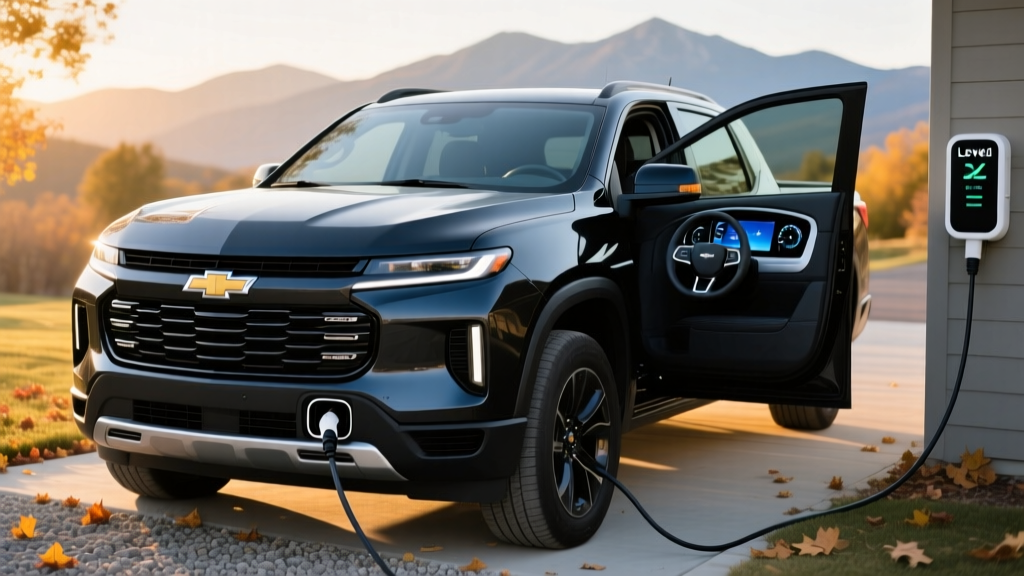
On Level 2 home charging, the ET7's onboard charger accepts up to 11 kW AC, meaning a full 0-100% charge from a dedicated home wallbox takes roughly 10-11 hours. That's adequate for overnight replenishment — plug in when you get home, wake up to a full battery every morning. If you're installing a Level 2 charger at home, you'll need a 240V circuit rated for at least 48 amps to deliver the full 11 kW. Budget $800-$2,500 for a professional home charger installation depending on your electrical panel's proximity to the garage and whether a panel upgrade is needed.
The ET7's most distinctive charging feature is NIO's battery swap system. At NIO Power Swap stations (currently concentrated in China and expanding in Europe), a robotic system replaces the entire battery pack in approximately 5 minutes — faster than any DC fast-charge session. This also means NIO owners can theoretically upgrade or downgrade battery capacity (e.g., 75 kWh for city driving, 150 kWh for road trips) on a subscription basis. However, battery swap infrastructure does not exist in the US, making this a moot point for American buyers unless NIO commits to a US rollout.
Performance and Driving Dynamics
The NIO ET7's dual-motor all-wheel-drive powertrain produces 644 horsepower and 627 lb-ft of torque, launching the sedan from 0-60 mph in an estimated 3.8 seconds. That puts it firmly in performance-sedan territory — quicker than a BMW i5 M60 (3.7 sec, but with 593 hp) and close to the Tesla Model S Long Range (3.1 sec).
Power delivery is immediate and linear, as expected from a dual-motor EV. The ET7 offers multiple drive modes (Comfort, Sport, Sport+, and Eco) that adjust throttle response, suspension damping (via the standard air suspension), and steering weight. The air suspension also enables adjustable ride height — useful for speed bumps, steep driveways, and reducing drag at highway speeds.
NIO equips the ET7 with its proprietary ICC (Intelligent Chassis Control) system, which integrates the air suspension, CDC (Continuous Damping Control), and torque vectoring between the front and rear motors. The result is a sedan that rides comfortably on the highway yet can tighten up for spirited driving on back roads. That said, at over 5,000 lbs, the ET7's mass is noticeable during aggressive cornering — this is a grand tourer, not a track car.
Interior, Tech, and Driver Assistance
The ET7's cabin is a study in minimalist luxury. NIO uses sustainable materials including a microfiber suede headliner, open-pore wood trim, and synthetic leather upholstery. The dashboard is dominated by a 12.8-inch AMOLED center touchscreen (OLED, 1720 × 1920 resolution) running NIO's Banyan infotainment system. A 10.2-inch HDR digital instrument cluster sits behind the steering wheel, and a standard HUD (head-up display) with AR navigation overlays projects directions onto the windshield.
One of the ET7's most recognizable features is NOMI, NIO's AI-powered in-car assistant, represented by a small robotic sphere on the dashboard that rotates to face whoever is speaking. NOMI handles voice commands for navigation, climate, media, and vehicle settings, and can recognize individual driver profiles via facial recognition.
Driver Assistance (SAE Level 2):
The ET7's NIO Pilot / NAD (NIO Autonomous Driving) system is a Level 2 driver-assist system. It provides adaptive cruise control, lane-centering, automatic lane changes, and traffic jam assist — but the driver must remain fully engaged, hands on or near the wheel, at all times. This is not a self-driving system. NIO's hardware includes up to 33 sensors (cameras, millimeter-wave radars, ultrasonic sensors, and a LiDAR unit mounted on the roof), giving the system strong environmental awareness — but responsibility always rests with the driver.
The roof-mounted LiDAR sensor (an Innovusion Falcon unit with 500-meter detection range) gives the ET7's ADAS a hardware advantage over camera-only systems like Tesla Autopilot. In practice, NIO Pilot performs well in highway cruising and stop-and-go traffic, with smooth lane-keeping and confident merge behavior. However, like all Level 2 systems, it can struggle with construction zones, faded lane markings, and complex urban intersections.
Audio: The ET7 offers a standard 7.1.4 Dolby Atmos surround sound system with 23 speakers — a genuinely impressive setup that rivals the Burmester and Bowers & Wilkins systems found in German competitors.
Space: The ET7's 120.9-inch wheelbase translates to generous rear-seat legroom (estimated 38+ inches), making it a comfortable four-seat executive cruiser. The trunk offers approximately 17.7 cubic feet of cargo space, which is competitive for the segment, and a small front trunk (frunk) adds space for charging cables or a small bag.
Pricing, Trims, and Federal Tax Credit Eligibility
As of early 2026, NIO does not sell vehicles in the United States. Pricing below reflects European-market MSRPs converted to USD for reference, plus estimated US pricing if NIO were to enter the market:
| Trim / Config | EU Price (Approx.) | Est. US MSRP (If Launched) |
|---|---|---|
| ET7 Standard (75 kWh) | ~€59,000 | ~$62,000 |
| ET7 Long Range (100 kWh) | ~€69,000 | ~$72,000 |
| ET7 Signature (100 kWh, loaded) | ~€78,000 | ~$82,000 |
Federal EV Tax Credit (§30D) — Would the ET7 Qualify?
If NIO launched the ET7 in the US, its eligibility for the IRS §30D federal tax credit would face significant hurdles under current rules:
- MSRP Cap: Sedans must be priced at or below $55,000 to qualify. The ET7's estimated $62,000-$82,000 pricing would exceed this cap, disqualifying all trims.
- Battery Sourcing: The §30D credit requires that critical minerals and battery components meet phased-in domestic-sourcing thresholds (with FEOC — Foreign Entity of Concern — restrictions). As a Chinese-manufactured vehicle with CATL- or similar-sourced cells, the ET7 would almost certainly fail the battery-component and critical-minerals tests.
- Buyer Income Cap: Modified AGI must not exceed $150,000 (single) / $300,000 (joint). Even if the vehicle qualified, high-income buyers would be excluded.
- Point-of-Sale Transfer: Current rules allow eligible buyers to transfer the credit to the dealer at purchase for an immediate price reduction — but only if the vehicle itself qualifies.
Bottom line: Even in a hypothetical US launch scenario, the NIO ET7 would almost certainly not qualify for the $7,500 federal tax credit due to its MSRP and Chinese battery sourcing. Always consult the latest IRS guidance on clean vehicle credits and speak with a tax professional for your specific situation.
Pros, Cons, and the Verdict
Pros
- Massive 100 kWh battery delivers strong range (~370 mi est. EPA)
- Battery swap capability (where infrastructure exists)
- 644 hp dual-motor AWD with 3.8-sec 0-60
- LiDAR-equipped ADAS hardware is best-in-class
- Premium interior with 23-speaker Dolby Atmos audio
- Air suspension with adjustable ride height
- NOMI AI assistant adds personality to daily driving
Cons
- Not available in the United States (as of 2026)
- Would not qualify for §30D tax credit due to MSRP and sourcing
- ~180 kW peak DC charge rate trails competitors (Model S: 250 kW, Ioniq 6: 350 kW)
- Heavy at 5,050 lbs — mass is felt in corners
- No established US service/parts network
- Cold-weather range loss of 30-35% is significant
- Brand recognition and resale value uncertain outside China/Europe
How the ET7 Compares to Key Rivals
| Spec | NIO ET7 (100 kWh) | Tesla Model S LR | BMW i5 eDrive40 | Mercedes EQE 350+ |
|---|---|---|---|---|
| EPA Range (est.) | ~370 mi | 405 mi | 295 mi | 305 mi |
| Battery | 100 kWh NMC | ~100 kWh | 84.3 kWh NMC | 90.6 kWh NMC |
| HP | 644 | 670 | 335 | 288 |
| 0-60 mph | 3.8 sec | 3.1 sec | 5.7 sec | 6.2 sec |
| Max DC Charge | ~180 kW | 250 kW | 205 kW | 170 kW |
| Base Price (US) | Not sold in US | $74,990 | $57,900 | $74,900 |
| Tax Credit | Likely ineligible | Eligible (check sourcing) | Eligible (check sourcing) | Likely ineligible |
The ET7's closest match is the Mercedes EQE in terms of luxury positioning and price point, but the NIO offers more power, more range, and superior ADAS hardware. Against the Tesla Model S, the ET7 trades outright speed and Supercharger access for a more luxurious cabin and battery-swap flexibility. The BMW i5 is the pragmatic choice — cheaper, widely available, and tax-credit eligible — but significantly less powerful.
Who Should Consider the NIO ET7?
- European/Chinese-market luxury EV buyers who want a tech-forward alternative to German sedans
- Tech enthusiasts drawn to LiDAR-equipped ADAS, battery swap, and the NOMI AI assistant
- Executive commuters who value rear-seat comfort, air-suspension ride quality, and Dolby Atmos audio
- Range-priority drivers who want a 100 kWh battery for long-distance travel between charges
- US-based buyers — the ET7 is not sold stateside, and gray-market import is impractical for daily ownership (no service network, no tax credit, parts availability)
- Budget-conscious shoppers — the ET7's pricing and ineligibility for federal incentives put it firmly in luxury territory
- Charging-speed priority buyers — 180 kW peak DC charging is adequate but not class-leading
Frequently Asked Questions
What is the real-world range of the NIO ET7?
Expect approximately 330-360 miles in mixed city/highway driving at moderate temperatures. Sustained highway driving at 70+ mph reduces this to roughly 290-320 miles. In cold weather (below 32°F), plan on 240-280 miles due to battery chemistry limitations and cabin heating demand, even with the ET7's heat pump.
How fast does the NIO ET7 charge at home and on DC fast chargers?
On a DC fast charger, the ET7 peaks at approximately 180 kW, reaching 10-80% State of Charge in about 30 minutes. At home on a Level 2 (240V, 48A) wallbox, the 11 kW onboard charger delivers roughly 32 miles of range per hour, meaning a full charge takes 10-11 hours. Level 1 (standard 120V outlet) adds only about 4 miles per hour — useful for emergencies only.
Does the NIO ET7 qualify for the US federal EV tax credit?
Almost certainly not, even if it were sold in the US. The §30D credit caps sedan MSRP at $55,000 (the ET7 is estimated at $62,000+), and the battery sourcing requirements would likely disqualify a Chinese-manufactured vehicle with Chinese-sourced cells. Always verify current rules on IRS.gov and consult a tax professional.
Is the NIO ET7 worth buying over a Tesla Model S or BMW i5?
If you're in a market where it's sold, the ET7 offers a compelling blend of range, luxury, and technology that differentiates it from both the Tesla (faster, better charging network, but spartan interior) and the BMW i5 (more affordable, tax-credit eligible, but less powerful and shorter range). The ET7's unique battery-swap capability is a genuine differentiator where NIO Power Swap stations exist. For US buyers, however, the lack of availability, service infrastructure, and tax-credit ineligibility make it impractical compared to readily available alternatives.
What is NIO's battery warranty on the ET7?
In markets where NIO operates, the standard battery and powertrain warranty covers 8 years or 100,000 miles (160,000 km), with a minimum capacity retention threshold of 70-80% (varies by market). NIO's battery-swap model also means that if a pack degrades below threshold, it can be swapped for a healthy unit at a Power Swap station rather than requiring a costly in-shop battery replacement — a significant ownership advantage where the infrastructure exists.
Will NIO ever sell the ET7 in the United States?
As of early 2026, NIO has not announced a US launch timeline. The company has focused its international expansion on Europe (Norway, Germany, Netherlands, Sweden, Denmark) and has cited US tariff structures, regulatory requirements, and the need for a service/charging network as barriers. While NIO has expressed long-term interest in the US market, there is no confirmed date. Monitor NIO's official investor communications for updates.
Sources: NIO official specifications, fueleconomy.gov for EPA comparison data, IRS §30D clean vehicle credit rules.