Quick Verdict: A Legitimate Electric Workhorse
The 2025 Chevy Silverado EV enters the full-size electric truck segment with a clear proposition: class-leading range, competitive towing, and GM's Ultium platform under a familiar nameplate. After spending time with the specs, cross-referencing EPA data, and comparing it against the Ford F-150 Lightning and Rivian R1T, the Silverado EV delivers where it matters most for truck buyers — range confidence and utility — while asking buyers to accept a premium price and a learning curve on the new platform.
The Work Truck (WT) trim starts at $39,900 (before destination), making it one of the most affordable electric trucks available, while the fully loaded RST First Edition pushes past $96,000. Fleet buyers and owner-operators will find the WT compelling; retail buyers eyeing the RST need to weigh the Silverado's advantages against established competitors.
Range, Battery, and Efficiency
| Specification | WT (Standard Range) | WT (Max Range) | RST First Edition |
|---|---|---|---|
| EPA Range | ~240 mi (est.) | ~400 mi (est.) | ~380 mi (est.) |
| Battery Capacity (usable) | ~100 kWh | ~200 kWh | ~200 kWh |
| Battery Chemistry | NMC (Ultium) | NMC (Ultium) | NMC (Ultium) |
| Efficiency (MPGe) | TBD | TBD | TBD |
GM's Ultium battery platform uses nickel-manganese-cobalt (NMC) chemistry, chosen for its higher energy density compared to LFP — critical for a truck carrying a massive pack. The 200 kWh pack in the Max Range variants is among the largest ever fitted to a production vehicle, enabling the Silverado EV to target an EPA-estimated range above 400 miles on the WT Max Range trim.
EPA estimates are measured under controlled conditions. Expect real-world highway driving (70-75 mph) to yield approximately 80-85% of the EPA sticker — so a 400-mile EPA rating translates to roughly 320-340 miles on the interstate. Cold weather (below 32°F) can reduce range by an additional 15-25% due to battery heating demands and cabin climate load. Towing will cut range dramatically; expect 150-200 miles when pulling near max capacity.
The Silverado EV's efficiency will be rated in MPGe and kWh per 100 miles once the EPA publishes final figures on fueleconomy.gov. For comparison, the Ford F-150 Lightning Extended Range achieves approximately 2.1 kWh/mile (48 MPGe combined). Expect the Silverado EV to land in a similar range given its comparable weight and aerodynamics.
Charging Speed: DC Fast Charge and Home Level 2
| Charging Level | Power | Charge Time / Rate | Notes |
|---|---|---|---|
| Level 1 (120V) | ~1.4 kW | ~3-4 miles/hour | Emergency/trickle only |
| Level 2 (240V, 48A) | 11.5 kW | ~25-30 miles/hour | Home/workplace standard |
| Level 2 (240V, 80A) | 19.2 kW | ~40-45 miles/hour | Optional high-power home charger |
| DC Fast Charge | Up to 200 kW peak | 10-80% in ~45 min (est.) | CCS connector; tapers above 80% |
The Silverado EV supports DC fast charging at up to 200 kW via the CCS1 connector. This is competitive with the F-150 Lightning (150 kW peak on Extended Range) but trails the Rivian R1T's 200+ kW capability. At a 150-200 kW station, you can expect the 200 kWh pack to charge from 10-80% in approximately 45 minutes — adequate for road trips but not class-leading.
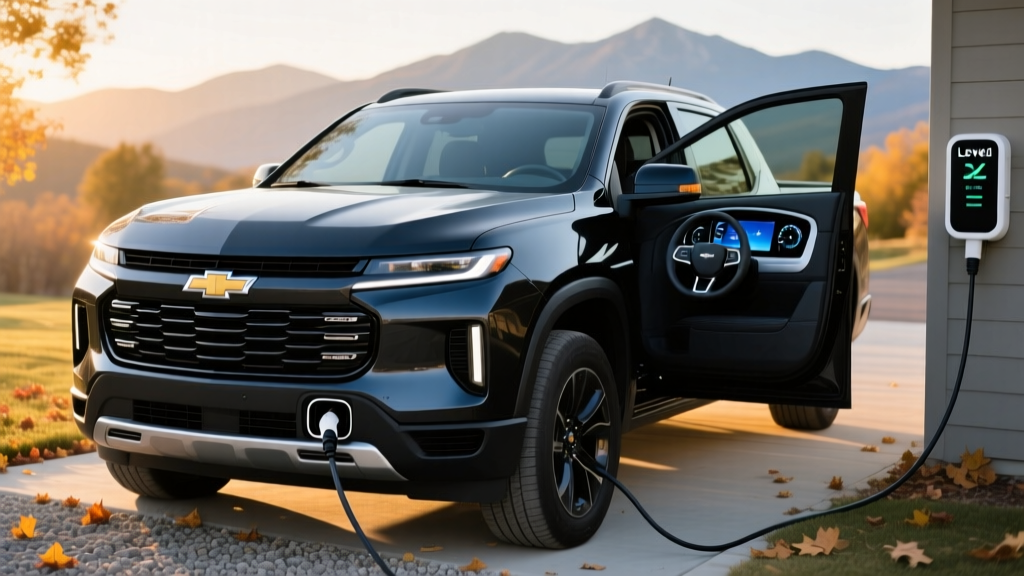
Home Level 2 charging is where the Silverado EV shines. The onboard charger supports up to 19.2 kW (80 amps at 240V), meaning a full charge from empty takes roughly 10-12 hours for the Max Range pack. Most buyers will install a 48-amp Level 2 station (11.5 kW), which requires a 60-amp dedicated circuit. Installation costs typically range from $800-$2,500 depending on panel proximity and local permitting — budget for a licensed electrician to assess your 200-amp panel capacity.
GM has committed to Tesla Supercharger access via an adapter (NACS port expected on future model years). For 2025, Silverado EV owners will rely on Electrify America, EVgo, and other CCS networks, which have improved reliability but still lag Tesla's coverage in rural areas.
Performance and Capability
| Performance Metric | WT (Dual-Motor AWD) | RST First Edition (Dual-Motor AWD) |
|---|---|---|
| Horsepower | ~510 HP | ~664 HP (up to 754 HP w/Wide Open Watts) |
| Torque | ~615 lb-ft | ~780 lb-ft |
| 0-60 mph | ~4.5 sec (est.) | ~4.0 sec (est.) |
| Drivetrain | Dual-motor AWD | Dual-motor AWD |
| Max Towing | ~8,000 lbs (WT); up to 10,000 lbs w/max tow pkg | ~8,000 lbs |
| Max Payload | ~1,300 lbs | ~1,300 lbs |
The RST First Edition's Wide Open Watts mode unleashes the full 754 horsepower, making the Silverado EV one of the quickest trucks on the market. However, this performance comes at an efficiency cost — repeated hard launches will degrade range faster than the EPA estimate suggests.
Towing capacity is competitive but not class-leading. The F-150 Lightning Max Tow package reaches 10,000 lbs, and the Silverado EV matches that only with the WT's optional tow package. Payload is constrained by the battery weight; expect real-world payload figures closer to 1,200-1,300 lbs depending on trim and options.
Regenerative braking is adjustable via steering wheel paddles, enabling one-pedal driving in most conditions. The system recovers energy effectively in stop-and-go traffic, though highway drivers may prefer low regen for coasting efficiency.
Interior, Cargo, and Technology
The Silverado EV breaks from traditional truck design with a unibody architecture (no body-on-frame), enabling a flat floor and innovative storage solutions. The available Multi-Flex Midgate allows the bed to extend into the cabin, creating up to 9 feet of enclosed cargo length — ideal for lumber, kayaks, or long equipment.
| Dimension | Measurement |
|---|---|
| Bed Length (Midgate closed) | ~5 ft 11 in |
| Bed Length (Midgate open) | ~9 ft |
| Front Trunk (Frunk) | ~10.7 cu ft |
| Front Legroom | ~45 in |
| Rear Legroom | ~43 in |
| Rear Headroom | ~40 in |
The RST First Edition features a 17-inch diagonal infotainment touchscreen running GM's latest Ultifi software platform, with wireless Apple CarPlay and Android Auto, Google Built-In (Maps, Assistant, Play Store), and over-the-air updates. The WT uses a smaller 11-inch screen but retains the core functionality.
Driver assistance includes GM's Super Cruise (available on RST), a Level 2 hands-free system for mapped divided highways. Unlike Tesla's FSD (Supervised), Super Cruise requires the driver to remain attentive via an infrared eye-tracking camera — it will not navigate unmapped roads or handle complex urban scenarios. The system is impressive on interstates but is not autonomous driving (SAE Level 4); you must remain engaged and ready to take over.
Notable drawbacks: The unibody design, while innovative, may concern traditional truck buyers accustomed to body-on-frame durability. Long-term reliability data for the Ultium platform is still limited (the platform launched in 2022 with the Hummer EV). The RST's $96,000+ price tag also pushes it into luxury truck territory, competing with the Rivian R1T and high-end F-150 Lightning Platinum.
Pricing, Trims, and Federal Tax Credit
| Trim | Base MSRP | Est. After §30D Credit* | Notes |
|---|---|---|---|
| WT Standard Range | $39,900 | ~$32,400 | Fleet-focused; limited retail availability |
| WT Max Range | $59,900 (est.) | ~$52,400 | Best value for range-conscious buyers |
| RST First Edition | $96,800 | ~$89,300 | Luxury trim; fully loaded |
*Federal tax credit eligibility depends on buyer income, vehicle MSRP, and battery sourcing. See IRS rules below.
The 2025 Silverado EV qualifies for the federal §30D Clean Vehicle Credit, but eligibility is not automatic. Under current IRS rules:
- MSRP Cap: Trucks/vans must have an MSRP below $80,000. This excludes the RST First Edition ($96,800) from the credit. The WT trims qualify.
- Buyer Income Cap: Adjusted gross income must be below $150,000 (single), $225,000 (head of household), or $300,000 (married filing jointly).
- Battery Sourcing: A percentage of critical minerals and battery components must be sourced from the U.S. or free-trade-agreement countries. GM has worked to comply, but final eligibility depends on the specific battery pack and model year. Check the IRS Clean Vehicle Credit page for the latest qualified vehicle list.
- Point-of-Sale Transfer: Buyers can transfer the credit to the dealer at purchase, reducing the upfront cost rather than waiting for a tax refund.
Consult a tax professional to confirm eligibility for your specific situation. State and local incentives (e.g., California's CVRP, Colorado's $5,000 credit) may stack on top of the federal credit — check your state's energy office for current programs.
Warranty and Ownership Costs
GM backs the Silverado EV with a competitive warranty package:
- Battery: 8 years / 100,000 miles (whichever comes first), with a capacity retention guarantee (typically 70% of original capacity).
- Powertrain: 5 years / 60,000 miles.
- Bumper-to-Bumper: 3 years / 36,000 miles.
The 8-year/100,000-mile battery warranty is standard for the industry and aligns with the F-150 Lightning and Rivian R1T. Battery replacement costs for a 200 kWh pack are currently estimated at $20,000-$30,000 out of warranty, though prices are expected to decline as Ultium production scales.
Insurance costs will be higher than a gas Silverado due to the EV's repair complexity and battery replacement cost. Expect premiums 15-25% above a comparable gas truck, depending on your driving record and location.
Maintenance savings are significant: no oil changes, no spark plugs, no transmission fluid. Brake wear is reduced thanks to regenerative braking. Total cost of ownership over 5 years will depend heavily on your electricity rate vs. local gas prices — at $0.13/kWh and $3.50/gallon, the Silverado EV saves approximately $1,500-$2,500 annually in fuel for a driver covering 15,000 miles/year.
Who Should Buy the 2025 Chevy Silverado EV?
Best for:
- Fleet buyers and small business owners who need 400+ miles of range and can charge at a depot overnight.
- Homeowners with Level 2 charging access who want a daily-driver truck with minimal fuel costs.
- Buyers who prioritize range over towing — the 400-mile EPA estimate is best-in-class.
Consider alternatives if:
- You tow frequently above 7,000 lbs — the F-150 Lightning's established tow rating and Pro Power Onboard may be more practical.
- You need a truck today — the Silverado EV's initial production is limited, and wait times may extend 6-12 months.
- You want the most refined interior — the Rivian R1T offers a more premium cabin and quad-motor performance at a similar price point.
Pros and Cons
- Class-leading EPA range (up to 400 miles)
- Innovative Multi-Flex Midgate for extended cargo
- Competitive pricing on WT trims ($39,900 base)
- Super Cruise hands-free driving (RST)
- Strong Level 2 home charging (up to 19.2 kW)
- RST First Edition exceeds $80k MSRP cap (no tax credit)
- Limited real-world reliability data on Ultium platform
- Towing capacity trails F-150 Lightning Max Tow
- CCS charging network less reliable than Tesla Superchargers
- Unibody design may concern traditional truck buyers
FAQ: 2025 Chevy Silverado EV
What is the real-world range of the 2025 Silverado EV?
The WT Max Range targets an EPA-estimated 400+ miles. Real-world highway driving (70-75 mph) will yield approximately 320-340 miles. Cold weather (below 32°F) can reduce range by 15-25%. Towing near max capacity will cut range to 150-200 miles.
How fast does the Silverado EV charge at home and on DC fast chargers?
DC fast charging peaks at 200 kW, achieving 10-80% in approximately 45 minutes. Home Level 2 charging supports up to 19.2 kW (80 amps), adding roughly 40-45 miles per hour. A full charge from empty takes 10-12 hours on a 19.2 kW charger.
Does the 2025 Silverado EV qualify for the $7,500 federal tax credit?
The WT trims (MSRP below $80,000) qualify if the buyer meets income caps ($150k single / $300k joint) and the battery meets IRS sourcing requirements. The RST First Edition ($96,800 MSRP) exceeds the truck MSRP cap and does not qualify. Check the IRS qualified vehicle list for final eligibility.
Is the Silverado EV worth buying vs. the Ford F-150 Lightning or Rivian R1T?
Choose the Silverado EV if range is your top priority (400 miles vs. Lightning's 320 miles Extended Range). Choose the F-150 Lightning if you need proven reliability, established dealer service, and Pro Power Onboard for job sites. Choose the Rivian R1T for a more premium interior, quad-motor performance, and better off-road capability.
What are the biggest drawbacks of the Silverado EV?
The RST's high price ($96,800) excludes it from the federal tax credit. The Ultium platform is new, so long-term reliability data is limited. Towing capacity (8,000-10,000 lbs) trails some gas trucks, and the CCS charging network is less reliable than Tesla's Supercharger network in rural areas.
Can I use Tesla Superchargers with the Silverado EV?
Not yet. The 2025 Silverado EV uses a CCS1 port. GM has announced future NACS (Tesla connector) adoption, and an adapter will be available for Supercharger access, but for 2025, you'll rely on Electrify America, EVgo, and other CCS networks.
Sources: Chevrolet Silverado EV Official Page, EPA Fuel Economy, IRS Clean Vehicle Credit.