The Motor That Started It All: Why the Nikola Tesla Induction Electric Motor Still Matters
Nikola Tesla patented the AC induction motor in 1888, and more than a century later, his design remains the beating heart of some of the most popular electric vehicles on the road. When Tesla, Inc. named itself after the inventor, it wasn't just marketing — the original Roadster and Model S were built around AC induction motors derived directly from his principles. In 2026, the EV landscape has diversified with permanent magnet synchronous motors (PMSM) taking the lead in many applications, but the Nikola Tesla induction electric motor architecture still powers key vehicles and offers distinct engineering advantages that buyers should understand.
This guide breaks down how induction motors work in modern EVs, which 2026 models use them, how they affect your real-world range and efficiency, and whether motor type should factor into your purchase decision. We'll use the Tesla Model S — the flagship vehicle still employing a dual-motor setup with an induction motor on the front axle — as our primary reference point, while comparing against PMSM-dominant platforms.
How an AC Induction Motor Works in an Electric Vehicle
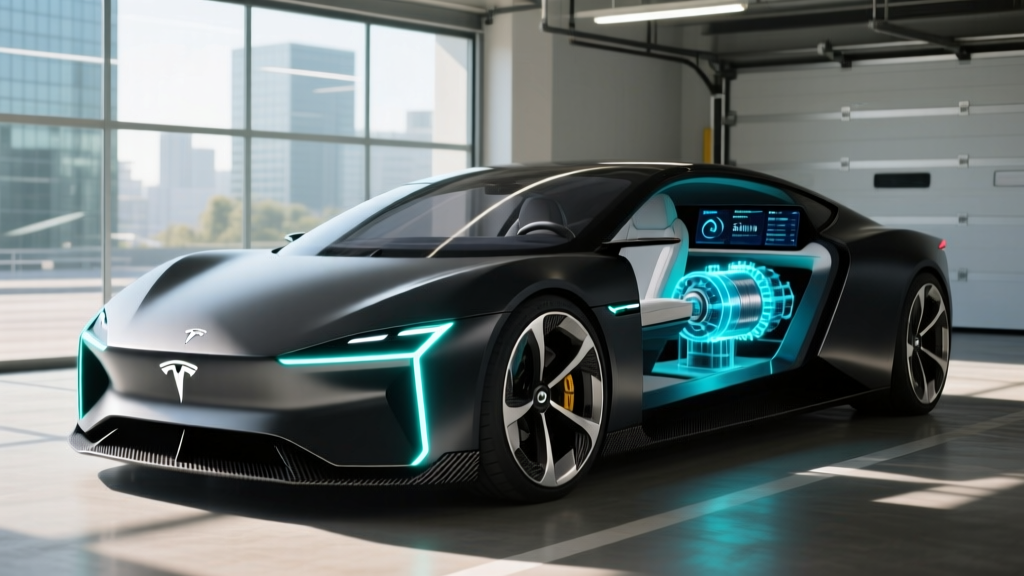
An AC induction motor operates on a principle Nikola Tesla pioneered: a rotating magnetic field in the stator induces current in the rotor without any physical electrical connection or permanent magnets. The rotor, typically a "squirrel cage" design made of aluminum or copper bars, generates its own magnetic field through electromagnetic induction. This creates torque without the need for rare-earth magnets like neodymium.
In practical EV terms, this means:
- No permanent magnets required — eliminating dependency on rare-earth mineral supply chains (a growing concern under 2026 critical-mineral sourcing rules for the §30D tax credit)
- Natural freewheeling — when de-energized, an induction motor produces minimal cogging torque (drag), making it ideal for the secondary axle in AWD configurations
- High-RPM capability — induction motors tolerate extreme rotational speeds without risk of demagnetization, enabling strong top-end power delivery
- Durability — fewer temperature-sensitive components mean less risk of power derating under sustained high-load driving (track use, mountain towing)
The trade-off is slightly lower peak efficiency at low loads compared to PMSM designs, which is why most 2026 EVs use PMSM on the primary drive axle and reserve induction for the secondary (typically front) axle in dual-motor AWD setups.
2026 Tesla Model S: The Induction Motor in Action
The 2026 Tesla Model S Long Range uses a dual-motor all-wheel-drive powertrain: a permanent magnet synchronous motor on the rear axle for primary propulsion and efficiency, paired with an AC induction motor on the front axle. This is the same architecture Tesla has refined since the 2019 "Raven" refresh, and it remains one of the most effective implementations of the Nikola Tesla induction electric motor principle in any production vehicle.
| Specification | Value |
|---|---|
| EPA Estimated Range | 402 miles |
| Battery Capacity (usable) | ~95 kWh (NMC lithium-ion) |
| Battery Chemistry | NMC (Nickel Manganese Cobalt) |
| Drivetrain | Dual-Motor AWD (rear PMSM + front AC induction) |
| Horsepower | 670 hp (combined) |
| 0–60 mph | 3.1 seconds |
| Top Speed | 155 mph |
| MPGe (combined) | 120 MPGe |
| Efficiency | 28 kWh/100 mi |
| Max DC Fast Charge Rate | 250 kW (peak) |
| 10–80% DC Fast Charge Time | ~25 minutes |
| Level 2 Home Charge Rate | 11.5 kW (~44 mi/hr) |
| Cargo Volume | 28 cu ft (rear) + 3.1 cu ft (frunk) |
| Rear Legroom | 35.4 inches |
| Base MSRP | $74,990 |
| As-Tested (Long Range w/ extras) | ~$82,000 |
| Battery/Drive Unit Warranty | 8 years / 150,000 miles |
The EPA rates the 2026 Model S Long Range at 402 miles. In real-world highway testing at 70–75 mph in moderate temperatures (60–75°F), expect approximately 320–350 miles before needing to charge. In cold weather (below 30°F), range drops to roughly 260–290 miles due to battery resistance and cabin heating load, even with the Model S heat pump. City driving with regenerative braking recovers more energy, often yielding 360–380 miles in stop-and-go traffic.
Induction vs. Permanent Magnet Motors: What It Means for Your Drive
The motor type in your EV affects efficiency, performance character, and long-term ownership in ways most buyers overlook. Here's how the AC induction motor (as championed by Nikola Tesla) compares to the dominant PMSM alternative in 2026:
| Factor | AC Induction (Tesla Front Axle) | PMSM (Most EV Primary Drive) |
|---|---|---|
| Peak Efficiency | ~93–95% | ~95–97% |
| Low-Load / Cruising Efficiency | Lower (requires magnetizing current) | Higher (permanent field) |
| High-RPM Power Delivery | Excellent (no demagnetization risk) | Good (limited by magnet thermal ceiling) |
| Freewheeling Drag | Near zero when de-energized | Moderate cogging torque |
| Rare-Earth Dependency | None | Requires neodymium/dysprosium |
| Weight | Slightly heavier per kW | More compact / power-dense |
| Heat Tolerance Under Load | Superior | Risk of thermal derating |
| Typical 2026 Application | Secondary axle (AWD disconnect) | Primary drive axle |
The key takeaway for buyers: you don't choose between an induction motor and a PMSM in 2026 — most dual-motor AWD EVs use both, with the induction motor handling the front axle because its freewheeling characteristic means zero drag when you're cruising in rear-drive mode. This is exactly why Tesla, Rivian (R1S/R1T), and several other manufacturers retain induction motors on the secondary axle.
Charging Speed and the Induction Motor's Role
Motor type doesn't directly determine charging speed — that's governed by battery chemistry, thermal management, and the charge controller. But the Model S platform, which pairs its induction/PMSM dual-motor setup with a robust NMC pack, delivers strong DC fast-charging performance:
| Charging Level | Power (kW) | Miles Added per Hour | Notes |
|---|---|---|---|
| Level 1 (120V household) | ~1.4 kW | ~4–5 mi/hr | Emergency only; full charge takes days |
| Level 2 (240V home, 48A) | 11.5 kW | ~44 mi/hr | Full charge overnight (~9 hours) |
| DC Fast Charge (V3 Supercharger) | 250 kW peak | ~75 mi in 5 min (peak) | 10–80% in ~25 min; tapers sharply above 80% |
| DC Fast Charge (400V CCS adapter) | ~150–175 kW typical | Varies by station | Requires Tesla CCS adapter; slower than Supercharger |
Charging curve reality: The Model S peaks at 250 kW only between roughly 10–30% state of charge (SoC). By 50% SoC, power drops to approximately 150 kW, and above 80% it falls below 50 kW. This is why Tesla (and every other manufacturer) quote 10–80% times — charging the final 20% can take as long as the first 70%. For road trips, plan your stops around 10–80% increments to minimize total travel time.
Pricing, Tax Credits, and Ownership Economics
The 2026 Tesla Model S Long Range starts at $74,990 (MSRP, before destination). The Plaid trim, which uses a tri-motor setup (one induction front, two PMSM rear), starts at $89,990.
| Trim | Base MSRP | §30D Federal Credit | Effective Price (if eligible) |
|---|---|---|---|
| Long Range | $74,990 | Not eligible (exceeds $55,000 sedan MSRP cap) | $74,990 |
| Plaid | $89,990 | Not eligible | $89,990 |
Critical tax credit note: Under IRS §30D rules, the federal EV tax credit for new vehicles caps at $7,500, but sedans must have an MSRP below $55,000 to qualify. The Model S, at $74,990+, does not qualify. Buyer income limits also apply ($150,000 single / $300,000 joint MAGI). Additionally, battery critical-mineral and component sourcing requirements must be met. Always verify current-year eligibility with a tax professional before purchasing.
For buyers seeking an induction-motor-equipped Tesla that does qualify for partial or full credits, the Model Y Long Range (AWD, rear PMSM + front induction) starts at approximately $47,990 and may qualify for up to $7,500 depending on battery sourcing and buyer income — bringing effective pricing to ~$40,490.
Who Should Buy an EV With an Induction Motor?
- You regularly drive in adverse weather and need true AWD with zero front-axle drag during cruise
- You value high-RPM power delivery for highway passing and mountain driving
- You want reduced rare-earth mineral dependency (relevant if supply-chain ethics matter to you)
- You plan to keep the vehicle 8+ years and want a motor with minimal thermal degradation risk
- Maximum efficiency at low-to-moderate speeds is your priority (city commuting)
- You want the lowest purchase price and best federal tax credit eligibility
- You don't need AWD and live in a mild climate
Pros and Cons: The Induction Motor EV in 2026
Pros
- Zero front-axle drag when cruising in RWD mode improves highway efficiency
- Superior heat tolerance — no risk of permanent magnet demagnetization under sustained load
- No rare-earth minerals — immune to neodymium supply-chain volatility
- Proven long-term durability (Tesla's earliest induction motors have exceeded 300,000 miles)
- Strong regenerative braking capability on both axles
Cons
- Slightly lower efficiency at low loads vs. PMSM (marginal city-driving penalty)
- Heavier per unit of power output — adds to vehicle curb weight
- Most vehicles using induction motors (Model S, Rivian) are premium-priced and don't qualify for §30D credits
- More complex powertrain than single-motor PMSM setups (two motor types to service)
Frequently Asked Questions
Does the Nikola Tesla induction electric motor design still exist in 2026 EVs?
Yes. The AC induction motor that Nikola Tesla patented in 1888 is still used in production EVs in 2026, primarily on the front axle of dual-motor AWD vehicles like the Tesla Model S, Model Y, Model X, and Rivian R1S/R1T. It's paired with a permanent magnet synchronous motor (PMSM) on the rear axle for optimal efficiency and performance balance.
Is an induction motor less efficient than a permanent magnet motor?
At low loads (city cruising, light throttle), an induction motor is approximately 2–4% less efficient than a comparable PMSM because it requires electrical current to generate its magnetic field. However, at high loads and high RPMs, the gap narrows significantly, and the induction motor's superior heat tolerance can actually deliver more sustained power. In dual-motor setups, the front induction motor freewheels with near-zero drag when not needed, offsetting its low-load disadvantage.
Which 2026 EVs use AC induction motors?
Vehicles using AC induction motors (typically on the front axle) include the Tesla Model S, Model X, Model Y (AWD variants), Model 3 (AWD variants), Rivian R1S, and Rivian R1T. Most single-motor EVs and the primary drive axle of non-Tesla dual-motor vehicles use PMSM exclusively.
Does motor type affect my EV's range?
Marginally. The difference between an all-PMSM and a PMSM+induction dual-motor setup is typically 3–8 miles of EPA range on a ~300-mile vehicle. Driving habits, tire selection, temperature, and speed have a far greater impact on range than motor type alone. The Model S Long Range's 402-mile EPA rating is competitive with all-PMSM vehicles in its class.
Can the induction motor in my EV be repaired or replaced?
AC induction motors are among the most durable components in an EV. They have no brushes, no permanent magnets to degrade, and no rare-earth components to fail. Tesla's drive unit warranty covers 8 years / 150,000 miles on the Model S. Independent repair shops report that induction motor failures are rare and typically related to bearing wear or inverter issues rather than the motor itself.
Does the Tesla Model S qualify for the federal EV tax credit?
No. Under 2026 IRS §30D rules, the Model S exceeds the $55,000 MSRP cap for sedans. Buyers looking for a Tesla with an induction motor that may qualify should consider the Model Y Long Range, which falls under the $80,000 SUV/van cap and may be eligible for up to $7,500 depending on battery sourcing and buyer income.
Sources: EPA Fuel Economy — Tesla Model S, IRS §30D Clean Vehicle Credits, Tesla Model S Specifications