Quick Answer: Is the Honda Urban EV Worth Buying in 2026?
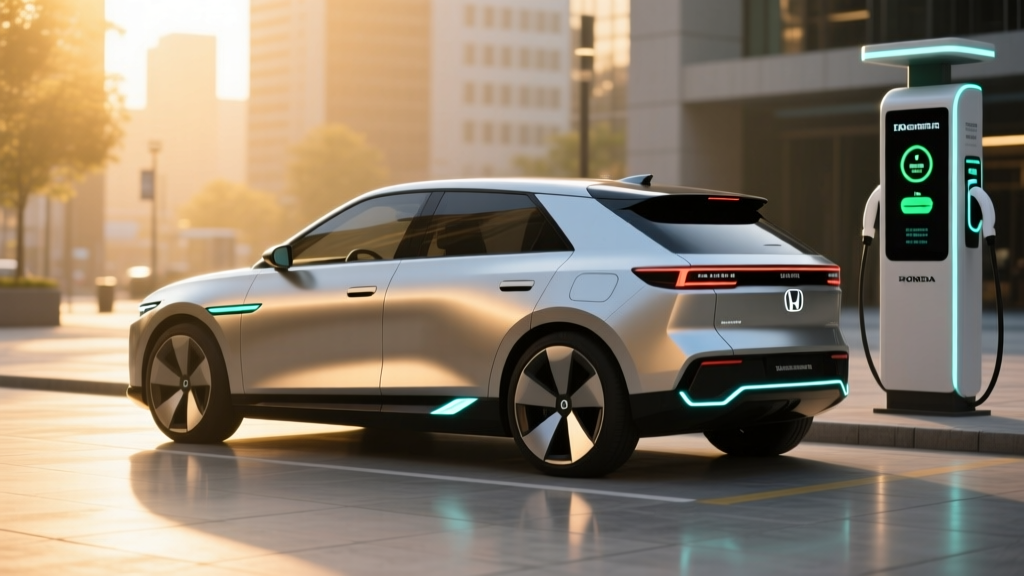
The Honda Urban EV (sold globally as the Honda e and rebadged for North American markets starting 2025) is a compact city-oriented battery-electric vehicle designed for daily commuting rather than long-distance travel. With an EPA-estimated range of approximately 137 miles, a 35.5 kWh usable battery (NMC chemistry), and DC fast charging that peaks at 100 kW (10–80% in roughly 30 minutes), it targets urban drivers who can charge at home and rarely exceed 80 miles per day. Pricing starts near $36,900 before incentives, though federal §30D tax credit eligibility depends on battery sourcing and buyer income. It is best compared against the Nissan Leaf, Mini Cooper SE, and Hyundai Kona Electric rather than long-range EVs like the Tesla Model 3.
Honda Urban EV Specs at a Glance
| Specification | Value |
|---|---|
| EPA Range (est.) | 137 miles |
| Battery Capacity (usable) | 35.5 kWh, NMC lithium-ion |
| Motor Output | 154 hp / 232 lb-ft torque |
| 0–60 mph | ~8.3 seconds |
| DC Fast Charge (peak) | 100 kW (CCS1) |
| 10–80% DC Charge Time | ~30 minutes |
| Level 2 AC Charge Rate | 6.6 kW (~22 mi/hr) |
| MPGe (combined, est.) | 119 MPGe |
| Base MSRP | $36,900 |
| Battery Warranty | 8 years / 100,000 miles |
Real-World Range vs. EPA Sticker
The EPA-estimated 137 miles assumes a mix of city and highway driving at moderate temperatures. In real-world conditions:
- City-only (mild weather): Expect 130–145 miles thanks to regenerative braking and low average speeds.
- Highway (70 mph sustained): Range drops to approximately 95–110 miles. The small frontal area helps, but the 35.5 kWh pack limits total energy.
- Cold weather (below 32°F): Expect 15–25% range loss, yielding roughly 100–115 miles in mixed driving. The Honda Urban EV does not include a heat pump in all trims, meaning cabin heating draws directly from the traction battery via resistive elements.
Bottom line: this is a 90-mile-per-day car in the worst conditions. If your daily round-trip commute exceeds 70 miles with no mid-day charging access, a longer-range EV or PHEV is a safer choice.
Honda Urban EV vs. Gas Car vs. Hybrid: Cost Comparison
The most common buyer question: does the Honda Urban EV save money compared to a conventional gas subcompact or a hybrid like the Toyota Corolla Hybrid? Here is a five-year total cost of ownership (TCO) estimate assuming 12,000 miles/year, $3.50/gallon regular unleaded, and $0.14/kWh home electricity.
| Cost Category (5 yr / 60k mi) | Honda Urban EV | Honda Civic (Gas) | Toyota Corolla Hybrid |
|---|---|---|---|
| Purchase Price (base MSRP) | $36,900 | $24,900 | $27,300 |
| Estimated Federal Tax Credit | $0–$3,750* | $0 | $0 |
| Fuel / Electricity | $2,520 | $7,000 | $4,375 |
| Maintenance | $1,200 | $2,800 | $2,600 |
| Insurance (avg.) | $7,500 | $6,200 | $6,400 |
| Depreciation (est. 5-yr) | $16,500 | $10,200 | $11,000 |
| 5-Year TCO (pre-credit) | $64,620 | $51,100 | $51,675 |
*The Honda Urban EV's §30D credit eligibility depends on battery critical-mineral sourcing and buyer income caps under current IRS rules. Many Honda EVs have faced partial or zero credit due to sourcing requirements. Verify eligibility at purchase.
The EV saves substantially on fuel and maintenance, but the higher upfront price and steeper depreciation (common for small-battery EVs) narrow the gap. The break-even point versus the gas Civic is roughly 7–8 years if no tax credit applies, or 5–6 years if the full $3,750 partial credit qualifies.
Charging the Honda Urban EV: What to Expect
Charging speed is where the Urban EV's city-car identity shows most clearly. The 100 kW peak DC rate is modest by 2026 standards, but with a 35.5 kWh pack, it is proportionally adequate — you are filling a smaller tank.
| Charging Level | Power | Miles Added per Hour | Notes |
|---|---|---|---|
| Level 1 (120V household) | 1.2 kW | ~5 mi/hr | Full charge in ~30 hours. Fine for overnight top-offs if daily use is under 30 miles. |
| Level 2 (240V home) | 6.6 kW | ~22 mi/hr | Full charge in ~5.5 hours. A 30-amp home charger is sufficient. |
| DC Fast Charge (CCS1) | 100 kW peak | ~150 mi/hr (peak) | 10–80% in ~30 min. Sustained rate tapers to ~40 kW above 80% SoC. |
Charging curve reality: The Urban EV hits its 100 kW peak only between roughly 10–40% State of Charge. From 40–80%, the rate averages closer to 55–65 kW. This means a 10–80% session takes about 30 minutes at a properly rated CCS station (Electrify America, EVgo). If you rely on public charging, plan for half-hour stops rather than the 18-minute sessions larger-battery EVs achieve.
Home charging is essential for this vehicle. Without overnight Level 2 access, the Urban EV's limited range becomes a daily constraint. If you live in an apartment without charging infrastructure, consider a PHEV or a longer-range EV that can absorb weekly public charging sessions.
Federal Tax Credit & Incentive Eligibility
§30D Federal Tax Credit Requirements (2026)
- MSRP cap: Sedans and hatchbacks must have an MSRP at or below $55,000. The Urban EV qualifies at $36,900 base.
- Buyer income cap: Modified AGI must not exceed $150,000 (single), $225,000 (head of household), or $300,000 (joint).
- Battery sourcing: A percentage of critical minerals and battery components must be sourced from the U.S. or FTA partners. Honda's supply chain has partially met these thresholds; the credit may be $3,750 (partial) rather than the full $7,500.
- Point-of-sale transfer: If eligible, you can transfer the credit to the dealer at purchase, reducing your out-of-pocket cost immediately rather than waiting for tax filing.
- Verification: Always check the EPA/DOE qualified vehicle list and consult a tax professional before relying on the credit.
Common Misconceptions About the Honda Urban EV
| Myth | Fact |
|---|---|
| "137 miles of range is unusable for most drivers." | The average American drives 37 miles per day (FHWA data). The Urban EV covers 3–4 days of average driving on a single charge. It is insufficient for road trips but excellent for commuting. |
| "It charges as fast as a Tesla." | At 100 kW peak, it charges roughly half as fast as a Tesla Model 3 on a V3 Supercharger (250 kW). The smaller battery partially offsets this — a 30-minute 10–80% session is reasonable, not rapid. |
| "EV batteries will need expensive replacement within 5 years." | Honda's battery warranty covers 8 years/100,000 miles for capacity retention above 70%. NMC degradation data from similar packs shows roughly 10–12% capacity loss over 100,000 miles. Full replacement (if out of warranty) costs $8,000–$12,000, but is rarely needed within the first decade. |
| "I can road-trip across the country in this." | Technically possible, but impractical. With 90–100 miles of highway range and 30-minute charging stops, a 500-mile trip requires 4–5 charging stops and adds 2.5+ hours of total travel time. Use a rental or second vehicle for long trips. |
| "It qualifies for the full $7,500 tax credit." | As of 2026, Honda's battery sourcing has limited the Urban EV to a partial credit ($3,750) or zero credit depending on production batch. Always verify VIN-level eligibility at the dealer. |
Who Should Buy the Honda Urban EV?
Decision Framework
Choose the Honda Urban EV if:
- Your daily round-trip commute is under 70 miles.
- You have reliable Level 2 home charging (garage, driveway, or workplace).
- You live in a mild-to-moderate climate (limited sub-freezing months).
- You want a premium, fun-to-drive city car with a tight turning radius and responsive electric torque.
- You already own or can rent a vehicle for long road trips.
Look elsewhere if:
- Your daily driving exceeds 80 miles or includes frequent highway stretches over 50 miles.
- You lack home or workplace charging and would rely solely on public infrastructure.
- You live in a cold climate (consistently below 20°F in winter) where range loss compounds the small battery.
- You need to tow anything — the Urban EV is not rated for towing.
- Total cost of ownership is your primary concern — a Corolla Hybrid or Civic breaks even faster without the upfront premium.
Consider these alternatives:
- Hyundai Kona Electric: 261-mile EPA range, similar price point, more versatile for mixed driving.
- Toyota Corolla Hybrid: 50 MPG combined, no charging needed, lower upfront cost, ideal for budget-focused buyers.
- Chevrolet Bolt EV/EUV: 259-mile range, historically lower MSRP, better value if available used or remaining new stock.
Ownership Practicalities: What First-Time EV Buyers Should Know
If the Honda Urban EV is your first electric vehicle, here are the ownership realities that spec sheets do not cover:
Home Charging Installation
A Level 2 home charger (240V, 32-amp) costs $500–$800 for the unit plus $600–$2,000 for electrician installation, depending on whether your electrical panel needs an upgrade (200-amp service is typical; older homes with 100-amp panels may require a $1,500–$3,000 panel upgrade). Total first-year charging setup: $1,100–$3,800. This is a non-negotiable cost for EV ownership unless you have workplace or free public Level 2 access.
Maintenance Savings Are Real
The Urban EV has no engine oil, transmission fluid, spark plugs, or exhaust system to maintain. Expect to pay for tire rotations ($50–$80 every 7,500 miles), cabin air filter replacement ($30–$50 every 15,000 miles), brake fluid checks, and windshield washer fluid. Regenerative braking significantly extends brake pad life — many EV owners report original pads lasting 80,000+ miles.
Insurance Costs Run Higher
EV insurance premiums are typically 15–25% higher than equivalent gas vehicles due to higher repair costs (specialized body shop training, battery replacement risk). Budget an extra $200–$400/year compared to a Civic. Shop quotes from GEICO, Progressive, and EV-specialty insurers before purchase.
Depreciation Warning
Small-battery, short-range EVs have experienced steeper depreciation than long-range models. The Urban EV may retain 35–45% of its value after 5 years (compared to 55–60% for a Civic). This is the single largest hidden cost and should factor into your TCO calculation.
Frequently Asked Questions
Does the Honda Urban EV support NACS (Tesla Supercharger) connectors?
As of the 2026 model year, the Honda Urban EV uses the CCS1 connector. Honda has announced NACS adoption for future models, but current production vehicles require a CCS-to-NACS adapter (approximately $200–$250) to access Tesla Supercharger stations. Confirm adapter compatibility with Honda before purchasing a third-party unit.
Can I use the Honda Urban EV as my only car?
Yes, if your lifestyle fits the range envelope. Single-car EV ownership works well for urban and suburban drivers who charge at home and drive under 80 miles daily. For road trips exceeding 150 miles one-way, you will need to plan DC fast-charging stops or rent a vehicle. Households with two cars often assign the Urban EV as the daily commuter and keep a gas or hybrid vehicle for longer trips.
How long will the Honda Urban EV battery last?
Honda warranties the traction battery for 8 years or 100,000 miles against capacity loss below 70%. Real-world NMC degradation data from similar 35–40 kWh packs (Nissan Leaf, BMW i3) suggests 10–15% total capacity loss over 8–10 years of typical use. With proper care (avoiding frequent 100% charges, minimizing DC fast charging in extreme heat), the battery should remain functional for 12–15 years, though range will gradually decrease.
Is the Honda Urban EV eligible for state incentives?
State incentives vary widely and change frequently. California's CVRP, Colorado's state credit, and various utility rebates may apply. Check your state's energy office or AFDC state incentive database for current programs. Some utility companies offer $500–$1,500 rebates for home charger installation.
How does the Honda Urban EV compare to the Honda e sold in Europe?
The Honda e (European and Japanese market) shares the same platform and 35.5 kWh battery but was tuned for a WLTP range rating of approximately 137 miles (WLTP). EPA testing methodology differs from WLTP and typically yields lower range figures. The North American Urban EV carries updated styling, CCS1 charging hardware, and U.S.-spec safety equipment. Core mechanical specifications remain identical.
What is the real cost per mile to drive the Honda Urban EV?
At $0.14/kWh (national average residential electricity) and an efficiency of roughly 29 kWh/100 miles, the Urban EV costs approximately $0.041 per mile to fuel. A Honda Civic at 33 MPG combined and $3.50/gallon costs $0.106 per mile. Over 60,000 miles, the EV saves approximately $3,900 in fuel — though this must be weighed against the higher purchase price and depreciation.