Quick Answer: Are Nikola Electric Trucks Worth Buying in 2026?
Nikola's primary product for 2026 is the Tre BEV, a Class 8 battery-electric day cab tractor with an EPA-estimated range of up to 330 miles (with the 753 kWh battery configuration), a peak DC fast-charge rate of 175 kW, and a base price in the neighborhood of $250,000–$280,000 before federal and state incentives. It targets regional-haul and drayage fleets running predictable sub-300-mile routes with depot-based charging. For those use cases, total cost of ownership can undercut diesel by $0.15–$0.30 per mile depending on electricity rates and duty cycles. For long-haul or irregular-route operations, the Tre BEV's range and public charging infrastructure limitations make it a poor fit — and Nikola's hydrogen fuel-cell Tre FCEV remains in limited production with far fewer refueling stations available.
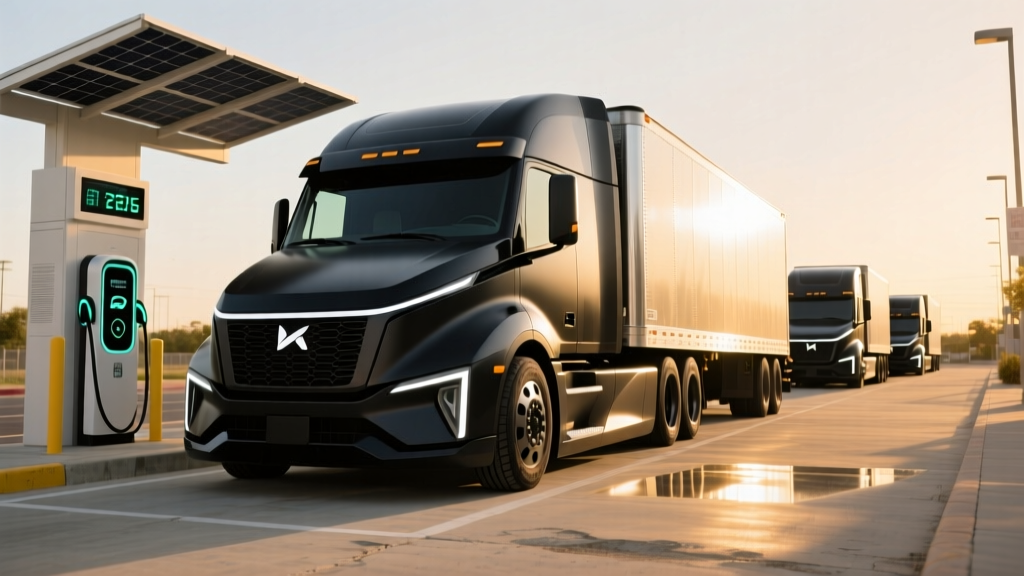
Fleet electrification is not a one-size-fits-all proposition. Nikola Motors, the Phoenix-based manufacturer that has survived a turbulent history of leadership changes, SPAC fallout, and production scaling challenges, now occupies a specific niche: heavy-duty Class 8 electric trucks for regional freight. This guide breaks down what the Nikola Tre BEV actually delivers, what it costs to own versus a comparable diesel tractor, and which fleet profiles should — or shouldn't — consider it.
Nikola Tre BEV: Core Specifications at a Glance
| Specification | Nikola Tre BEV (2026) |
|---|---|
| Vehicle Class | Class 8 (day cab tractor) |
| Battery Capacity | 753 kWh usable (LFP chemistry) |
| EPA Estimated Range | Up to 330 miles |
| Real-World Range (loaded, mixed) | ~240–290 miles (varies by payload, terrain, climate) |
| Peak DC Fast Charge Rate | 175 kW (CCS1) |
| 10–80% Charge Time (DC) | ~120–150 minutes |
| Level 2 Charge Rate | ~19.2 kW (depot AC charging) |
| Motor Output | 480 kW (~645 hp), 1,800 lb-ft torque |
| GVWR | 82,000 lbs (combined) |
| Base MSRP (estimated) | $250,000–$280,000 |
| Battery Warranty | 8 years / 500,000 miles (capacity retention threshold ~70%) |
The 753 kWh battery pack is massive — roughly eight times the capacity of a long-range Tesla Model S. Nikola uses LFP (lithium iron phosphate) cells, which trade energy density for longer cycle life and lower cost per kWh. For a fleet vehicle expected to run 600,000+ miles over its service life, LFP's durability advantage matters more than weight savings. However, the pack's sheer mass — estimated at over 8,000 lbs — directly reduces available payload compared to a diesel tractor of equivalent GVWR.
Charging Infrastructure: The Depot-Centric Reality
Unlike light-duty EVs that can rely on public charging networks, Class 8 electric trucks like the Tre BEV are fundamentally depot-charged vehicles. Fleet operators must install DC fast chargers (typically 150–350 kW units) or high-power Level 2 chargers at their yards and terminals.
| Charging Level | Power (kW) | Miles Added Per Hour (approx.) | Typical Use Case |
|---|---|---|---|
| Level 2 (AC depot) | 19.2 kW | ~25–30 mi/hr | Overnight / multi-day parking |
| DC Fast (mid-power) | 120 kW | ~120–140 mi/hr | Mid-shift top-up |
| DC Fast (high-power) | 175 kW (peak) | ~150–180 mi/hr (at peak) | Turnaround charging |
Charging curve reality: The Tre BEV's 175 kW peak rate is not sustained across the entire session. Like all battery-electric vehicles, charge speed tapers significantly above 80% State of Charge (SoC) to protect battery health. A realistic 10–80% session takes approximately 2 to 2.5 hours at a compatible DC fast charger. This means mid-shift charging requires meaningful downtime — a factor fleet dispatchers must build into route planning.
Depot charging infrastructure costs are substantial. Based on industry data from NREL and fleet electrification case studies, expect the following ranges:
| Component | Cost Range (Per Charger) |
|---|---|
| DC fast charger hardware (150–180 kW) | $80,000–$140,000 |
| Electrical infrastructure (transformer, switchgear, conduit) | $50,000–$150,000 |
| Utility demand charges / service upgrade | $20,000–$200,000+ |
| Installation labor & permitting | $30,000–$80,000 |
| Total per charge point | $180,000–$570,000 |
Utility lead times for the required power upgrades can stretch 12–24 months in some markets. This is the single biggest barrier to heavy-duty fleet electrification — not the truck itself, but the grid connection.
Nikola Tre BEV vs. Diesel Class 8: Operating Cost Breakdown
The purchase price gap between an electric Class 8 tractor and a diesel equivalent is enormous — often $100,000–$150,000 more for the EV. The economic case rests entirely on lower operating costs over the vehicle's service life. Here is a data-driven comparison:
| Cost Category | Nikola Tre BEV | Diesel Class 8 (e.g., Freightliner Cascadia) |
|---|---|---|
| Purchase Price (base) | $250,000–$280,000 | $130,000–$160,000 |
| Federal Tax Credit (§45W commercial) | Up to $40,000 | $0 |
| Fuel/Energy Cost Per Mile | $0.20–$0.35 (at $0.08–$0.14/kWh) | $0.55–$0.75 (at $3.80–$4.50/gal, 6.5 MPG) |
| Maintenance Per Mile | $0.08–$0.12 | $0.17–$0.25 |
| Estimated Annual Miles | 60,000–80,000 (regional) | 80,000–120,000 (long-haul) |
| Annual Fuel/Energy Cost | $14,000–$24,500 | $44,000–$90,000 |
| Annual Maintenance | $5,600–$8,400 | $13,600–$20,000 |
For a regional fleet running 70,000 miles per year at $0.10/kWh (a reasonable industrial electricity rate in many states), the Tre BEV saves approximately $30,000–$50,000 per year in fuel and maintenance compared to diesel. Over a 7-year ownership cycle, that equates to $210,000–$350,000 in operating savings — enough to offset the higher purchase price and depot charging investment in many scenarios.
Caveat: These savings depend heavily on electricity rates. Fleets in California, where industrial rates can exceed $0.25/kWh during peak demand periods and utility demand charges apply, will see a narrower gap. Fleets in the Midwest or Southeast with access to $0.06–$0.08/kWh industrial rates benefit most.
Real-World Ownership Considerations
Payload Penalty
The Tre BEV's battery pack adds several thousand pounds compared to a diesel tractor with full fuel tanks. Under current federal weight exemptions for EVs (an additional 2,000 lbs GVW allowance), the payload penalty is partially mitigated but not eliminated. For weight-sensitive freight (e.g., liquids, aggregates), this can mean 2,000–4,000 lbs less revenue-generating cargo per load.
Cold-Weather Range Loss
LFP batteries are more susceptible to cold-weather capacity loss than NMC chemistries. In sub-freezing conditions, expect the Tre BEV's real-world range to drop 15–30% from the EPA estimate. A 330-mile EPA rating could mean 230–280 miles of usable range in a northern winter with a loaded trailer. Fleet planners in cold climates should size routes to 70% of the EPA figure to maintain operational buffer.
Public Charging for Trucks: Nearly Nonexistent
Unlike passenger EVs that can access Electrify America or Tesla Superchargers, public DC fast-charging infrastructure for Class 8 trucks remains extremely limited as of 2026. A handful of WattEV and Greenlots/Shell Recharge heavy-duty corridors exist in California, but cross-country electric trucking is not viable. The Tre BEV is a depot-return vehicle by design.
Insurance and Total Cost Nuances
Commercial EV insurance premiums are generally 10–20% higher than diesel equivalents due to higher repair costs for battery damage and specialized parts. Factor this into your TCO model. Additionally, LFP battery replacement out of warranty — while unlikely before 500,000+ miles given the chemistry's cycle life — could cost $100,000–$180,000 for the pack alone.
Federal Incentives: §45W Commercial Clean Vehicle Credit
Fleet buyers do not qualify for the consumer §30D credit. Instead, the relevant incentive is the §45W Commercial Clean Vehicle Credit, which provides up to $40,000 for qualified commercial EVs with a GVWR over 14,000 lbs (per IRS guidelines). Key requirements:
- Vehicle must be acquired for business use (not personal)
- Must meet battery component and critical mineral sourcing requirements (phasing in through 2026)
- Credit equals the lesser of 15% of vehicle basis (30% if no depreciation deduction) or the incremental cost over a comparable ICE vehicle
- Vehicle must be placed in service during the tax year
- Consult a tax professional — entity structure (C-corp, S-corp, partnership) affects how the credit is applied
Additionally, many states and air quality management districts offer supplemental incentives. California's Hybrid and Zero-Emission Truck and Bus Voucher Incentive Project (HVIP) has historically provided $60,000–$120,000 per Class 8 BEV, though funding availability varies by fiscal year. Check current program status with your state's air resources board.
Common Misconceptions About Nikola Electric Trucks
| Myth | Fact |
|---|---|
| "Nikola is out of business." | Nikola continues manufacturing the Tre BEV at its Coolidge, AZ facility, though the company has faced significant financial restructuring and production volume remains low compared to competitors like Freightliner and Volvo. |
| "Electric trucks can haul cross-country." | Not in 2026. The Tre BEV's ~240–290 real-world loaded miles and near-absence of public truck charging make it a regional/drayage vehicle only. Long-haul requires hydrogen fuel cells or diesel. |
| "Charging is just like fueling a diesel." | A diesel tractor refuels in 15 minutes. The Tre BEV needs 2+ hours for a meaningful charge. Route scheduling must accommodate this. |
| "The battery won't last." | LFP chemistry is rated for 3,000–5,000+ charge cycles before significant degradation. At one cycle per day, that's 8–14 years of daily use before reaching 70–80% State of Health. |
| "Electric trucks are zero maintenance." | No oil changes or DPF regeneration, but tire wear is higher (more weight, instant torque), and cooling systems, suspension, and brake components still require service. |
Decision Framework: Is the Nikola Tre BEV Right for Your Fleet?
Choose the Nikola Tre BEV if:
- Your routes are predictable, repeatable, and under 250 miles round-trip
- Your fleet returns to a central depot nightly (drayage, regional distribution, port operations)
- You have access to industrial electricity rates below $0.12/kWh or can negotiate a utility EV rate schedule
- You operate in a state with substantial zero-emission truck incentives (CA, NY, NJ, WA)
- You face regulatory pressure (e.g., California's Advanced Clean Fleets rule) to transition to zero-emission vehicles
- Your average daily mileage allows overnight Level 2 charging to cover most needs
Look elsewhere (diesel, CNG, or wait) if:
- Your routes are irregular, exceed 300 miles, or require multi-day out-and-back runs
- You haul weight-sensitive freight where every pound of payload matters
- Your depot lacks the electrical capacity for high-power charging and utility upgrades are cost-prohibitive
- You operate primarily in extreme cold climates without heated depot facilities
- You need the flexibility to run any route, anywhere, without advance charging logistics
Competitive Landscape: How Nikola Stacks Up
The Nikola Tre BEV is not the only Class 8 electric tractor on the market. Key competitors in 2026 include:
- Freightliner eCascadia: 230-mile EPA range, 438 kWh battery (NMC), ~$270,000 base. Backed by Daimler Truck's massive dealer and service network. Better range confidence due to established support infrastructure.
- Volvo VNR Electric: 275-mile EPA range (enhanced battery option), 565 kWh battery, ~$280,000+. Strong dealer network, proven reliability in fleet trials.
- Tesla Semi: 500-mile claimed range (dual-motor, ~900 kWh pack), but production remains extremely limited with long waitlists and uncertain delivery timelines. Megacharger infrastructure is proprietary and sparse.
Nikola's advantage has historically been its aggressive range figure (330 miles with the largest pack) and its purpose-built EV platform. Its disadvantage is a smaller service network, lower production volumes, and the reputational hangover from its early corporate controversies. Fleet buyers should weigh the range advantage against service-access risk — a truck down for repair with no nearby authorized service center costs hundreds per hour in lost revenue.
Frequently Asked Questions
What is the real-world range of the Nikola Tre BEV with a full load?
With a gross combined weight near 82,000 lbs on mixed highway/urban routes, expect approximately 240–290 miles in moderate temperatures. In cold weather (below 32°F), plan for 230–260 miles. Highway-only runs at sustained 65+ mph will be on the lower end due to aerodynamic drag on the trailer.
How long does it take to fully charge the Tre BEV?
From near-empty to 100% on a 175 kW DC fast charger: approximately 5–6 hours (accounting for taper above 80%). On Level 2 depot charging at 19.2 kW: roughly 39–42 hours for a full charge. Most fleets use a combination — DC fast for turnaround and Level 2 for overnight storage.
Does the Nikola Tre BEV qualify for the $7,500 consumer EV tax credit?
No. The §30D consumer credit applies to light-duty vehicles under 14,000 lbs GVWR with an MSRP cap. The Tre BEV is a Class 8 commercial vehicle and instead qualifies for the §45W Commercial Clean Vehicle Credit (up to $40,000), subject to IRS sourcing and business-use requirements.
Can I run the Tre BEV on long-haul routes between cities?
Not practically. Public DC fast-charging stations capable of serving Class 8 trucks are extremely scarce outside of select California corridors. The Tre BEV is designed for hub-and-spoke, depot-return operations. Cross-country long-haul remains a diesel or hydrogen fuel-cell application in 2026.
How does Nikola's service network compare to Freightliner or Volvo?
It doesn't — yet. Freightliner and Volvo have hundreds of service locations across North America with trained heavy-duty EV technicians. Nikola's authorized service network is smaller and more concentrated in the western and southern U.S. For fleets operating in regions without a nearby Nikola service point, downtime risk is a legitimate concern.
What happens to the battery at end of life?
Nikola's LFP battery is designed for 500,000+ miles before reaching the 70% State of Health threshold. Beyond that, the pack may still function for reduced-range routes. LFP batteries are also candidates for second-life stationary storage applications. Recycling infrastructure for LFP is less mature than for NMC, but developing.