Quick Answer: Is the Nikola Tre BEV Right for Your Fleet?
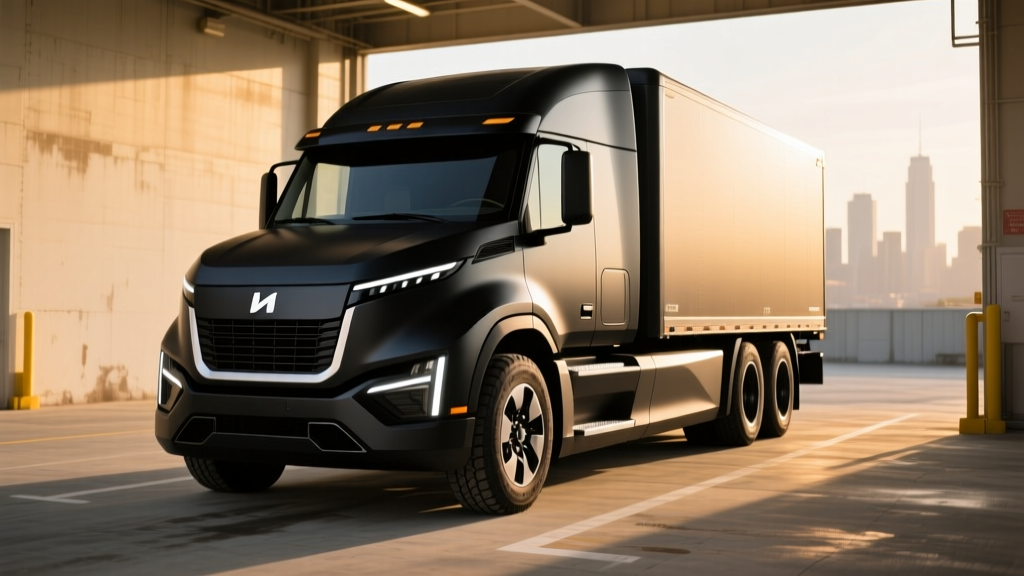
The Nikola Tre BEV is a Class 8 battery-electric day cab targeted at regional-haul and drayage operators running predictable routes under 200 miles round-trip. With a usable battery of roughly 753 kWh (NMC chemistry), an EPA-estimated range near 330 miles, and DC fast charging peaking at 350 kW (10–80% in ~90 minutes), it is one of the few production heavy-duty electric trucks available at scale in 2026. The base MSRP sits around $399,000 before incentives, making the total cost of ownership (TCO) viable primarily when federal and state incentives (up to $40,000 federal commercial clean vehicle credit under IRC §45W, plus CARB HVIP and similar state vouchers) are stacked with high daily utilization and depot-based Level 2 or DC charging. It is not a long-haul solution, and operators without depot charging access should wait or evaluate hydrogen fuel-cell alternatives.
Who Should Actually Consider a Nikola Electric Truck?
The Nikola electric truck lineup in 2026 centers on the Tre BEV (battery-electric) for day-cab regional work and the Tre FCEV (hydrogen fuel cell) for longer routes up to 500 miles. This guide focuses on the BEV variant because it represents the bulk of current fleet deployments and charging infrastructure planning.
Best-fit operators share these characteristics:
- Routes under 200 miles round-trip with return-to-base charging
- Drayage, port operations, or regional distribution with predictable schedules
- Access to depot-level electrical capacity (typically 1–2 MW for a 5-truck fleet)
- Operation in states with strong incentive programs (California, New York, New Jersey, Oregon)
- Daily mileage high enough to recoup higher upfront cost through diesel displacement
If your operation involves long-haul, irregular routes, or frequent cold-weather operation below 20°F without preconditioning infrastructure, the Tre BEV's real-world range loss (15–30% in winter) and 90-minute fast-charge dwell time make it a poor fit today.
Nikola Tre BEV: Core Specifications
| Specification | Nikola Tre BEV (2026) |
|---|---|
| Class | Class 8 (day cab) |
| Battery Capacity | ~753 kWh usable (NMC chemistry) |
| EPA Range | ~330 miles (unladen); expect 150–220 miles at full 82,000 lb GCW) |
| Peak DC Fast Charge | 350 kW (CCS1) |
| 10–80% Charge Time | ~90 minutes at peak |
| Level 2 Charge Rate | ~40 kW (depot AC) |
| Motor Output | ~480 hp continuous / 645 hp peak |
| 0–60 mph (unladen) | ~20 seconds |
| Base MSRP | ~$399,000 (before incentives) |
| Battery Warranty | 8 years / 750,000 miles (70% SoH retention) |
| GVWR | 82,000 lbs (GCW) |
Real-World Range Reality
The EPA sticker says ~330 miles, but that figure assumes a partially laden, standardized test cycle. In fleet testing and operator reports, a fully loaded Tre BEV at 82,000 lbs GCW on highway routes typically delivers 150–220 miles depending on terrain, speed, and ambient temperature. Cold weather (below 32°F) without battery preconditioning can reduce range by an additional 15–30%. Plan routes with a 20% buffer below your expected range to avoid stranding.
Cost Breakdown: Purchase, Charging, and Maintenance
The upfront cost of a Nikola electric truck is roughly 3–4x that of a comparable diesel Class 8 tractor (which runs $120,000–$160,000 new). The TCO equation only works when incentives close the gap and daily fuel savings compound.
| Cost Category | Nikola Tre BEV | Diesel Class 8 (Baseline) |
|---|---|---|
| Purchase Price | $399,000 | $140,000 |
| Federal §45W Credit | Up to $40,000 | $0 |
| CARB HVIP (CA example) | Up to $240,000 | $0 |
| Effective Net Price (CA) | ~$119,000 | $140,000 |
| Fuel/Energy Cost per Mile | $0.22–$0.35 (electricity at $0.12–$0.18/kWh) | $0.55–$0.75 (diesel at $4.50/gal, 6.5 mpg) |
| Maintenance per Mile | $0.08–$0.12 | $0.18–$0.25 |
| Annual Insurance | $12,000–$18,000 | $9,000–$14,000 |
| 5-Year Fuel Savings (100k mi/yr) | ~$165,000–$200,000 | |
Key insight: The 5-year fuel and maintenance savings of $200,000+ can offset the net purchase premium in incentive-rich states, but only if the truck runs 80,000–120,000 miles annually. Low-utilization fleets will not recoup the capital cost.
Charging Infrastructure: What Fleets Must Budget
Charging a Nikola electric truck is not like plugging in a passenger EV. A single Tre BEV requires a CCS1 DC fast charger rated at 350 kW to achieve the advertised 90-minute 10–80% charge, or a 40 kW Level 2 depot charger for overnight topping (10–12 hours for a full charge from 20% SoC).
Depot Charging Install Costs
| Item | Cost Range (per stall) |
|---|---|
| 350 kW DC Fast Charger (hardware) | $120,000–$180,000 |
| Electrical service upgrade (transformer, switchgear) | $50,000–$200,000 |
| Trenching, conduit, civil work | $20,000–$80,000 |
| Permitting and utility interconnection fees | $10,000–$50,000 |
| Software/network management (annual) | $2,000–$5,000 |
| Total per DC stall | $200,000–$515,000 |
For a 5-truck fleet, budget $1–2.5 million in charging infrastructure before utility rebates. Many utilities offer make-ready programs covering 50–100% of electrical upgrade costs — contact your utility's EV fleet team before signing a charger purchase order.
Common Misconceptions About Nikola Electric Trucks
| Myth | Fact |
|---|---|
| "The Tre gets 330 miles fully loaded." | EPA range is ~330 miles unladen. At 82,000 lbs GCW, expect 150–220 miles real-world. |
| "It charges as fast as a Tesla Semi." | Tre peaks at 350 kW (CCS1). Tesla Semi uses a proprietary MCS connector at up to 1 MW. Different ecosystems. |
| "Federal tax credit covers $40,000 for everyone." | IRC §45W commercial clean vehicle credit is up to $40,000 for vehicles over 14,000 lbs GVWR, but eligibility depends on battery sourcing, MSRP, and tax liability. Consult a tax professional. |
| "No maintenance means no costs." | Battery thermal management, suspension, tires (heavier due to battery mass), and brake inspections still apply. Budget $0.08–$0.12/mile. |
| "Cold weather doesn't affect it." | NMC batteries lose 15–30% range below 20°F without preconditioning. Depot charging with battery heating is essential in northern climates. |
Decision Framework: Should You Buy a Nikola Electric Truck?
If X, then Y
- If your routes are under 150 miles round-trip with depot return: The Tre BEV is a strong candidate. Pair with overnight Level 2 charging and one DC fast charger for mid-day top-offs.
- If you operate in California, New York, or New Jersey: Stack CARB HVIP or NYTVIP vouchers with the federal §45W credit. Net purchase price can drop below a new diesel tractor.
- If your routes exceed 250 miles or lack depot charging: Wait for the Tre FCEV (hydrogen) or evaluate the Tesla Semi (500-mile range, but limited production). Neither BEV solution is viable for long-haul in 2026.
- If you operate in extreme cold (below 0°F routinely): Budget for battery preconditioning infrastructure and accept 20–30% range loss. Consider diesel or FCEV for winter months.
- If your fleet runs fewer than 50,000 miles per truck annually: The fuel savings will not justify the capital premium. Stick with diesel or evaluate used BEVs in 2028 when depreciation brings prices down.
Ownership Considerations: What First-Time EV Fleet Buyers Must Know
Transitioning to a Nikola electric truck is not a simple vehicle swap. It is an infrastructure project with a 12–24 month lead time for utility upgrades, permitting, and charger installation.
- Utility engagement: Start with your utility's EV fleet team. Many offer make-ready programs and time-of-use rates that cut charging costs by 30–50%.
- Driver training: Regen braking and one-pedal driving require retraining. Plan 1–2 weeks of supervised onboarding.
- Charging scheduling: Unlike diesel refueling (10 minutes), a 90-minute DC charge must be built into driver schedules. Use telematics to optimize SoC targets and avoid peak-rate charging.
- Resale uncertainty: Heavy-duty EV resale values are not yet established. Budget for 5–7 year ownership to amortize the capital cost fully.
- Insurance: Expect 20–40% higher premiums than diesel equivalents due to repair costs and battery replacement risk. Get quotes before purchase.
Frequently Asked Questions
What is the real-world range of the Nikola Tre BEV?
EPA-estimated range is ~330 miles unladen. At full 82,000 lbs GCW on highway routes, expect 150–220 miles. Cold weather (below 32°F) can reduce range by an additional 15–30% without battery preconditioning.
How long does it take to charge a Nikola electric truck?
At a 350 kW DC fast charger, 10–80% takes ~90 minutes. Overnight Level 2 depot charging (40 kW) requires 10–12 hours for a full charge from 20% SoC.
Does the Nikola Tre qualify for the federal tax credit?
Yes, under IRC §45W (commercial clean vehicle credit), eligible fleets can claim up to $40,000 for vehicles over 14,000 lbs GVWR. Eligibility depends on battery sourcing, MSRP, and tax liability. Consult a tax professional and review IRS guidelines.
How does the Nikola Tre compare to a diesel truck on cost?
Upfront cost is 3–4x higher ($399,000 vs $140,000), but with incentives (up to $280,000 in CA), the net price can drop below diesel. Fuel and maintenance savings of $0.30–$0.50/mile compound to $200,000+ over 5 years at 100,000 miles/year.
What charging connector does the Nikola Tre use?
The Tre BEV uses CCS1 for DC fast charging (350 kW peak) and a standard J1772-derived connector for Level 2 depot charging. It does not use Tesla's NACS or the emerging MCS (Megawatt Charging System) standard.
Is the Nikola Tre suitable for long-haul trucking?
No. With a real-world loaded range of 150–220 miles and 90-minute charge times, the Tre BEV is designed for regional haul and drayage. For routes over 300 miles, consider the Tre FCEV (hydrogen) or wait for next-generation BEVs with 500+ mile range.
Sources: Nikola Motor Tre BEV specifications, IRS Commercial Clean Vehicle Credit (§45W), CARB HVIP program.