The Bottom Line on Nikola Electric Trucks
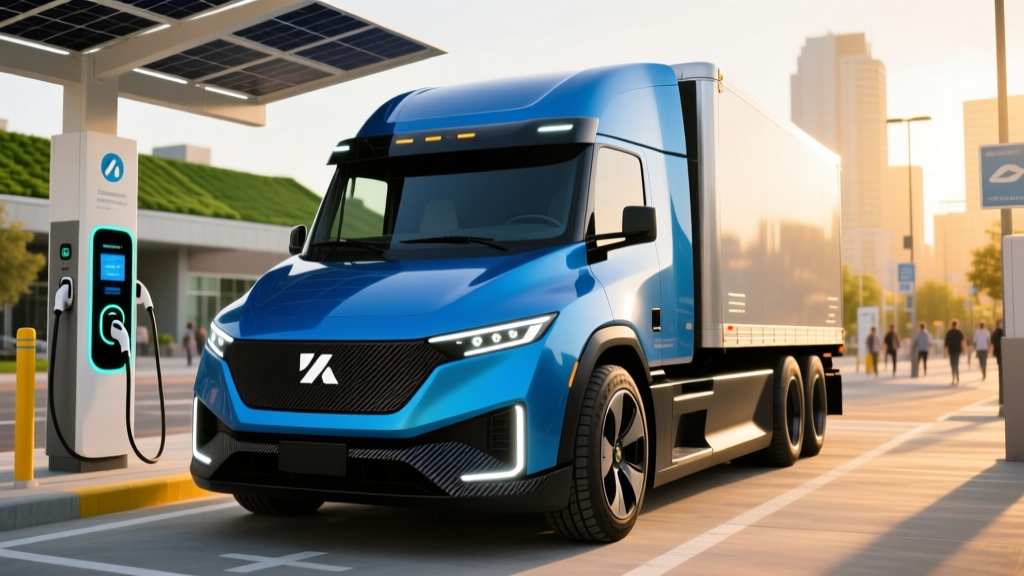
As of 2026, Nikola does not sell a consumer electric pickup truck. The company's Tre BEV is a Class 8 semi-truck designed for commercial fleet operators, not individual buyers. If you're researching "electric truck Nikola" for personal purchase, you'll need to look at alternatives like the Ford F-150 Lightning, Chevrolet Silverado EV, Rivian R1T, or Tesla Cybertruck. For commercial fleet buyers, the Nikola Tre BEV offers 330 miles of EPA-estimated range, but the company has faced significant financial and operational challenges that make it a high-risk purchase compared to established manufacturers.
What Nikola Actually Makes (And What They Don't)
Nikola Corporation has had a turbulent history since its founding, marked by high-profile partnerships, fraud allegations against its founder Trevor Milton, and ongoing financial struggles. The company's current product lineup consists of:
- Nikola Tre BEV: Battery-electric Class 8 semi-truck for regional hauling
- Nikola Tre FCEV: Hydrogen fuel cell variant (limited production)
- Nikola Two: Sleeper cab semi-truck (announced but limited availability)
What Nikola does not produce is a consumer electric pickup truck comparable to the F-150 Lightning or Silverado EV. Despite early concept renderings and marketing that suggested a broader product portfolio, Nikola has focused exclusively on the commercial trucking market.
Nikola Tre BEV: Commercial Fleet Specs
| Specification | Nikola Tre BEV |
|---|---|
| Vehicle Class | Class 8 Semi-Truck |
| Battery Capacity | 753 kWh (usable) |
| Battery Chemistry | NMC (Nickel Manganese Cobalt) |
| EPA-Estimated Range | 330 miles |
| Real-World Range (Loaded) | 200-260 miles (varies by payload, terrain, climate) |
| Peak DC Fast Charge Rate | 175 kW |
| Charge Time (10-80%) | ~120 minutes at peak rate |
| Motor Power | 645 hp continuous |
| Torque | 1,475 lb-ft |
| GVWR | 82,000 lbs (with trailer) |
| Base MSRP | ~$350,000-$400,000 (fleet pricing varies) |
| Federal Tax Credit (§30D) | Up to $40,000 (commercial clean vehicle credit, §45W) |
| Warranty (Battery) | 7 years / 750,000 miles (capacity retention threshold: 70%) |
Real-world range reality: The 330-mile EPA estimate assumes optimal conditions. In actual fleet operations with full payloads (40,000-45,000 lbs cargo), hilly terrain, and highway speeds of 65-70 mph, expect 200-260 miles. Cold weather (below 32°F) can reduce range by an additional 20-30%, bringing practical range down to 140-200 miles in winter conditions.
Consumer Electric Truck Alternatives: 2026 Comparison
If you're shopping for a personal electric pickup truck, here's how the major options stack up:
| Model | EPA Range | Real-World Range | Battery (kWh) | Peak DC kW | 10-80% Min | 0-60 mph | Base MSRP | §30D Credit Eligible |
|---|---|---|---|---|---|---|---|---|
| Ford F-150 Lightning (Std Range) | 240 mi | 190-220 mi | 98 kWh | 150 kW | ~44 min | 4.5 sec | $54,995 | Yes (income/MSRP limits) |
| Ford F-150 Lightning (Ext Range) | 320 mi | 260-290 mi | 131 kWh | 150 kW | ~52 min | 4.5 sec | $69,995 | Yes (income/MSRP limits) |
| Chevrolet Silverado EV 4WT | 450 mi | 360-400 mi | 200+ kWh | 350 kW | ~35 min | 4.5 sec | $74,800 | Partial (MSRP cap issues) |
| Rivian R1T (Dual Motor, Max Pack) | 410 mi | 330-370 mi | 149 kWh | 190 kW | ~45 min | 3.5 sec | $87,600 | No (MSRP exceeds cap) |
| Tesla Cybertruck (AWD) | 340 mi | 280-310 mi | 123 kWh | 250 kW | ~30 min | 4.1 sec | $79,990 | Partial (MSRP cap issues) |
| GMC Sierra EV Denali Edition 1 | 440 mi | 350-390 mi | 200+ kWh | 350 kW | ~35 min | 4.3 sec | $99,495 | No (MSRP exceeds cap) |
Tax credit reality check: The federal §30D clean vehicle credit offers up to $7,500, but eligibility depends on multiple factors including buyer income limits ($150k single / $300k joint AGI), vehicle MSRP caps ($80k for trucks/SUVs), battery component sourcing requirements, and critical minerals sourcing. Many electric trucks exceed the MSRP cap or fail sourcing requirements. Always verify current-year rules on IRS.gov before purchase.
Total Cost of Ownership: Electric Truck vs Gas Truck (5-Year Comparison)
Let's compare a Ford F-150 Lightning (Extended Range, $69,995) against a comparable gas F-150 (XLT SuperCrew, $55,000) over 5 years and 75,000 miles:
| Cost Category | F-150 Lightning EV | F-150 Gas (2.7L EcoBoost) |
|---|---|---|
| Purchase Price | $69,995 | $55,000 |
| Federal Tax Credit | -$7,500 (if eligible) | $0 |
| Net Purchase Cost | $62,495 | $55,000 |
| Fuel/Energy (75k miles) | $3,750 (home charging @ $0.15/kWh) | $11,250 (gas @ $3.50/gal, 20 MPG) |
| Maintenance | $1,200 (tire rotation, cabin filter, fluid top-off) | $4,500 (oil changes, filters, brakes, transmission fluid) |
| Insurance (5 years) | $9,000 (higher premiums for EVs) | $7,500 |
| Estimated Resale Value | $28,000 (40% retention) | $25,000 (45% retention) |
| Total 5-Year Cost | $48,445 | $53,250 |
| Cost Per Mile | $0.65 | $0.71 |
Key takeaway: The EV breaks even or saves money over 5 years if you qualify for the full tax credit and charge primarily at home. Without the credit or with heavy reliance on public DC fast charging ($0.35-$0.50/kWh), the gas truck becomes more economical.
Real-World Ownership Considerations
Home Charging Access: The Deal-Breaker
Electric truck ownership only makes financial sense with reliable Level 2 home charging. Here's what installation typically costs:
- Level 2 charger (40A, 9.6 kW): $500-$800 for equipment
- Electrician installation: $800-$2,500 (depends on panel proximity, conduit runs)
- Electrical panel upgrade (if needed): $1,500-$3,500 (older homes with 100A service)
- Permit fees: $50-$300 (varies by jurisdiction)
- Total typical install: $1,500-$3,500
With a 9.6 kW Level 2 charger, an F-150 Lightning (131 kWh battery) charges from 10-80% in about 9-10 hours overnight. This works for daily driving patterns under 200 miles.
Climate and Range Loss
Cold weather significantly impacts electric truck range. At 20°F:
- Expect 25-35% range reduction compared to EPA estimates
- Charging speeds slow by 20-40% until the battery warms (preconditioning helps)
- Regenerative braking effectiveness decreases, increasing brake wear
If you live in northern states with harsh winters and regularly drive 250+ miles per day, an electric truck may not be practical without careful route planning and charging access.
Towing and Payload Reality
Electric trucks lose 30-50% of their range when towing at maximum capacity. The F-150 Lightning's 320-mile range drops to 160-220 miles when towing 7,000-10,000 lbs. For frequent heavy towing, a gas or diesel truck remains more practical.
Common Misconceptions About Nikola and Electric Trucks
| Myth | Fact |
|---|---|
| "Nikola makes a consumer pickup truck" | Nikola only produces Class 8 semi-trucks for commercial fleets, not consumer pickups |
| "Electric trucks can't tow" | Electric trucks tow effectively but lose 30-50% range under heavy loads; torque delivery is actually superior to gas |
| "You'll save $10,000+ in fuel every year" | Realistic savings are $1,000-$2,000/year for average drivers (12k miles/year); savings depend on electricity vs gas prices in your area |
| "Electric trucks are maintenance-free" | EVs eliminate oil changes and have less brake wear, but still require tire rotation, cabin filters, coolant checks, and software updates |
| "The battery will need replacement in 5 years" | Modern EV batteries are warrantied for 8 years/100,000 miles with 70%+ capacity retention; degradation is typically 10-15% over 10 years |
| "All electric trucks qualify for the $7,500 tax credit" | Many trucks exceed the $80k MSRP cap or fail battery sourcing requirements; eligibility varies by buyer income and vehicle specs |
Decision Framework: Should You Buy an Electric Truck?
Choose an Electric Truck If:
- You have reliable Level 2 home charging (garage or driveway with 240V access)
- Your daily driving is under 200 miles (round trip)
- You live in a moderate climate or can accept winter range loss
- You qualify for the federal tax credit (income under $150k single / $300k joint)
- You value instant torque, quiet operation, and lower maintenance
- You can absorb the higher upfront cost ($10k-$20k premium over gas trucks)
- You rarely tow heavy loads long distances
Stick with Gas/Diesel If:
- You lack home charging access (apartment, street parking, landlord restrictions)
- You regularly drive 300+ miles per day or tow heavy loads
- You live in a rural area with limited public charging infrastructure
- You need maximum range flexibility without route planning
- Your budget is under $50,000 and you can't absorb the EV premium
- You operate in extreme cold (-20°F or below) regularly
Consider a Hybrid/PHEV If:
- You want some electric driving but need gas-engine range flexibility
- You have short daily commutes (under 40 miles) but occasional long trips
- You're not ready to commit to full EV ownership
What First-Time EV Truck Buyers Must Know
- kW vs kWh: kW (kilowatts) measures charging power—how fast you can add energy. kWh (kilowatt-hours) measures battery capacity—how much energy the truck stores. A 131 kWh battery charged at 9.6 kW takes ~14 hours from empty to full.
- Charging curves matter: DC fast chargers don't maintain peak speed. A "150 kW" charger might only deliver that rate from 10-50% state of charge, then taper to 75 kW or less above 80%. Plan for longer stops than peak kW suggests.
- Preconditioning is essential: Most EVs warm the battery before fast charging if you navigate to a charger in the infotainment system. This can cut charge time by 20-30% in cold weather.
- Public charging is expensive: DC fast charging costs $0.35-$0.50/kWh in most areas—often more expensive than gas per mile. Home charging at $0.12-$0.18/kWh is where you save money.
- Insurance costs more: EV insurance premiums run 15-25% higher than comparable gas vehicles due to repair complexity and battery replacement costs. Get quotes before buying.
- Tax credit rules change: The §30D credit has strict sourcing requirements that change annually. A truck eligible in January might not qualify by December. Verify at purchase.
Frequently Asked Questions
Is Nikola still in business in 2026?
Nikola continues operations but has faced significant financial challenges, including delisting warnings and restructuring. The company produces the Tre BEV in limited volumes for fleet customers. For individual buyers, the company's instability makes it a high-risk choice compared to established manufacturers like Ford, GM, or Rivian.
What's the cheapest electric truck I can buy?
The Ford F-150 Lightning Pro (Standard Range) starts at $54,995 before incentives. After the $7,500 federal tax credit (if eligible), the effective price drops to ~$47,500. This remains $5,000-$10,000 more than a comparable gas F-150 XL.
Can I charge an electric truck on a standard 120V outlet?
Yes, but impractically slow. Level 1 charging (120V, 12A) adds about 2-3 miles of range per hour. Fully charging a 131 kWh F-150 Lightning battery would take 5-6 days. Level 2 (240V) home charging is essential for practical ownership.
How long do electric truck batteries last?
Most manufacturers warrant batteries for 8 years or 100,000 miles with at least 70% capacity retention. Real-world data suggests modern NMC and LFP batteries retain 85-90% capacity after 100,000 miles with proper care (avoiding frequent 100% charges and extreme heat exposure). Replacement costs $15,000-$25,000 if needed out of warranty.
Do electric trucks work in cold weather?
They work but with significant range penalties. Expect 25-35% range loss at 20°F and 40-50% loss at 0°F. Features like heat pumps, battery preconditioning, and heated seats/steering wheels help mitigate losses. If you live in Alaska, Minnesota, or Maine and drive long distances daily, an electric truck may not be practical.
What about the Chevrolet Silverado EV or GMC Sierra EV?
GM's Ultium-based electric trucks offer 400+ miles of range and 350 kW fast charging, but base prices start at $74,800 (Silverado 4WT) to $99,495 (Sierra Denali), exceeding the $80k tax credit cap for most trims. These are premium products aimed at commercial fleets and high-income buyers.