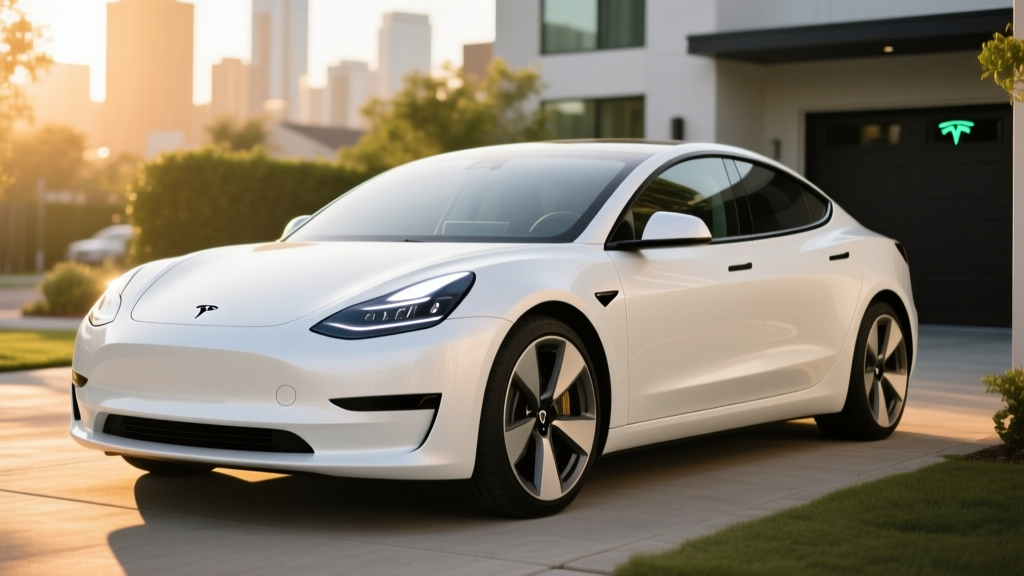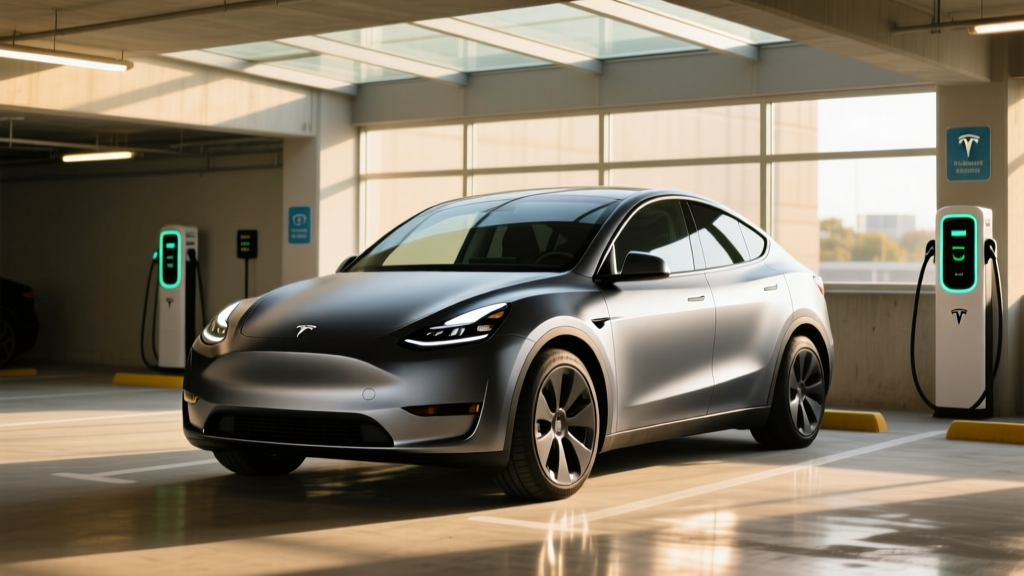
After months of scrutiny, the National Highway Traffic Safety Administration has officially closed its investigation into Tesla's Smart Summon feature, the driver-assistance tool that allows a Model Y (or other Tesla) to navigate a parking lot to its owner via the Tesla app. The closure signals that NHTSA found Tesla's software updates and operational constraints addressed the agency's concerns — but it doesn't make Smart Summon a Level 4 autonomous system. It remains a Level 2 convenience feature requiring active supervision.
With that regulatory chapter settled, the 2026 Tesla Model Y continues as one of the best-selling EVs in the U.S. Below, we break down the current Long Range and Performance trims with exact range, charging, pricing, and tax-credit data you need before buying.
2026 Tesla Model Y: Quick Spec Overview
| Spec | Long Range AWD | Performance AWD |
|---|---|---|
| EPA Range | 320 miles | 295 miles |
| Battery (usable) | ~78 kWh, NMC | ~78 kWh, NMC |
| MPGe (combined) | 111 MPGe | 104 MPGe |
| Efficiency | 28 kWh/100 mi | 30 kWh/100 mi |
| 0–60 mph | 4.8 sec | 3.3 sec |
| Horsepower | 384 hp | 456 hp |
| Drivetrain | Dual-motor AWD | Dual-motor AWD |
| Max DC Fast Charge | 250 kW | 250 kW |
| 10–80% DC Time | ~25 min | ~25 min |
| Level 2 Home Rate | 11.5 kW (~37 mi/hr) | 11.5 kW (~37 mi/hr) |
| Base MSRP | $44,990 | $49,990 |
| Battery Warranty | 8 yr / 120,000 mi | 8 yr / 120,000 mi |
Real-World Range: What the EPA Sticker Doesn't Tell You
EPA Estimate: 320 miles (Long Range)
Real-World Highway (70–80 mph): ~250–275 miles
Cold Weather (below 32°F): ~210–245 miles (25–35% loss typical for NMC packs)
Mixed City/Suburban: ~290–310 miles
The 2026 Model Y Long Range carries a 320-mile EPA rating — adequate for most daily commutes and manageable for road trips with Supercharger access. However, sustained highway driving at 75+ mph, cold temperatures, and headwinds compress that figure substantially. On a 300-mile winter interstate run, plan for at least one 15-minute DC fast-charge stop.
Tesla's heat pump (standard on all 2026 trims) mitigates cold-weather cabin energy draw, but the NMC battery chemistry still suffers reduced efficiency in freezing conditions. Preconditioning the battery via the Tesla app or navigation-routed Supercharger approach helps restore charge acceptance and range.
Charging Speed: Supercharger Network Advantage
| Charging Level | Power | Miles Added per Hour |
|---|---|---|
| Level 1 (120V outlet) | ~1.4 kW | ~4 mi/hr |
| Level 2 (240V home, 48A) | 11.5 kW | ~37 mi/hr |
| DC Fast (V3 Supercharger) | 250 kW peak | ~162 mi in 15 min (peak) |
| DC Fast (10–80%) | Sustained ~150 kW avg | ~25 minutes |
The Model Y peaks at 250 kW on V3 Superchargers, but like all EVs, it doesn't sustain that rate. The charge curve tapers sharply above 60% State of Charge (SoC), and by 80%, you're pulling closer to 50–70 kW. The practical 10–80% session takes about 25 minutes — competitive with Hyundai's Ioniq 5 but slower than the Kia EV9's 350-kW capability.
Home charging on a 240V/48A circuit (Tesla Wall Connector or equivalent Level 2 EVSE) adds roughly 37 miles of range per hour. A full overnight session (8–10 hours) easily replenishes a depleted pack. Installation costs typically run $800–$2,500 depending on panel proximity and local permit fees — consult a licensed electrician for your specific setup.
Tesla's NACS connector is now the industry standard, with Ford, GM, Rivian, and others adopting it. This means expanding Supercharger access for non-Tesla EVs, but Model Y owners already enjoy seamless plug-and-charge at 6,000+ U.S. Supercharger stalls.
Performance and Driving Dynamics
The Long Range AWD delivers 384 horsepower and a 4.8-second 0–60 mph time — quick enough for confident highway merging without the insurance premium of the Performance trim. The Performance variant drops 0–60 to 3.3 seconds with 456 hp, but the stiffer suspension tuning and 21-inch wheels reduce ride comfort on rough pavement.
Regenerative braking in the Model Y is aggressive by default, enabling true one-pedal driving in most city scenarios. The steering is precise but artificially weighted, and the absence of a traditional instrument cluster (everything routes through the 15-inch center touchscreen) requires an adjustment period for first-time Tesla drivers.
Smart Summon After the NHTSA Investigation
NHTSA opened its probe into Smart Summon after reports of the feature contacting curbs, stopping unexpectedly, or misreading parking-lot geometry. The agency's closure of the investigation in 2026 followed Tesla's over-the-air software refinements that added stricter geofencing (limiting Summon to private lots, not public roads), reduced maximum travel distance to 150 feet, and required the owner to maintain line-of-sight with the phone app.
Smart Summon, Autopilot, and Full Self-Driving (Supervised) are all SAE Level 2 driver-assistance systems. The driver must remain attentive, keep hands on the wheel (for in-car features), and maintain visual supervision. Tesla's FSD does not make the Model Y a Level 4 autonomous vehicle. Only driverless robotaxi services like Waymo operate at Level 4 in geofenced areas.
Smart Summon is a parking-lot convenience, not a replacement for walking to your car. It works best in well-marked, flat lots with clear lane lines. Expect it to be slow, cautious, and occasionally confused by angled spaces or faded markings.
Pricing, Trims, and Federal Tax Credit Eligibility
| Trim | MSRP | Est. After §30D Credit | Eligibility Notes |
|---|---|---|---|
| Long Range AWD | $44,990 | ~$37,490 | Eligible for up to $7,500 if buyer meets income caps & battery-sourcing rules |
| Performance AWD | $49,990 | ~$42,490 | Same eligibility requirements; MSRP under $80,000 SUV cap |
The 2026 Model Y qualifies as an SUV under IRS §30D rules, which raises the MSRP cap to $80,000 (vs. $55,000 for sedans). Both trims clear that threshold easily. However, eligibility for the full $7,500 credit depends on:
- Buyer income caps: Modified AGI ≤ $150,000 (single), $225,000 (head of household), $300,000 (joint)
- Critical minerals & battery component sourcing: A percentage of battery materials must be sourced from the U.S. or free-trade-agreement countries — these thresholds tighten annually
- Point-of-sale transfer: You can apply the credit as a down-payment reduction at the dealer (effective 2024 onward), reducing upfront cost rather than waiting for tax filing
Tesla's U.S. Fremont and Austin production gives it a sourcing advantage over imported EVs, but the exact credit amount ($3,750 or $7,500) can shift based on annual critical-mineral thresholds. Always verify current eligibility on IRS.gov or consult a tax professional before relying on the credit in your purchase math.
Cargo, Passenger Space, and Daily Practicality
The Model Y is classified as a compact crossover SUV, and its packaging reflects that:
- Cargo (rear seats up): 30.2 cu ft
- Cargo (rear seats folded): 72.1 cu ft
- Frunk (front trunk): 4.1 cu ft
- Rear legroom: 41.6 inches
- Seating: 5-passenger standard; optional third-row (7-passenger) available on Long Range, but the rearmost seats are best suited for small children
The 72-cu-ft maximum cargo volume with seats folded is competitive with the Ford Mustang Mach-E (65 cu ft) and Hyundai Ioniq 5 (53 cu ft), making the Model Y a practical choice for families hauling strollers, camping gear, or Costco runs. The frunk adds useful space for charging cables or a small bag.
Tech, Driver Assists, and Notable Drawbacks
Standout tech:
- 15-inch center touchscreen with responsive UI and OTA updates
- Standard Autopilot (adaptive cruise + lane-keep); FSD (Supervised) available as a $8,000 option or $99/month subscription
- Sentry Mode dashcam recording, Dog Mode climate control for pets
- Tesla app integration (preconditioning, Smart Summon, location tracking)
- Over-the-air updates that add features post-purchase
Notable drawbacks:
- No physical stalks for turn signals or wipers in 2026 refresh — all controlled via steering-wheel buttons and touchscreen, which frustrates some drivers
- No Apple CarPlay or Android Auto — Tesla's proprietary infotainment only
- Rear-seat visibility is compromised by the sloping roofline and small rear window
- Insurance premiums run 15–30% higher than comparable non-Tesla EVs due to repair-cost data
- FSD (Supervised) remains a Level 2 system despite the "Full Self-Driving" name — manage expectations accordingly
Pros and Cons at a Glance
- 320-mile EPA range (Long Range) covers most road trips with one stop
- Supercharger network reliability remains best-in-class
- Strong cargo capacity (72 cu ft) for a compact SUV
- OTA updates keep the vehicle current
- Federal tax credit eligible (up to $7,500)
- Turn-signal buttons (no stalks) take getting used to
- No CarPlay/Android Auto
- FSD is expensive and still Level 2
- Insurance costs above segment average
- NMC battery loses more range in cold weather than LFP competitors
Who Should Buy the 2026 Model Y?
Best for: Commuters with home Level 2 charging, small families needing cargo flexibility, road-trippers who value Supercharger infrastructure, and tech-forward buyers who want OTA updates.
Skip it if: You need a third row for older kids (look at the Kia EV9), you live in extreme cold and want LFP chemistry (consider the RWD Model Y with LFP, though range drops to ~260 mi EPA), or you want Apple CarPlay integration.
Frequently Asked Questions
What is the real-world range of the 2026 Model Y?
Expect 250–275 miles on the highway, 290–310 in mixed city driving, and 210–245 in sub-freezing temperatures. The 320-mile EPA figure is a best-case mixed-cycle estimate.
How fast does the Model Y charge at home and on the road?
At home on a 240V/48A Level 2 charger, you'll add ~37 miles per hour (full charge in ~8 hours). On a V3 Supercharger, 10–80% takes about 25 minutes, adding up to 162 miles in 15 minutes at peak rate.
Does the 2026 Model Y qualify for the $7,500 federal tax credit?
Yes, both trims are eligible, provided the buyer meets IRS income caps (≤$300k joint), the vehicle's battery sourcing satisfies current-year critical-mineral thresholds, and the MSRP is under the $80k SUV cap. Verify at IRS.gov or with a tax professional.
Is Smart Summon safe to use now that NHTSA closed its investigation?
NHTSA's closure indicates Tesla's software updates addressed the agency's concerns, but Smart Summon remains a Level 2 feature requiring active supervision. Use it in well-marked, flat parking lots and maintain line-of-sight with your vehicle.
Model Y vs. Ioniq 5 vs. Mach-E: which should I buy?
Choose the Model Y for Supercharger access and cargo space. Choose the Ioniq 5 for faster 350-kW charging and a more comfortable ride. Choose the Mach-E for a more engaging driving experience and available CarPlay. All three are strong — your priority (charging speed, cargo, or driving feel) should guide the decision.
What's the battery warranty on the 2026 Model Y?
Tesla covers the battery and drive unit for 8 years or 120,000 miles (whichever comes first), with a minimum 70% capacity retention threshold. If degradation drops below 70% within that window, Tesla will replace or refurbish the pack at no cost.