Why NHTSA Tesla Ratings Matter for EV Buyers in 2026
When shoppers search NHTSA Tesla ratings, they're looking for hard data on how Tesla's highest-volume vehicles — the Model 3 sedan and Model Y crossover — perform in government crash testing. The National Highway Traffic Safety Administration (NHTSA) subjects vehicles to frontal, side barrier, side pole, and rollover tests, awarding up to 5 stars in each category. Both the Model 3 and Model Y have historically earned 5-star overall ratings, but understanding what those stars actually mean — and pairing that safety data with real-world range, charging, and cost — is what separates an informed purchase from a hopeful one.
This review breaks down the latest NHTSA Tesla safety data alongside the specifications that matter just as much at the dealership: EPA range, battery chemistry, DC fast-charge speeds, pricing after the §30D federal tax credit, and who each vehicle actually suits in 2026.
NHTSA Tesla Crash-Test Scores at a Glance
NHTSA's 5-star scale evaluates occupant protection across multiple crash modes. Here is how the current-generation Model 3 (Highland refresh) and Model Y (Juniper refresh) stack up based on the most recent published test results:
| Test Category | Model 3 (AWD LR) | Model Y (AWD LR) |
|---|---|---|
| Overall Rating | 5 / 5 Stars | 5 / 5 Stars |
| Frontal Crash | 5 / 5 Stars | 5 / 5 Stars |
| Side Barrier Crash | 5 / 5 Stars | 5 / 5 Stars |
| Side Pole Crash | 5 / 5 Stars | 5 / 5 Stars |
| Rollover Risk | 5 / 5 Stars (9.3%) | 5 / 5 Stars (7.9%) |
The rollover risk percentage reflects the static stability factor — lower is better. The Model Y's slightly lower rollover risk percentage reflects its wider track relative to its center of gravity. Both vehicles benefit from the inherent EV advantage: a heavy battery pack mounted low in the chassis, which resists rollover and creates a massive front crumple zone (no engine block to intrude).
For the most current NHTSA Tesla scores by VIN and model year, buyers can query NHTSA's 5-Star Safety Ratings portal directly.
Model 3 vs. Model Y: Full Specification Breakdown
| Specification | 2026 Model 3 Long Range AWD | 2026 Model Y Long Range AWD |
|---|---|---|
| EPA Range | 341 miles | 320 miles |
| Battery Capacity (usable) | ~79 kWh (NMC) | ~78.1 kWh (NMC) |
| Drivetrain | Dual-Motor AWD | Dual-Motor AWD |
| Horsepower | ~346 hp | ~384 hp |
| 0–60 mph | 4.2 sec | 4.8 sec |
| MPGe (combined) | 134 MPGe | 122 MPGe |
| Efficiency | 25 kWh/100 mi | 28 kWh/100 mi |
| Max DC Fast Charge | 250 kW | 250 kW |
| 10–80% DC Charge Time | ~25 min | ~27 min |
| Level 2 Charge Rate | 11.5 kW (~44 mi/hr) | 11.5 kW (~44 mi/hr) |
| Cargo Volume | 23 cu ft (rear) + 3.1 cu ft frunk | 30 cu ft (rear) + 4.1 cu ft frunk |
| Rear Legroom | 35.2 in | 41.6 in |
| Battery/Drive Unit Warranty | 8 yr / 120,000 mi | 8 yr / 120,000 mi |
| Base MSRP | $47,740 | $48,630 |
Charging Speed: Home and DC Fast Charging Explained
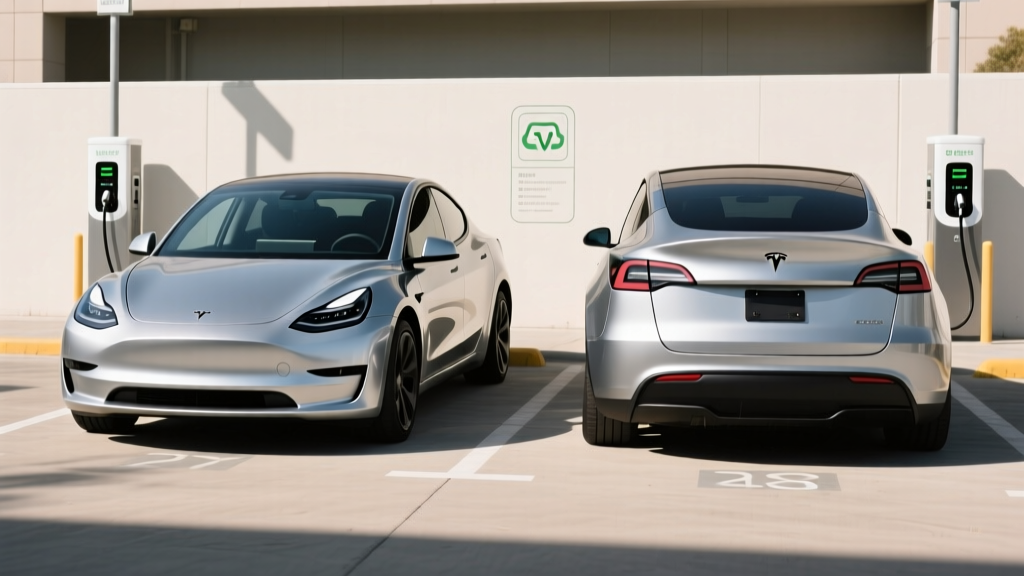
Charging speed remains one of the most consequential ownership variables — and one where marketing figures require careful interpretation. Both the Model 3 and Model Y peak at 250 kW on a DC fast charger, but peak rate is not sustained rate.
| Charging Level | Power | Delivery Rate | Notes |
|---|---|---|---|
| Level 1 (120V household) | ~1.4 kW | ~5 mi/hr | Emergency/trickle only; impractical for daily use |
| Level 2 (240V home Wall Connector) | 11.5 kW | ~44 mi/hr | Full charge overnight (~8–9 hours from 10%) |
| DC Fast Charge (V3 Supercharger) | Up to 250 kW peak | 10–80% in ~25 min | Rate tapers above 60%; 80–100% adds ~20+ min |
| DC Fast Charge (V4 Supercharger) | Up to 250 kW | Similar to V3 for these models | V4 architecture benefits future models with higher acceptance |
The charge-curve reality: A 250 kW peak rate applies roughly between 10% and 35% State of Charge (SoC). From 35–60%, expect sustained rates around 150–180 kW. Above 80%, the rate drops sharply to protect the NMC battery cells — often below 50 kW. This is why Tesla's navigation system preconditions the battery when a Supercharger is set as your destination: warming the pack to optimal temperature maximizes the time spent in the high-power portion of the curve.
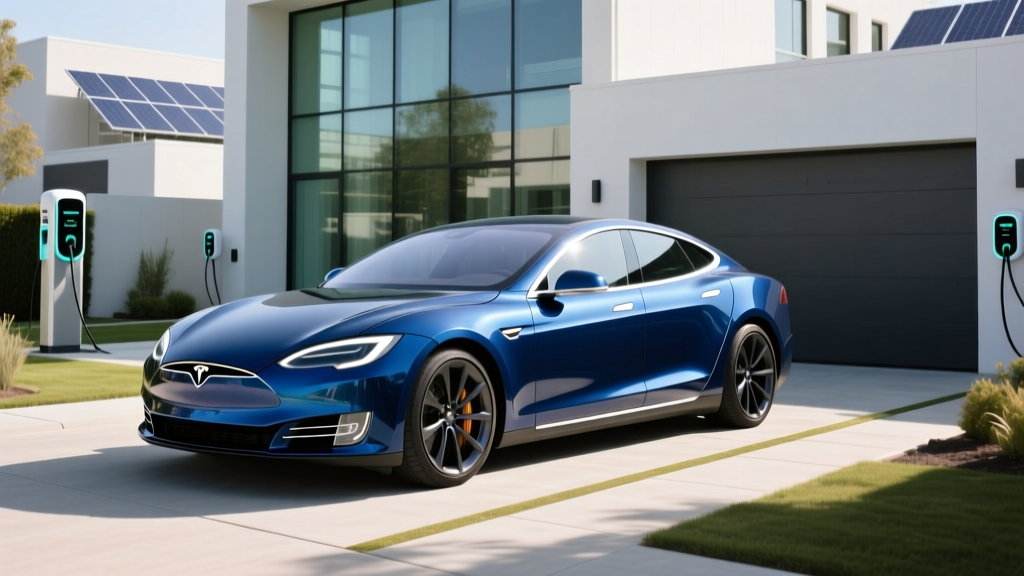
For home charging, a Tesla Wall Connector on a 60-amp circuit delivers the full 11.5 kW (48 amps continuous). Most owners charging overnight from 20% to 80% will add roughly 260 miles in about 6 hours — more than sufficient for daily driving needs. Installation costs for a Level 2 home setup typically range from $500 (simple outlet near panel) to $2,500+ if a panel upgrade or long conduit run is required.
Pricing, Trims, and Federal Tax Credit Eligibility
Tesla's 2026 lineup pricing is straightforward compared to legacy automakers, but federal tax credit eligibility under IRS §30D is not guaranteed for every buyer. Here is the current pricing and credit landscape:
| Trim | MSRP | Potential §30D Credit | Effective Price (if eligible) |
|---|---|---|---|
| Model 3 RWD | $40,240 | Up to $7,500 | ~$32,740 |
| Model 3 Long Range AWD | $47,740 | Up to $7,500 | ~$40,240 |
| Model 3 Performance | $54,740 | Up to $7,500 | ~$47,240 |
| Model Y Long Range AWD | $48,630 | Up to $7,500 | ~$41,130 |
| Model Y Performance | $53,630 | Up to $7,500 | ~$46,130 |
- MSRP Cap: Sedans (Model 3) must be ≤$55,000; SUVs/trucks/vans (Model Y) must be ≤$80,000. All current Model 3 and Model Y trims qualify on MSRP.
- Buyer Income Cap: Modified AGI must not exceed $150,000 (single), $225,000 (head of household), or $300,000 (joint filers).
- Battery Sourcing: The full $7,500 requires meeting both critical-mineral and battery-component sourcing requirements. Partial credit ($3,750) applies if only one threshold is met. Tesla's North American battery supply chain has been evolving — verify current sourcing status at purchase.
- Point-of-Sale Transfer: Eligible buyers can transfer the credit to the dealer at purchase, reducing the out-of-pocket price immediately rather than waiting for a tax return.
- VIN Verification: Use the IRS Energy Credits portal or Tesla's checkout tool to confirm eligibility before finalizing your order.
Credit rules are subject to legislative change. Consult a tax professional and verify at irs.gov before purchasing.
Technology, Driver Assistance, and Notable Drawbacks
Tesla's technology stack is arguably the most software-forward in the industry, which is both its greatest strength and a source of frustration depending on your tolerance for screen-centric controls.
Standout Tech Features
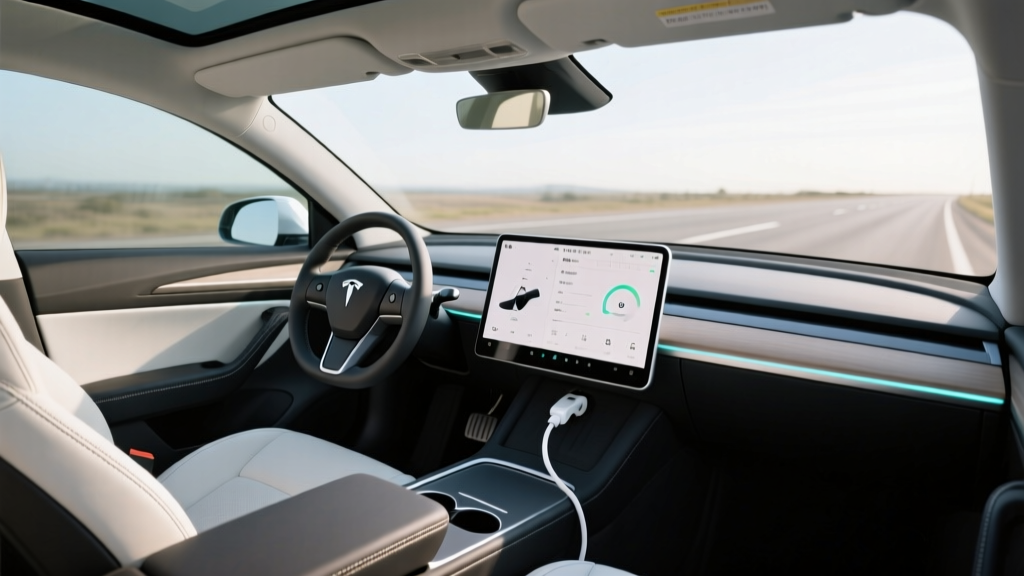
- 15.4-inch center touchscreen (Model 3 Highland / Model Y Juniper) with fast response times and regular OTA updates
- Autopilot standard: Includes adaptive cruise control, lane-keeping, and automatic emergency braking. Competent for highway use but requires constant driver supervision (SAE Level 2).
- FSD (Supervised): $8,000 add-on (or $99/mo subscription) adds city-street navigation, traffic-light recognition, and autosteer on local roads. Still requires full driver attention — it is not autonomous driving.
- Supercharger network access: Over 6,500+ North American V3/V4 Supercharger stalls remain the most reliable public DC fast-charging network by uptime metrics.
- Sentry Mode / Dashcam: Integrated multi-camera recording system with cloud clip access.
- Heat pump: Standard on both models, significantly reducing cold-weather range loss compared to resistive heating systems.
Notable Drawbacks
- No physical instrument cluster in the Model 3 — speed and all driving info lives on the center screen. The Model Y Juniper refresh similarly relies on the center display, though it adds a small rear passenger screen.
- Turn-signal buttons on steering wheel (Model 3 Highland) replaced the traditional stalk, which draws consistent owner complaints in stoplight and roundabout scenarios.
- Insurance costs remain above segment average due to repair complexity and parts pricing — expect premiums 20–40% higher than comparable ICE sedans/crossovers in many states.
- No Apple CarPlay or Android Auto — Tesla's proprietary infotainment is the only option.
- Panel gap inconsistency has improved but still surfaces in owner reports, particularly on early-build vehicles from new production runs.
Who Should Buy — and Who Should Look Elsewhere
Choose the Model 3 if:
- You want the most efficient Tesla sedan with the longest range per dollar (341 EPA miles, 134 MPGe)
- Your commute is highway-heavy and you value a quieter, more refined cabin (Highland generation improved NVH substantially)
- You don't need more than 23 cu ft of cargo space
- You want a sub-$41,000 effective price after the federal credit (RWD trim)
Choose the Model Y if:
- You need crossover cargo versatility (30 cu ft rear + 60/40 fold-flat for larger loads)
- Rear-seat passengers are regulars — 41.6 inches of legroom vs. the Model 3's 35.2 inches
- You want a slightly higher driving position and easier entry/exit for child seats
- You're willing to trade ~21 miles of range and 12 MPGe for utility
Look at competitors (Hyundai Ioniq 5, BMW iX, Ford Mustang Mach-E) if:
- You want physical controls, Apple CarPlay, or a traditional instrument cluster
- You prefer a dealer-service model over Tesla's mobile-ranger / service-center approach
- You need 800V architecture for faster sustained DC charging (Ioniq 5 peaks at ~240 kW but sustains higher rates longer)
Ownership Costs: 5-Year Estimate
| Cost Category | Model 3 LR AWD | Model Y LR AWD |
|---|---|---|
| Purchase Price (after $7,500 credit) | ~$40,240 | ~$41,130 |
| Estimated 5-Year Electricity (15k mi/yr @ $0.14/kWh) | ~$2,625 | ~$2,940 |
| Estimated 5-Year Insurance | ~$12,500 | ~$13,200 |
| Maintenance (tires, cabin filter, fluid top-offs) | ~$2,200 | ~$2,400 |
| Estimated 5-Year Depreciation | ~$18,000 | ~$17,500 |
| Estimated 5-Year Total Cost of Ownership | ~$75,565 | ~$77,170 |
For comparison, a similarly equipped gas-powered Toyota Camry AWD or Subaru Outback would cost approximately $55,000–$62,000 over five years, driven primarily by higher fuel costs (~$9,000–$11,000 in gasoline) but offset by lower insurance and slower depreciation. The EV advantage widens if your electricity rate is below the national average or if you have access to free workplace/Supercharger credits.
Frequently Asked Questions
What is the real-world range of the Tesla Model 3 and Model Y?
The Model 3 Long Range AWD carries an EPA rating of 341 miles, but sustained highway driving at 75 mph typically yields 275–295 miles. In freezing temperatures, expect 240–270 miles. The Model Y Long Range AWD rates at 320 miles EPA, with real-world highway range of approximately 260–280 miles and cold-weather range of 220–250 miles. Preconditioning and moderate speeds narrow the gap between EPA and real-world figures.
How fast do the Model 3 and Model Y charge at home and on the road?
On a 240V Level 2 home charger (Tesla Wall Connector at 11.5 kW), both vehicles add approximately 44 miles of range per hour, fully replenishing overnight. On a V3 Supercharger, both peak at 250 kW and charge from 10–80% in roughly 25–27 minutes. However, the charge rate tapers significantly above 60% SoC — plan for 45+ minutes if you need a full 10–100% session.
Does the Tesla Model 3 or Model Y qualify for the $7,500 federal EV tax credit?
Both vehicles are under the §30D MSRP cap ($55,000 for sedans, $80,000 for SUVs). However, eligibility also depends on buyer income (≤$300,000 joint / $150,000 single), battery-component sourcing, and critical-mineral requirements. The credit amount can be $3,750 or $7,500 depending on which sourcing thresholds are met at time of delivery. Always verify on the IRS portal and confirm with your tax advisor before ordering.
How do NHTSA Tesla safety ratings compare to IIHS ratings?
NHTSA has awarded both the Model 3 and Model Y 5-star overall ratings. The Insurance Institute for Highway Safety (IIHS) evaluates vehicles on a separate scale and has historically given the Model 3 Top Safety Pick+ status when equipped with acceptable headlights. The refreshed Model Y (Juniper) is undergoing updated IIHS testing — check iihs.org for the latest designation, as headlight and pedestrian-detection scores can shift with model-year updates.
Is it worth buying a Tesla vs. competitors like the Hyundai Ioniq 5 or BMW i4?
The Tesla advantage in 2026 remains the Supercharger network (the most reliable DC fast-charging ecosystem in North America), software update cadence, and efficiency leadership (the Model 3's 25 kWh/100 mi is among the lowest in the segment). Competitors like the Hyundai Ioniq 5 offer 800V architecture with faster sustained charge rates, physical controls, and Apple CarPlay. The BMW i4 provides a more traditional luxury experience. If charging reliability and efficiency are your top priorities, Tesla still leads. If cabin ergonomics and dealer service matter more, cross-shop aggressively.
What are the biggest pros and cons of owning a Tesla in 2026?
- Class-leading efficiency and range per kWh
- Access to the Supercharger network
- 5-star NHTSA safety across all crash modes
- OTA updates continuously add features
- Heat pump standard (cold-weather efficiency)
- Strong resale value relative to EV segment
- No physical instrument cluster or CarPlay
- Above-average insurance premiums
- Service center wait times in some metro areas
- Steering-wheel turn-signal buttons (Model 3)
- 250 kW peak DC charge rate trails 800V rivals
- FSD (Supervised) costs $8,000 and still requires full attention
The Bottom Line
The NHTSA Tesla safety story in 2026 is strong: 5-star overall ratings for both the Model 3 and Model Y across all crash-test categories, backed by the structural advantages of a skateboard battery platform. But safety is one input among many. The Model 3 Long Range remains the efficiency benchmark in the electric sedan segment at 341 EPA miles and 134 MPGe, while the Model Y Long Range delivers crossover practicality with minimal range compromise. Both charge at 250 kW peak — adequate but no longer class-leading — and both benefit from the most mature public charging network in North America. Verify your §30D tax credit eligibility before ordering, budget for higher-than-average insurance, and test-drive the screen-centric controls to confirm they match your preferences. If they do, the NHTSA data confirms you're getting one of the safest vehicles on the road.