What Is the Next Generation Velar Electric?
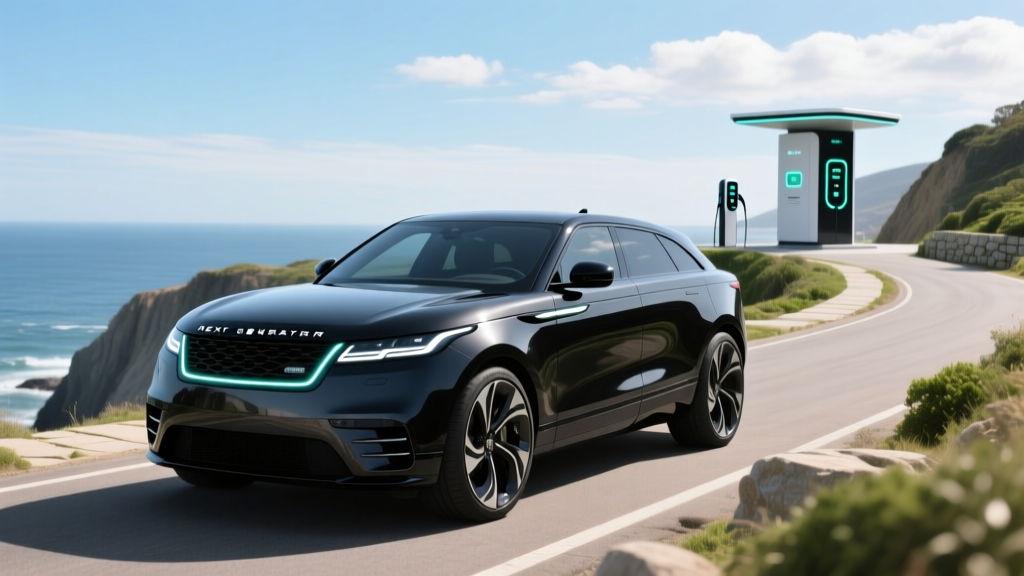
The next generation Velar electric is Land Rover's upcoming all-electric luxury midsize SUV, built on Jaguar Land Rover's new EMA (Electric Modular Architecture) platform. As of early 2026, the vehicle has been officially announced and previewed but has not yet reached U.S. dealerships. JLR has confirmed production at its Halewood, UK plant, with deliveries expected to begin in late 2026 or early 2027 depending on market. All specifications below are preliminary estimates based on JLR disclosures, industry analysis, and the EMA platform's known capabilities. Final EPA-certified figures will be published closer to launch.
If you're considering this vehicle now, this guide gives you the framework to evaluate whether it fits your driving needs, budget, and charging situation — and how it stacks up against established competitors.
Estimated Range, Battery, and Efficiency
The EMA platform is engineered to accommodate battery packs in the 85–110 kWh (usable) range using NMC (nickel manganese cobalt) chemistry, which prioritizes energy density over the cycle-life advantages of LFP. Based on JLR's stated targets and the platform's efficiency profile, here is what we expect:
| Specification | Estimated Figure |
|---|---|
| Battery Capacity (usable) | ~100 kWh (NMC chemistry) |
| EPA Range (est.) | 300–340 miles |
| Real-World Highway Range | ~250–280 miles (70+ mph, mild weather) |
| Cold-Weather Range (20°F) | ~210–240 miles (est. 25–30% reduction) |
| Efficiency (est.) | ~2.8–3.2 kWh/mile (95–110 MPGe) |
| Drivetrain | Dual-motor AWD expected |
| 0–60 mph (est.) | ~4.5–5.5 seconds |
| Horsepower (est.) | ~400–500 hp |
Real-World Range Reality Check
JLR will likely target an EPA rating above 300 miles to remain competitive with the BMW iX, Mercedes EQE SUV, and Tesla Model X. However, real-world highway driving at 75 mph typically yields 15–20% less than the EPA sticker in any luxury EV. Add cold weather (below 32°F), and NMC batteries lose an additional 10–15% due to increased internal resistance and cabin heating demands. Plan for 250–280 miles of usable range on a warm-weather road trip and closer to 210–240 miles in freezing conditions. A heat pump — expected to be standard — will help mitigate winter losses compared to resistive heating systems.
Charging Speed and Infrastructure Compatibility
The EMA platform supports 800-volt architecture, which enables faster DC charging and thinner cabling. Here's what that translates to in practice:
| Charging Level | Power | Estimated Speed |
|---|---|---|
| Level 1 (120V household) | ~1.4 kW | ~4–5 miles per hour |
| Level 2 (240V home/public) | ~11–19.2 kW | ~35–60 miles per hour |
| DC Fast Charge (peak) | ~200–250 kW (est.) | 10–80% in ~22–28 minutes (est.) |
Key charging-curve detail: Peak kW is not sustained kW. Most EVs hitting 200+ kW do so only between 10–40% State of Charge (SoC), then taper progressively. Expect the Velar Electric to average roughly 150–170 kW across a full 10–80% session on a capable 350 kW charger. On 150 kW stations (still the majority of U.S. public infrastructure), you'll be capped at the station's output for the entire session, extending 10–80% time to roughly 35–40 minutes.
For U.S. buyers, the connector situation matters. JLR has been transitioning to NACS (North American Charging Standard) for its North American vehicles, following the industry-wide shift. Confirm the final connector type before purchase, as this determines native Tesla Supercharger access versus the need for a CCS-to-NACS adapter.
Pricing, Tax Credits, and Total Cost of Ownership
Estimated Pricing
Based on the current Velar's positioning ($63,000–$95,000 MSRP for ICE models) and the typical EV premium JLR commands, expect the next generation Velar electric to start around $70,000–$75,000 MSRP for a base SE trim, with higher trims (HSE, Autobiography) reaching $85,000–$95,000+. These are estimates; JLR has not published official U.S. pricing.
Federal Tax Credit Eligibility (§30D)
This is where it gets complicated for luxury EV buyers. Under current IRS §30D rules:
- MSRP Cap: SUVs must have an MSRP of $80,000 or below to qualify. Higher Velar Electric trims will likely exceed this threshold.
- Buyer Income Cap: Modified adjusted gross income must not exceed $150,000 (single), $225,000 (head of household), or $300,000 (joint filers).
- Battery Sourcing: Critical minerals and battery components must meet phased-in sourcing requirements. As a UK-built vehicle with JLR's supply chain, full $7,500 credit eligibility is uncertain — partial credit ($3,750) may be more likely depending on final critical-mineral and component sourcing certifications.
- Point-of-Sale Transfer: If eligible, the credit can be transferred to the dealer at purchase, reducing your out-of-pocket cost immediately.
Bottom line: Do not assume you'll receive the full $7,500. Consult a tax professional and check the fueleconomy.gov tax credit tracker once the Velar Electric is officially listed.
5-Year Cost Comparison: Velar Electric vs. Gas Velar vs. BMW iX
| Category | Velar Electric (est.) | Gas Velar (P250 AWD) | BMW iX xDrive50 |
|---|---|---|---|
| Purchase Price (base MSRP) | $72,000 | $63,500 | $87,250 |
| Federal Tax Credit | –$3,750 (est. partial) | $0 | –$7,500 |
| Fuel/Energy (5 yrs) | $4,500 (home L2 + some DCFC) | $11,250 (22 mpg, $3.30/gal) | $4,800 |
| Maintenance (5 yrs) | $2,000 | $5,500 | $2,200 |
| Insurance (5 yrs, avg.) | $12,500 | $9,500 | $13,000 |
| Estimated Depreciation | $28,800 (40%) | $25,400 (40%) | $39,260 (45%) |
| Total 5-Year Cost | ~$115,450 | ~$115,150 | ~$137,810 |
Key takeaways:
- Energy savings over gas are substantial — roughly $6,750 over five years at current electricity and fuel prices.
- EV insurance premiums run 15–30% higher than equivalent ICE vehicles due to repair costs and battery replacement risk.
- Luxury EV depreciation remains a wildcard. The BMW iX has seen steep depreciation (45–50% in some model years), which could also affect the Velar Electric.
- The gas Velar and the electric Velar may end up at near-parity on total cost, with the EV winning on fuel/maintenance but losing on insurance and potentially steeper depreciation.
Real-World Ownership: What First-Time EV Buyers Must Know
Home Charging Is Non-Negotiable for Convenience
If you have a garage or dedicated parking spot with access to a 240V circuit, a Level 2 home charger (11.5 kW) will add roughly 40 miles of range per hour of charging. Overnight charging from 20% to 80% takes about 5–6 hours — you'll wake up "full" every morning. Installation costs range from $800 to $2,500 depending on panel capacity, conduit run length, and local permit fees. If your home has a 100-amp electrical panel, you may need a $1,500–$3,000 panel upgrade to 200 amps to support a dedicated 60-amp EV circuit.
If you don't have home charging access (apartment, street parking), public DC fast charging becomes your primary fueling method. At $0.35–$0.50/kWh on networks like Electrify America or EVgo, your "fuel" cost rises to roughly $0.10–$0.16 per mile — still cheaper than gas, but 2–3× more expensive than home charging at $0.13/kWh national average.
Climate and Driving Pattern Considerations
The Velar Electric's NMC battery and expected heat pump make it viable in cold climates, but plan conservatively:
- Cold-climate buyers (Northeast, Midwest, Mountain West): Expect 25–30% range reduction in sustained sub-freezing temperatures. A 320-mile EPA rating becomes ~225–240 real-world miles in January. Preconditioning the battery while plugged in mitigates this somewhat.
- Hot-climate buyers (Southwest, Southeast): NMC batteries degrade faster when repeatedly exposed to high SoC + high heat. Avoid habitually charging to 100% and parking in direct sun at full charge. An 80% daily charge limit is recommended for longevity.
- Road-trip frequency: If you regularly drive 300+ miles in a day, the Velar Electric's estimated 22–28 minute 10–80% DCFC time means one 30-minute stop per ~250 miles of highway driving. Compare this to the gas Velar's 400+ mile range and 5-minute fill-up.
Common Misconceptions About the Next Gen Velar Electric
| Myth | Fact |
|---|---|
| "The battery will need replacing in 5 years." | JLR's battery warranty is expected to cover 8 years/100,000 miles with a 70% capacity retention threshold. Real-world degradation for NMC packs averages 10–15% over 8 years based on industry data. A full replacement, if ever needed, would likely cost $15,000–$22,000 out of warranty. |
| "I'll never be able to charge on road trips." | The U.S. now has over 8,000 DC fast-charging stations. Tesla Superchargers (now opening to NACS-equipped non-Teslas) alone number 6,000+ stalls. Route planning via apps like A Better Routeplanner makes this manageable. |
| "It qualifies for the full $7,500 tax credit." | Eligibility depends on MSRP (≤$80K for SUVs), buyer income, and battery sourcing rules. Higher trims will likely exceed the MSRP cap. Always verify on IRS.gov before committing. |
| "EVs have zero maintenance." | EVs eliminate oil changes, spark plugs, and transmission fluid. But tires wear 15–20% faster due to instant torque and higher weight, cabin air filters need replacement, brake fluid still requires periodic flushing, and the 12V auxiliary battery still dies every 3–5 years. |
| "The electric Velar will be a Level 4 self-driving car." | JLR's driver-assistance systems are SAE Level 2 — the driver must remain fully engaged with hands on the wheel and eyes on the road. No production consumer vehicle sold in the U.S. is Level 4 autonomous. |
Decision Framework: Should You Buy the Next Generation Velar Electric?
Choose the Next Gen Velar Electric If:
- You want a luxury British SUV with EV refinement and have home Level 2 charging access.
- Your daily commute is under 80 miles round-trip, and road trips of 300+ miles happen fewer than 10 times per year.
- You're willing to pay a $70K+ starting price for design, brand cachet, and interior quality, accepting that depreciation may be steep in the first 3 years.
- You live in a region with reliable public DC fast-charging infrastructure for the occasional road trip.
- You value silent, smooth electric drivetrain character and instant torque in a luxury package.
Look Elsewhere If:
- You lack home charging and your area has limited public DCFC options (check the AFDC station locator).
- You regularly tow heavy loads — EV towing range drops 40–50%, and the Velar Electric's towing capacity will likely be limited to ~4,000–5,000 lbs.
- You need a vehicle now — the Velar Electric won't reach U.S. dealers until late 2026 at the earliest, and initial supply may be constrained.
- You're budget-sensitive and the $80,000 MSRP cap for the §30D tax credit means your preferred trim won't qualify.
- You'd rather buy a proven, available luxury EV today: the BMW iX (EPA 307–324 mi, ~$87K), Mercedes EQE SUV (EPA 279–305 mi, ~$78K), or Tesla Model X (EPA 326–348 mi, ~$82K) are all purchasable and testable now.
Frequently Asked Questions
When will the next generation Velar electric be available in the U.S.?
JLR has confirmed production at Halewood starting in 2025 for global markets, but U.S. deliveries are expected in late 2026 or early 2027. Pre-order reservations may open in mid-to-late 2026. This timeline is subject to change based on supply chain and homologation.
How does the Velar Electric compare to the Range Rover Electric?
The full-size Range Rover Electric (also announced, built on the MLA platform) sits above the Velar Electric in price, size, and luxury positioning. Expect the Range Rover Electric to start above $120,000 with a larger battery and more range. The Velar Electric is the more accessible, midsize option.
Will the Velar Electric use NACS or CCS for charging?
JLR has signaled adoption of NACS for North American models, but final confirmation for the Velar Electric specifically has not been published. This matters for native Tesla Supercharger access — confirm before ordering.
What is the expected battery warranty?
Based on JLR's current EV warranty structure and industry norms, expect 8 years / 100,000 miles on the high-voltage battery with a minimum 70% capacity retention guarantee. The general vehicle warranty is expected at 4 years / 50,000 miles.
Is the next generation Velar electric eligible for any state incentives?
State EV incentives vary widely. California's CVRP, Colorado's state credit, and New York's Drive Clean rebate all have their own eligibility rules, income caps, and MSRP limits that may differ from federal §30D. Check your state's energy or environmental agency website for current programs. These incentives can stack with the federal credit where eligible.
Should I wait for the Velar Electric or buy an available luxury EV now?
If you need a vehicle within 6 months, buy now — the BMW iX, Mercedes EQE SUV, Genesis Electrified GV70, and Tesla Model X are all proven, available, and testable. If you can wait 12–18 months and are drawn to the Velar's design language and Land Rover's off-road heritage, the Velar Electric may be worth the wait. Just know that first-model-year vehicles often carry early-production quirks that are resolved in year two or three.