Buying an electric vehicle in New York involves more than comparing sticker prices. Between the federal §30D clean vehicle credit, the New York State electric vehicle tax credit (officially the Drive Clean Rebate), utility rebates from Con Edison and National Grid, and the realities of higher insurance premiums and evolving resale values, the actual five-year cost of ownership requires careful math. This guide walks through every incentive available to New York EV buyers in 2026 and pairs them against the real costs of charging, insuring, maintaining, and eventually selling an EV.
New York State Electric Vehicle Tax Credit: What's Available in 2026
The New York State Drive Clean Rebate is a point-of-sale incentive administered through the New York State Energy Research and Development Authority (NYSERDA). Unlike a tax credit you claim on your annual return, this rebate is applied directly at the dealership, reducing your out-of-pocket cost at purchase or lease.
Key details of the NYSERDA Drive Clean Rebate:
- Maximum rebate: Up to $2,000 for eligible new battery-electric vehicles (BEVs) and plug-in hybrids (PHEVs)
- Price cap: Vehicle MSRP must not exceed $42,000
- Eligibility: New vehicles purchased or leased from a participating New York dealership; available to individuals, businesses, and nonprofits
- Funding: Rebate amounts are subject to available program funding and may be reduced or paused when allocations are exhausted
- Stacking: The NYSERDA rebate can be combined with the federal §30D credit and local utility incentives
Because NYSERDA funding is finite and program terms can shift, always verify current availability on the official NYSERDA Drive Clean Rebate page before finalizing a purchase.
Federal §30D Clean Vehicle Credit: Income Caps, MSRP Limits, and Battery Sourcing Rules
The federal tax credit under Internal Revenue Code §30D offers up to $7,500 for qualifying new EVs — but "up to" carries significant caveats. The credit is split into two $3,750 halves, each with independent requirements.
Federal §30D Eligibility Checklist (2026 Tax Year):
- Income caps (modified AGI): $150,000 single filer / $225,000 head of household / $300,000 married filing jointly
- MSRP caps: $80,000 for SUVs, vans, and pickup trucks; $55,000 for sedans and other passenger cars
- Battery component sourcing (½ of credit = $3,750): Required percentage of battery components must be manufactured or assembled in North America (threshold increases annually)
- Critical minerals sourcing (½ of credit = $3,750): Required percentage of critical minerals must be sourced from the US or a free-trade-agreement partner (threshold increases annually)
- FEOC restriction: Vehicles with battery components from a "foreign entity of concern" (primarily Chinese manufacturers) are disqualified entirely
- Point-of-sale transfer: Buyers may elect to transfer the credit to the dealer at purchase, receiving it as an immediate price reduction rather than a tax-time credit
- One vehicle per taxpayer per year; VIN must be reported on IRS Form 8936
Source: IRS Clean Vehicle Credits
Many popular EVs qualify for the full $7,500, but some — particularly models with LFP batteries sourced from CATL or BYD — may only receive $3,750 or nothing at all. Always check the specific VIN's eligibility on fueleconomy.gov before committing.
5-Year Total Cost of Ownership: EV vs. Gas Car in New York
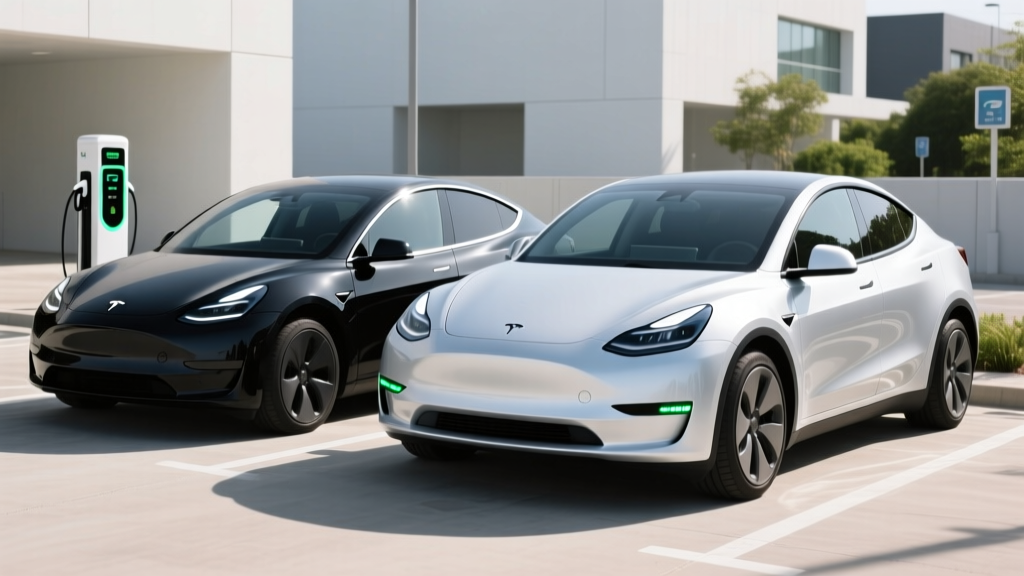
To illustrate real ownership economics, we modeled a 2026 Tesla Model Y Long Range AWD ($44,990 MSRP, 320 mi EPA range, 75 kWh usable NMC battery) against a comparably equipped 2026 Toyota RAV4 AWD gas SUV ($33,000 MSRP, 30 MPG combined). Both driven 12,000 miles/year in the New York metro area.
| Cost Category (5 Years) | Tesla Model Y LR AWD | Toyota RAV4 AWD (Gas) |
|---|---|---|
| Purchase Price (MSRP) | $44,990 | $33,000 |
| Federal §30D Credit | −$7,500 | $0 |
| NYSERDA Drive Clean Rebate | −$2,000 | $0 |
| Net Purchase Cost | $35,490 | $33,000 |
| Fuel / Charging (60,000 mi) | $4,320 | $7,800 |
| Insurance (5 years) | $11,500 | $8,750 |
| Maintenance (5 years) | $1,200 | $3,500 |
| Depreciation (est. 5-yr loss) | $18,500 | $12,000 |
| Total 5-Year Cost | $71,010 | $65,050 |
Assumptions: Electricity at $0.20/kWh (NY residential average), home Level 2 charging primarily; gasoline at $3.50/gallon; insurance from NY metro averages; maintenance per AAA Your Driving Costs methodology. Actual results vary by driving pattern, utility rate, and insurance profile.
Charging vs. Gas: The Per-Mile Cost Math for New York Drivers
New York's electricity rates run higher than the national average, which narrows the fuel-cost advantage EVs typically enjoy — but the gap remains substantial.
Tesla Model Y (home charging, NY residential rate):
- Efficiency: 28 kWh/100 mi (EPA combined)
- Electricity cost: $0.20/kWh (Con Edison residential, 2026 average)
- Cost per mile: $0.056/mi
- Annual fuel cost (12,000 mi): $672
Toyota RAV4 AWD (gasoline):
- Efficiency: 30 MPG combined
- Gasoline cost: $3.50/gallon (NY metro, 2026 average)
- Cost per mile: $0.117/mi
- Annual fuel cost (12,000 mi): $1,400
Annual fuel savings driving electric: ~$728/year (or ~$3,640 over 5 years)
Public DC fast charging changes this equation. At Electrify America or Tesla Supercharger rates of $0.35–$0.48/kWh in New York, your per-mile cost rises to $0.10–$0.13/mi — comparable to or exceeding gasoline. Home Level 2 charging is essential to capturing EV fuel savings in New York. If you cannot charge at home, the economic case weakens considerably.
Maintenance Savings: Fewer Moving Parts, Real Dollars Saved
EVs eliminate oil changes, spark plugs, timing belts, exhaust system repairs, and transmission fluid services. Regenerative braking dramatically extends brake pad life — many EV owners report original brake pads lasting 80,000–100,000 miles.
| Maintenance Item | EV (5-Year Cost) | Gas Car (5-Year Cost) |
|---|---|---|
| Oil Changes | $0 | $450 |
| Brake Pads & Rotors | $0–$200 | $600–$900 |
| Coolant / Transmission Fluid | $100 | $350 |
| Air Filters / Spark Plugs | $80 (cabin filter only) | $350 |
| Tire Rotation & Replacement | $1,020 | $850 |
| Total (5 Years) | ~$1,200 | ~$3,500 |
One cost where EVs are higher: tires. EVs are heavier (the Model Y weighs ~4,400 lbs vs. the RAV4 at ~3,600 lbs) and deliver instant torque, accelerating tread wear. Budget for tire replacement every 30,000–40,000 miles rather than the 50,000+ miles typical of gas vehicles.
Insurance Costs: The Hidden EV Premium
EV insurance in New York typically runs 15–30% higher than comparable gas vehicles. For our Model Y vs. RAV4 comparison, expect roughly $2,300/year for the Tesla versus $1,750/year for the Toyota — a $550/year gap that adds $2,750 over five years.
Why the premium? Three factors drive it:
- Higher repair costs: EV battery packs, power electronics, and specialized structural components (like Tesla's gigacastings) are expensive to replace after collision damage
- Higher vehicle values: Insurers price comprehensive and collision coverage based on replacement cost
- Specialized labor: Fewer body shops are certified for high-voltage system repairs, increasing labor rates
Some insurers now offer dedicated EV policies with bundled home-charger coverage. Shop at least three quotes — premiums for the same vehicle can vary by $800+/year across carriers in New York.
EV Depreciation and Resale Value: A Shifting Landscape
Depreciation remains the largest single ownership cost for any vehicle, and EVs have experienced unusual volatility in this area. Between 2023 and 2025, aggressive price cuts by Tesla, increased competition from Chinese-market brands globally, and rapid improvements in battery technology compressed used-EV values harder than the broader market.
Current 5-year depreciation projections for mainstream EVs sit at 40–55% of original MSRP (before incentives), compared to 35–45% for popular gas crossovers. However, the calculus changes when you apply incentives against the purchase price:
Depreciation on net cost vs. MSRP:
If you buy a $44,990 Model Y and receive $9,500 in combined federal and state incentives, your net cost basis is $35,490. If the vehicle is worth $26,500 after five years (a 41% loss on MSRP), your actual dollar loss is $8,990 — not the $18,500 that MSRP-based depreciation would suggest.
This is why stacking incentives matters enormously for long-term ownership economics. The more you reduce your effective purchase price, the less depreciation hurts.
Vehicles with strong brand loyalty, proven battery longevity data (8+ years of real-world degradation curves), and broad charging-network compatibility tend to hold value better. The 8-year/100,000-mile federal battery warranty (mandating ≥70% capacity retention) provides a resale-value floor that many buyers overlook.
Stacking New York Incentives: Maximizing Your Savings
New York EV buyers can potentially layer multiple incentives. Here's the stacking hierarchy for a qualifying 2026 BEV purchase:
- Federal §30D Credit: Up to $7,500 (point-of-sale or tax-time)
- NYSERDA Drive Clean Rebate: Up to $2,000 (point-of-sale)
- Utility rebates: Con Edison offers up to $500 for home Level 2 charger installation; National Grid's "Charge Smart" program provides similar incentives — check with your specific utility
- HOV lane access: New York's Clean Pass program (currently expired for new applicants — monitor for renewal)
- E-ZPass discounts: Some bridge/tunnel discounts for eligible clean vehicles (program-dependent)
Maximum theoretical incentive stack for a qualifying sub-$42,000 MSRP EV: approximately $10,000+ off the effective purchase price before utility rebates.
Frequently Asked Questions
How much does it really cost to own an EV over 5 years in New York?
For a mainstream EV like the Tesla Model Y with full incentives applied, expect approximately $65,000–$75,000 in total five-year costs (net purchase + charging + insurance + maintenance + depreciation). This is competitive with — though often slightly higher than — a comparable gas SUV when accounting for New York's elevated insurance and electricity rates. The break-even point depends heavily on your annual mileage, home-charging access, and whether you qualify for the full $7,500 federal credit.
Do I qualify for the federal EV tax credit?
You qualify for up to $7,500 if your modified adjusted gross income falls below $150,000 (single) / $300,000 (married filing jointly), the vehicle MSRP is under $55,000 (cars) or $80,000 (SUVs/trucks/vans), and the vehicle meets battery-component and critical-mineral sourcing thresholds. The vehicle must also not contain components from a foreign entity of concern. Check your specific VIN on fueleconomy.gov for confirmed eligibility.
How much do I save on fuel and maintenance driving an EV in New York?
With home Level 2 charging at $0.20/kWh, expect to save roughly $700–$800/year on fuel compared to a 30 MPG gas vehicle. Maintenance savings add another $400–$500/year. Combined, that's $5,500–$6,500 over five years. These savings are largest for high-mileage drivers and smallest for those who rely primarily on expensive public DC fast charging.
Are EVs more expensive to insure in New York?
Yes — typically 15–30% more than equivalent gas vehicles. Higher repair costs for battery and power-electronics damage, elevated vehicle values, and a smaller pool of certified high-voltage repair shops all contribute. The gap is narrowing as EV market share grows and more shops gain certification, but budget for the premium in your ownership calculations.
How well do EVs hold their value compared to gas cars?
EVs have depreciated faster than gas vehicles in recent years, losing 40–55% of MSRP over five years versus 35–45% for popular gas crossovers. However, when measured against the incentive-reduced net purchase price, the actual dollar depreciation gap narrows significantly. Battery warranty coverage (8 years/100,000 miles, ≥70% capacity) and growing used-EV market familiarity are stabilizing resale values heading into 2026.
Can I claim both the New York State rebate and the federal tax credit?
Yes. The NYSERDA Drive Clean Rebate and the federal §30D credit are independent programs and can be stacked. The NYSERDA rebate has its own $42,000 MSRP cap, which is lower than the federal cap, so some vehicles may qualify for the federal credit but not the state rebate. Always confirm eligibility for both programs separately.
Bottom line: The New York State electric vehicle tax credit (Drive Clean Rebate), combined with the federal §30D credit, can reduce a qualifying EV's effective purchase price by $9,500 or more. That incentive stack — paired with $700+/year in fuel savings and lower maintenance — makes EV ownership cost-competitive with gas vehicles for New York buyers who can charge at home. The caveats are real: higher insurance premiums, faster depreciation on MSRP, and the need for reliable home charging. Run the numbers against your specific driving pattern, utility rate, and insurance quotes before signing.