The Short Answer on the New Toyota EV
If you're researching a new Toyota EV in 2026, your current showroom option is the Toyota bZ4X — a compact electric SUV with an EPA-estimated 252 miles of range (FWD), a 71.4 kWh usable battery, and DC fast charging that peaks around 150 kW (10–80% in roughly 30 minutes). Pricing starts near $38,000 MSRP before incentives, and federal tax credit eligibility under IRS §30D depends on battery sourcing, your income, and point-of-sale transfer rules that shift frequently. For most Toyota shoppers, the real decision isn't "EV or not" — it's whether the bZ4X's range and charging speed meet your daily needs, or whether a Toyota hybrid (RAV4 Hybrid, Prius) still makes more financial sense until Toyota's next-generation EVs arrive in late 2026–2027.
Toyota's Current EV: The 2026 bZ4X at a Glance
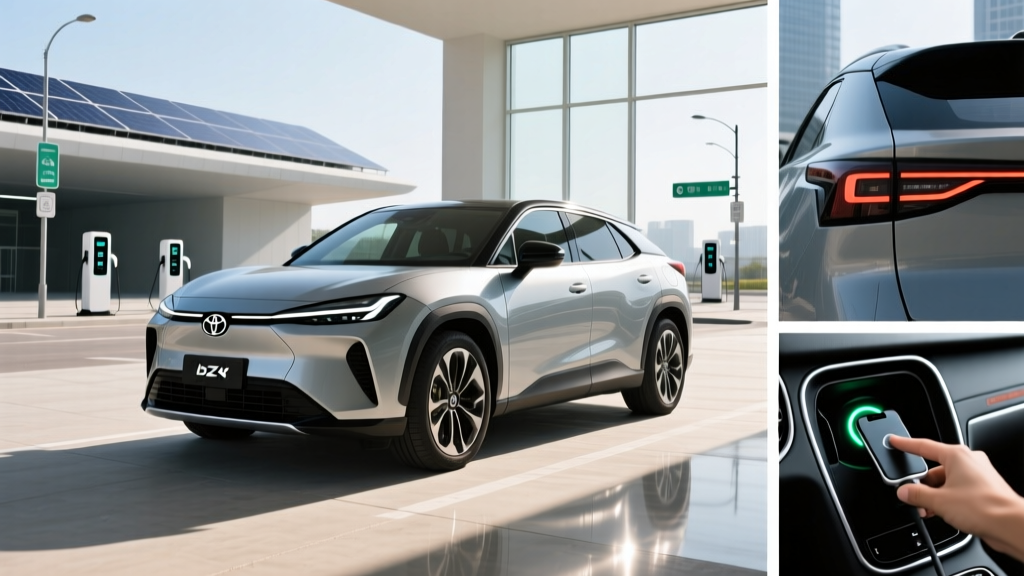
The bZ4X remains Toyota's only battery-electric vehicle available to U.S. buyers as of early 2026. Built on the e-TNGA platform (co-developed with Subaru, which sells the mechanically similar Solterra), the bZ4X competes in the compact electric crossover segment against the Hyundai Ioniq 5, Kia EV6, Volkswagen ID.4, and Tesla Model Y. It's a front-wheel-drive or all-wheel-drive vehicle aimed squarely at practical daily driving — not performance bragging rights.
| Spec | bZ4X FWD | bZ4X AWD |
|---|---|---|
| EPA Range | 252 miles | 228 miles |
| Battery (usable) | 71.4 kWh (NMC lithium-ion) | 71.4 kWh (NMC lithium-ion) |
| Horsepower | 201 hp | 214 hp |
| 0–60 mph | ~7.1 sec | ~6.5 sec |
| Peak DC Fast Charge | ~150 kW | ~150 kW |
| 10–80% DC Charge Time | ~30 min | ~30 min |
| Level 2 AC Charging | ~9 hours (0–100%) | ~9 hours (0–100%) |
| MPGe (combined) | 119 MPGe | 104 MPGe |
| Base MSRP (2026 est.) | ~$38,000 | ~$42,000 |
| Battery/Powertrain Warranty | 8 yr / 100,000 mi | 8 yr / 100,000 mi |
Real-world range caveat: The EPA's 252-mile figure assumes mixed driving at moderate temperatures. In our experience and consistent with third-party highway testing, expect 200–220 miles at sustained 70–75 mph highway speeds, and potentially 170–190 miles in freezing weather with cabin heat running. The bZ4X uses a resistive PTC heater in most trims rather than a heat pump, which draws significantly more energy in cold climates. If you live north of the 37th parallel and lack a heated garage, plan your road-trip charging around a 180-mile practical range in winter.
Charging Reality: What the bZ4X Curve Actually Looks Like
Toyota quotes a peak DC fast-charge rate of 150 kW, but as with every EV, peak kW is not sustained kW. The bZ4X's charging curve holds near its maximum rate only between roughly 10–40% state of charge (SoC), then tapers progressively. From 40–80%, expect average speeds closer to 80–100 kW. This means the advertised 30-minute 10–80% session is realistic at a well-maintained 150 kW+ charger (Electrify America, EVgo), but can stretch to 40+ minutes at older 50 kW stations or in extreme heat without adequate battery preconditioning.
The bZ4X does not feature active battery preconditioning for DC fast charging in the same way a Tesla or Hyundai E-GMP vehicle does. This means cold-soaked batteries (below ~50°F) will charge significantly slower until the pack warms up through use. If you're a frequent road-tripper in cold months, this is a meaningful limitation.
| Charging Level | Power | Miles Added per Hour | Typical Use Case |
|---|---|---|---|
| Level 1 (120V household) | ~1.2 kW | ~3–4 mi/hr | Emergency / overnight top-off |
| Level 2 (240V home/public) | ~7.2 kW | ~22–25 mi/hr | Daily home charging |
| DC Fast Charge | Up to 150 kW peak | ~150+ mi in 30 min (tapers) | Road trips |
kW vs. kWh reminder: kW (kilowatts) measures the rate of charging — like the flow rate of a gas pump nozzle. kWh (kilowatt-hours) measures total energy stored in the battery — like the size of your gas tank. The bZ4X's 71.4 kWh battery charged at 7.2 kW takes about 10 hours from empty to full on Level 2.
The Hybrid Question: bZ4X vs. Toyota's Own RAV4 Hybrid
This is the comparison most Toyota shoppers actually need. Toyota dominates the hybrid market, and for many buyers, a RAV4 Hybrid or RAV4 Prime (PHEV) delivers lower total cost and fewer lifestyle adjustments than going fully electric. Here's how the numbers stack up:
| Factor | bZ4X FWD (EV) | RAV4 Hybrid AWD | RAV4 Prime (PHEV) |
|---|---|---|---|
| Base MSRP (est.) | ~$38,000 | ~$33,000 | ~$44,500 |
| EPA Range / MPG | 252 mi / 119 MPGe | 40 MPG combined | 42 mi electric + 38 MPG gas |
| Fuel/Energy Cost per Mile* | ~$0.04–$0.06 | ~$0.09–$0.11 | ~$0.04 (electric) / $0.10 (gas) |
| Home Charging Needed? | Yes (strongly recommended) | No | Recommended for EV mode |
| Road-Trip Refuel Time | 30+ min per stop | 5 min | 5 min (gas) / 30 min (DC charge) |
| Federal Tax Credit (2026) | Up to $7,500 (eligibility varies) | None | Up to $7,500 (eligibility varies) |
| Estimated 5-Year Fuel/Energy Cost | ~$2,400 | ~$5,400 | ~$3,200 (mixed) |
*Energy costs based on U.S. average electricity rate of ~$0.16/kWh and gasoline at ~$3.40/gallon. Your local rates vary significantly — check your utility's time-of-use plans.
The math is clear: if you have reliable home Level 2 charging and drive under 200 miles daily, the bZ4X saves roughly $3,000 in energy costs over five years compared to the RAV4 Hybrid. But the RAV4 Hybrid's lower purchase price, zero charging infrastructure needs, and proven 40 MPG make it the lower-risk pick for apartment dwellers, frequent road-trippers, or those in areas with sparse public charging.
The RAV4 Prime is arguably Toyota's most compelling electrified vehicle for fence-sitters: 42 miles of electric-only range covers most daily commutes, and the gas engine eliminates range anxiety entirely. Its higher MSRP is partly offset by the §30D tax credit (if eligible), and you never need to rely on public charging infrastructure.
Real Costs of bZ4X Ownership: The Full Breakdown
Sticker price is just the entry point. Here's what five years of bZ4X ownership actually costs versus a comparable RAV4 Hybrid, assuming 15,000 miles/year, home Level 2 charging, and current incentive structures:
| Cost Category (5 Years) | bZ4X FWD | RAV4 Hybrid AWD |
|---|---|---|
| Purchase Price (base MSRP) | $38,000 | $33,000 |
| Federal Tax Credit (§30D, if eligible) | –$7,500 | $0 |
| Home Level 2 Charger Install | $800–$2,000 | $0 |
| Energy/Fuel (75,000 miles) | $2,400 | $5,400 |
| Maintenance (tires, fluid, brakes) | $1,500 | $3,000 |
| Insurance (average) | $7,500 | $6,000 |
| Estimated Depreciation | $16,000 | $12,000 |
| Total 5-Year Cost (est.) | ~$45,700–$46,900 | ~$59,400 |
Key takeaways:
- The §30D tax credit — if you qualify — effectively erases the bZ4X's price premium over the hybrid and funds your home charger installation.
- EV maintenance costs are roughly half those of a hybrid: no oil changes, far less brake wear (regenerative braking handles most deceleration), and fewer moving parts.
- EV insurance premiums run 15–25% higher on average due to higher repair costs and battery replacement risk. Get quotes from your insurer before committing.
- Depreciation is the wildcard. Toyota's brand reputation supports strong resale, but EV depreciation has been steeper than ICE/hybrid depreciation in recent years. Lease deals (often with manufacturer-subsidized residual values) can mitigate this risk.
Federal Tax Credit Eligibility: What Actually Applies in 2026
The §30D Clean Vehicle Credit can reduce your federal tax liability by up to $7,500 — but eligibility is a moving target. As of 2026, the key requirements include:
- MSRP Cap: SUVs must be priced at or below $80,000; sedans at or below $55,000. The bZ4X qualifies.
- Buyer Income Limits: Modified AGI must not exceed $150,000 (single), $225,000 (head of household), or $300,000 (married filing jointly).
- Battery Component Sourcing: A percentage of battery components must be manufactured or assembled in North America. This threshold increases annually. Verify current-year compliance on the fueleconomy.gov credit lookup.
- Critical Minerals: A percentage of critical minerals must be sourced from the U.S. or free-trade-agreement partners. This is the requirement most likely to affect Toyota, as Japanese supply chains have been negotiating compliance.
- Point-of-Sale Transfer: You can transfer the credit to the dealer at purchase, reducing your out-of-pocket cost immediately — even if you owe less than $7,500 in taxes. This is a significant benefit for buyers with lower tax liability.
- Filing Requirement: You must file IRS Form 8936 with your tax return. Consult a tax professional for your specific situation.
Critical note for Toyota buyers: Battery sourcing rules under §30D have caused several Toyota and Subaru models to cycle on and off the eligible list. Always verify the bZ4X's current status at fueleconomy.gov and irs.gov before signing a purchase agreement. Dealers should provide written confirmation of credit eligibility at point of sale.
Common Misconceptions About the New Toyota EV
| Myth | Fact |
|---|---|
| "The bZ4X battery will need expensive replacement within a few years." | Toyota warranties the battery for 8 years/100,000 miles with a capacity retention threshold (typically 70%). NMC batteries in modern thermal-managed packs show degradation of roughly 10–15% over 100,000 miles based on industry data. Full replacement costs $10,000–$15,000 out of warranty, but most owners will never need one. |
| "EVs don't work in cold weather." | EVs work in cold weather — they just lose range. Expect a 20–30% range reduction in sustained sub-freezing temperatures due to cabin heating demands and slower battery chemistry. Preconditioning the battery while plugged in and using seat/steering wheel heaters (which draw far less energy than cabin air heating) mitigate most of the loss. |
| "I can't take road trips in an EV." | You can, but you'll plan more carefully. The bZ4X's ~150 kW charging means 30-minute stops every 180–200 highway miles. Apps like A Better Routeplanner let you model trips with charging stops. The national DC fast-charging network continues expanding, though rural gaps remain. |
| "Toyota is behind on EVs — I should wait." | Partially true. Toyota's EV lineup is thin compared to Hyundai/Kia or Tesla, and next-gen models on a dedicated platform are expected in late 2026–2027 with faster charging and longer range. But "waiting" has an opportunity cost in fuel savings and credit eligibility that may change. |
| "Charging an EV at home is expensive to install." | A basic Level 2 home charger installation on an existing 240V circuit runs $500–$800. A new dedicated circuit with panel work averages $1,200–$2,500. A full 200A panel upgrade (if needed for older homes) can cost $2,500–$5,000. Most homes with modern electrical panels need only the basic install. |
What's Next: Toyota's Upcoming EV Models
Toyota has announced a broader EV rollout, including next-generation battery-electric models expected to arrive in U.S. showrooms in the 2027–2028 timeframe. Key details remain preliminary:
- Next-gen battery technology: Toyota has referenced improved NMC cells with higher energy density targeting 30%+ range gains and faster charging (potentially 10–80% in under 20 minutes). These are announced targets, not confirmed production specs.
- Solid-state batteries: Toyota holds the most solid-state battery patents of any automaker, but commercialization timelines have slipped repeatedly. Limited production in select models may begin around 2027–2028 in Japan, with U.S. availability likely later. Treat any solid-state timeline with healthy skepticism.
- Expanded lineup: Toyota has signaled electric sedans, larger SUVs, and potentially a three-row electric SUV to compete with the Kia EV9 and Tesla Model X. None are confirmed for U.S. sale as of early 2026.
If you're not in a rush, waiting 12–18 months may yield a more competitive Toyota EV with faster charging and longer range. If you need a vehicle now and the bZ4X fits your daily driving profile, the current tax incentives and lower energy costs make a strong case for acting.
Decision Framework: Should You Buy the bZ4X, a Toyota Hybrid, or Wait?
Buy the bZ4X now if:
- You have (or can install) Level 2 home charging
- Your daily driving is under 180 miles round-trip
- You qualify for the §30D tax credit (check income + sourcing rules)
- You want to lock in current incentive amounts that may change
- You value zero tailpipe emissions and lower per-mile energy cost
Buy a RAV4 Hybrid or Prius if:
- You live in an apartment or lack reliable home charging access
- You frequently drive 300+ miles in a day through areas with sparse DC chargers
- You want the lowest-risk, lowest-complexity ownership experience
- Your budget is under $35,000 and you can't wait for incentives
Buy a RAV4 Prime (PHEV) if:
- Your daily commute is under 42 miles and you can charge at home
- You want electric daily driving with gas-engine freedom for road trips
- You're in a state with HOV lane access for PHEVs
- You want the best of both worlds without range anxiety
Wait for the next-gen Toyota EV if:
- Your current vehicle is functional and you're not under purchase pressure
- You want 300+ miles of range and sub-20-minute fast charging
- You're interested in a larger Toyota EV (three-row SUV, sedan)
- You want to see how the charging network and incentive landscape evolve
Frequently Asked Questions
Does the Toyota bZ4X qualify for the $7,500 federal tax credit in 2026?
It depends on current battery-sourcing compliance, which has shifted for Toyota models under §30D rules. The bZ4X's MSRP and vehicle class qualify, and most buyers fall within income limits, but critical-mineral and battery-component sourcing requirements must be verified at the time of purchase. Check fueleconomy.gov for the latest eligible-vehicle list and ask your dealer for written confirmation.
How long does it take to charge the bZ4X at home?
On a Level 2 home charger (240V, 32A, ~7.2 kW), a full charge from empty takes approximately 9–10 hours. In practice, most owners plug in nightly and top up 30–50% of the battery, which takes 3–5 hours — easily completed overnight on a standard Level 2 setup.
Is the bZ4X good for road trips?
It's adequate but not class-leading. With ~200 miles of real-world highway range and 30-minute DC fast-charge stops, plan for a charging break every 2.5–3 hours of driving. Compare this to the Hyundai Ioniq 5 (peak ~240 kW, 10–80% in ~18 minutes) if road-trip charging speed is a priority. Use route-planning apps to identify reliable chargers along your route.
What happens if the bZ4X battery degrades?
Toyota's battery warranty covers 8 years or 100,000 miles against capacity loss below a defined threshold (typically 70% of original capacity). Real-world degradation for liquid-cooled NMC packs averages 1–2% per year under normal use. If you charge primarily on Level 2, avoid frequent 100% charges, and don't regularly drain below 10%, your battery should retain 85–90% capacity at 100,000 miles.
Should I lease or buy the bZ4X?
Leasing has distinct advantages for the bZ4X: it shields you from EV depreciation risk, and some lease deals allow the dealer to apply the §30D credit as a capitalized-cost reduction (even when purchase credit eligibility is uncertain, because leased vehicles qualify under the separate commercial-credit pathway — §45W). Ask your dealer to run both scenarios. If you plan to keep the vehicle 8+ years and drive it into the ground, buying makes sense.
How does the bZ4X compare to the Subaru Solterra?
The Solterra is mechanically nearly identical — same e-TNGA platform, same battery, similar range and charging specs. Differences are mostly cosmetic and feature-content related. Subaru typically includes standard AWD, while Toyota offers FWD as the base. Pricing and incentives may differ slightly. Test-drive both and buy whichever dealer offers the better deal.