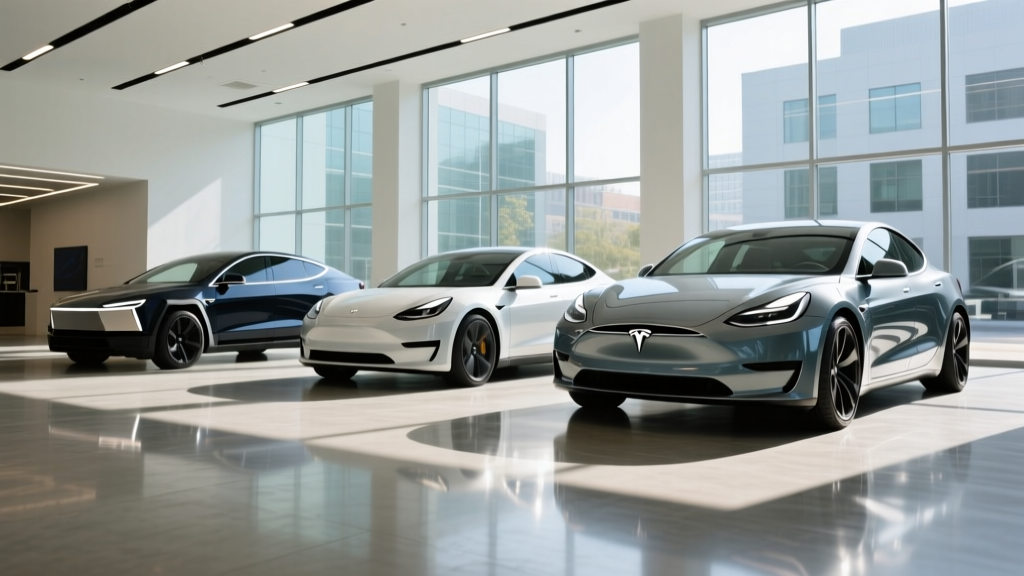
Tesla's product cycle moves faster than legacy automakers, but slower than its own hype. For buyers tracking new Tesla models coming to showrooms, the 2026 lineup represents a mix of confirmed refreshes, announced platforms, and long-delayed promises. This guide separates what you can order today from what remains in the pipeline — with exact specs, pricing, and federal tax-credit implications for each.
As of early 2026, Tesla's core lineup (Model 3, Model Y, Model S, Model X, and Cybertruck) is available for purchase, while the next-generation compact platform (often referred to as the "Model 2" or "Redwood") and the second-generation Roadster remain announced but not yet on sale. Below, we profile the confirmed 2026 models with the latest refresh specs, then preview what's coming next.
The 2026 Tesla Lineup at a Glance
| Model | Status | EPA Range | Battery (kWh) | 0-60 mph | Starting MSRP |
|---|---|---|---|---|---|
| Model 3 (Highland) | On Sale | 363 mi (LR RWD) | ~75 kWh (NMC) | 5.8s (RWD) | $38,990 |
| Model Y (Juniper) | On Sale | 320 mi (LR AWD) | ~78 kWh (NMC) | 4.8s (LR AWD) | $44,990 |
| Model S (Refresh) | On Sale | 402 mi (LR) | ~100 kWh (NMC) | 3.1s (Plaid) | $74,990 |
| Model X (Refresh) | On Sale | 348 mi (LR) | ~100 kWh (NMC) | 3.8s (Plaid) | $79,990 |
| Cybertruck | On Sale | 340 mi (AWD) | ~123 kWh (NMC) | 4.1s (AWD) | $79,990 |
| Next-Gen Compact ("Model 2") | Announced | ~250 mi (est.) | ~50-60 kWh (LFP est.) | TBD | ~$25,000 (announced target) |
| Roadster (Gen 2) | Announced | ~620 mi (claimed) | ~200 kWh (claimed) | <1.9s (claimed) | $200,000+ (est.) |
2026 Tesla Model Y "Juniper" — The Refreshed Bestseller
The Juniper-refreshed Model Y arrived in early 2025 with a redesigned interior, ventilated front seats, a rear touchscreen, ambient lighting, and a slightly revised exterior with a full-width light bar. For 2026, Tesla has carried over these updates with minor software and efficiency tweaks.
The Long Range AWD Model Y carries an EPA-estimated 320 miles. In real-world highway driving at 70-75 mph, expect approximately 265-285 miles in mild weather. In cold conditions (below 30°F), highway range can drop to 220-245 miles due to battery resistance and cabin heating load. The RWD variant (when available) posts slightly higher EPA numbers but uses the same battery pack with different software limits.
Battery and Powertrain
The Model Y Long Range AWD uses an ~78 kWh usable NMC (nickel-manganese-cobalt) battery pack with a dual-motor all-wheel-drive configuration. The Standard Range RWD variant, when offered, uses an LFP (lithium iron phosphate) pack of approximately 60 kWh — heavier but more tolerant of daily 100% charging, making it ideal for commuters who can charge at home nightly.
Charging Performance
| Charging Level | Power / Rate | Time / Miles Added |
|---|---|---|
| Level 1 (120V outlet) | ~1.4 kW | ~3-4 miles per hour |
| Level 2 (240V, 48A Wall Connector) | 11.5 kW | ~44 miles per hour; full charge in ~8 hours |
| DC Fast Charge (Supercharger V3/V4) | Peak 250 kW | 10-80% in ~25 minutes; tapers sharply above 80% |
| DC Fast Charge (CCS adapter, 3rd-party) | Peak 150-250 kW | Varies by station; ~30-40 min 10-80% |
The Model Y's charge curve peaks near 250 kW only between roughly 10-30% State of Charge (SoC), then steps down progressively. From 50-80%, sustained rates average around 80-110 kW. This is competitive but not class-leading — the Hyundai Ioniq 5 and Kia EV6 sustain higher rates longer thanks to their 800V architecture.
Performance and Efficiency
The Long Range AWD produces 384 horsepower and hits 0-60 mph in 4.8 seconds. Efficiency is rated at 122 MPGe combined (28 kWh/100 miles) per fueleconomy.gov. The Performance variant drops the 0-60 to approximately 3.5 seconds but sacrifices roughly 15-20 miles of EPA range.
Pricing and Federal Tax Credit
| Trim | MSRP | Est. After §30D Credit | Credit Eligibility Notes |
|---|---|---|---|
| Long Range AWD | $44,990 | $37,490 | Eligible if buyer meets income caps; MSRP under $80K SUV cap |
| Performance AWD | $48,990 | $41,490 | Same eligibility as LR AWD |
The IRS §30D clean vehicle credit offers up to $7,500, split between a $3,750 critical-minerals component and a $3,750 battery-components component. Eligibility depends on: (1) buyer AGI not exceeding $150K single / $300K joint, (2) vehicle MSRP under $80,000 for SUVs, and (3) battery-sourcing requirements that have tightened annually. As of 2026, Tesla's US-built vehicles with North American-sourced battery components generally qualify for at least the $3,750 component half — the critical-minerals half depends on the specific supply chain at time of delivery. The credit can now be transferred to the dealer at point of sale as an instant discount. Always verify eligibility on the IRS website and with your tax professional before purchase.
2026 Model 3 "Highland" — Refined and Quiet
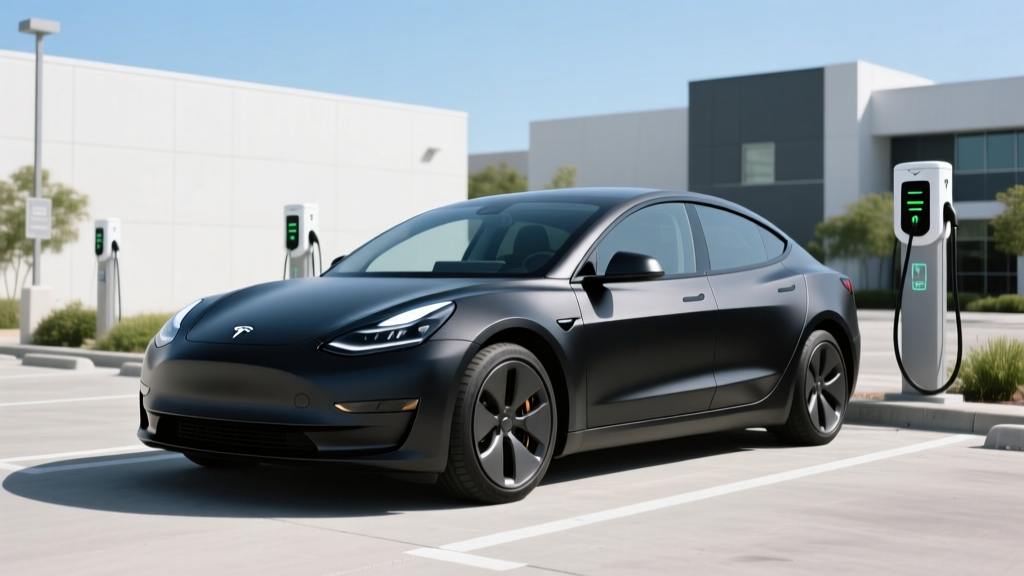
The Highland-refreshed Model 3 (introduced late 2023, carried into 2026) brought dramatically improved ride quality, a quieter cabin with acoustic glass, ventilated seats, rear passenger touchscreen, and removal of the turn-signal stalk (signals are now on the steering wheel — a love-it-or-hate-it change). The Long Range RWD variant is the efficiency champion of the entire Tesla lineup.
The Model 3 Long Range RWD posts an EPA-estimated 363 miles. On real-world highway trips at 70 mph in 65-75°F weather, owners consistently report 305-330 miles. In winter highway driving (20-30°F), plan for 255-280 miles. The base RWD Standard Range (LFP pack, ~341 EPA miles) sees slightly larger percentage losses in cold weather due to LFP chemistry characteristics at low temperatures.
Key Specs
- Battery: ~75 kWh NMC (Long Range) / ~60 kWh LFP (Standard Range RWD)
- 0-60 mph: 5.8s (LR RWD) / 3.1s (Performance AWD)
- Horsepower: 271 hp (LR RWD) / 510 hp (Performance)
- Efficiency: 132 MPGe combined (LR RWD) — 26 kWh/100 mi
- DC Fast Charge: Peak 250 kW, 10-80% in ~25 min
- Level 2 Home: 11.5 kW via Wall Connector (~44 mi/hr)
- Cargo: 23 cu ft rear trunk + ~3 cu ft frunk
- Rear legroom: 35.3 inches
- Warranty: 4-year/50,000-mi basic; 8-year/120,000-mi battery & drive unit (LR) / 8-year/100,000-mi (Standard Range)
Pricing starts at $38,990 for the Long Range RWD. With the full $7,500 §30D credit (subject to eligibility), the effective price drops to approximately $31,490 — making it one of the best-value long-range EVs on the market. The Model 3 qualifies as a sedan, so the MSRP cap is $55,000 (not $80K), but all current trims fall well under that threshold.
Model S and Model X: The Flagships Carry On
The refreshed Model S and Model X continue into 2026 with minimal changes. Both use a ~100 kWh NMC pack, tri-motor "Plaid" or dual-motor configurations, and remain the range and performance leaders in Tesla's catalog. However, sales volumes have declined as the Model Y and Model 3 absorb most buyer interest.
The Model S Long Range delivers an EPA-estimated 402 miles — the highest of any current Tesla — with real-world highway range around 330-350 miles in temperate weather. The Plaid variant sacrifices about 30 miles of range for a 1,020-hp, 1.99-second 0-60 time. Pricing starts at $74,990 (LR) and $89,990 (Plaid). As a sedan over $55K MSRP, the Model S does not qualify for the §30D federal credit.
The Model X Long Range posts 348 EPA miles with real-world highway figures around 280-300 miles. The Plaid variant hits 60 mph in 2.5 seconds with 1,020 hp. Starting at $79,990 (LR), the Model X falls under the $80K SUV MSRP cap — but just barely. The Plaid at $94,990 exceeds it and is credit-ineligible. Buyers should verify exact MSRP including destination charges against the cap.
Announced but Not Yet Available: What's Coming Next
Next-Generation Compact Platform ("Model 2" / "Redwood")
Tesla has confirmed a next-generation, lower-cost vehicle platform targeting a ~$25,000 price point. Production timing has been repeatedly shifted — initially hinted for 2025, now broadly expected for late 2026 or 2027 based on Tesla's recent earnings calls. Expected specs remain preliminary:
- Estimated range: ~250 miles EPA (smaller pack, efficiency-focused)
- Estimated battery: 50-60 kWh, likely LFP chemistry for cost reduction
- Platform: Unboxed manufacturing process, smaller footprint than Model 3
- Tax credit: At ~$25K MSRP, well under the $55K sedan cap — likely eligible for the full $7,500 if battery sourcing requirements are met at time of production
This vehicle is not currently available for purchase or reservation. Specs are estimated and subject to change.
Second-Generation Roadster
Originally announced in 2017 with a promised 2020 production date, the Roadster has been delayed repeatedly. Tesla claims a 620-mile range, sub-1.9-second 0-60, and a $200,000+ price. As of 2026, no firm production date has been confirmed. This vehicle remains announced only and should not factor into any near-term purchase decision.
Tesla Autopilot and FSD: What You Actually Get
Tesla's Autopilot and Full Self-Driving (Supervised) are SAE Level 2 driver-assistance systems. The driver must remain fully engaged, hands on or near the wheel, and eyes on the road at all times. These systems do not make the vehicle self-driving. Only Level 4 services like Waymo operate without a human driver — and those are geofenced robotaxis, not consumer vehicles.
Every 2026 Tesla ships with basic Autopilot (Traffic-Aware Cruise Control + Autosteer) at no extra cost. FSD (Supervised) adds automatic lane changes, navigate-on-autopilot, traffic-light and stop-sign recognition, and city-street autosteer. FSD can be purchased for $8,000 upfront or subscribed at $99/month. Despite the "Full Self-Driving" name, FSD Supervised requires constant driver oversight and does not absolve the driver of responsibility.
- Drive without human supervision — you must monitor at all times
- Handle all construction zones, unmapped roads, or severe weather reliably
- Replace an attentive driver — NHTSA has investigated multiple Tesla crashes involving Autopilot/FSD misuse
- Qualify as "self-driving" under any SAE or regulatory definition
Pros and Cons Across the 2026 Tesla Lineup
- Class-leading Supercharger network access (17,000+ stalls in North America)
- Best-in-class efficiency (kWh/100mi) across Model 3 and Model Y
- Over-the-air updates continuously add features
- Strong resale value relative to most EV competitors
- Point-of-sale §30D credit transfer reduces upfront cost on eligible models
- Minimal maintenance — no oil changes, rare brake-pad replacement due to regen
- Phantom braking and inconsistent Autopilot/FSD behavior remain documented issues
- Turn-signal buttons on steering wheel (Model 3 Highland) frustrate many drivers
- Build quality inconsistency — panel gaps, paint defects still reported at delivery
- No Apple CarPlay or Android Auto integration
- Insurance premiums 15-30% higher than comparable ICE vehicles in most states
- Model S/X priced above §30D MSRP caps — no federal credit for most trims
Who Should Buy a 2026 Tesla — And Who Should Look Elsewhere
- You want access to the most reliable, extensive DC fast-charging network (Superchargers)
- You prioritize efficiency and range per dollar — the Model 3 LR RWD at ~363 miles EPA and ~$31.5K after credit is hard to beat
- You want OTA software updates that meaningfully improve the car over time
- You can charge at home (Level 2) and your daily commute is under 80 miles
- You want Apple CarPlay/Android Auto (check the Hyundai Ioniq 6, BMW i4)
- You prefer traditional build quality and dealer service (BMW iX, Mercedes EQB)
- You need a sub-$30K EV now — wait for the next-gen Tesla compact or consider the Chevrolet Equinox EV
- You want hands-free Level 2+ on highways without constant steering input — GM's Super Cruise and Ford's BlueCruise offer eyes-off capability on mapped highways
Frequently Asked Questions
What is the real-world range of the 2026 Tesla Model Y?
The EPA rates the Model Y Long Range AWD at 320 miles. Real-world highway driving in mild weather yields approximately 265-285 miles. In cold weather (below 30°F), expect 220-245 miles on the highway. City driving with regenerative braking recovers more energy and often matches or exceeds the EPA estimate.
How fast does the 2026 Model 3 charge at home and on the road?
At home on a Level 2 Tesla Wall Connector (240V, 48A), the Model 3 charges at 11.5 kW — adding roughly 44 miles of range per hour, or a full charge in about 7-8 hours. On a V3/V4 Supercharger, it peaks at 250 kW and charges from 10-80% in approximately 25 minutes. Above 80%, the charge rate tapers significantly to protect battery health.
How much does a 2026 Tesla cost after federal tax credits?
The Model 3 Long Range RWD starts at $38,990. With the maximum $7,500 §30D credit (if you meet all income, MSRP, and battery-sourcing requirements), the effective price drops to approximately $31,490. The Model Y Long Range AWD at $44,990 drops to about $37,490. However, the credit is not guaranteed for every buyer — it depends on your AGI, the vehicle's battery component sourcing at time of manufacture, and correct point-of-sale transfer. Always verify on irs.gov.
Does the Tesla Model S or Model X qualify for the federal EV tax credit?
The Model S (starting $74,990) exceeds the $55,000 MSRP cap for sedans and does not qualify. The Model X Long Range ($79,990) sits just under the $80,000 SUV cap and may qualify, but the Plaid trim ($94,990) exceeds it. Buyer income limits ($300K joint / $150K single AGI) also apply regardless of MSRP.
Is a 2026 Tesla worth buying over competitors like the Ioniq 5 or BMW i4?
It depends on your priorities. Tesla wins on charging network access, efficiency, and software. The Hyundai Ioniq 5 charges faster (10-80% in ~18 min on 350 kW chargers), offers CarPlay, and has a more conventional interior. The BMW i4 provides superior build quality and dealer service but at a higher price and with less range. For road-trippers who rely on DC fast charging, Tesla's Supercharger advantage remains significant in 2026 — though NACS adoption by other automakers is narrowing that gap.
When will the $25,000 Tesla compact ("Model 2") be available?
Tesla has confirmed a next-generation compact vehicle but has not announced a firm production or sale date. Industry expectations place it in late 2026 or 2027 at the earliest. It is not currently available for purchase or reservation. Specs remain preliminary and subject to change.
What is Tesla's battery warranty?
Tesla covers the battery and drive unit for 8 years / 120,000 miles (whichever comes first) on Long Range and Performance variants, with a minimum 70% capacity retention threshold. Standard Range models (LFP) carry an 8-year / 100,000-mile battery warranty. This is competitive with the industry standard (Hyundai/Kia offer 10yr/100K). Battery replacements outside warranty currently cost $12,000-$16,000 depending on the pack.