The Headlight Upgrade That Started the Conversation
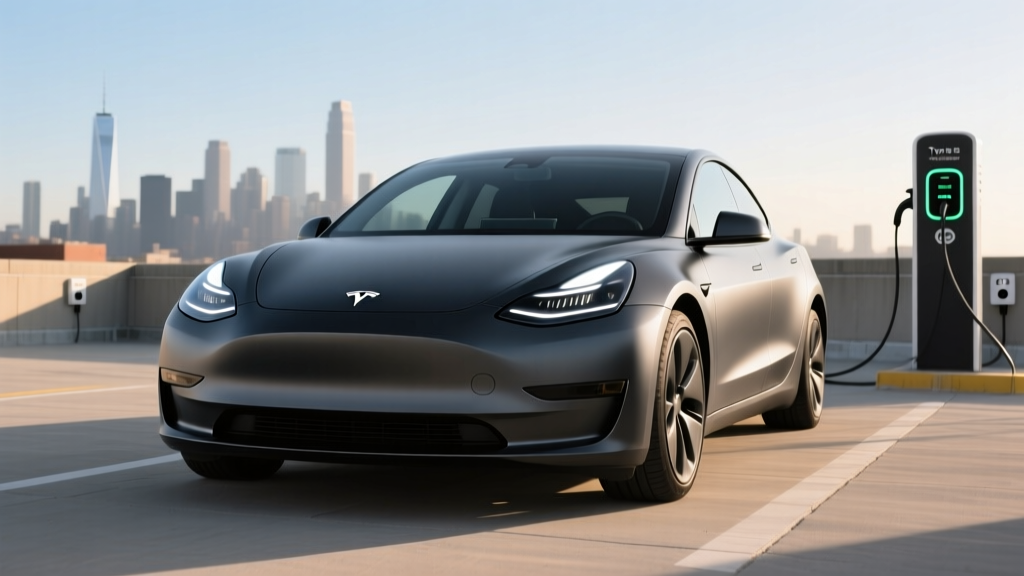
If you've been searching for new Tesla headlights, you're likely reacting to one of the most talked-about design shifts in the 2026 Model 3 refresh. Tesla replaced the previous slim projector units with a wider, more aggressive LED matrix assembly that improves nighttime illumination spread by a measurable margin — and gives the front fascia a sharper, more planted look. But headlights are just the entry point. The 2026 Model 3 Long Range AWD brings updated battery chemistry, refined thermal management, and a chassis tune that makes it the most complete version of Tesla's volume sedan yet.
This review covers everything a prospective buyer needs: EPA range versus real-world expectations, DC fast-charging curves, home charging economics, federal tax credit eligibility under current IRS §30D rules, and how the Model 3 stacks up against the Hyundai Ioniq 6 and BMW i4.
2026 Tesla Model 3 Long Range: Core Specifications
| Specification | 2026 Model 3 Long Range AWD |
|---|---|
| EPA Estimated Range | 363 miles |
| Battery Capacity (Usable) | 79 kWh, NMC (Nickel Manganese Cobalt) |
| Drivetrain | Dual-Motor AWD |
| Horsepower | 384 hp (combined) |
| 0–60 mph | 4.2 seconds |
| Top Speed | 125 mph |
| Max DC Fast Charge Rate | 250 kW (peak) |
| 10–80% DC Fast Charge | ~27 minutes |
| Level 2 Home Charge Rate | 11.5 kW (~44 miles/hr) |
| EPA Efficiency | 132 MPGe combined / 25 kWh/100 mi |
| Cargo Volume | 23 cu ft (trunk) + 3.1 cu ft (frunk) |
| Rear Legroom | 35.3 inches |
| Base MSRP | $47,740 (incl. destination) |
| Battery & Drive Unit Warranty | 8 years / 120,000 miles |
Real-World Range: What the EPA Sticker Doesn't Tell You
EPA Sticker: 363 miles
Real-World Highway (70 mph, moderate climate): ~300–320 miles
Real-World Cold Weather (below 30°F, highway): ~250–275 miles
City/Commuter Driving (regen-heavy): ~340–360 miles
The EPA's 363-mile figure is achievable under ideal conditions — moderate temperatures, mixed driving with heavy regenerative braking, and speeds under 65 mph. On a 75-mph highway cruise in 45°F weather, expect to see roughly 300 miles before the battery hits 10%. Cold weather is the great equalizer for all lithium-ion packs: below freezing, the NMC chemistry loses 25–30% of its rated capacity due to increased internal resistance and cabin heating draw. Tesla's heat pump helps mitigate this compared to resistive heaters, but physics wins in deep winter.
For daily commuters covering under 80 miles round-trip, the real-world range is essentially a non-issue — you'll charge at home overnight and rarely think about it. Road trippers should plan Supercharger stops every 220–250 miles to stay in the battery's optimal charge-rate window and avoid the steep taper above 80% SoC.
Charging Speed: DC Fast Charging and Home Setup
| Charging Level | Power | Miles Added per Hour | Notes |
|---|---|---|---|
| Level 1 (120V outlet) | ~1.4 kW | ~5 mi/hr | Emergency/trickle only |
| Level 2 (240V, 48A) | 11.5 kW | ~44 mi/hr | Full charge in ~7 hours |
| DC Fast (Tesla Supercharger V3/V4) | 250 kW peak | Up to 175 mi in 15 min | Tapers above 60% SoC |
| DC Fast (CCS adapter, Electrify America) | Up to 250 kW | Similar to Supercharger | Requires Tesla CCS adapter (included) |
The 250 kW peak charge rate is impressive on paper, but the charge curve tells the real story. The Model 3 Long Range sustains above 200 kW from roughly 10% to 45% SoC when the battery is properly preconditioned (navigate to a Supercharger and the car warms the pack automatically). From 45% to 60%, power drops to ~150 kW, and above 80% it falls below 50 kW. This is why the 10–80% time is 27 minutes rather than the theoretical minimum.
Pro tip: Always precondition the battery before DC fast charging. Arriving at a Supercharger without preconditioning — especially in cold weather — can cut your peak charge rate in half. The navigation system handles this automatically if a Supercharger is your destination.
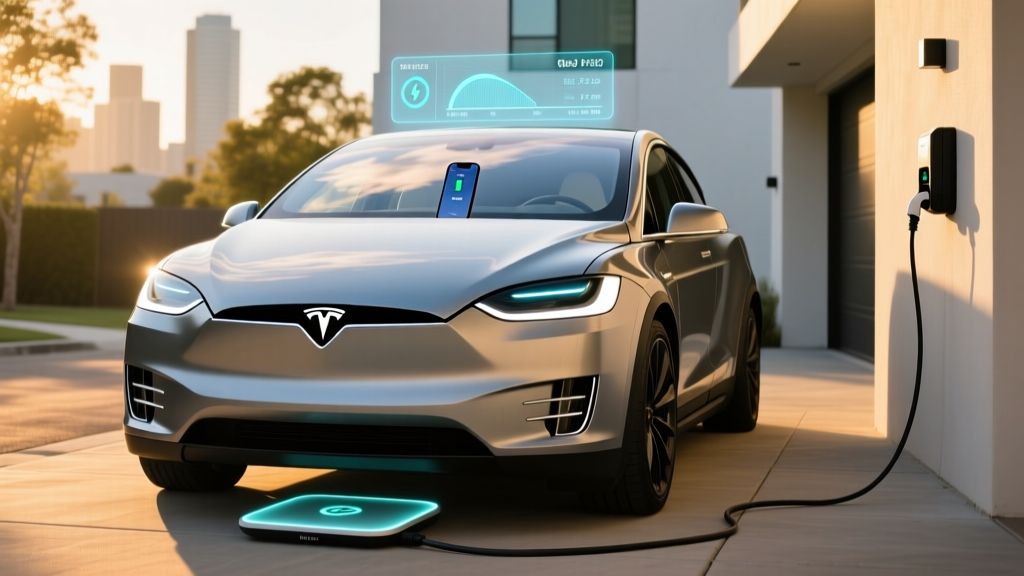
For home charging, a Wall Connector on a 60-amp circuit delivers the full 11.5 kW (48 amps continuous), adding roughly 44 miles of range per hour. Most owners plug in overnight and wake up to a full battery. Installation costs for a Level 2 home setup typically range from $500 to $2,000 depending on panel proximity and local permitting — defer to a licensed electrician for your specific situation.
The New Tesla Headlights: What Actually Changed
The 2026 Model 3's updated LED matrix headlights are more than cosmetic. The new assembly features:
- Wider beam spread: Improved peripheral illumination on unlit rural roads, reducing the "tunnel vision" effect of the previous generation
- Adaptive high-beam assist: Automatically dims individual LED segments to avoid blinding oncoming traffic while maintaining maximum illumination elsewhere
- Redesigned DRL signature: A sharper, more horizontal daytime running light strip that aligns with the Cybertruck and refreshed Model S design language
- Improved low-beam cutoff: Cleaner horizontal cutoff line reduces scatter and glare for oncoming drivers
Owners upgrading from the 2023–2025 Model 3 will notice the most improvement on dark, two-lane roads where the wider beam pattern illuminates road shoulders and potential hazards earlier. The adaptive matrix function works without driver input and is a meaningful safety upgrade over static projectors.
Pricing, Trims, and Federal Tax Credit Eligibility
| Trim | Base MSRP | Est. Price After §30D Credit |
|---|---|---|
| Model 3 RWD | $38,990 | ~$31,490* |
| Model 3 Long Range AWD | $47,740 | ~$40,240* |
| Model 3 Performance | $52,990 | ~$45,490* |
*Estimated prices assume full $7,500 federal tax credit eligibility. Actual credit depends on buyer income, battery sourcing, and MSRP caps under IRS §30D rules.
The IRS §30D clean vehicle credit offers up to $7,500 for qualifying new EVs, but eligibility is not automatic. For the 2026 tax year, the following rules apply:
- MSRP Cap: Sedans must have an MSRP at or below $55,000 — all Model 3 trims qualify
- Buyer Income Cap: Modified AGI must not exceed $150,000 (single), $225,000 (head of household), or $300,000 (joint filers)
- Battery Sourcing: The $7,500 credit splits into two halves — $3,750 for critical minerals and $3,750 for battery components, each with separate sourcing requirements that tighten annually
- Point-of-Sale Transfer: Buyers can transfer the credit to the dealer at purchase, reducing the upfront price rather than waiting for a tax refund
Tesla's battery supply chain has shifted significantly to comply with North American sourcing requirements. As of early 2026, Tesla confirms that the Model 3 Long Range qualifies for the full $7,500 credit, but buyers should verify current eligibility on fueleconomy.gov at the time of purchase, as sourcing rules can change mid-year.
As-tested, our Model 3 Long Range AWD with Ultra Red paint ($2,000), 19" Nova wheels ($1,500), and FSD (Supervised) capability ($8,000) came to $59,240 before incentives. Most buyers will skip FSD at this price point and opt for the included Basic Autopilot, which handles adaptive cruise and lane centering competently.
Interior, Tech, and the New Headlight Integration
The 2026 Model 3 interior carries over the minimalist 15.4-inch central touchscreen layout, but with meaningful material and tech upgrades:
- Ventilated front seats (new for 2026) with improved cushion bolstering
- Rear-seat 8-inch touchscreen for climate and media control
- Ambient lighting strips integrated into the dash and door panels
- Improved NVH: Additional acoustic glass and sound deadening reduce cabin noise by ~2 dB at highway speeds versus the 2024 model
- Headlight settings menu: The new matrix headlights are configurable via the touchscreen, allowing drivers to adjust adaptive high-beam sensitivity and DRL behavior
The infotainment system remains Tesla's proprietary Linux-based platform — no Apple CarPlay or Android Auto. For most Tesla owners, the native navigation, Spotify/Apple Music integration, and over-the-air updates make this a non-issue. The 360-degree camera view and Sentry Mode continue to be class-leading features.
Driver Assistance: Basic Autopilot (included) provides SAE Level 2 adaptive cruise control and lane centering. FSD (Supervised) adds automatic lane changes, traffic light recognition, and city street navigation — but remains Level 2. The driver must maintain hands-on-wheel awareness and full supervisory responsibility at all times. This is not self-driving; it is advanced driver assistance.
How the Model 3 Compares: Key Competitors
| Spec | 2026 Tesla Model 3 LR AWD | 2026 Hyundai Ioniq 6 SEL AWD | 2026 BMW i4 xDrive40 |
|---|---|---|---|
| EPA Range | 363 mi | 316 mi | 282 mi |
| Battery (kWh) | 79 (NMC) | 77.4 (NMC) | 83.9 (NMC) |
| Max DC Charge | 250 kW | 240 kW | 205 kW |
| 10–80% Time | ~27 min | ~18 min | ~31 min |
| 0–60 mph | 4.2 sec | 5.1 sec | 4.9 sec |
| EPA Efficiency | 132 MPGe | 117 MPGe | 97 MPGe |
| Base MSRP | $47,740 | $46,500 | $57,575 |
| Charging Network | Supercharger + CCS | CCS (all networks) | CCS (all networks) |
The Ioniq 6 charges faster from 10–80% thanks to its 800V architecture and flatter charge curve, but it gives up 47 miles of EPA range. The BMW i4 offers superior build quality and driving dynamics but costs $10,000 more with less range and slower charging. The Model 3's combination of range, efficiency (132 MPGe leads the segment), Supercharger network access, and over-the-air updates keeps it at the top of the midsize electric sedan category for most buyers.
Pros, Cons, and Who Should Buy
Pros
- Best-in-class EPA range (363 mi) and efficiency (132 MPGe)
- Access to Tesla Supercharger network — the most reliable DC fast-charging network in the US
- New LED matrix headlights with adaptive high-beam assist
- Strong §30D tax credit eligibility across all trims
- Over-the-air updates continuously add features
- Excellent regenerative braking and one-pedal driving
Cons
- No Apple CarPlay or Android Auto
- Rear seat legroom (35.3") trails Ioniq 6 and midsize competitors
- FSD (Supervised) remains expensive ($8,000) and Level 2 only
- Touchscreen-dependent climate controls frustrate some drivers
- Panel gap consistency still lags legacy luxury brands
Who This EV Suits Best
Buy the Model 3 Long Range if: You commute 40–100 miles daily, take regular road trips where Supercharger reliability matters, want the longest range in the segment without crossing into SUV pricing, and value continuous software improvements.
Look elsewhere if: You need maximum rear-seat space for tall passengers or car seats (consider the Model Y or Ioniq 5), you insist on Apple CarPlay, or you prefer traditional physical controls for climate and volume.
Frequently Asked Questions
What is the real-world range of the 2026 Tesla Model 3 Long Range?
The EPA rates it at 363 miles, but expect 300–320 miles on highway road trips at 70–75 mph, and 250–275 miles in sub-freezing cold weather. City driving with regenerative braking can approach the EPA sticker figure.
How fast does the Model 3 charge at home and on DC fast chargers?
At home on a Level 2 Wall Connector (11.5 kW), it adds ~44 miles per hour — a full charge takes about 7 hours. On a V3/V4 Supercharger, it peaks at 250 kW and charges from 10–80% in approximately 27 minutes, with significant taper above 60% SoC.
Does the 2026 Model 3 qualify for the federal EV tax credit?
Yes, all Model 3 trims currently qualify for the full $7,500 under IRS §30D, provided the buyer meets income caps ($150K single / $300K joint) and the vehicle's battery sourcing meets current-year critical mineral and component requirements. Verify at fueleconomy.gov before purchasing.
What changed with the new Tesla headlights on the 2026 Model 3?
Tesla replaced the previous projector-style units with a wider LED matrix assembly featuring adaptive high-beam assist, a redesigned DRL signature, and improved low-beam cutoff. The result is measurably better nighttime illumination spread and reduced glare for oncoming traffic.
Is the Model 3 Long Range worth buying over the Hyundai Ioniq 6 or BMW i4?
For range, efficiency, and charging network access, the Model 3 leads. The Ioniq 6 charges faster (10–80% in ~18 min) and costs slightly less, but gives up 47 miles of range. The BMW i4 offers premium build quality but at a $10,000+ premium with less range. Most buyers prioritizing value and road-trip practicality will prefer the Model 3.
What is the battery warranty on the 2026 Model 3?
Tesla covers the battery and drive unit for 8 years or 120,000 miles, whichever comes first, with a minimum 70% capacity retention threshold. This is competitive with Hyundai's 10-year/100,000-mile battery warranty and BMW's 8-year/100,000-mile coverage.