Why BYD's Hungary Factory Matters to EV Buyers Everywhere
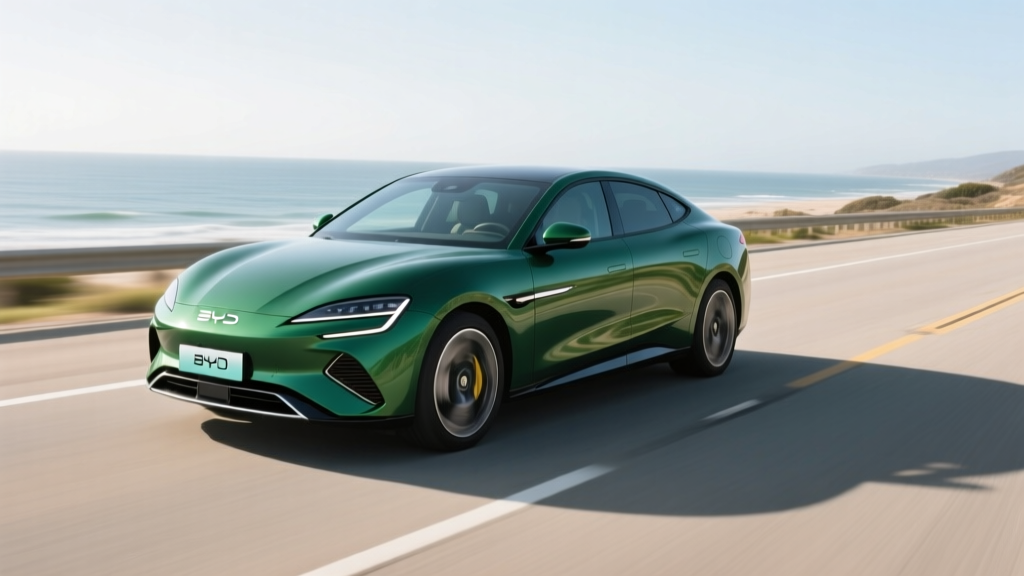
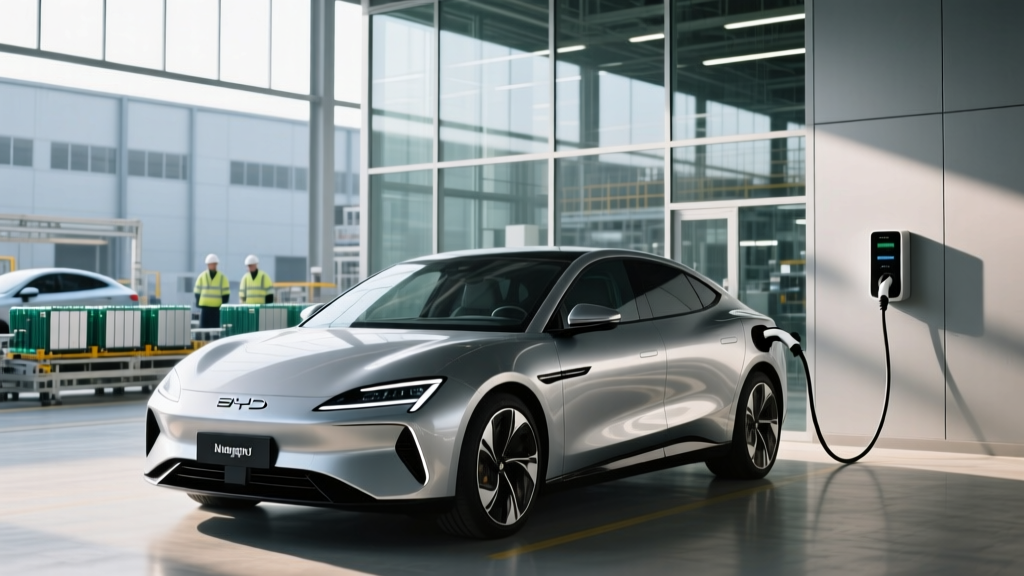
When BYD broke ground on its Szeged, Hungary passenger-car plant in late 2023, it signaled a strategic inflection point: the world's largest plug-in-electric automaker was planting a flag inside the European Union's tariff wall. By 2026, the facility is ramping toward an annual capacity of 150,000–200,000 vehicles, producing models like the Atto 3 (known in some markets as the Yuan Plus), Dolphin, and Seal for European delivery. For US-based EV shoppers tracking global pricing and platform evolution, the Hungary plant is a bellwether for where BYD's technology, cost structure, and model lineup are headed next — even if these cars aren't sold stateside today.
This profile examines the vehicles rolling out of Szeged, the Blade Battery architecture underpinning them, and the real-world ownership data that matters to anyone comparing BYD against Tesla, Hyundai, and Volkswagen on the global stage.
The BYD Models Built in Hungary: Specs at a Glance
The Szeged plant focuses on BYD's e-Platform 3.0 vehicles — a dedicated BEV architecture with an 800-volt-capable electrical system, cell-to-body battery integration, and standard heat-pump HVAC. Here are the headline models and their key specifications as of the 2026 model year:
| Spec | Atto 3 | Dolphin | Seal |
|---|---|---|---|
| EPA-est. range (WLTP shown; EPA ~10–15% lower) | WLTP 260 mi / ~225 mi EPA-adj. | WLTP 265 mi / ~230 mi EPA-adj. | WLTP 354 mi / ~305 mi EPA-adj. |
| Battery (usable kWh) | 58.56 kWh | 60.48 kWh | 82.5 kWh |
| Chemistry | LFP Blade | LFP Blade | LFP Blade |
| Peak DC fast charge | 88 kW | 88 kW | 150 kW |
| 10–80% DC time (est.) | ~29 min | ~29 min | ~26 min |
| Level 2 AC rate | 7 kW (11 kW optional) | 7 kW | 11 kW |
| 0–60 mph | 7.3 sec | 7.0 sec | 3.8 sec (AWD) |
| Horsepower | 201 hp | 201 hp | 523 hp (AWD) |
| Drivetrain | FWD | FWD | RWD / AWD |
| MPGe (WLTP adj.) | ~110 MPGe | ~115 MPGe | ~105 MPGe (AWD) |
| Cargo (rear seats up / folded) | 15.7 / 47.3 cu ft | 12.1 / 37.7 cu ft | 14.1 / N/A (sedan) |
| Base MSRP (Europe, €) | €38,000 | €35,000 | €48,000 |
Note: EPA range figures are estimates derived from WLTP data; BYD has not published US EPA certifications. WLTP tends to overstate range by 10–15% versus EPA methodology. Source: BYD Europe official site.
Blade Battery Chemistry: LFP Done Right
Every BYD model from Szeged uses the company's proprietary Blade Battery — a lithium iron phosphate (LFP) cell arranged in long, thin prismatic modules that slot directly into the pack tray. This cell-to-body (CTB) integration eliminates module-level hardware, improving volumetric energy density by roughly 50% over conventional LFP packs, according to BYD's published engineering data.
Why this matters for buyers:
- Longevity: LFP chemistry inherently resists thermal runaway and supports 3,000+ full charge cycles before reaching 80% state-of-health — roughly double the cycle life of typical NMC cells.
- Safety: BYD's nail-penetration test (a standard the company publicized aggressively) shows the Blade cell does not ignite or emit significant gas when punctured — a meaningful differentiator versus high-nickel NMC.
- Cost: LFP avoids cobalt and nickel, insulating BYD from the commodity-price swings that have plagued NMC-dependent competitors. This is a core reason the Atto 3 undercuts the Volkswagen ID.4 in European pricing.
- Trade-off: LFP's lower energy density means heavier packs for equivalent range. The Seal's 82.5 kWh pack weighs roughly 1,100 lbs, contributing to a curb weight over 4,700 lbs in AWD trim.
Real-World Range Reality Check
Seal AWD (82.5 kWh): WLTP 354 mi translates to roughly 305 mi EPA-equivalent. Expect ~260–275 mi in mixed highway driving at 70 mph, and as low as 210–230 mi in sub-30°F winter conditions despite the standard heat pump. LFP packs lose slightly more range in extreme cold than NMC due to higher internal resistance at low temperatures.
Atto 3 (58.56 kWh): WLTP 260 mi ≈ ~225 mi EPA-adj. Highway-heavy commutes will see 185–200 mi; city/regen-heavy driving can approach the sticker number.
Charging Speed: Adequate, Not Class-Leading
This is where BYD's Europe lineup faces its most honest criticism. The Atto 3 and Dolphin peak at just 88 kW on DC fast charging — meaning a 10–80% session takes roughly 29 minutes at a 150+ kW station. The Seal improves to 150 kW peak, achieving 10–80% in approximately 26 minutes.
For context, the Hyundai Ioniq 5 peaks at 240 kW (10–80% in ~18 min) and the Tesla Model Y at 250 kW (~15 min). BYD's more conservative charge curves are partly a function of LFP chemistry (which tolerates high-C-rate charging less gracefully than NMC at elevated SoC) and partly a cost-saving measure on thermal-management hardware.
| Model | Peak DC kW | 10–80% Time | Level 2 Rate | Connector |
|---|---|---|---|---|
| BYD Seal AWD | 150 kW | ~26 min | 11 kW | CCS2 (Europe) |
| BYD Atto 3 | 88 kW | ~29 min | 7 kW | CCS2 |
| Hyundai Ioniq 5 | 240 kW | ~18 min | 10.9 kW | CCS1/NACS |
| Tesla Model Y LR | 250 kW | ~15 min | 11.5 kW | NACS |
| VW ID.4 Pro S | 175 kW | ~28 min | 11 kW | CCS1/NACS |
At home on a Level 2 wallbox, the Seal adds roughly 30–35 miles of range per hour of charging at 11 kW. The Atto 3 and Dolphin, limited to 7 kW (unless the 11 kW onboard charger option is selected), add about 20–22 miles per hour. An overnight 8-hour session fully replenishes any of these packs.
Performance, Ride, and Tech: The Ownership Experience
The Seal AWD's 3.8-second 0–60 mph time puts it in Tesla Model 3 Performance territory, and its dual-motor torque vectoring delivers confident corner-exit traction. The FWD Atto 3 and Dolphin, at 7.0–7.3 seconds, are adequate for merging and passing but won't win stoplight races.
Infotainment: BYD's signature 15.6-inch rotating center screen (landscape for navigation, portrait for app-style menus) runs a customized Android-based OS. It supports wireless Apple CarPlay and Android Auto, over-the-air updates, and a built-in 4G hotspot. Response times are quick, though the menu hierarchy takes acclimation compared to Tesla's minimalist UI or Hyundai's conventional layout.
Driver Assistance: All Europe-market BYDs ship with the ADAS suite branded "BYD Pilot" — adaptive cruise control with stop-and-go, lane-centering assist, blind-spot monitoring, rear cross-traffic braking, and a 360° camera system. This is SAE Level 2 driver assistance: the driver must keep hands on the wheel and eyes on the road at all times. It is not autonomous driving. Competence is comparable to Toyota Safety Sense 3.0, though not as refined as GM's Super Cruise on mapped highways.
Notable Drawbacks:
- Rear visibility in the Seal is compromised by the sloping roofline and thick C-pillars.
- The Dolphin's 12.1 cu ft cargo area is tight for a family hatchback — the Chevrolet Bolt EUV offers 16.3 cu ft.
- No front trunk (frunk) on any model — the e-Platform 3.0 packaging prioritizes cabin space over under-hood storage.
- European CCS2 connectors are incompatible with US CCS1/NACS infrastructure without adapters, which is moot since these cars aren't sold in the US.
Warranty Coverage and Battery Longevity
BYD provides the following warranty coverage for European-market vehicles (US terms would differ if/when the brand enters the market):
- Vehicle limited warranty: 6 years / 150,000 km (~93,000 mi)
- Blade Battery warranty: 8 years / 200,000 km (~124,000 mi) with a 70% state-of-health retention guarantee
- Drive unit (motor/inverter): 8 years / 150,000 km
The 70% SoH threshold is industry-standard (matching Tesla, Hyundai, and VW), though some competitors like Rivian guarantee 70% at 100,000 miles with fewer total miles covered. LFP's inherent cycle-life advantage means most Blade packs should retain well above 80% capacity at 100,000 miles under normal use — degradation data from early Chinese-market Blade vehicles supports this projection.
Pricing, Tax Credits, and US Availability Outlook
Here is the critical question for US readers: Can you buy a BYD in America today? The answer, as of early 2026, is no. BYD has not announced US retail sales, and the company faces two significant barriers:
Federal Tax Credit (§30D) Eligibility — If BYD Entered the US
- MSRP caps: SUVs/vans/pickups ≤ $80,000; sedans ≤ $55,000 (IRS §30D rules)
- Buyer income caps: AGI ≤ $150,000 single / $300,000 joint filers
- Battery sourcing: Critical minerals and battery components must meet escalating US/free-trade-agreement sourcing thresholds — BYD's vertically integrated Chinese supply chain would face significant compliance hurdles
- FEOC exclusion: Vehicles with battery components from a "foreign entity of concern" (Chinese state-linked companies) are disqualified from the credit under current IRS rules — this effectively bars BYD from the $7,500 credit
- Point-of-sale transfer: If eligible, buyers can transfer the credit to the dealer for an instant price reduction at purchase
Source: IRS Clean Vehicle Credit guidelines. Tax rules change frequently — consult a tax professional before purchasing.
The FEOC (Foreign Entity of Concern) restriction, tied to battery-component and critical-minerals sourcing from Chinese entities, is the most immediate obstacle. Even if BYD established a US dealership network tomorrow, its vertically integrated supply chain — which controls everything from lithium mining to cell manufacturing in China — would almost certainly disqualify its vehicles from the §30D credit under current law. This is a structural disadvantage versus competitors like Hyundai (which manufactures in Georgia) and Tesla (Fremont/Austin).
The Hungary plant exists partly to sidestep a parallel issue: the EU's 2024 imposition of countervailing duties on Chinese-made EVs (up to 35.3% on BYD, per European Commission findings). By manufacturing inside the EU customs zone, BYD avoids these tariffs for European customers. A similar US tariff structure (currently 100% on Chinese-made EVs under Section 301) makes direct import economically unviable.
Who Should Watch BYD's European Play?
While you cannot purchase a BYD in the United States in 2026, the company's Hungary strategy matters for three groups of EV buyers:
Pay Attention to BYD If:
- You're a US buyer comparing global platforms: BYD's LFP pricing pressure is already forcing Hyundai, VW, and Stellantis to accelerate their own LFP adoption. Expect sub-$30,000 LFP models from competitors within 2–3 model years, partly in response to BYD's cost structure.
- You're considering a used EV import or gray-market purchase: Not recommended — US safety certification (NHTSA/FMVSS) and EPA compliance are not met by EU-spec BYDs, and parts/service infrastructure does not exist stateside.
- You're a European-based reader or dual-citizen: The Atto 3 and Seal represent strong value versus the ID.4 and Model Y in the EU market, particularly for buyers prioritizing battery longevity and safety over fast-charging speed.
Look Elsewhere If:
- You need DC fast charging above 150 kW for frequent road trips (the Ioniq 5, Ioniq 6, or Model Y are meaningfully faster)
- You require a frunk, third-row seating, or truck-bed utility
- You want a vehicle with established US service infrastructure and resale-value data
BYD Hungary FAQ
What is the real-world range of BYD models from the Hungary plant?
The Seal AWD delivers approximately 260–275 highway miles in moderate temperatures and 210–230 miles in sub-freezing conditions, against a WLTP sticker of 354 mi (~305 EPA-adjusted). The Atto 3 yields roughly 185–200 highway miles against a WLTP of 260 mi. LFP chemistry is more cold-sensitive than NMC, so winter range loss can reach 25–30%.
How fast do Hungary-built BYDs charge?
The Atto 3 and Dolphin peak at 88 kW DC (10–80% in ~29 min). The Seal peaks at 150 kW (10–80% in ~26 min). These are adequate but trail the Hyundai Ioniq 5 (240 kW, ~18 min) and Tesla Model Y (250 kW, ~15 min). Home Level 2 charging ranges from 7–11 kW depending on model and onboard-charger option.
Can I buy a BYD in the United States?
No. As of 2026, BYD does not sell passenger vehicles in the US market. The 100% Section 301 tariff on Chinese-made EVs and the FEOC battery-sourcing exclusion from the §30D tax credit create insurmountable barriers under current policy. The Hungary plant serves European customers only.
Does BYD qualify for the US federal EV tax credit?
Even if BYD sold cars in the US, its Chinese-manufactured battery cells and critical-mineral supply chain would almost certainly trigger the FEOC (Foreign Entity of Concern) exclusion under IRS §30D rules, disqualifying its vehicles from the up-to-$7,500 credit. This is a structural supply-chain issue, not a pricing issue.
What are the biggest pros and cons of BYD's European lineup?
Pros: Excellent LFP battery longevity and safety, competitive pricing (Atto 3 from €38,000), strong Seal AWD performance (3.8s 0–60), comprehensive ADAS standard, heat pump standard on all models.
Cons: Mediocre DC fast-charge speeds (88–150 kW), no frunk, Dolphin cargo space is tight (12.1 cu ft), infotainment learning curve, no US availability or service network.
Is the BYD Seal worth buying over a Tesla Model 3 or Hyundai Ioniq 6?
In Europe, the Seal is a credible alternative — it undercuts the Model 3 Long Range on price while offering comparable 0–60 performance and superior battery cycle life. Its weakness is charging speed: if you road-trip frequently, the Ioniq 6's 800V architecture and ~200+ kW peak rate save meaningful time on long journeys. For European buyers who charge primarily at home and value long-term battery durability, the Seal is a strong pick.