The Short Answer on New Subaru EVs in 2026
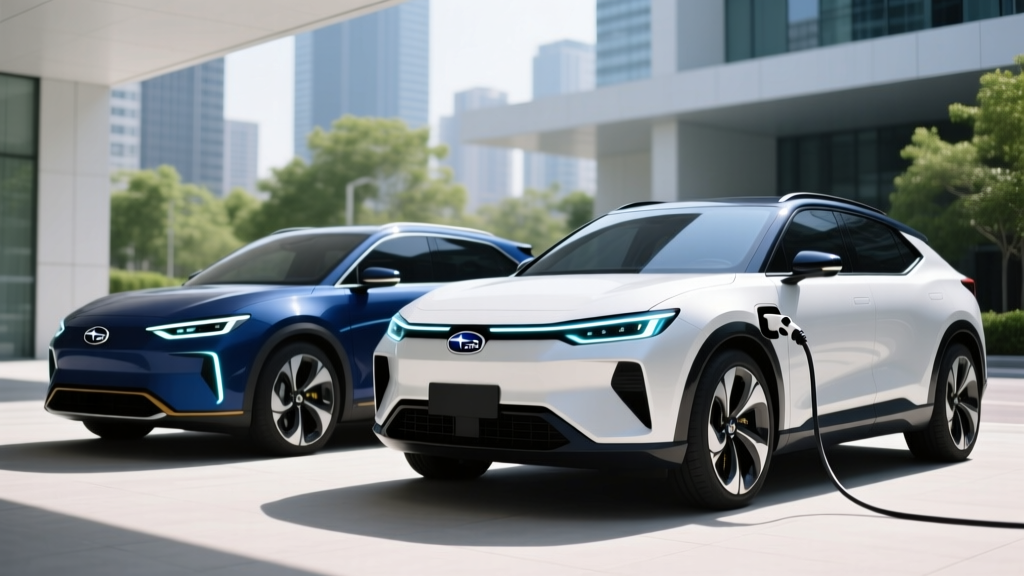
Subaru currently sells two battery-electric vehicles in the U.S.: the Solterra (compact SUV, co-developed with Toyota's bZ4X) and the Uncharted (smaller crossover arriving for the 2026 model year). The 2026 Solterra offers up to an EPA-estimated 227 miles of range, 72.8 kWh of usable battery capacity, and DC fast charging up to 150 kW. The Uncharted targets roughly 250 miles of range on a smaller, more affordable platform. Both come standard with Subaru's symmetrical all-wheel drive. If you have Level 2 home charging and drive under 200 miles daily, either can replace a gas compact SUV. If you rely solely on public charging or regularly drive 300+ miles in freezing weather, Subaru's current EV lineup demands careful route planning.
Subaru's 2026 EV Lineup at a Glance
Subaru's electrification strategy has been deliberate rather than aggressive. Unlike Hyundai or Tesla, Subaru leaned into its hybrid Outback and Crosstrek offerings while gradually building its BEV portfolio. For 2026, buyers have two distinct options:
| Spec | 2026 Solterra | 2026 Uncharted (Announced) |
|---|---|---|
| Body Style | Compact SUV (5-seat) | Subcompact Crossover (5-seat) |
| Platform | e-TNGA (shared with Toyota bZ4X) | Dedicated Subaru EV platform |
| Battery (Usable) | 72.8 kWh (NMC lithium-ion) | ~60 kWh (estimated, NMC) |
| EPA Range | Up to 227 mi (Premium trim, 18" wheels) | ~250 mi (preliminary estimate) |
| Drivetrain | Dual-motor AWD (214 hp) | Dual-motor AWD (~220 hp est.) |
| 0-60 mph | ~6.5 sec | ~6.8 sec (est.) |
| Max DC Fast Charge | 150 kW (CCS1 / NACS adapter avail.) | ~150 kW (est.) |
| 10-80% DC Charge | ~35 min | ~30 min (est.) |
| Level 2 (240V) Rate | ~7.2 kW (~23 mi/hr) | ~7.2 kW (est.) |
| MPGe (Combined) | 104 MPGe | TBD |
| Starting MSRP | $39,995 (Base) | ~$35,000 (announced estimate) |
| Battery Warranty | 8 yr / 100,000 mi | 8 yr / 100,000 mi (est.) |
Note: Uncharted figures are preliminary and based on Subaru's announced targets. Final EPA certification and pricing will be confirmed closer to the on-sale date. Source: Subaru.com.
Real-World Range: What the EPA Sticker Doesn't Tell You
The Solterra's 227-mile EPA rating applies to the Premium trim with 18-inch wheels. Step up to the Touring trim with 20-inch wheels and the rating drops to 222 miles. But EPA testing uses a mix of city and highway driving at moderate temperatures. Here is what Subaru owners actually report:
2026 Solterra Real-World Range Expectations
- EPA sticker: 227 miles (Premium, 18" wheels)
- Highway-heavy driving (70-80 mph): ~185-200 miles
- City/suburban mixed: ~210-225 miles
- Cold weather (below 32°F, highway): ~155-175 miles (25-30% reduction)
- Cold weather + cabin heat + 80 mph: ~140-160 miles
The Solterra uses an NMC (nickel manganese cobalt) battery chemistry, which offers higher energy density but is more sensitive to cold-weather range loss than LFP chemistry. Subaru includes a battery preconditioning feature for DC fast charging, but unlike Tesla or Hyundai, the Solterra does not currently precondition the battery automatically during navigation-routed charging. You must manually activate it through the infotainment menu before arriving at a charger — a quirk that can add 10-15 minutes to your charging stop in cold weather if forgotten.
According to fueleconomy.gov, the 2026 Solterra's combined efficiency is 104 MPGe (approximately 32 kWh per 100 miles). That is competitive with the Toyota bZ4X but trails the Hyundai Ioniq 5's 114 MPGe. In practical terms, you will spend roughly $0.10-$0.14 per mile charging at home (at $0.13/kWh national average) versus $0.14-$0.18 per mile fueling a comparable gas-powered Subaru Forester at $3.50/gallon.
Charging Speed and Infrastructure: The Honest Picture
The Solterra's 150 kW peak DC fast-charging rate is its most debated specification. Here is why that number requires context:
| Charging Level | Power (kW) | Speed (Miles of Range Added) | Use Case |
|---|---|---|---|
| Level 1 (120V household) | ~1.2 kW | ~3-4 mi/hr | Emergency/overnight trickle |
| Level 2 (240V home/public) | 7.2 kW | ~23 mi/hr | Daily home charging, full overnight fill |
| DC Fast (50 kW public) | 50 kW | ~150 mi/hr | Older public stations |
| DC Fast (150 kW peak) | 150 kW | ~380 mi/hr (peak) | Electrify America, EVgo 150+ stations |
The charge curve reality: The Solterra peaks at 150 kW only between roughly 10-30% state of charge. From 30-60%, it sustains approximately 100-120 kW. Above 80%, it tapers sharply to under 40 kW. This is why Subaru quotes 10-80% in approximately 35 minutes — but a 10-100% session will take closer to 55-60 minutes. Competitors like the Hyundai Ioniq 5 (peak 240 kW, 10-80% in ~18 minutes) significantly outpace the Solterra on road trips.
Connector note: The 2026 Solterra ships with a CCS1 charge port. However, Subaru offers a NACS adapter (compatible with Tesla Superchargers) either included or available depending on trim. As the industry transitions to NACS through 2026-2027, this adapter access is critical — it opens roughly 15,000 additional Tesla Supercharger stalls to Solterra owners.
Home Charging: What It Actually Costs to Install
Subaru includes a portable Level 1 charging cord with every Solterra. For daily ownership, you will want a Level 2 home charger. Here is a realistic installation budget:
| Item | Cost Range |
|---|---|
| Level 2 charger hardware (ChargePoint, Emporia, Wallbox) | $350 - $700 |
| Electrician labor (240V/40A circuit, 30-50 ft run) | $500 - $1,500 |
| Permit and inspection | $50 - $200 |
| Electrical panel upgrade (if 100A panel, need 200A) | $1,500 - $3,000 |
| Total (no panel upgrade) | $900 - $2,400 |
| Total (with panel upgrade) | $2,400 - $5,400 |
At 7.2 kW, a full Solterra charge from empty takes about 10 hours on Level 2 — easily achievable overnight. If your daily commute is 40-60 miles round trip, you will typically plug in every 2-3 nights and wake up fully charged.
Solterra vs. Gas Forester: 5-Year Ownership Cost Breakdown
The most common question from Subaru shoppers: does the Solterra actually save money compared to a gas-powered Forester? Let's run the numbers over five years and 75,000 miles.
| Cost Category | 2026 Solterra Premium | 2026 Forester Premium (Gas) |
|---|---|---|
| MSRP (before incentives) | $41,995 | $34,495 |
| Federal tax credit (§30D, if eligible) | -$0 to -$7,500* | $0 |
| Effective purchase price | $34,495 - $41,995 | $34,495 |
| Fuel/energy (75,000 mi) | $2,800 (home) / $5,600 (public DC) | $8,250 (29 MPG avg, $3.50/gal) |
| Maintenance (5 yr) | ~$1,200 (tire rotations, cabin filter, wipers) | ~$3,800 (oil, filters, brakes, fluids) |
| Insurance (5 yr avg) | ~$9,500 | ~$7,800 |
| Estimated depreciation | ~$18,000 | ~$14,500 |
| 5-Year Total (home charging, max credit) | ~$61,495 | ~$68,845 |
| 5-Year Total (public charging, no credit) | ~$81,095 | ~$68,845 |
*Federal tax credit caveat: Under current IRS §30D rules, the Solterra's eligibility for the full $7,500 credit depends on battery component and critical-mineral sourcing requirements, buyer income caps ($150K single / $300K joint AGI), and the $80,000 SUV MSRP cap. The credit can be transferred to the dealer as a point-of-sale discount. Always verify current-year eligibility with your tax professional before relying on the credit in your budget.
The takeaway is stark: home charging is the economic linchpin. With a Level 2 home setup and full tax-credit eligibility, the Solterra undercuts the Forester over five years despite a higher sticker price. Without home charging, the higher cost of public DC fast charging (typically $0.35-$0.50/kWh at Electrify America or EVgo) erases the fuel-cost advantage and makes the Forester cheaper to own.
Common Misconceptions About Subaru's EVs
| Myth | Fact |
|---|---|
| "The Solterra is just a rebadged Toyota bZ4X." | They share the e-TNGA platform and battery, but Subaru tunes the suspension, AWD system, and X-MODE off-road software independently. The Solterra has 8.3 inches of ground clearance vs. the bZ4X's 7.0 inches, and its AWD torque distribution is Subaru-specific. |
| "EV batteries need replacing every 5 years." | NMC batteries in modern EVs like the Solterra are warrantied for 8 years/100,000 miles against degradation below 70% capacity. Real-world data from similar platforms shows typical degradation of 8-12% over 5 years — meaning a 227-mile Solterra might offer ~200-210 miles of range at year five. |
| "AWD EVs can't handle winter." | The Solterra's dual-motor AWD system provides independent torque to front and rear axles with no mechanical linkage delay. Combined with Subaru's X-MODE traction software and winter tires, it outperforms most gas AWD systems in snow. The limitation is range, not traction — expect 25-30% range loss below freezing. |
| "You can't tow with an EV SUV." | The 2026 Solterra is rated for up to 2,000 lbs towing — sufficient for a small utility trailer or bike rack. Towing at maximum capacity will reduce range by roughly 30-40%, however. |
| "Subaru's driver assist is self-driving." | Subaru's EyeSight Driver Assist is an SAE Level 2 system — it provides adaptive cruise control, lane centering, and emergency braking, but requires continuous driver attention and hands on the wheel at all times. |
SAE Automation Level Reminder
Subaru EyeSight and EyeSight with Lane Centering are SAE Level 2 driver-assistance systems. The driver must remain fully engaged, monitor the road, and be prepared to take over instantly. No Subaru currently offers Level 3 or higher automation. True "self-driving" (Level 4) is currently limited to geofenced robotaxi services like Waymo in select cities.
Decision Framework: Should You Buy a New Subaru EV?
Choose the 2026 Solterra If:
- You have or can install Level 2 home charging (garage or driveway with 240V access)
- Your daily driving is under 150 miles round trip
- You value AWD, 8.3" ground clearance, and genuine light off-road capability
- You qualify for the §30D federal tax credit (income and sourcing dependent)
- You want Subaru's safety record (IIHS Top Safety Pick history) in an EV
- You take road trips 3-5 times a year and can plan DC fast-charging stops
Choose the 2026 Uncharted If:
- You want a more affordable entry point (~$35K) into the Subaru EV ecosystem
- You primarily drive in urban/suburban environments under 100 miles daily
- You want a smaller, easier-to-park crossover with AWD
- You can wait for availability (arriving through 2026, limited initial supply likely)
Stick with a Gas or Hybrid Subaru If:
- You live in an apartment/condo without charging access and public infrastructure is sparse
- You regularly drive 300+ miles in a single day (especially in winter)
- You tow more than 2,000 lbs frequently
- You live in a region with extreme cold (sustained sub-zero°F) and have no garage
- The Solterra's $40K+ price stretches your budget, and you cannot qualify for the tax credit
Consider a Competitor EV Instead If:
- Charging speed is a top priority — the Hyundai Ioniq 5 (240 kW peak, 10-80% in ~18 min) is significantly faster on road trips
- You need 300+ miles of EPA range — the Tesla Model Y Long Range (320+ mi) or Chevrolet Equinox EV (315+ mi) offer more buffer
- You want a three-row electric SUV — the Kia EV9 or Tesla Model X serve that need
What First-Time Subaru EV Buyers Should Know
If you are transitioning from a gas Subaru to your first EV, here are the ownership realities that brochures rarely cover:
1. Plan your charging before you buy. Confirm your electrical panel has capacity for a 40-amp, 240V circuit. A licensed electrician can assess this for $100-$200. If your home has a 100-amp panel, you will likely need a $1,500-$3,000 upgrade before installing Level 2 charging.
2. Download charging apps before delivery day. PlugShare, Electrify America, EVgo, and ChargePoint are essential. Filter for CCS-compatible stations (or NACS if using the adapter) and check recent user reviews — station reliability varies significantly by location.
3. Learn the charge curve. Charging from 80-100% on DC fast chargers takes almost as long as 10-80%. On road trips, charge to 80% and drive on — it is faster overall than waiting for a full battery.
4. Precondition before fast charging in cold weather. Use the Solterra's battery preconditioning feature 15-20 minutes before arriving at a DC charger in cold conditions. Skipping this can double your charging time.
5. Budget for higher insurance. EV insurance premiums run 15-25% higher than equivalent gas vehicles due to battery replacement costs and specialized repair requirements. Get a quote before signing the purchase agreement.
6. Regenerative braking takes a week to master. The Solterra offers adjustable regen paddles behind the steering wheel. Setting 3 or 4 enables near one-pedal driving in city traffic, recapturing energy and reducing brake wear. Expect your brake pads to last 100,000+ miles.
Frequently Asked Questions
Does the 2026 Subaru Solterra qualify for the $7,500 federal tax credit?
Eligibility depends on current-year IRS §30D requirements including battery component sourcing, critical-mineral sourcing, buyer income limits ($150,000 single / $300,000 joint modified AGI), and the vehicle's MSRP falling under the $80,000 SUV cap. The Solterra's MSRP qualifies, but battery sourcing rules change annually. Check the IRS clean vehicle credit page and consult a tax professional before purchase. If eligible, the credit can be applied as a point-of-sale price reduction through the dealer.
How does the Solterra compare to the Toyota bZ4X?
Both share the e-TNGA platform and 72.8 kWh battery. The Solterra has more ground clearance (8.3" vs. 7.0"), standard AWD on all trims (the bZ4X offers FWD on base), and Subaru's X-MODE off-road software. The bZ4X FWD variant achieves a slightly higher EPA range (up to 252 mi) due to lower weight and single-motor efficiency. Pricing is comparable, and both share the same 150 kW DC charging limitation.
When will the Subaru Uncharted be available to buy?
Subaru announced the Uncharted as a 2026 model-year vehicle with dealer arrivals expected through 2026. Exact timing varies by market, and initial supply may be limited. Final EPA range, pricing, and specifications will be confirmed at launch. Treat all current figures as preliminary estimates.
Can I charge a Subaru Solterra at a Tesla Supercharger?
Yes, with a NACS adapter. Subaru provides or offers a CCS-to-NACS adapter that enables Solterra owners to access Tesla's Supercharger network. As of 2026, Tesla has opened a substantial portion of its Supercharger stalls to non-Tesla EVs via the NACS standard. Confirm adapter availability with your dealer at purchase.
What happens if the Solterra's battery degrades significantly?
Subaru warranties the high-voltage battery for 8 years or 100,000 miles against capacity loss below 70% of original. If your battery falls below this threshold within the warranty period, Subaru will repair or replace it at no cost. Out-of-warranty battery replacement for the Solterra is estimated at $12,000-$16,000 based on current e-TNGA platform parts pricing — though real-world data suggests most NMC batteries retain 85-90% capacity at the 8-year mark under normal use.
Is the Solterra good for off-road driving?
For light off-road use — dirt roads, snow, mud, rocky trails — the Solterra's 8.3 inches of ground clearance, X-MODE traction management, and dual-motor AWD make it genuinely capable, continuing Subaru's brand identity. It is not a dedicated off-roader like a Jeep Wrangler 4xe, but it handles the same terrain a gas Crosstrek or Forester would, with the advantage of instant electric torque and no exhaust or fuel-system vulnerability on rough terrain.