The Quick Answer: Which New Small Electric Truck Should You Buy in 2026?
The compact electric truck segment in 2026 comes down to three serious contenders: the Ford Maverick EV (est. 270 mi EPA range, ~$34,995 starting MSRP), the Hyundai Santa Cruz EV (est. 290 mi, ~$36,500), and the Tesla Compact Truck concept (announced, not yet on sale). For most buyers, the Ford Maverick EV offers the best balance of range, payload, and price — especially if you qualify for the federal §30D tax credit, which can bring the effective price below $28,000. If you prioritize maximum electric-only range and don't need heavy towing, the Santa Cruz EV edges ahead. If you can't charge at home or drive 300+ miles regularly, a compact hybrid truck like the Maverick Hybrid (42 MPG combined) remains a pragmatic alternative.
What Counts as a "Small" Electric Truck in 2026?
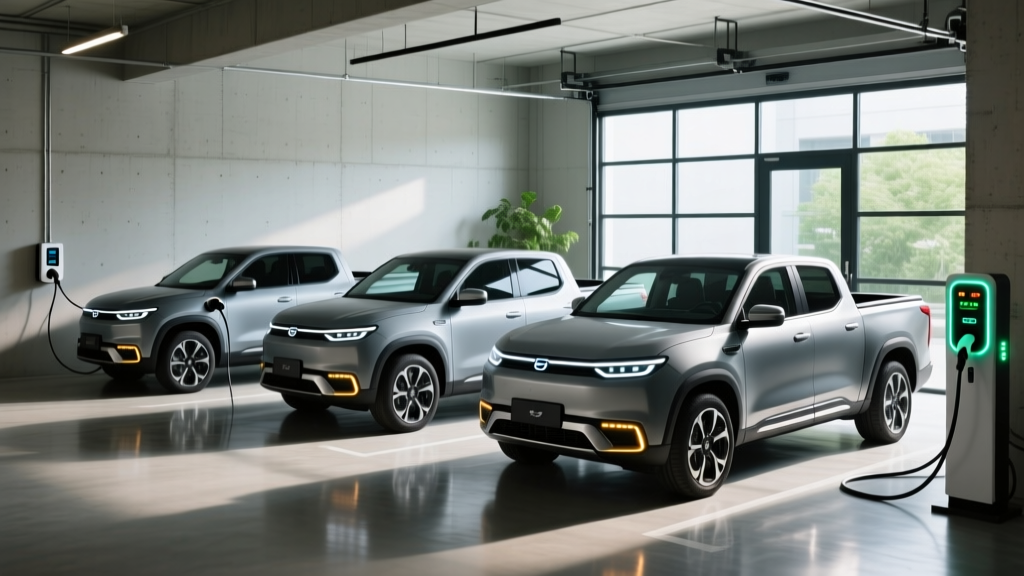
The "small" or compact truck segment sits below full-size pickups like the Ford F-150 Lightning and Rivian R1T. These trucks target urban commuters, light-duty haulers, and weekend adventurers who want a truck bed without full-size dimensions, weight, or pricing. Expect bed lengths around 4.5 feet, payload capacities of 1,200–1,500 lbs, and towing limits between 2,000 and 4,000 lbs when properly equipped.
As of early 2026, the segment has shifted from "announced" to "available" — but inventory remains tight, and dealer markups persist in many markets. Here is the current landscape:
| Model | Status | EPA Range (est.) | Battery | Peak DC Charge | 0–60 mph | Base MSRP |
|---|---|---|---|---|---|---|
| Ford Maverick EV | On sale (2026 MY) | ~270 mi | ~78 kWh usable, NMC | ~150 kW | ~5.8 sec (AWD) | $34,995 |
| Hyundai Santa Cruz EV | On sale (2026 MY) | ~290 mi | ~84 kWh usable, NMC | ~175 kW | ~5.5 sec (AWD) | $36,500 |
| Tesla Compact Truck | Announced (preliminary) | ~300 mi (claimed) | ~80 kWh (est.), LFP/NMC TBD | ~200 kW (est.) | ~5.0 sec (est.) | ~$35,000 (est.) |
Note: Tesla Compact Truck specs are preliminary and subject to change. Ford and Hyundai figures reflect manufacturer estimates and early EPA submissions. Verify at fueleconomy.gov before purchasing.
Real-World Range vs. EPA Sticker: What You'll Actually Get
EPA range estimates are measured under controlled lab conditions. In the real world, your mileage will vary — sometimes significantly — based on speed, temperature, terrain, and payload.
Real-World Range Expectations: 2026 Compact EV Trucks
| Condition | Ford Maverick EV (~270 mi EPA) | Hyundai Santa Cruz EV (~290 mi EPA) |
|---|---|---|
| City / suburban mix (65°F) | ~255–270 mi | ~275–290 mi |
| Highway sustained (70–75 mph, 65°F) | ~220–240 mi | ~235–255 mi |
| Highway + cold weather (30°F) | ~175–200 mi | ~190–215 mi |
| Towing near max capacity | ~130–160 mi | ~140–170 mi |
Cold weather reduces range by 25–35% due to battery chemistry limitations and cabin heating demands. Towing cuts range nearly in half due to aerodynamic drag and weight. If your commute exceeds 100 miles one-way in winter, plan charging stops accordingly.
Charging: Home Setup, Public Networks, and the kW vs. kWh Reality
Before buying any electric truck, solve your charging situation. This single factor determines whether EV ownership is convenient or frustrating.
| Level | Power (kW) | Miles Added per Hour | Typical Use Case |
|---|---|---|---|
| Level 1 (120V household outlet) | 1.2–1.8 kW | 3–5 mi/hr | Overnight top-up; insufficient for daily driving >30 mi |
| Level 2 (240V home / public) | 7.2–11.5 kW | 22–35 mi/hr | Primary home charging; full charge in 7–10 hours |
| DC Fast Charge | 50–175 kW | 150–400+ mi/hr (peak) | Road trips; 10–80% in 25–35 minutes |
Home Level 2 installation is the gold standard. Expect to pay $800–$2,500 total (charger unit: $400–$700; electrician labor + permit: $400–$1,800). If your electrical panel is older or maxed out, a panel upgrade can add $1,500–$3,000. Always hire a licensed electrician and pull a permit — unpermitted work can void home insurance and cause safety hazards.
Charging curve reality: Peak DC fast-charge rates (e.g., 175 kW on the Santa Cruz EV) are sustained only between roughly 10–50% state of charge. Above 80%, the rate tapers significantly to protect battery health. A "10–80% in 28 minutes" claim doesn't mean 0–100% in 40 minutes — expect the final 20% to take an additional 25–35 minutes on DC fast charging.
EV Truck vs. Gas Truck vs. Hybrid Truck: The Numbers
Here's where the rubber meets the road. Comparing a compact EV truck against its gas and hybrid siblings reveals where electrification saves money — and where it doesn't.
| Metric | Ford Maverick EV AWD (2026) | Ford Maverick Hybrid FWD (2026) | Ford Maverick Gas AWD (2026) |
|---|---|---|---|
| Base MSRP | $34,995 | $28,995 | $26,995 |
| Est. Federal Tax Credit (§30D) | Up to $7,500* | $0 | $0 |
| Effective Price After Credit | ~$27,495 | $28,995 | $26,995 |
| EPA Efficiency | ~105 MPGe (2.0 kWh/mi) | 42 MPG combined | 26 MPG combined |
| Fuel/Energy Cost per Mile† | $0.04–$0.06 | $0.08–$0.10 | $0.13–$0.16 |
| Annual Fuel/Energy (15,000 mi) | $600–$900 | $1,200–$1,500 | $1,950–$2,400 |
| Est. Annual Maintenance | $200–$400 | $500–$800 | $600–$1,000 |
| 5-Year Total Energy + Maintenance | $4,000–$6,500 | $8,500–$11,500 | $12,750–$17,000 |
* §30D credit eligibility depends on buyer income caps, vehicle MSRP caps, battery mineral sourcing, and final assembly. Check current rules at IRS.gov. † Energy costs assume $0.14/kWh home charging and $3.40/gal gas. Actual costs vary by region.
The math is clear: if you qualify for the full $7,500 credit and charge primarily at home, the Maverick EV becomes the cheapest truck to own over five years — even against the hybrid. But if you don't qualify for the credit (due to income limits, MSRP caps, or battery sourcing), the hybrid's lower MSRP and zero charging dependency make it the safer financial play.
Federal Tax Credit in 2026: Do You Actually Qualify?
The §30D clean vehicle credit is not a blanket $7,500 for everyone. Multiple requirements must be met simultaneously:
- Buyer income caps: Modified AGI must not exceed $150,000 (single), $225,000 (head of household), or $300,000 (married filing jointly).
- Vehicle MSRP caps: Trucks/vans/SUVs must have an MSRP at or below $80,000. All current compact EV trucks clear this easily.
- Battery component sourcing: A percentage of battery components must be manufactured or assembled in North America (threshold increases annually; 100% for 2026 model year).
- Critical minerals sourcing: A percentage of critical minerals must be sourced from the U.S. or free-trade-agreement partners (80% for 2026).
- Final assembly: Must occur in North America.
- Point-of-sale transfer: As of 2024, you can transfer the credit to the dealer at purchase, reducing your out-of-pocket cost immediately rather than waiting for tax filing.
Both the Ford Maverick EV and Hyundai Santa Cruz EV are assembled in North America, but battery-sourcing compliance can vary by production batch. Always confirm the specific VIN's eligibility through the dealer and cross-reference with the DOE's qualifying vehicle list at fueleconomy.gov. Consult a tax professional for your personal situation.
5-Year Total Cost of Ownership Breakdown
| Cost Category | Maverick EV AWD | Maverick Hybrid FWD | Maverick Gas AWD |
|---|---|---|---|
| Purchase price (after credit) | $27,495 | $28,995 | $26,995 |
| Home charger install | $1,500 | $0 | $0 |
| Energy/fuel (5 yr, 15k mi/yr) | $3,750 | $6,750 | $10,875 |
| Maintenance (5 yr) | $1,500 | $3,250 | $4,000 |
| Insurance (5 yr, est. avg) | $9,500 | $7,500 | $7,200 |
| Depreciation (est. 5 yr) | $12,000 | $10,000 | $11,500 |
| 5-Year Total Cost | $55,745 | $56,495 | $60,570 |
The EV wins on total cost by a narrow margin — but notice insurance is $2,000+ higher over five years. EV insurance premiums remain elevated due to higher repair costs for battery packs and specialized bodywork. Get quotes from your insurer before committing. Also, depreciation estimates for EVs remain volatile; early data suggests compact EV trucks may hold value better than sedans but worse than proven hybrid trucks.
Common Misconceptions About Small Electric Trucks
| Myth | Fact |
|---|---|
| "EV trucks can't tow anything useful." | Compact EV trucks tow 2,000–4,000 lbs — enough for a small utility trailer, jet skis, or a light camper. Range drops significantly while towing (expect 50–60% of normal), so plan charging stops. |
| "The battery will need replacing in 5 years." | Modern NMC batteries degrade roughly 10–15% over 8 years / 100,000 miles. Federal warranty mandates require 8 yr / 100,000 mi coverage with at least 70% capacity retention. Full battery replacements cost $8,000–$15,000 but are rarely needed within the first decade. |
| "I can just plug into a regular outlet." | Level 1 (120V) adds only 3–5 miles of range per hour. If you drive 40+ miles daily, Level 1 is insufficient. A Level 2 (240V) home charger is practically mandatory for truck owners who use their vehicles daily. |
| "The tax credit is automatic." | You must meet income caps, the vehicle must meet sourcing requirements, and you must have sufficient tax liability (unless using point-of-sale transfer). Always verify before signing a purchase agreement. |
| "Electric trucks are worse in cold weather." | EVs do lose 25–35% range in sub-freezing temperatures, but they start instantly (no cold cranking), and preconditioning while plugged in mitigates much of the loss. Gas trucks also lose efficiency in cold weather — just less noticeably at the pump. |
Decision Framework: Should You Buy an EV, Hybrid, or Gas Small Truck?
Choose the Electric Truck If:
- You can install a Level 2 home charger (garage or driveway with 240V access)
- Your daily driving is under 150 miles round-trip
- You qualify for the §30D federal tax credit (income + sourcing requirements)
- You value low per-mile energy costs and minimal maintenance
- You rarely tow more than 2,000 lbs long-distance
Choose the Hybrid Truck If:
- You lack reliable home or workplace charging access
- You regularly drive 250+ miles in a single day without planned stops
- You live in a region with extreme cold (<10°F) for extended periods
- You want lower upfront cost without charging infrastructure investment
- You tow frequently and need consistent range regardless of load
Choose the Gas Truck If:
- Your budget is strictly under $27,000 and you don't qualify for tax credits
- You drive fewer than 8,000 miles per year (fuel savings won't offset EV premium)
- You need maximum towing capacity and off-road capability in the compact segment
What First-Time EV Truck Buyers Must Know
1. Test the charging ecosystem before you buy. Download apps for Electrify America, EVgo, and ChargePoint. Map the DC fast chargers along your most common road-trip routes. If there are 50+ mile gaps with no charging, plan accordingly.
2. Understand kW vs. kWh. Kilowatts (kW) measure power — how fast energy flows into your battery. Kilowatt-hours (kWh) measure energy capacity — how much total energy the battery holds. A 78 kWh battery charged at 150 kW (peak) doesn't fill in 31 minutes; the charge curve tapers, so expect 10–80% in roughly 28–35 minutes.
3. Preconditioning matters. Both the Maverick EV and Santa Cruz EV can precondition the battery before a DC fast-charge stop (via navigation routing). This warms the battery to optimal temperature, enabling peak charge rates. Without preconditioning, cold batteries charge significantly slower — sometimes 40–50% below peak kW.
4. Payload and bed limitations are real. Compact EV trucks have smaller beds (~4.5 ft) and lower payloads (~1,200–1,500 lbs) than full-size pickups. The battery pack sits under the bed, so weight distribution differs from gas trucks. Don't expect to haul a full pallet of pavers.
5. Budget for insurance. EV insurance premiums run 15–25% higher than comparable gas trucks. Get quotes from at least three insurers before finalizing your purchase. Some insurers offer EV-specific discounts.
Frequently Asked Questions
What is the cheapest new small electric truck available in 2026?
The Ford Maverick EV starts at approximately $34,995 before incentives. With the full $7,500 federal tax credit, the effective price drops to around $27,495 — competitive with gas and hybrid compact trucks. Verify current pricing and credit eligibility at the dealer and on IRS.gov.
How long does it take to charge a small electric truck at home?
On a Level 2 (240V, 48-amp) home charger delivering ~11.5 kW, a full charge from 10% to 100% takes approximately 7–9 hours for a ~78–84 kWh battery. Most owners charge overnight and wake to a full battery every morning. Level 1 (120V) would take 50+ hours — impractical for daily use.
Can I tow a trailer with a compact electric truck?
Yes, within limits. The Maverick EV and Santa Cruz EV are rated for 2,000–4,000 lbs of towing. However, towing dramatically reduces range — expect 130–170 miles on a full charge vs. 270–290 unloaded. For long-distance towing, a hybrid or gas truck remains more practical due to refueling speed and consistent range.
Will the battery need replacing, and what does it cost?
Battery degradation averages 1.5–2.5% per year for NMC chemistries. After 8 years, expect roughly 85–90% of original capacity remaining. Federal law mandates battery warranties of at least 8 years / 100,000 miles with a minimum 70% capacity retention threshold. Full replacement costs range from $8,000 to $15,000 but are rarely needed within the warranty period.
Is a compact EV truck practical without home charging?
It's possible but significantly less convenient. Relying on public DC fast charging means 25–35 minute stops every 200–250 miles, plus potential wait times, broken chargers, and higher per-kWh costs ($0.30–$0.50/kWh vs. $0.14 at home). If you cannot install home charging, a hybrid truck is the more practical choice.