Quick Verdict: The New Mustang Mach-E Hits the Electric SUV Sweet Spot
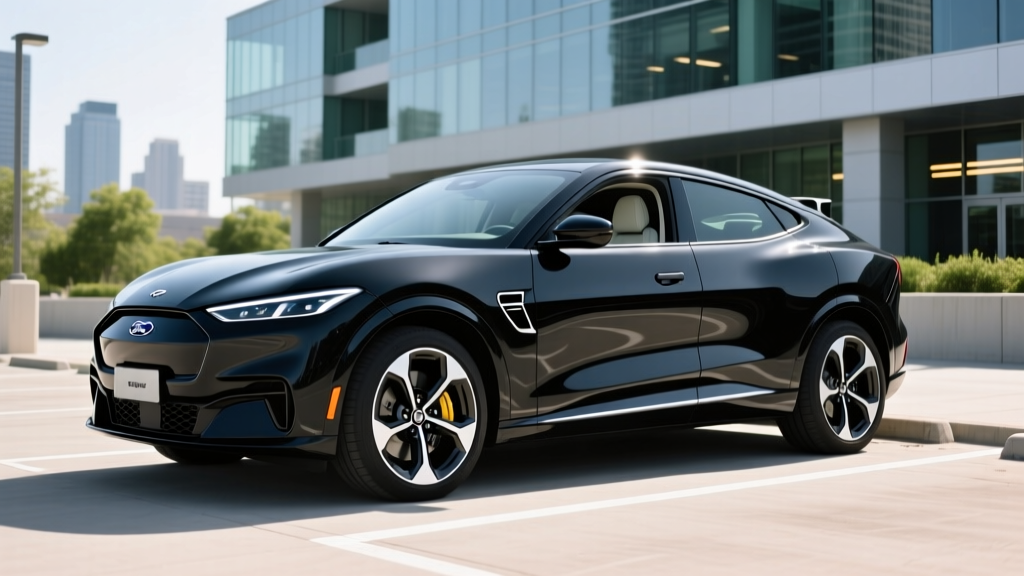
Ford's latest refresh of the Mustang Mach-E tightens the bolts on what was already one of the most practical electric SUVs in its class. For 2026, the new Mustang Mach-E arrives with a revised battery pack, slightly improved DC fast-charging speeds, and a starting price that keeps it competitive against the Tesla Model Y, Hyundai Ioniq 5, and Volkswagen ID.4. It's not the flashiest EV on the market, but it delivers where most buyers actually care: usable range, reasonable charging times, a comfortable cabin, and BlueCruise hands-on-wheel driver assistance that works reliably on mapped highways.
If you're cross-shopping mid-size electric crossovers and want something with a traditional dealer network, a proven battery platform, and enough range to handle a 250-mile road trip without sweating, the Mach-E belongs on your shortlist. Here's exactly what you're getting — and where it falls short.
Range, Battery, and Real-World Efficiency
| Spec | Select RWD (Std Range) | Premium RWD (Ext Range) | GT AWD |
|---|---|---|---|
| EPA Range | 250 mi | 320 mi | 280 mi |
| Battery (usable) | 70 kWh (LFP) | 91 kWh (NMC) | 91 kWh (NMC) |
| Horsepower | 266 hp | 290 hp | 480 hp |
| 0–60 mph | 6.1 sec | 5.6 sec | 3.5 sec |
| Drivetrain | RWD single motor | RWD single motor | AWD dual motor |
| MPGe (combined) | 101 MPGe | 98 MPGe | 84 MPGe |
| Efficiency | 33 kWh/100mi | 34 kWh/100mi | 40 kWh/100mi |
| Base MSRP | $42,995 | $48,995 | $59,995 |
The standard-range models now use lithium iron phosphate (LFP) chemistry, which trades some energy density for longer cycle life and lower degradation risk over time. Ford recommends you can charge LFP packs to 100% daily without the long-term wear concerns associated with NMC batteries. The extended-range and GT models retain nickel manganese cobalt (NMC) chemistry, where Ford recommends an 80% daily charge limit to preserve longevity — reserving 100% for road trips.
According to EPA data on fueleconomy.gov, the Premium RWD achieves 98 MPGe combined, translating to roughly 34 kWh per 100 miles. That's mid-pack for the segment — the Hyundai Ioniq 5 RWD is slightly more efficient at 117 MPGe, while the Tesla Model Y Long Range RWD sits at 122 MPGe.
Charging Speed: DC Fast Charge and Home Level 2
| Charge Level | Power / Rate | Time / Miles Added |
|---|---|---|
| Level 1 (120V household) | ~1.4 kW | ~3–4 miles per hour |
| Level 2 (240V, 48A home) | 10.5 kW | ~30 miles per hour; full charge in ~9.5 hrs (Ext Range) |
| DC Fast Charge (peak) | 150 kW (Std) / 150 kW (Ext) | 10–80% in ~36 min (Ext Range); ~28 min (Std Range) |
The Mach-E's peak DC fast-charge rate of 150 kW is the most honest disappointment in an otherwise solid package. While competitors like the Hyundai Ioniq 5 (peak 240 kW on 800V architecture) and Tesla Model Y (peak ~250 kW on V3 Superchargers) can sprint from 10–80% in roughly 18–25 minutes, the Mach-E takes 36 minutes on the extended-range pack.
The charge curve is also worth understanding. The Mach-E hits its peak 150 kW rate only between roughly 15–40% state of charge. Above 60%, the rate tapers noticeably, dropping to around 70–80 kW, and above 80% it slows to under 40 kW. This means that if you arrive at a charger at 10% and need to reach 90% for a long leg, the last 10% alone can add 15+ minutes. Plan your road-trip stops to charge from 10–80% and drive on.
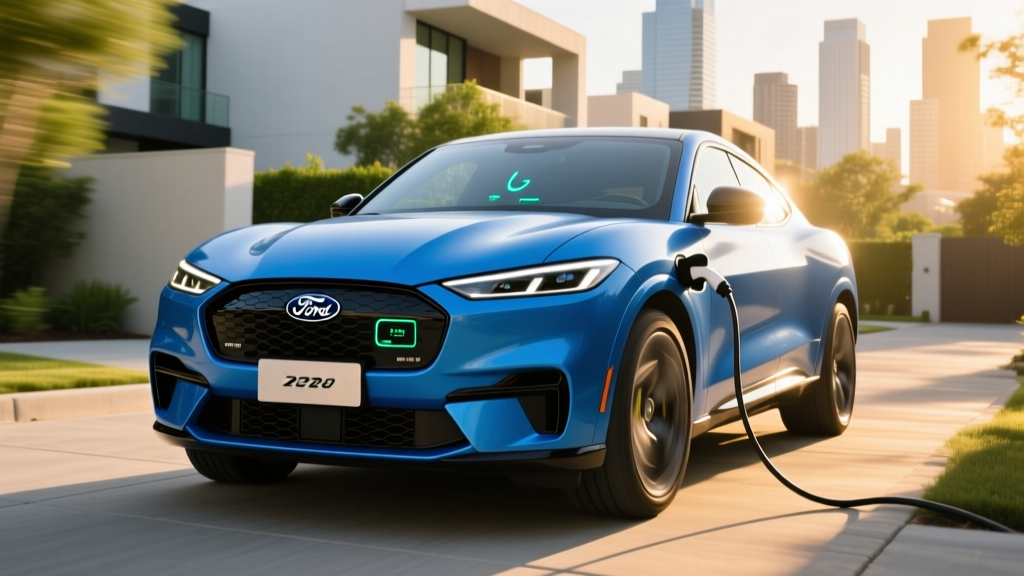
For home charging, the onboard 10.5 kW Level 2 charger is a strong point. On a 48-amp, 240V circuit (the most common Level 2 home installation), you'll recover roughly 30 miles of range per hour of charging. Plug in overnight and even the 91 kWh extended-range pack fills completely by morning. A professional Level 2 home installation typically costs $800–$2,000 including the charger unit, electrical labor, and permitting, depending on whether your panel needs an upgrade.
Performance, Drivetrain, and Ride Quality
The base Select RWD with its 266-hp single motor handles daily commuting and highway merging without complaint, hitting 60 mph in about 6.1 seconds. The step up to the Premium RWD adds 24 hp for a 5.6-second run — a meaningful improvement for loaded highway on-ramps.
The GT is the performance headline: 480 hp, dual-motor AWD, and a 3.5-second 0–60 time. That puts it in Porsche Cayenne territory for acceleration. However, the GT's 40 kWh/100mi efficiency and 280-mile EPA range are the trade-off. The GT also rides firmer, which you'll notice on rough pavement.
All trims feature one-pedal driving with adjustable regenerative braking. Ford's implementation isn't as aggressive as Tesla's or Nissan's e-Pedal, so expect to use the friction brake pedal more than in some competitors. The steering is well-weighted, and the Mach-E corners more confidently than its crossover proportions suggest, though it's not a sports car despite the Mustang badge.
Interior Space, Tech, and Driver Assistance
The cabin seats five with 41.7 inches of front legroom and 38.1 inches in the rear — adequate for adults on long trips. Cargo volume behind the rear seats is 29.7 cubic feet, expanding to 59.7 cu ft with the 60/40 split rear seats folded. The front trunk (frunk) adds 4.7 cu ft with a drain plug — handy for tailgating or storing wet gear.
The centerpiece is a 15.5-inch portrait touchscreen running Ford's SYNC 4A system. It supports wireless Apple CarPlay and Android Auto, over-the-air updates, and has a physical volume knob integrated at the base — a practical detail many competitors lack. The digital instrument cluster is a separate 10.2-inch display behind the wheel.
BlueCruise, Ford's hands-on-wheel driver assistance system, is available on mapped divided highways (over 130,000 miles of coverage in the US and Canada as of 2026). It handles steering, acceleration, and braking while monitoring driver attention via an infrared camera. This is an SAE Level 2 system — you must remain engaged and cannot take your eyes off the road for extended periods. It does not navigate intersections, handle city streets autonomously, or function as a self-driving system.
Pricing, Trims, and Federal Tax Credit Eligibility
| Trim | Base MSRP | As-Tested (Typical) | §30D Credit (Est.) | Effective Price |
|---|---|---|---|---|
| Select RWD (Std Range) | $42,995 | $44,500 | Up to $3,750 | ~$39,245 – $40,750 |
| Premium RWD (Ext Range) | $48,995 | $52,000 | Up to $7,500 | ~$41,495 – $44,500 |
| Premium AWD (Ext Range) | $51,995 | $55,000 | Up to $7,500 | ~$44,495 – $47,500 |
| GT AWD | $59,995 | $63,500 | Up to $7,500 | ~$52,495 – $56,000 |
All trims fall under the IRS §30D MSRP cap of $80,000 for SUVs. However, the actual credit amount depends on battery-component and critical-mineral sourcing requirements that shift annually. For 2026, the standard-range LFP models may qualify for only the $3,750 critical-minerals half-credit (or potentially less), as LFP cells are predominantly manufactured in China. The extended-range NMC models with more diversified supply chains are more likely to qualify for the full $7,500, but this must be verified at the point of sale through the IRS Energy Credits Online portal.
- Buyer income cap: Modified AGI ≤ $150,000 (single), $225,000 (head of household), $300,000 (joint)
- MSRP cap: ≤ $80,000 for SUVs (all Mach-E trims qualify)
- Battery sourcing: Must meet escalating critical-mineral and battery-component thresholds — verify per VIN
- Point-of-sale transfer: Eligible buyers can apply the credit as a down-payment reduction at the dealer
- Consult a tax professional: Credit eligibility is complex and subject to change
Warranty, Ownership Costs, and Long-Term Outlook
Ford covers the Mach-E's high-voltage battery and electric powertrain for 8 years or 100,000 miles, whichever comes first. The battery warranty guarantees at least 70% capacity retention over that period — a standard threshold for the industry. The basic vehicle warranty is 3 years/36,000 miles.
Insurance costs tend to run 15–25% higher than comparable gas-powered crossovers, averaging roughly $1,800–$2,400 annually depending on your state, driving record, and trim (the GT is notably more expensive to insure). Depreciation has been a weak point for the Mach-E — expect roughly 45–55% value retention at 5 years, below the Tesla Model Y but in line with other non-Tesla EVs.
Maintenance costs are minimal: no oil changes, no transmission fluid, and regenerative braking extends pad life. Expect to budget for cabin air filter replacement (~$50–80 annually), tire rotation, and windshield washer fluid. Tires on the GT wear faster due to the instant torque and heavier weight.
Pros, Cons, and Who Should Buy
- 320-mile EPA range on Extended Range RWD is road-trip capable
- 10.5 kW Level 2 onboard charger fills overnight on a standard home install
- Comfortable ride with spacious rear seats and useful frunk
- BlueCruise is one of the most reliable Level 2 highway systems available
- LFP option on standard-range trims offers longer battery cycle life
- Established Ford dealer network for service and warranty work
- 150 kW peak DC fast charge is slow vs. Ioniq 5 (240 kW) and Model Y (~250 kW)
- 36-minute 10–80% charge time adds up on road trips
- No heat pump on all trims hurts cold-weather range
- LFP standard-range models may not qualify for the full $7,500 tax credit
- Depreciation steeper than Tesla Model Y
- One-pedal driving less aggressive than some competitors
- Choose the Mach-E if: You want a comfortable, practical electric SUV with strong highway driver assistance, you charge primarily at home, and you value a traditional dealer service network over cutting-edge charging speed.
- Look at the Ioniq 5 instead if: You road-trip frequently and need faster DC charging (10–80% in ~18 min on 350 kW chargers).
- Look at the Model Y instead if: You want maximum Supercharger network access, higher efficiency (MPGe), and stronger resale value.
Frequently Asked Questions
What is the real-world range of the new Mustang Mach-E?
The Extended Range RWD is EPA-rated at 320 miles. Real-world mixed driving typically yields 285–300 miles in mild weather. Sustained 75+ mph highway driving reduces this to around 250–270 miles, and freezing temperatures with cabin heat can drop it to 210–240 miles. Standard Range models (250 mi EPA) should expect 200–225 miles in mixed real-world conditions.
How fast does the Mach-E charge at home and on the road?
At home on a 240V Level 2 charger (48A), the Mach-E charges at 10.5 kW, adding roughly 30 miles of range per hour — a full overnight charge covers any daily driving. On DC fast chargers, it peaks at 150 kW and takes approximately 36 minutes to go from 10–80% on the Extended Range battery. That's adequate but noticeably slower than the Ioniq 5 or Model Y.
Does the 2026 Mustang Mach-E qualify for the $7,500 federal EV tax credit?
It depends on the trim and your income. All trims are under the $80,000 SUV MSRP cap. The Extended Range NMC models are more likely to qualify for the full $7,500 if battery sourcing requirements are met. The Standard Range LFP models may qualify for only $3,750 or less due to critical-mineral sourcing. Buyer income must not exceed $150K (single), $225K (head of household), or $300K (joint). Always verify per VIN at the dealer and consult a tax professional. See IRS §30D guidelines for current rules.
Is the Mustang Mach-E worth buying over the Tesla Model Y or Ioniq 5?
The Mach-E is worth buying if you prioritize ride comfort, a traditional dealership experience, and BlueCruise highway assistance. The Model Y wins on charging speed, Supercharger access, efficiency, and resale value. The Ioniq 5 wins on DC fast-charge speed and interior design. None of these are wrong choices — the right answer depends on your charging access, road-trip frequency, and service preferences.
What is the battery warranty on the Mach-E?
Ford covers the high-voltage battery and electric drivetrain for 8 years or 100,000 miles, with a guaranteed minimum of 70% capacity retention during that period. If your battery degrades below 70% State of Health within the warranty window, Ford will repair or replace it.
Can the Mustang Mach-E tow?
Yes. With the optional Class II tow package, the Mach-E can tow up to 2,300 lbs (AWD models) or 1,500 lbs (RWD). That's sufficient for a small utility trailer or a pair of dirt bikes, but not a camper or boat. Towing will reduce range by 30–50% depending on speed, terrain, and trailer aerodynamics.