The Quick Answer for New Mexico EV Buyers
Yes, a new Mexico electric car makes strong financial and practical sense for most drivers in 2026 — but only if you can install a Level 2 home charger. New Mexico's low electricity rates (averaging $0.14/kWh via PNM and El Paso Electric) make home charging roughly 60% cheaper per mile than gasoline at $3.15/gallon. The state offers up to $2,500 in clean vehicle rebates on top of the federal §30D credit (up to $7,500 with income, MSRP, and battery-sourcing requirements). Top picks for New Mexico driving include the Hyundai Ioniq 5 (EPA 318 mi, $42,600), Tesla Model Y Long Range (EPA 320 mi, $44,990), and Chevrolet Equinox EV (EPA 319 mi, $33,600). If you lack home charging access or regularly drive remote routes along I-40 or US-491 beyond the DC fast-charging corridor, a plug-in hybrid like the Toyota RAV4 Prime (42 mi electric, 38 MPG gas) is the safer bridge.
Why New Mexico Is Surprisingly EV-Friendly in 2026
New Mexico ranks among the most affordable states to charge an EV at home, thanks to below-average residential electricity rates and growing public infrastructure. According to the U.S. Energy Information Administration, New Mexico's average residential rate sits near $0.14/kWh — well below California's $0.30+ and competitive with Texas. For a driver covering 12,000 miles annually in a Hyundai Ioniq 5 (consuming roughly 30 kWh/100 mi), annual home-charging cost is about $504, versus $1,575 for a comparable 25 MPG gas car at $3.15/gallon.
The state's climate also works in your favor. Mild winters in Albuquerque, Las Cruces, and Santa Fe mean less cold-weather range loss than northern states. Where a Minnesota EV owner might see 25-30% range drop at 10°F, New Mexico drivers in the Rio Grande corridor rarely experience temperatures below 20°F for extended periods. Expect 5-10% winter range reduction in most of the state — a meaningful advantage.
New Mexico's flat-to-rolling terrain along major corridors (I-25, I-40, I-10) also means less elevation-driven energy consumption than Colorado or Utah. The exception: mountain drives to Taos, Cloudcroft, or the Sangre de Cristos will cut range 15-20% on the ascent, partially recovered via regenerative braking on the descent.
Real Costs: New Mexico EV vs Gas vs Hybrid
Let's break down a realistic 5-year ownership scenario for a Santa Fe-based driver covering 12,000 miles/year. We're comparing a Hyundai Ioniq 5 SEL (BEV), a Toyota RAV4 Prime XSE (PHEV), and a Toyota RAV4 LE (gas AWD).
| Cost Factor | Ioniq 5 SEL (BEV) | RAV4 Prime (PHEV) | RAV4 LE (Gas AWD) |
|---|---|---|---|
| Base MSRP | $45,100 | $46,700 | $31,000 |
| Federal §30D Credit | −$7,500* | −$7,500* | $0 |
| NM Clean Vehicle Rebate | −$2,500 | −$1,500 | $0 |
| Effective Purchase Price | $35,100 | $37,700 | $31,000 |
| Home Charger Install | $1,200 | $1,200 | $0 |
| 5-Yr Fuel/Energy | $2,520 | $3,800 | $7,875 |
| 5-Yr Maintenance | $1,800 | $3,200 | $3,600 |
| 5-Yr Insurance (est.) | $7,800 | $7,200 | $6,600 |
| 5-Year Total | $48,420 | $53,100 | $49,075 |
*§30D credit eligibility depends on buyer AGI (≤$150K single / $300K joint), vehicle MSRP caps ($55K cars / $80K SUVs), and battery critical-mineral sourcing. Verify at IRS.gov before purchase.
The Ioniq 5 narrowly beats the gas RAV4 on 5-year cost despite a higher sticker, driven by energy and maintenance savings. The PHEV splits the difference — ideal if you want electric commuting (42 mi EPA electric range) without any range concern on long drives to Carlsbad or Farmington.
Charging in New Mexico: Home, Public, and the Desert Reality
Home charging is where New Mexico EV ownership wins or fails. Most single-family homes in Albuquerque, Rio Rancho, and Las Cruces have 200-amp electrical panels capable of supporting a 48-amp (11.5 kW) Level 2 circuit. Expect to pay $800-$1,800 for a licensed electrician to install a NEMA 14-50 outlet or hardwired Level 2 charger, per U.S. DOE guidelines. Older homes or those with 100-amp panels may need a $2,000-$4,000 panel upgrade — get a quote before committing to an EV.
| Charging Level | Power (kW) | Miles Added per Hour | Best Use Case |
|---|---|---|---|
| Level 1 (120V) | 1.4 kW | 3-5 mi/hr | Overnight top-up, PHEVs |
| Level 2 (240V home) | 7.7-11.5 kW | 25-44 mi/hr | Daily home charging |
| DC Fast (public) | 50-350 kW | 150-800 mi/hr | Road trips, corridor driving |
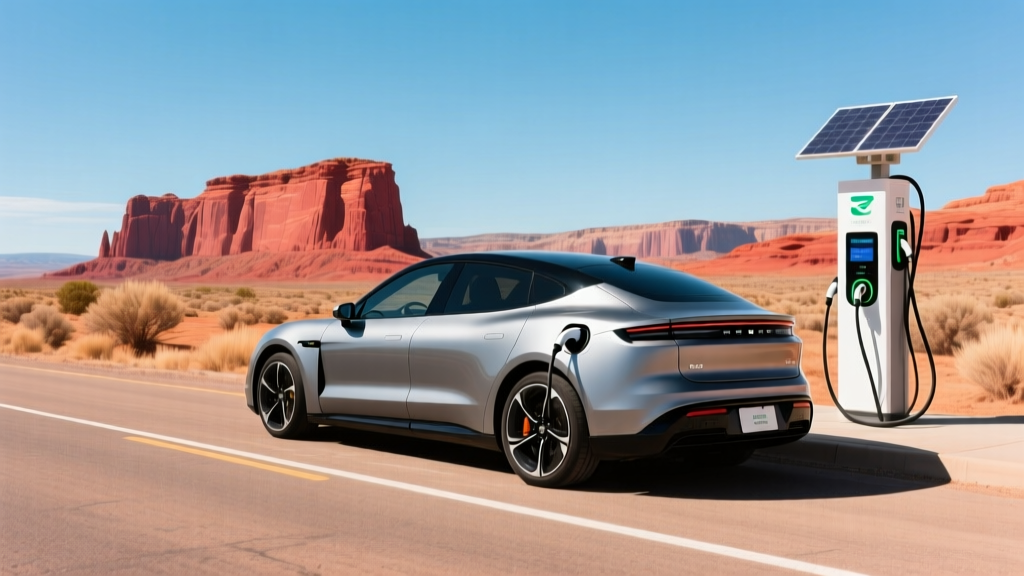
For public charging, New Mexico's DC fast-charging network has expanded meaningfully by 2026. Tesla Superchargers (now open to NACS-equipped non-Tesla EVs) line I-25 from Raton to Las Cruces and I-40 through Albuquerque and Gallup. Electrify America and EVgo stations fill gaps at major Walmart and travel-center locations. However, charging deserts remain real on US-491 north of Gallup, NM-434 toward Angel Fire, and most routes into the Bootheel. Plan these trips with a 20% range buffer and check PlugShare for real-time station status.
Charge-curve reality check: A "250 kW peak" charger does not deliver 250 kW for the full session. Most NMC-battery EVs taper sharply above 80% SoC. The Ioniq 5's 84 kWh battery sustains ~220 kW from 10-55% SoC, then drops to ~100 kW by 70%, and ~45 kW above 85%. A 10-80% session takes roughly 18 minutes; 10-95% takes 38-42 minutes. Plan road-trip stops around 80% to avoid the taper penalty.
Top EV Picks for New Mexico Drivers (2026 Models)
Not every EV suits New Mexico's mix of urban commuting, high-desert highway, and occasional remote driving. Here are three strong matches with exact specs:
Hyundai Ioniq 5 SEL — Best All-Around
- EPA Range: 318 mi (real-world highway: ~270-285 mi; cold weather: ~290 mi)
- Battery: 84 kWh usable, NMC chemistry
- DC Fast Charging: 250 kW peak, 10-80% in ~18 min
- Level 2: 10.9 kW onboard charger
- 0-60 mph: 5.0 sec (AWD), 225 hp RWD / 320 hp AWD
- MPGe: 110 combined
- MSRP: $45,100 (SEL AWD)
- Warranty: 10 yr / 100,000 mi battery & powertrain
Chevrolet Equinox EV LT — Best Value
- EPA Range: 319 mi (real-world highway: ~275-290 mi)
- Battery: 85 kWh usable, NMC
- DC Fast Charging: 150 kW peak, 10-80% in ~30 min
- 0-60 mph: 8.1 sec, 213 hp FWD
- MPGe: 97 combined
- MSRP: $33,600 (LT 2)
- Warranty: 8 yr / 100,000 mi battery
Toyota RAV4 Prime — Best for Remote Drivers
- Electric Range: 42 mi EPA
- Gas MPG: 38 combined (94 MPGe blended)
- Battery: 18.1 kWh, NMC
- Level 2: 6.6 kW (~2.5 hr full charge)
- 0-60 mph: 5.7 sec, 302 hp combined
- MSRP: $46,700 (XSE)
- Warranty: 10 yr / 150,000 mi hybrid battery
New Mexico State Incentives and Tax Credits
New Mexico reinstated and expanded its clean vehicle incentive program, offering up to $2,500 for new BEV purchases and $1,500 for PHEVs, stackable with the federal §30D credit. Income-qualified buyers (under 200% federal poverty level) may access an additional $1,000. These incentives are point-of-sale in many cases, reducing your dealer paperwork.
| ✅ | Buyer AGI: ≤$150K single / $225K HOH / $300K joint |
| ✅ | Vehicle MSRP: ≤$55K (sedans/hatchbacks) or ≤$80K (SUVs/trucks) |
| ✅ | Vehicle assembled in North America (VIN check at fueleconomy.gov) |
| ✅ | Battery critical minerals and components meet 2026 sourcing thresholds |
| ✅ | Point-of-sale transfer available — dealer applies credit at purchase |
| ✅ | NM rebate: apply via state Energy, Minerals and Natural Resources Dept. |
Always confirm eligibility with a tax professional before purchase — sourcing rules tighten annually and not every trim qualifies.
Common Misconceptions About New Mexico EVs
| Myth | Fact |
|---|---|
| "The desert heat will destroy the battery." | Modern NMC and LFP packs use active liquid thermal management. Phoenix data shows ~8% degradation over 100K mi — manageable within 8-10 year warranties. New Mexico's lower ambient temps are easier on packs than Arizona. |
| "There are no chargers outside Albuquerque." | I-25 and I-40 corridors have DC fast chargers every 60-90 miles. The gap is rural state highways — plan accordingly with PlugShare. |
| "EVs are worse for the environment because of the grid." | New Mexico's grid is ~45% renewable (wind + solar) as of 2025 and climbing. Per EPA lifecycle analysis, even on a coal-heavy grid, BEVs produce lower lifetime emissions than comparable gas cars. |
| "Battery replacement will cost $20,000." | Full pack replacement: $8,000-$15,000 depending on model. But most packs last 200K+ miles with 70-80% capacity retained. Module-level repair often costs $1,500-$4,000. |
| "I need a Tesla to use Superchargers." | As of 2026, Ford, Rivian, Hyundai, Kia, GM, and others ship with native NACS ports and access Tesla's Supercharger network. CCS adapters are also available for legacy vehicles. |
Decision Framework: Should You Buy a New Mexico Electric Car?
Choose a Battery EV (BEV) If:
- You own or rent a home where a Level 2 charger can be installed
- Your daily driving is under 80 miles round-trip (covers 90%+ of NM commutes)
- You stay primarily on the I-25, I-40, or I-10 corridor for road trips
- You qualify for the §30D credit (income + MSRP + sourcing)
- You want the lowest 5-year operating cost
Choose a Plug-In Hybrid (PHEV) If:
- You live in an apartment or condo without charging access
- You regularly drive remote routes (US-491, NM-434, Bootheel)
- Your daily commute is under 40 miles (covers PHEV electric range)
- You want one vehicle for both electric commuting and long road trips without planning
Stick With Gas or a Standard Hybrid (HEV) If:
- You cannot install any home charging and public infrastructure is >5 miles away
- You tow heavy loads frequently (trailers, horse trailers — EV towing cuts range 40-50%)
- Your budget is under $30,000 and you buy used (used EV credit capped at $4,000 with strict rules)
Frequently Asked Questions
Do I really need a home charger in New Mexico?
Practically, yes. Level 1 (120V) charging adds only 3-5 miles per hour — insufficient for most BEV drivers doing 30+ miles daily. Without home Level 2, you'll rely on public DC fast chargers, which cost $0.35-$0.55/kWh in New Mexico (vs $0.14 at home), erasing most fuel savings. PHEVs are the exception — Level 1 overnight fully recharges their smaller 15-18 kWh batteries.
How does elevation affect EV range in Santa Fe or Taos?
Higher elevation itself has minimal direct impact (thinner air reduces drag slightly), but the mountain grades to reach Santa Fe (7,200 ft) and Taos (7,000 ft) demand significant energy on the climb. Expect 15-20% range loss ascending I-25 from Albuquerque to Santa Fe, partially recovered on the return descent via regenerative braking. Plan one-way mountain trips with a 20% buffer.
Are EVs reliable in New Mexico's monsoon season?
Yes. EV battery packs are sealed to IP67 ratings (submersible in 1 meter of water for 30 minutes). Flash-flood wading is generally safer in an EV than a gas car (no air intake to hydro-lock). However, avoid driving through moving water deeper than the vehicle's rated wading depth — check your owner's manual.
What happens if my EV runs out of charge on a remote NM highway?
Treat it like running out of gas: call roadside assistance. AAA and manufacturer programs (Hyundai, Tesla, Ford) offer flatbed towing to the nearest charger — never tow an EV with wheels on the ground, which can damage the motors. In New Mexico, the longest gap between DC chargers is roughly 90 miles on I-40 near the Arizona border; plan conservatively and charge at 20% remaining.
Is a used EV a good deal in New Mexico?
The federal used-EV credit offers up to $4,000 (30% of sale price) on vehicles priced ≤$25,000, model year 2016+, with buyer income caps ($75K single / $150K joint). A used 2022-2023 Nissan Leaf or Chevrolet Bolt can be a strong value, but verify battery State of Health (SoH) via the dealer or a third-party diagnostic. Aim for ≥85% SoH at purchase.