Quick Answer: Yes, Electric Motorcycles Require Titles in New Jersey
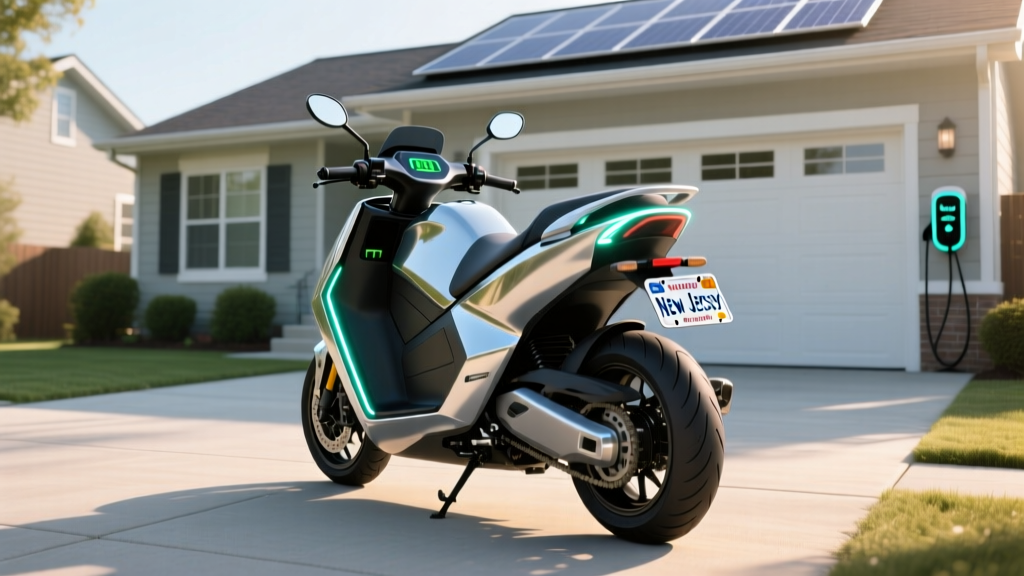
Every electric motorcycle operated on public roads in New Jersey must be titled and registered through the NJ Motor Vehicle Commission (MVC), exactly like a gasoline motorcycle. The state does not exempt electric two-wheelers from titling based on their powertrain. You will need a Manufacturer's Certificate of Origin (MCO/MSO) for a new purchase, or the prior owner's signed title for a used one. Title fees are $85, and registration runs $65 annually for motorcycles. Note: low-speed electric scooters and e-bikes under specific wattage thresholds follow different rules — this guide covers full-speed, road-legal electric motorcycles like the Zero SR/S, LiveWire ONE, and Energica Ego+.
New Jersey Title and Registration Requirements for Electric Motorcycles
New Jersey treats electric motorcycles identically to internal-combustion motorcycles for titling and registration purposes. The MVC does not maintain a separate "electric motorcycle" title class. Here is exactly what you need to complete the process:
- Manufacturer's Certificate of Origin (MCO) — for brand-new electric motorcycles from dealers (Zero, LiveWire, Energica, etc.)
- Signed title from previous owner — for private-party used purchases, with odometer disclosure
- Proof of New Jersey insurance — minimum liability coverage required before registration
- New Jersey driver's license — with a motorcycle endorsement (Class M)
- Proof of address — utility bill, lease, or bank statement
- Title fee: $85
- Registration fee: $65/year (motorcycle class)
- Sales tax: 6.625% of purchase price (no EV-specific exemption for motorcycles in NJ as of 2026)
The MVC will issue a standard motorcycle title. There is no special "EV" designation printed on the document, though your VIN will identify the vehicle as electric when decoded.
Electric Motorcycle vs. Gas Motorcycle: Cost and Ownership Comparison
The titling process is identical, but the ongoing ownership economics diverge significantly. Below is a real-world comparison using a 2026 Zero SR/S (the most popular premium electric motorcycle in the US) against a comparable Kawasaki Ninja 650 gas sport bike.
| Category | Zero SR/S (Electric) | Kawasaki Ninja 650 (Gas) |
|---|---|---|
| Base MSRP | $21,995 | $8,399 |
| NJ Title + Reg (Year 1) | $150 | $150 |
| Sales Tax (6.625%) | $1,457 | $556 |
| "Fuel" Cost (5 yrs, 30k mi) | $480 (electricity) | $2,850 (gasoline @ $3.80/gal, 45 MPG avg) |
| Maintenance (5 yrs) | $350 (tires, brake fluid, belt) | $2,400 (oil, filters, chain, valves, coolant) |
| Insurance (avg annual) | $1,800/yr ($9,000 total) | $1,200/yr ($6,000 total) |
| 5-Year Total Cost | $33,432 | $20,355 |
| Cost Per Mile | $1.11/mi | $0.68/mi |
Key takeaway: Electric motorcycles save roughly $2,370 on fuel and $2,050 on maintenance over five years, but the higher MSRP and insurance premiums mean the gas bike still wins on total cost for most riders. The break-even point arrives only if you ride more than 8,000 miles per year or if gas prices climb above $5.50/gallon.
Real-World Range, Charging, and New Jersey Riding Considerations
Electric motorcycle range is where EPA stickers and reality diverge sharply. The Zero SR/S carries a 15.6 kWh usable battery (Z-Force lithium-ion, NMC chemistry) and posts these EPA-equivalent figures:
- City range: 161 miles (stop-and-go regen maximizes efficiency)
- Highway range (70 mph sustained): 82 miles
- Combined (55/45 mix): 113 miles
Real-World Expectation: On a mixed New Jersey ride — Garden State Parkway at 65 mph with some surface streets — expect 90-105 miles from a full charge in summer (75°F). In winter (35°F), cold reduces battery efficiency by 20-30%, dropping real range to 65-80 miles. Plan conservatively.
Charging speeds:
- Level 1 (120V household): 1.3 kW — adds ~13 miles/hour; full charge in ~12 hours
- Level 2 (240V, Charge Point/J1772): 3.3 kW onboard (standard) or 6.6 kW with optional Charge Tank — full charge in 2.5-5 hours
- DC Fast Charging: Not available on the SR/S. Zero's 2026 lineup does not support CCS or NACS DC charging — a significant limitation for touring riders.
New Jersey climate impact: The state's humid summers are manageable — battery thermal management on the Zero is passive (air-cooled), but NJ ambient temps rarely exceed the threshold for meaningful degradation. Winter is the bigger concern. Riders in North Jersey (Sussex, Warren counties) who commute through December-March should budget 25-30% range loss and consider a heated gear power draw that further reduces range.
Federal and State Incentives: What Electric Motorcycle Buyers Actually Get
This is where many buyers encounter disappointment. The federal §30D Clean Vehicle Credit — up to $7,500 for qualifying EVs — does not apply to motorcycles. The credit covers four-wheeled vehicles with a gross vehicle weight rating under 14,000 lbs. Two-wheeled electric vehicles are excluded under current IRS §30D rules.
A separate federal credit for two-wheeled plug-in vehicles (formerly §30D(l)) expired and has not been renewed as of 2026.
New Jersey state incentives (2026):
- Charge Up New Jersey rebate: As of 2026, the state's EV rebate program focuses on four-wheeled BEVs. Electric motorcycles are not currently eligible for the up-to-$4,000 point-of-sale rebate.
- EZ Pass discount: NJ does not offer an EV-specific toll discount for motorcycles.
- HOV lane access: Electric motorcycles may use NJ HOV lanes regardless of occupant count, consistent with federal CAV exemption rules.
- Home charger installation: NJ Clean Energy Program occasionally offers rebates for Level 2 home charger installations — these apply to the charger, not the vehicle, and motorcycle owners installing a 240V J1772 outlet can qualify (typically $250-$500 rebate on equipment).
| Incentive | Electric Motorcycle | Electric Car (e.g., Tesla Model 3) |
|---|---|---|
| Federal §30D Credit | $0 (ineligible) | Up to $7,500 (if sourcing/income/MSRP rules met) |
| NJ Charge Up Rebate | $0 (ineligible) | Up to $4,000 |
| HOV Lane Access | Yes | Yes (with CAV decal) |
| Home Charger Rebate | Eligible (charger-based) | Eligible |
| Total Potential Savings | $250-$500 | Up to $11,500+ |
Common Misconceptions About Electric Motorcycle Registration
| Myth | Fact |
|---|---|
| "Electric motorcycles don't need titles because they have no engine." | NJ titles all motor vehicles by vehicle class (motorcycle), not powertrain. The MVC requires a title regardless of whether propulsion is electric or gasoline. |
| "I can ride an electric motorcycle without a motorcycle endorsement." | Any motorcycle — electric or gas — with a top speed above 25 mph and over 1.5 brake horsepower requires a Class M endorsement on your NJ license. |
| "Electric motorcycles are exempt from NJ inspection." | New Jersey eliminated routine safety and emissions inspections for all motorcycles (gas and electric) in 2010. However, police can still cite you for equipment violations. |
| "The federal EV tax credit covers electric motorcycles." | The §30D credit applies only to four-wheeled vehicles. No federal purchase incentive exists for electric motorcycles in 2026. |
| "I don't need insurance for an electric motorcycle in NJ." | NJ requires minimum liability insurance ($15,000/$30,000/$5,000) for all registered motorcycles, regardless of propulsion type. |
Decision Framework: Should You Buy an Electric Motorcycle in New Jersey?
Choose an electric motorcycle if:
- Your daily commute is under 60 miles round-trip and you have access to a standard 120V or 240V outlet at home
- You ride primarily in urban/suburban NJ (Newark, Jersey City, Hoboken, Princeton) where speeds stay below 55 mph and regenerative braking maximizes range
- You value near-silent operation, zero tailpipe emissions, and minimal maintenance (no oil changes, no valve adjustments, no chain lubrication)
- You already own a car or gas motorcycle for longer trips and want a dedicated commuter
- You can absorb the $15,000-$22,000 MSRP without expecting a tax credit offset
Stick with a gas motorcycle if:
- You regularly ride more than 100 miles in a single day or take weekend touring trips (the Jersey Shore to Cape May is fine; the Poconos or New England are not practical on current electric motorcycles)
- You lack home charging access — public Level 2 chargers are not designed for motorcycle parking, and DC fast charging is unavailable on most electric motorcycles
- You ride heavily in December-February, where cold-weather range loss makes a 100-mile EPA city rating feel like 65 real miles
- Budget is a primary concern — a comparable gas motorcycle costs $8,000-$12,000 less upfront and has a robust dealer/service network across NJ
Step-by-Step: Titling and Registering Your Electric Motorcycle in NJ
- Obtain the MCO or signed title from the dealer or private seller. Verify the VIN matches the vehicle.
- Secure NJ motorcycle insurance — you need an insurance ID card before visiting the MVC. Providers like Progressive, Dairyland, and Markel cover electric motorcycles; expect $120-$200/month for a $22,000 Zero SR/S.
- Visit an NJ MVC agency (no appointment needed for title/registration). Bring: MCO/title, insurance card, NJ driver's license with M endorsement, proof of address, and payment.
- Pay fees: $85 title + $65 registration + 6.625% sales tax on purchase price.
- Receive your title by mail within 4-6 weeks. You'll get the registration and license plate on the spot.
- Renew registration annually — $65/year, no inspection required.
Frequently Asked Questions
Do I need a title for a used electric motorcycle bought from a private seller in NJ?
Yes. The seller must sign over the existing title, and you must transfer it at the MVC within 10 business days. If the seller has lost the title, they must apply for a duplicate before the sale can proceed. A bill of sale alone is not sufficient for titling in New Jersey.
Are electric dirt bikes or off-road electric motorcycles titled in NJ?
Off-road-only electric dirt bikes (like the Zero FX or KTM Freeride E-XC) that are never operated on public roads do not require a title or registration. However, if you convert one for street use or purchase a dual-sport model intended for road use, titling and registration are mandatory.
Can I title a Chinese import electric motorcycle in New Jersey?
Only if the manufacturer has submitted the required EPA and DOT certifications and can issue a valid Manufacturer's Certificate of Origin (MCO). Many low-cost electric motorcycles sold online lack US DOT compliance and cannot be titled for road use in any state. Verify DOT/EPA compliance before purchasing.
Does the electric motorcycle battery affect the title or registration?
No. The MVC does not record battery capacity, chemistry, or state of health on the title. However, when selling, you should disclose battery condition — a degraded battery (below 70% state of health) significantly reduces resale value, and buyers increasingly request a battery health report.
How does NJ sales tax on electric motorcycles compare to electric cars?
The sales tax rate is the same: 6.625%. However, New Jersey eliminated the sales tax exemption for zero-emission vehicles in 2024. Both electric motorcycles and electric cars are now subject to full sales tax. The key difference is that electric cars may qualify for the federal §30D credit (up to $7,500), while electric motorcycles do not qualify for any federal purchase incentive.
What happens if I move to NJ from another state with an already-titled electric motorcycle?
You must title and register the motorcycle in New Jersey within 60 days of establishing residency. Bring your out-of-state title, proof of NJ insurance, NJ driver's license, and proof of address. The $85 title fee and $65 registration fee apply, but you will not owe sales tax again if you can show proof that sales tax was paid in your previous state.
For the most current registration fees and requirements, always verify with the New Jersey Motor Vehicle Commission before your visit — fees and procedures can change with state legislation. For federal incentive rules, consult the IRS Clean Vehicle Credits page.