The Short Answer
If you're shopping for a new Hyundai EV in 2026, you have three main options: the Kona Electric (EPA 261 mi, ~$34,000 base) for budget-conscious commuters, the Ioniq 5 (EPA 318 mi, ~$43,000 base) for families needing space and ultra-fast charging, and the Ioniq 6 (EPA 361 mi, ~$42,000 base) for maximum highway efficiency. All three use Hyundai's proven NMC or LFP battery chemistries, support DC fast charging at 150–240 kW, and come with a 10-year/100,000-mile battery warranty. The Ioniq 5 and Ioniq 6 may qualify for a partial or full §30D federal tax credit depending on battery sourcing and your income; the Kona Electric's eligibility is more limited. Your best pick depends on range needs, charging access, and cargo space — not just sticker price.
Hyundai's 2026 EV Lineup at a Glance
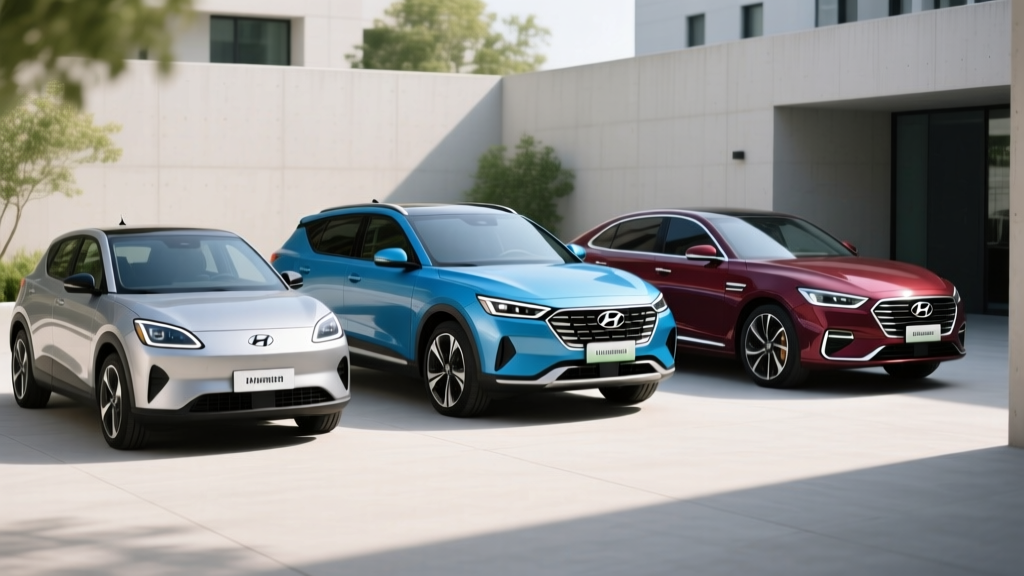
Hyundai's current battery-electric portfolio covers three distinct segments. Each rides on a different platform philosophy, and the spec differences matter for real ownership.
| Spec | 2026 Kona Electric | 2026 Ioniq 5 | 2026 Ioniq 6 |
|---|---|---|---|
| EPA Range (max trim) | 261 mi | 318 mi (Long Range RWD) | 361 mi (SE Long Range RWD) |
| Battery (usable) | 64.8 kWh (NMC) | 84.0 kWh (NMC) | 77.4 kWh (NMC) |
| Peak DC Charge Rate | ~150 kW | ~240 kW (800V) | ~240 kW (800V) |
| 10–80% DC Fast Charge | ~43 min | ~18 min | ~18 min |
| Level 2 Charge Rate | 10.9 kW | 10.9 kW | 10.9 kW |
| Horsepower | 201 hp (FWD) | 168–320 hp (RWD/AWD) | 149–320 hp (RWD/AWD) |
| 0–60 mph | ~7.6 sec | ~7.3 sec (RWD) / ~4.5 sec (AWD) | ~7.0 sec (RWD) / ~5.1 sec (AWD) |
| Cargo Volume | 25.5 cu ft (rear up) | 27.2 cu ft (+ 0.85 cu ft frunk) | 12.3 cu ft (sedan trunk) |
| Base MSRP | ~$34,000 | ~$43,000 | ~$42,000 |
| Battery Warranty | 10 yr / 100,000 mi | 10 yr / 100,000 mi | 10 yr / 100,000 mi |
| Connector | CCS1 (NACS adapter avail.) | NACS (native, 2025+) | NACS (native, 2025+) |
Key takeaway: The Ioniq 5 and Ioniq 6 share Hyundai's E-GMP 800-volt architecture, enabling dramatically faster DC charging than the Kona Electric's 400V system. On a road trip, that 18-minute vs. 43-minute 10–80% difference compounds quickly.
Real-World Range: What the EPA Sticker Doesn't Tell You
EPA vs. Reality
Ioniq 5 Long Range RWD: EPA 318 mi → Expect ~265–285 mi at sustained 75 mph highway speeds; ~220–245 mi in sub-30°F winter conditions.
Ioniq 6 SE Long Range RWD: EPA 361 mi → Expect ~300–320 mi highway (its 0.21 Cd drag coefficient excels at speed); ~255–280 mi in cold weather.
Kona Electric: EPA 261 mi → Expect ~215–235 mi highway; ~180–200 mi in freezing temps.
Hyundai's EPA numbers are achievable in mixed city/suburban driving at moderate temperatures. Highway speed is the biggest range killer in any EV — aerodynamic drag scales with the square of velocity, so 80 mph burns significantly more kWh per mile than 65 mph. The Ioniq 6's sedan shape gives it a measurable advantage here over the boxier Ioniq 5 and Kona Electric.
Cold weather reduces range through battery resistance and cabin heating demand. Hyundai includes a standard heat pump on the Ioniq 5 and Ioniq 6 (which recovers waste heat from the powertrain to warm the cabin more efficiently than resistive heating). The Kona Electric's heat pump availability varies by trim — verify before purchasing if you live in a cold climate. According to fueleconomy.gov, EVs can lose 20–40% of range at 20°F compared to 72°F baseline testing.
Charging at Home and on the Road: Cost and Speed
| Charging Level | Power (kW) | Miles Added/Hour | Typical Use Case |
|---|---|---|---|
| Level 1 (120V outlet) | ~1.4 kW | ~4–5 mi/hr | Overnight top-up, low-mileage drivers |
| Level 2 (240V home) | 10.9 kW | ~35–40 mi/hr | Daily home charging (full overnight refill) |
| DC Fast (Ioniq 5/6) | Up to 240 kW | ~700+ mi/hr (peak) | Road trips; 10–80% in ~18 min |
| DC Fast (Kona Electric) | Up to 150 kW | ~450 mi/hr (peak) | Road trips; 10–80% in ~43 min |
kW vs. kWh refresher: kW (kilowatts) measures charging power — how fast energy flows into the battery. kWh (kilowatt-hours) measures battery capacity — how much energy the battery stores. A 240 kW charger fills an 84 kWh battery quickly, but peak rate isn't sustained across the entire charge curve. Hyundai's 800V E-GMP models hold high charge rates longer than most competitors, tapering noticeably only above ~70% state of charge.
Cost to Charge vs. Gas
| Scenario | Cost per Mile | Annual (12,000 mi) |
|---|---|---|
| Home charging ($0.14/kWh avg) | ~$0.04–0.05 | ~$480–$600 |
| Public DC fast charging ($0.40/kWh avg) | ~$0.12–0.14 | ~$1,440–$1,680 |
| Gas car (28 MPG, $3.30/gal) | ~$0.12 | ~$1,414 |
Home charging is the economic sweet spot. At the U.S. average residential rate of ~$0.14/kWh (per EIA data), an Ioniq 5 averaging 3.0 mi/kWh costs roughly $0.047/mile — less than half the cost of a comparable 28 MPG gas crossover. If you rely exclusively on public DC fast chargers, the per-mile cost roughly triples and approaches gas-car parity. This is why home charging access is the single most important ownership variable.
Level 2 Home Installation Reality
Budget $500–$1,500 for a quality Level 2 charger (e.g., ChargePoint Home Flex, Emporia V2) and $800–$2,500 for professional electrician installation on a 240V/50A circuit. If your electrical panel is at capacity or outdated (e.g., a 100A panel in an older home), a panel upgrade to 200A can add $1,500–$4,000. Always get a licensed electrician's assessment before purchasing equipment.
Federal Tax Credit: What You Actually Qualify For
§30D Federal EV Tax Credit Requirements (2026)
- Vehicle MSRP cap: SUVs/pickups ≤ $80,000; sedans/hatchbacks ≤ $55,000 (Ioniq 6 sedan qualifies; Ioniq 5 and Kona as SUVs have the higher cap)
- Buyer income cap (modified AGI): $300,000 joint / $225,000 head of household / $150,000 single
- Battery sourcing: Increasingly strict critical-mineral and battery-component requirements phase in annually — eligibility can change mid-year
- Point-of-sale transfer: You can transfer the credit to the dealer at purchase for an immediate price reduction (requires IRS registration)
- Final assembly: Vehicle must be assembled in North America
Source: IRS §30D guidance. Rules change frequently — verify current eligibility at purchase time. Consult a tax professional for your specific situation.
Hyundai's U.S.-built models (Ioniq 5 from the Georgia Meta Plant, and select trims) are positioned for §30D eligibility, but the battery-sourcing requirements are the moving target. Some trims may qualify for the full $7,500, others for $3,750 (half credit for meeting one of the two sourcing thresholds), and some may qualify for none. Always confirm the specific VIN's eligibility with the dealer and cross-reference fueleconomy.gov before signing.
Total 5-Year Ownership Cost: Hyundai EV vs. Gas Crossover
| Cost Category | Ioniq 5 SEL (est.) | Gas Crossover (e.g., Tucson 2.5T, est.) |
|---|---|---|
| Purchase Price (MSRP) | ~$47,000 | ~$37,000 |
| Federal Tax Credit | –$3,750 to –$7,500 | $0 |
| Fuel / Electricity (5 yr) | $2,400–$3,000 (home) | $7,070 |
| Maintenance (5 yr) | ~$1,500 (no oil, fewer brakes) | ~$3,500 |
| Insurance (5 yr, avg) | ~$9,000–$10,500 | ~$7,500–$8,500 |
| Estimated Depreciation | ~$18,000–$22,000 | ~$14,000–$17,000 |
| Est. 5-Year Total | ~$66,000–$73,000 | ~$65,000–$70,000 |
The Ioniq 5's higher sticker price is partially offset by the tax credit, dramatically lower fuel costs, and reduced maintenance (no oil changes, less brake wear from regenerative braking). Insurance is typically 15–25% higher for EVs due to repair-cost data. Depreciation remains a wildcard — EV resale values have been volatile. Over 5 years, total costs are broadly comparable, with the EV pulling ahead in years 6–10 as maintenance and fuel savings compound and the battery warranty provides coverage.
Common Misconceptions About Buying a New Hyundai EV
| Myth | Fact |
|---|---|
| "The battery will need replacing in 5 years." | Hyundai warranties the battery for 10 years/100,000 miles against capacity loss below 70%. Real-world data shows NMC batteries losing ~10–15% capacity over 150,000–200,000 miles with normal use. Replacement is rarely needed within typical ownership. |
| "I can't take road trips — charging takes too long." | The Ioniq 5 and Ioniq 6 add ~200 miles of range in 18 minutes at a 250+ kW charger. That's a restroom-and-coffee stop. The Kona Electric is slower (~43 min for 10–80%), making it better suited for daily commuting than frequent road trips. |
| "EVs are worse in winter." | Range drops 20–30% in extreme cold — a real limitation. But preconditioning (warming the battery and cabin while plugged in) mitigates this. Hyundai's heat pump on the Ioniq 5/6 recovers waste heat efficiently. Traction, AWD, and instant torque are advantages in snow. |
| "I need a Tesla to use Superchargers." | Starting 2025, Hyundai's NACS-equipped Ioniq 5 and Ioniq 6 can access Tesla Supercharger stalls natively. The Kona Electric (CCS1) requires an adapter. This dramatically expands the public fast-charging network for Hyundai owners. |
| "The $7,500 tax credit applies to everyone." | Eligibility depends on your income, the vehicle's MSRP, battery sourcing, and final assembly location. Some buyers qualify for $3,750, some $7,500, and some $0. Always verify before committing. |
Decision Framework: Which New Hyundai EV Is Right for You?
Choose the Kona Electric if:
- Your daily commute is under 60 miles round-trip
- You rarely take road trips over 200 miles
- Home Level 2 charging is available and budget is a priority
- You want the lowest entry price into a Hyundai EV
Choose the Ioniq 5 if:
- You need crossover cargo space for a family (27.2 cu ft + frunk)
- You take road trips and want the fastest charging (~18 min, 10–80%)
- You want native NACS access to Tesla Superchargers
- AWD availability matters for your climate
Choose the Ioniq 6 if:
- Maximum range is your top priority (EPA 361 mi)
- You drive long highway commutes where its low drag coefficient shines
- Cargo space is secondary (12.3 cu ft trunk)
- You value a quieter, more aerodynamic cabin at speed
Skip the EV and consider a Hyundai PHEV (e.g., Tucson PHEV) if:
- You lack reliable home or workplace charging access
- You frequently drive in rural areas with sparse DC fast-charging infrastructure
- Your budget is under $35,000 and you need maximum flexibility
What First-Time Hyundai EV Buyers Should Know Before Signing
1. Confirm your home electrical capacity. Before visiting the dealer, have an electrician assess whether your panel can support a 240V/50A circuit. A 200A panel is usually sufficient; older 100A panels may need an upgrade.
2. Test the actual charging network in your area. Download the PlugShare or Tesla app and map DC fast chargers along your most common routes. Network reliability varies — Electrify America, EVgo, and Tesla Superchargers differ in uptime and ease of use by region.
3. Understand the charge curve. Peak kW (e.g., 240 kW) is only sustained for a portion of the charging session. The Ioniq 5's 800V system holds above 150 kW from roughly 10–55% SoC, then tapers. Charging from 80–100% is deliberately slow to protect battery health — plan road-trip stops around 10–80% fills.
4. Precondition before fast charging. Navigate to a DC fast charger using the Hyundai infotainment system's built-in routing. This triggers battery preconditioning — warming the pack to optimal temperature for faster charge acceptance. Arriving at a 350 kW charger with a cold battery can cut your charge rate in half.
5. Insurance costs more — shop before buying. Get an insurance quote on the specific trim before signing. EV premiums average 15–25% higher than equivalent gas models, though this gap is narrowing as repair data matures.
6. Verify tax credit eligibility on the exact VIN. Don't rely on general model-year claims. The dealer should confirm §30D eligibility for the specific vehicle you're purchasing, and you should cross-reference with the IRS and fueleconomy.gov.
Frequently Asked Questions
Is the Hyundai Ioniq 5 a good first EV?
Yes, for most buyers. Its 800V fast-charging capability (10–80% in ~18 min), spacious interior, 10-year battery warranty, and NACS Supercharger access make it one of the most practical first EVs on the market. The main prerequisite is reliable home Level 2 charging.
How long does a Hyundai EV battery last?
Hyundai warranties its EV batteries for 10 years or 100,000 miles against capacity loss below 70%. Based on NMC chemistry degradation data, most Hyundai EV batteries retain 85–90% capacity at 100,000 miles under normal use. Complete battery failure is rare; gradual capacity loss is the norm.
Can I charge a Hyundai EV at a Tesla Supercharger?
Yes — the 2025+ Ioniq 5 and Ioniq 6 come with a native NACS port, granting direct access to Tesla's Supercharger network without an adapter. The Kona Electric uses CCS1 and requires a NACS-to-CCS adapter (sold separately by Hyundai and third parties).
What's the cheapest Hyundai EV to buy in 2026?
The Kona Electric SE starts around $34,000 MSRP. After any applicable state incentives (which vary by jurisdiction — check your state's energy office), it's the most affordable entry point into a new Hyundai EV. Federal §30D credit eligibility for the Kona Electric is more limited than the Ioniq 5 due to battery-sourcing requirements.
Does the Hyundai Ioniq 6 have enough cargo space?
The Ioniq 6 offers 12.3 cubic feet of trunk space — adequate for groceries and luggage for two, but tight for families or bulk shopping. If cargo versatility is a priority, the Ioniq 5's 27.2 cu ft hatchback (plus a 0.85 cu ft frunk) is significantly more practical.
Is Hyundai's EV driver-assist system self-driving?
No. Hyundai's Highway Driving Assist 2 (HDA2) is an SAE Level 2 driver-assistance system — it can manage steering, acceleration, and braking on highways, but the driver must remain fully engaged, hands on or near the wheel, and eyes on the road at all times. It is not autonomous driving.
Specs and pricing reflect manufacturer data and EPA estimates available at time of publication. Tax credit eligibility changes frequently — always verify with IRS §30D resources and fueleconomy.gov before purchasing. Real-world range estimates are based on testing patterns and community data; your results will vary based on speed, temperature, terrain, and driving style.