Quick Answer: Which New Ford EV Should You Buy?
Ford offers two main consumer EVs for 2026: the Mustang Mach-E (starting ~$39,995, up to 320 miles EPA range) for car buyers and the F-150 Lightning (starting ~$54,995, up to 320 miles EPA range) for truck buyers. Both qualify for partial or full federal tax credits depending on your income, the trim's MSRP, and battery-sourcing rules. If you drive under 40 miles daily and can charge at home, either model will cut your fuel and maintenance costs significantly versus gas equivalents. If you lack home charging or regularly tow heavy loads in cold weather, a Ford hybrid like the Maverick Hybrid may serve you better.
Ford's 2026 EV Lineup: The Models That Matter
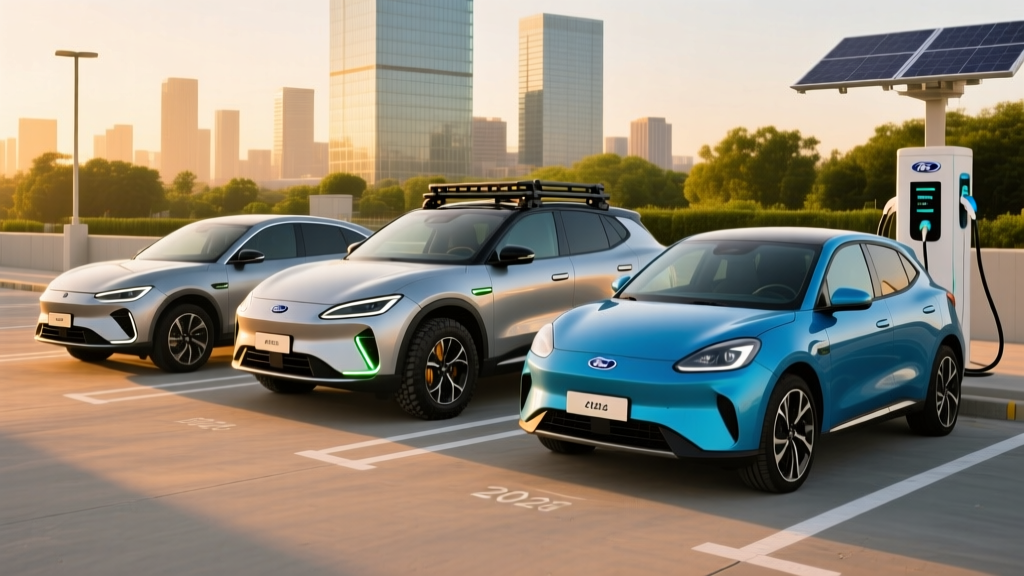
Ford's consumer EV lineup in 2026 centers on two vehicles, with a third aimed at commercial fleets. Here's what's actually on dealer lots — not concept cars or announced models years away from production.
| Spec | Mustang Mach-E (Select RWD) | Mustang Mach-E (GT AWD) | F-150 Lightning (XLT Std Range) | F-150 Lightning (Lariat Ext Range) |
|---|---|---|---|---|
| EPA Range | 250 mi | 290 mi | 240 mi | 320 mi |
| Battery (usable kWh) | 75.7 kWh (LFP) | 91 kWh (NMC) | 98 kWh (NMC) | 131 kWh (NMC) |
| Horsepower | 266 hp | 480 hp | 452 hp | 580 hp |
| 0–60 mph | ~6.0 sec | ~3.5 sec | ~5.5 sec | ~3.8 sec |
| Peak DC Fast Charge | 150 kW | 150 kW | 150 kW | 150 kW |
| 10–80% DCFC Time | ~36 min | ~41 min | ~41 min | ~49 min |
| Level 2 Charge Rate | 10.5 kW | 10.5 kW | 19.2 kW | 19.2 kW |
| MPGe (Combined) | 101 MPGe | 84 MPGe | 70 MPGe | 70 MPGe |
| Base MSRP | $39,995 | $54,995 | $54,995 | $69,995 |
| Battery Warranty | 8 yr / 100,000 mi | 8 yr / 100,000 mi | 8 yr / 100,000 mi | 8 yr / 100,000 mi |
Real-World Range vs. EPA Sticker
EPA numbers are tested under controlled conditions. Expect ~15–20% less range at sustained highway speeds (75+ mph), and ~25–35% less in freezing temperatures (below 30°F) due to battery heating demands and cabin HVAC. The F-150 Lightning Extended Range's 320-mile EPA figure realistically translates to 250–270 miles on a highway road trip, and potentially 210–230 miles in sub-freezing conditions. Towing a 5,000-lb trailer cuts range roughly in half regardless of the truck.
The E-Transit remains Ford's commercial-focused electric van (126 miles EPA, 68 kWh battery, ~$47,500 MSRP), primarily sold to fleet operators. It's not a practical consumer purchase, so this guide focuses on the Mach-E and Lightning.
EV vs. Gas: How Do Ford's EVs Compare to Their Gas Stablemates?
The most useful comparison is against the gas vehicles these EVs replace in a buyer's cross-shopping: the gas Mustang/EcoBoost for the Mach-E, and the gas F-150 for the Lightning.
| Metric | Mach-E Select RWD | Ford Bronco Sport (2.0T AWD) | F-150 Lightning XLT | F-150 XLT (3.5L V6 Gas) |
|---|---|---|---|---|
| Base MSRP | $39,995 | $35,600 | $54,995 | $48,500 |
| Fuel/Energy Cost per Mile | ~$0.045 (home charging) | ~$0.16 (gas at $3.40/gal) | ~$0.055 (home charging) | ~$0.18 (gas at $3.40/gal) |
| Annual Fuel/Energy (15k mi) | ~$675 | ~$2,400 | ~$825 | ~$2,700 |
| Annual Maintenance Est. | ~$300 | ~$650 | ~$350 | ~$700 |
| 5-Year Fuel + Maint. Total | ~$4,875 | ~$15,250 | ~$5,875 | ~$17,000 |
| EPA Range / Tank Range | 250 mi | ~380 mi | 240 mi | ~500 mi |
| Refuel/Recharge Time | 8–10 hr (L2 home) | 5 min (gas station) | 8–10 hr (L2 home) | 5 min (gas station) |
The EVs cost more upfront but save $1,500–$2,200 per year in fuel and maintenance if you charge primarily at home. The break-even point against a comparably trimmed gas model is typically 3–5 years, accelerated if you qualify for the federal tax credit.
The Real Costs: Purchase, Charging, Insurance, and Tax Credits
Buying an EV involves different cost dynamics than a gas car. Here's a grounded breakdown for a Mach-E Select RWD buyer.
| Cost Category | Mach-E Select RWD | Notes |
|---|---|---|
| MSRP | $39,995 | Before incentives |
| Federal Tax Credit (§30D) | Up to $7,500 | Subject to income caps, MSRP caps, battery sourcing; point-of-sale transfer available |
| Effective Price (with full credit) | ~$32,495 | Not all buyers qualify |
| Home Level 2 Charger Install | $800–$2,200 | 240V/48A circuit; panel upgrade adds $1,500–$3,000 if needed |
| Annual Electricity (15k mi, home) | ~$675 | At $0.14/kWh national avg; varies by utility |
| Annual Insurance | ~$1,800–$2,400 | EVs typically cost 15–25% more to insure than gas equivalents |
| Estimated 5-Year Total Cost of Ownership | ~$45,000–$52,000 | Includes purchase, energy, insurance, maintenance, minus residual value |
Federal Tax Credit: What You Actually Need to Know
The IRS §30D credit for 2026 is not a guaranteed $7,500 for every buyer. Eligibility depends on:
- Buyer income caps: AGI must not exceed $150,000 (single), $225,000 (head of household), or $300,000 (joint filing)
- MSRP caps: Vans/trucks/SUVs capped at $80,000; sedans/wagons at $55,000. The Mach-E qualifies as an SUV; the Lightning qualifies as a truck.
- Battery sourcing requirements: Increasingly strict critical-mineral and battery-component rules may reduce the credit to $3,750 or eliminate it for certain trims depending on supply-chain changes. Check the latest IRS guidance before purchasing.
- Point-of-sale transfer: You can transfer the credit to the dealer at purchase, reducing your out-of-pocket cost immediately rather than waiting for tax filing.
Always confirm credit eligibility with your tax professional and check fueleconomy.gov for the most current qualifying vehicle list.
What First-Time Ford EV Buyers Need to Know
Home Charging Is the Foundation
Over 80% of EV charging happens at home. A Level 2 home charger (240V, 40–48 amps) adds roughly 25–35 miles of range per hour for the Mach-E and up to 40+ miles per hour for the Lightning with its 19.2 kW onboard charger. Expect a full overnight charge in 8–10 hours. If you live in an apartment without charging access or park on the street, an EV becomes significantly less convenient — you'll rely on public DC fast chargers, which cost $0.30–$0.50/kWh (roughly double home rates) and require 35–50 minute stops.
Charging Speed: Peak kW vs. Reality
Ford's EVs peak at 150 kW on DC fast chargers, but that peak is only sustained between roughly 10–30% state of charge. The charge curve tapers significantly above 50%, and drops sharply past 80%. A "10–80% in ~41 minutes" spec means the last 20% could take another 30+ minutes. On road trips, plan to charge from 10–80% and move on — don't wait for a full charge.
Cold Weather Cuts Range
Lithium-ion batteries lose efficiency in cold temperatures, and cabin heating demands energy. In sustained sub-freezing conditions, expect 25–35% range loss. The Mach-E and Lightning both use heat pumps (standard or available), which recover some efficiency compared to resistive heaters, but physics still applies. If your daily commute is 60+ miles round-trip in Minnesota winters, the Standard Range models may feel tight.
NACS Connector and Supercharger Access
Ford EVs for 2026 come equipped with the NACS (North American Charging Standard) port, giving native access to Tesla Supercharger stations — the most reliable and widespread DC fast-charging network in the U.S. This is a significant practical advantage over vehicles still using CCS connectors, which rely on Electrify America, EVgo, or ChargePoint networks with more variable uptime.
Common Misconceptions About Ford EVs
| Myth | Fact |
|---|---|
| "The battery will need replacing in 5 years for $20,000." | Ford warranties the battery for 8 years/100,000 miles with a capacity-retention threshold of 70%. Real-world degradation data from earlier Mach-E and Lightning models shows ~10–15% loss over 100,000 miles. Most EV batteries outlast the vehicle. Full replacement costs $15,000–$25,000 but is rarely needed. |
| "EVs are worse in the cold — they barely run." | Range drops 25–35% in freezing temps, but the vehicle functions normally. Preconditioning the battery while plugged in recovers some range. EVs start instantly in cold weather — no cranking a frozen engine. |
| "Public charging is broken everywhere." | Tesla Superchargers (now accessible to Ford EVs via NACS) maintain 99%+ uptime and average 150–250 kW speeds. Non-Tesla networks are more variable — Electrify America and EVgo have improved, but plan routes using apps like PlugShare or A Better Routeplanner. |
| "The Lightning can't tow anything useful." | The F-150 Lightning is rated to tow up to 7,700 lbs (Extended Range with Max Trailer Tow). However, towing at highway speeds roughly halves range — a 320-mile truck becomes a ~160-mile truck with a heavy trailer. This is a physics limitation, not a Ford defect. |
| "I'll save $7,500 no matter what." | The §30D credit has income limits, MSRP caps, and battery-sourcing rules that change periodically. Not every buyer or trim qualifies for the full amount. Verify before signing. |
Decision Framework: Which New Ford EV Is Right for You?
If X, Then Y
- If you commute under 40 miles/day and have a garage: Either the Mach-E Select or Lightning XLT Standard Range covers your daily needs with range to spare. Charge overnight on a Level 2 home charger and rarely visit a gas station or public charger.
- If you road-trip 3+ times per year: Choose Extended Range trims (Mach-E Premium/California Route 1 or Lightning Lariat Extended Range) for 290–320 miles EPA. The NACS port and Supercharger access make long-distance travel practical with 30–40 minute stops every ~220 real-world miles.
- If you tow a boat or camper regularly: The F-150 Lightning Extended Range with Max Trailer Tow is the clear pick. Budget for 140–180 miles of real-world range while towing, and plan charging stops accordingly.
- If you live in an apartment without charging: Reconsider. Public-only charging adds cost ($0.30–$0.50/kWh) and time (2–4 hours/week). A Ford hybrid like the Maverick Hybrid (42 MPG combined, ~$29,000 MSRP) may be a better fit until you have reliable home or workplace charging.
- If your AGI exceeds the §30D income caps: You won't receive the federal credit. Factor this into your cost comparison — the EV may still save money over 5 years through lower fuel and maintenance costs, but the payback period extends.
- If you want performance above all: The Mach-E GT (480 hp, 0–60 in ~3.5 sec) or Lightning Lariat Extended Range (580 hp, 0–60 in ~3.8 sec) deliver sports-car acceleration with practical utility. Expect higher insurance premiums and slightly lower real-world range from aggressive driving.
Frequently Asked Questions
Are new Ford EVs eligible for the full $7,500 federal tax credit in 2026?
Eligibility varies by trim, buyer income, and current battery-sourcing compliance. The Mach-E and Lightning both fall under the MSRP caps ($80,000 for SUVs/trucks), but the critical-mineral and battery-component requirements under §30D may limit the credit to $3,750 for certain configurations. Check the IRS clean vehicle credit page and confirm with your dealer and tax professional before purchasing.
How long does it take to charge a Ford EV at home?
On a 48-amp Level 2 home charger (240V), the Mach-E charges at up to 10.5 kW, taking roughly 7–9 hours for a full charge. The F-150 Lightning with its 19.2 kW onboard charger can accept more power, charging in roughly 7–10 hours depending on battery size. Both comfortably charge overnight from a typical daily-driving state of charge.
Can the F-150 Lightning power my house during an outage?
Yes, with Ford's available Intelligent Backup Power system (requires the Ford Charge Station Pro and a compatible home transfer switch, installed by a licensed electrician). The Lightning's 131 kWh Extended Range battery can supply up to 9.6 kW of continuous power, potentially running essential home circuits for 3–10 days depending on usage. The hardware and installation cost roughly $3,000–$5,000 beyond the charger itself.
What's the real-world highway range of the Mustang Mach-E?
At 70–75 mph in moderate temperatures (60–80°F), expect roughly 210–220 miles from the Select RWD (250 EPA) and 245–260 miles from the Premium/Extended Range AWD (290–312 EPA). Cold weather and aggressive driving reduce these figures further. For highway-heavy drivers, the Extended Range battery is the pragmatic choice.
How does Ford's BlueCruise compare to Tesla Autopilot?
Both are SAE Level 2 driver-assistance systems — meaning the driver must remain attentive and ready to take over at all times. Ford's BlueCruise allows hands-off driving on pre-mapped divided highways (over 130,000 miles of approved roads in the U.S.), using a driver-monitoring camera to confirm attention. Tesla's Autopilot/FSD (Supervised) requires hands-on-wheel contact. Neither system is "self-driving" — they are advanced cruise control with lane centering. BlueCruise is included for a trial period, then requires a subscription (~$75/month or $800/year).
Should I buy a Ford EV or a Ford hybrid?
If you have home charging and drive under 250 miles daily, a Ford EV (Mach-E or Lightning) offers lower operating costs and smoother driving. If you lack home charging, regularly exceed 300 miles between stops, or tow heavy trailers long distances without time for charging stops, a Ford hybrid (Maverick Hybrid at 42 MPG or F-150 PowerBoost Hybrid at 24 MPG combined) offers flexibility without range compromises. The best choice depends on your specific driving pattern and charging access — not on which technology is "better" in the abstract.
For the latest EPA range and efficiency data, see the official fueleconomy.gov comparison tool. Safety ratings for the Mach-E and F-150 Lightning are available through IIHS and NHTSA.