Quick Answer: Is a New EV Subaru Right for You?
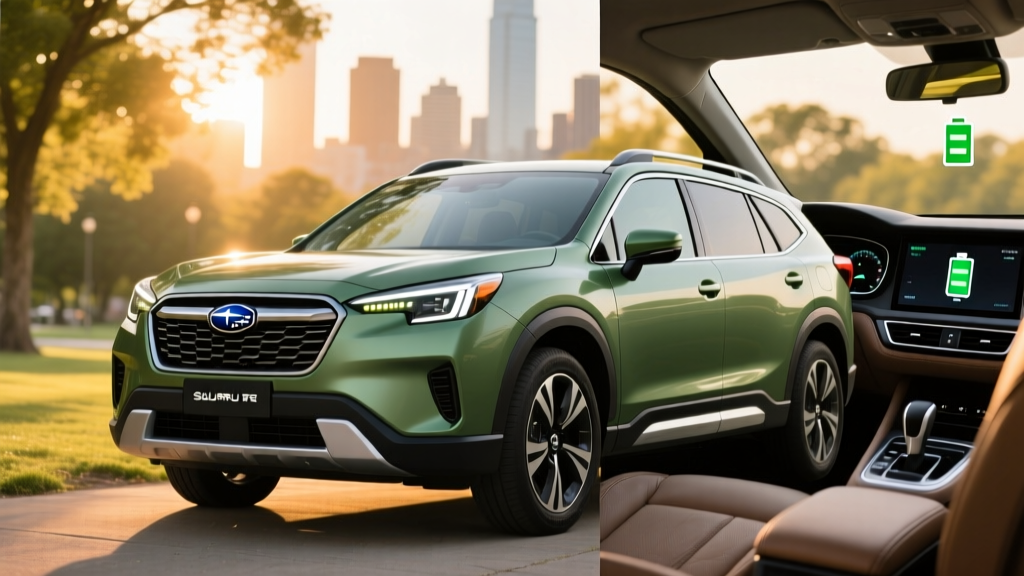
If you're considering a new EV Subaru, you're looking at the 2026 Subaru Solterra — the brand's only all-electric vehicle. It offers up to 222 miles of EPA range (Touring trim drops to 214 miles), standard all-wheel drive, and a starting MSRP around $38,495. It shares its platform with the Toyota bZ4X and is best suited for buyers who want Subaru's trademark AWD capability in an electric package, have access to home Level 2 charging, and primarily drive under 150 miles per day. If you need 300+ mile range or frequent remote backcountry road trips, a plug-in hybrid or a longer-range EV may serve you better.
2026 Subaru Solterra: The Only New EV Subaru Available
Subaru's electric lineup remains focused on a single model: the Solterra. Introduced for the 2023 model year and co-developed with Toyota (it rides on the same e-TNGA platform as the bZ4X), the 2026 Solterra carries forward with incremental updates to charging software and trim packaging. Subaru has announced future EVs, but as of early 2026, the Solterra is the only battery-electric vehicle you can buy from the brand.
| Spec | Premium (Base) | Limited | Touring |
|---|---|---|---|
| EPA Range | 222 mi | 222 mi | 214 mi |
| Battery (usable) | ~68 kWh, NMC lithium-ion | ||
| Drivetrain | Dual-motor AWD, 215 hp / 249 lb-ft | ||
| 0–60 mph | ~6.5 seconds | ||
| DC Fast Charge (peak) | ~100 kW (10–80% in ~55 min) | ||
| Level 2 Charge Rate | ~6.6 kW (J1772) | ||
| MPGe (combined) | 104 MPGe | 104 MPGe | 102 MPGe |
| Starting MSRP | ~$38,495 | ~$41,995 | ~$46,495 |
| Battery Warranty | 8 years / 100,000 miles | ||
Real-world range caveat: The 222-mile EPA figure assumes mixed driving at moderate temperatures. In our experience and consistent with independent testing, expect 175–195 miles on the highway at 70+ mph, and potentially 150–170 miles in sub-freezing winter conditions. The Solterra's relatively modest battery capacity (68 kWh usable) and its AWD system's energy draw mean range drops are more pronounced than in larger-battery EVs. If your daily commute exceeds 100 miles round-trip, you'll want reliable home charging.
Range Reality Check
EPA Sticker: 222 miles (Premium/Limited) | Real-World Highway (65–75 mph): ~185–195 miles | Cold Weather (below 32°F): ~150–170 miles | Mixed Commute (moderate climate): ~200–210 miles
Solterra vs. Gas Subaru Outback: What You Actually Spend
The most common cross-shop for Solterra buyers is the Subaru Outback — the brand's best-selling wagon and a natural comparison point. Here's how the numbers stack up over five years of ownership, assuming 12,000 miles/year and national average energy prices.
| Cost Factor | Solterra Premium | Outback (2.5i) |
|---|---|---|
| MSRP (approx.) | $38,495 | $32,695 |
| Federal Tax Credit (§30D)* | Up to $7,500 (if eligible) | $0 |
| Effective Purchase Price | ~$30,995 | $32,695 |
| 5-Year Fuel/Energy Cost** | ~$3,150 (home L2 charging) | ~$9,375 (gas at $3.50/gal, 28 MPG) |
| 5-Year Maintenance | ~$1,200 | ~$3,500 |
| 5-Year Insurance (est.) | ~$8,500 | ~$7,200 |
| 5-Year Total (purchase + fuel + maint + ins.) | ~$43,845 | ~$52,770 |
*Federal §30D tax credit eligibility depends on buyer income caps ($150K single / $300K joint), MSRP caps ($55K for SUVs), battery critical-mineral sourcing, and assembly requirements. Credit can now be transferred to the dealer at point of sale as a purchase-price reduction. Always verify current-year rules at IRS.gov and consult a tax professional.
**Energy costs assume $0.14/kWh for home charging (national average) and $3.50/gallon gasoline. Public DC fast charging at $0.35–$0.50/kWh would raise the Solterra's energy cost to roughly $5,500–$7,500 over five years if used exclusively.
The Solterra can break even or save money over five years if you qualify for the full tax credit and charge primarily at home. Without the credit, or if you rely entirely on expensive public DC charging, the Outback's lower purchase price and strong resale value keep it competitive. The Solterra's higher insurance premiums (typically 15–25% above the Outback) also narrow the gap.
Charging the Solterra: Speeds, Costs, and Limitations
Charging is the area where the Solterra draws the most criticism — and where prospective buyers need the clearest expectations.
| Charging Level | Power (kW) | Miles Added Per Hour | Full Charge Time |
|---|---|---|---|
| Level 1 (120V household) | ~1.2 kW | ~3–4 mi/hr | ~55–65 hours |
| Level 2 (240V home/public) | ~6.6 kW | ~20–22 mi/hr | ~10–11 hours |
| DC Fast Charge (public) | ~100 kW peak | N/A | 10–80% in ~55 min |
The DC fast-charging limitation is real. At roughly 100 kW peak, the Solterra charges considerably slower than rivals like the Hyundai Ioniq 5 (peak 240 kW, 10–80% in ~18 minutes) or the Tesla Model Y (peak 250 kW, 10–80% in ~15 minutes). A 55-minute 10–80% session means road trips require longer stops. On a 400-mile drive, plan for two charging stops of roughly 45–55 minutes each.
Home charging is essential for Solterra ownership. A Level 2 home charger (240V, 32–40 amp circuit) replenishes the 68 kWh battery overnight. Installation costs vary widely:
| Component | Low Estimate | High Estimate |
|---|---|---|
| Level 2 charger hardware (e.g., ChargePoint Home Flex, Emporia Vue) | $350 | $700 |
| Electrician labor (240V/40A circuit run) | $500 | $2,000 |
| Permit and inspection | $50 | $300 |
| Electrical panel upgrade (if needed, 100A→200A) | $1,500 | $3,500 |
| Total (no panel upgrade) | $900 | $3,000 |
| Total (with panel upgrade) | $2,400 | $6,500 |
Most homes with a 200-amp panel and a garage or carport within 50 feet of the panel will fall in the $900–$2,000 range. Older homes or those with the panel far from the parking spot should budget higher. Always get a quote from a licensed electrician before purchasing the vehicle — don't assume your electrical setup is ready.
Connector note: The 2026 Solterra uses the J1772 connector for Level 1/Level 2 AC charging and CCS1 for DC fast charging. It does not have a native NACS (Tesla) port. Adapters are available to access Tesla Superchargers (J3400 adapter), but verify compatibility with Subaru before relying on this for road trips.
Tax Credit Eligibility: Can You Actually Get $7,500?
The federal §30D Clean Vehicle Credit offers up to $7,500 for qualifying new EVs, but eligibility is far from guaranteed. Here's the current checklist for the 2026 Solterra:
- MSRP Cap: Vehicle MSRP must be ≤$80,000 for SUVs — the Solterra clears this easily (top trim ~$46,495).
- Buyer Income Cap: Modified AGI ≤$150,000 (single) / ≤$300,000 (married filing jointly) / ≤$225,000 (head of household).
- Battery Sourcing: Critical minerals and battery components must meet phased-in percentage thresholds from US or FTA-partner countries. The Solterra's battery is manufactured in Japan (Toyota/Panasonic JV), which may or may not meet the 2026 critical-minerals threshold — this changes annually.
- Final Assembly: Must occur in North America. The Solterra is assembled at Toyota's Motomachi plant in Japan, which disqualifies it from the §30D credit as of current rules.
- Point-of-Sale Transfer: If eligible, you can transfer the credit to the dealer at purchase, reducing your out-of-pocket cost immediately rather than waiting for tax filing.
Critical reality: Because the Solterra is assembled in Japan, it does not qualify for the federal §30D new-vehicle tax credit under current law. This is a significant financial consideration versus competitors assembled in the US (like the Tesla Model Y, Hyundai Ioniq 5, or Ford Mustang Mach-E). Some buyers may qualify for state or utility incentives — check your local programs — and the used EV credit (§25E, up to $4,000) applies if you purchase a qualifying pre-owned Solterra from a dealer. Always verify current rules at IRS.gov.
Solterra vs. the Competition: Where It Stands
The Solterra competes in the compact/midsize electric crossover segment. Here's how it compares to key rivals at a glance:
| Spec | Subaru Solterra | Hyundai Ioniq 5 | Tesla Model Y (LR) | Ford Mach-E (AWD) |
|---|---|---|---|---|
| EPA Range | 222 mi | 303 mi | 320 mi | 290 mi |
| Battery (usable) | 68 kWh | 77.4 kWh | 75 kWh | 75.7 kWh |
| Peak DC Charge | ~100 kW | ~240 kW | ~250 kW | ~150 kW |
| 10–80% DC Time | ~55 min | ~18 min | ~15 min | ~36 min |
| HP | 215 | 320 (AWD) | 384 | 312 |
| Starting MSRP | ~$38,495 | ~$42,600 | ~$44,990 | ~$42,995 |
| US Assembly (§30D eligible) | No (Japan) | Yes (Georgia) | Yes (Texas) | Yes (Mexico*) |
*Ford Mach-E is assembled in Cuautitlán, Mexico. Its §30D eligibility depends on battery sourcing requirements — verify current-year status.
The Solterra's primary advantages are its standard AWD (some competitors charge $3,000–$4,000 extra for AWD), Subaru's EyeSight safety suite, and its lower base MSRP. Its primary disadvantages are the short range, slow DC charging, and lack of federal tax credit eligibility due to Japanese assembly. If range and road-trip charging speed are top priorities, the Ioniq 5 or Model Y are stronger choices. If you want a Subaru specifically — for the brand's AWD reputation, dealer network, or X-Mode off-road software — the Solterra is your only electric option.
Common Misconceptions About the Solterra
| Myth | Fact |
|---|---|
| "The Solterra gets $7,500 in federal tax credits." | It does not. Japanese assembly disqualifies it from §30D. State incentives may still apply. |
| "222 miles of range is enough for any road trip." | Real-world highway range is closer to 185–195 miles. Plan charging stops every 150–170 miles on road trips, especially in cold or mountainous terrain. |
| "I can just plug into a regular outlet and be fine." | Level 1 (120V) adds only 3–4 miles per hour — roughly 36–48 miles overnight. For daily driving over 40 miles, Level 2 home charging is practically mandatory. |
| "It charges as fast as other EVs at public stations." | At ~100 kW peak, the Solterra charges roughly 2–2.5× slower than the Ioniq 5 or Model Y. Expect 55 minutes for a 10–80% session versus 15–20 minutes for top competitors. |
| "EV batteries need replacing every few years." | Subaru warranties the Solterra's battery for 8 years/100,000 miles (retaining at least 70% capacity). Industry data shows NMC batteries typically retain 85–90% capacity after 100,000 miles with normal use. |
Decision Framework: Should You Buy the Solterra?
Choose the Subaru Solterra if:
- You want a Subaru specifically — brand loyalty, local dealer trust, AWD reputation
- Your daily driving is under 120 miles round-trip
- You have (or can install) home Level 2 charging
- You rarely take road trips over 250 miles, or you're willing to plan longer charging stops
- You value Subaru's EyeSight safety suite and X-Mode for light off-road capability
- You live in a state with its own EV incentives that offset the lack of federal credit
Look at competitors instead if:
- You need 300+ miles of range for frequent long-distance driving
- You want fast DC charging (under 20 minutes, 10–80%) for road trips
- You want to maximize federal tax credit savings (§30D-eligible vehicles save up to $7,500)
- Performance is a priority — the Solterra's 215 hp and 6.5-second 0–60 trails most rivals
- You don't have access to home or workplace charging and would rely on public DC fast charging (slow charge speeds make this frustrating)
What First-Time EV Buyers Should Know Before Purchasing
If the Solterra is your first EV, here are the ownership realities that don't appear on the window sticker:
1. Home charging is the backbone. Over 80% of EV charging happens at home. If you live in an apartment without charging access or park on the street, EV ownership becomes significantly harder. Before buying, confirm your electrical panel can support a 240V/40A circuit and get an electrician's quote.
2. Cold weather cuts range by 20–35%. The Solterra does not have a heat pump (it uses resistive cabin heating), which means winter range loss is more severe than EVs equipped with heat pumps. In sub-20°F conditions, plan for as little as 150 miles of usable range.
3. Insurance costs more. EV insurance premiums run 15–25% higher than comparable gas vehicles due to higher repair costs and parts pricing. Get a quote from your insurer before committing — the annual premium difference ($200–$500/year) affects your total cost of ownership.
4. Maintenance is genuinely cheaper. No oil changes, no spark plugs, no transmission fluid. Brake pad life extends significantly thanks to regenerative braking. Budget roughly $200–$300/year for cabin air filters, tire rotation, and wiper fluid — versus $600–$900/year for a gas Subaru.
5. Tire wear increases. EVs are heavier and deliver instant torque, which accelerates tire wear by roughly 15–25%. Budget for tire replacement every 30,000–40,000 miles rather than the 50,000+ miles typical of gas vehicles.
Frequently Asked Questions
Does Subaru make any other electric vehicles besides the Solterra?
As of 2026, no. The Solterra is Subaru's only battery-electric vehicle. Subaru has announced plans for additional EVs later this decade, but nothing else is currently available or open for order. The Crosstrek Hybrid (PHEV) was discontinued after the 2023 model year.
Can the Solterra tow?
The 2026 Solterra is not rated for towing. If you need towing capability, you'll need to look at the Ford Mach-E (up to 1,500 lbs with the California Route 1 package) or larger electric SUVs like the Rivian R1S or Tesla Model X.
What is the Solterra's NACS/Tesla Supercharger compatibility?
The Solterra uses a CCS1 DC fast-charging port natively. Subaru has indicated that a NACS adapter for Tesla Supercharger access will be available, but verify current adapter availability and compatibility directly with your Subaru dealer before relying on Supercharger access for road trips. The broader Tesla Supercharger network opening to CCS vehicles has been gradual and station-dependent.
How does the Solterra perform in snow and off-road?
This is the Solterra's strongest suit among electric crossovers. Standard dual-motor AWD, 8.3 inches of ground clearance, and Subaru's X-Mode traction management make it genuinely capable in snow and on maintained dirt roads. It's not a rock crawler, but it matches the Outback's light-off-road competence. According to IIHS, the Solterra earns top safety marks, which matters for family-oriented buyers in snow-belt states.
Is the Toyota bZ4X the same car?
Mechanically, yes — the Solterra and bZ4X share the e-TNGA platform, battery pack, and powertrain. The Solterra differentiates with standard AWD on all trims (the bZ4X offers FWD on its base trim), Subaru-tuned suspension, X-Mode, and additional underbody cladding. Pricing, range, and charging speeds are nearly identical. Choose based on brand preference and which dealer network you prefer.
What happens if the battery degrades significantly?
Subaru's battery warranty guarantees at least 70% capacity retention for 8 years or 100,000 miles. If the battery drops below that threshold within the warranty period, Subaru will repair or replace it at no cost. Based on data from fueleconomy.gov and industry degradation studies, NMC batteries in thermally managed systems (like the Solterra's liquid-cooled pack) typically retain 85–92% capacity at 100,000 miles under normal use. Full battery replacement outside of warranty is estimated at $12,000–$18,000, though prices continue to decline as battery costs fall.
Sources: EPA range and efficiency data from fueleconomy.gov. Federal tax credit rules from IRS.gov §30D. Safety ratings from IIHS. Manufacturer specifications from Subaru of America. Pricing and incentive rules are current as of early 2026 and subject to change.