The New Electric VW Bus: Quick Verdict
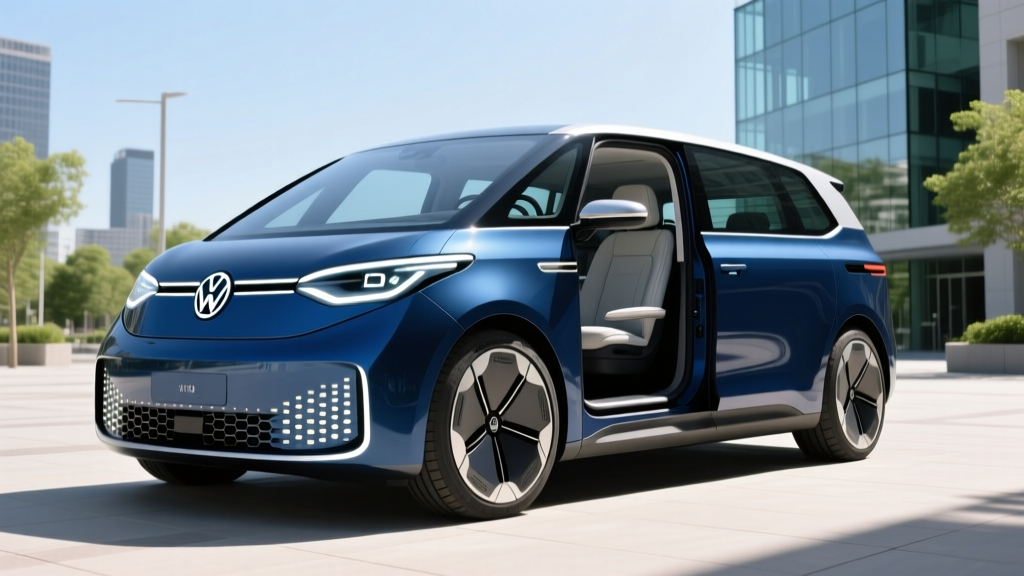
The new electric VW Bus — officially the Volkswagen ID. Buzz — is a retro-styled, three-row electric minivan that went on sale in the U.S. for the 2025 model year. For 2026, the ID. Buzz starts at $59,995 (Pro S trim) and reaches up to $69,995 for the 1st Edition AWD. Its EPA-estimated range is 234 miles (RWD) or 231 miles (AWD), powered by a 91 kWh (usable) NMC lithium-ion battery. DC fast charging peaks at 200 kW, achieving a 10–80% charge in approximately 26 minutes. It qualifies for a $250–$7,500 federal tax credit depending on battery-sourcing compliance under current IRS §30D rules — a critical variable buyers must verify at point of sale.
If you've been searching for a "new electric VW bus," the ID. Buzz is the vehicle you're looking for. Volkswagen revived its iconic Type 2 Microbus as a modern battery-electric vehicle (BEV) built on the MEB platform. It's not a concept or a vaporware promise — it's on dealer lots now. But whether it makes financial and practical sense for your household depends on your driving patterns, charging access, and expectations around range and cost. This guide breaks down the real numbers.
ID. Buzz Spec Sheet: Range, Battery, Charging & Performance
| Specification | Pro S (RWD) | Pro S Plus (AWD) | 1st Edition (AWD) |
|---|---|---|---|
| EPA Range | 234 mi | 231 mi | 231 mi |
| Battery (Usable) | 91 kWh NMC | 91 kWh NMC | 91 kWh NMC |
| Horsepower | 282 hp | 335 hp | 335 hp |
| 0–60 mph | ~7.9 sec | ~5.9 sec | ~5.9 sec |
| Peak DC Charge Rate | 200 kW | 200 kW | 200 kW |
| 10–80% DC Fast Charge | ~26 min | ~26 min | ~26 min |
| Level 2 (AC) Charge Rate | 11 kW | 11 kW | 11 kW |
| Level 2 Full Charge Time | ~9 hours | ~9 hours | ~9 hours |
| MPGe (Combined) | 87 MPGe | 84 MPGe | 84 MPGe |
| Seating | 7 passengers | 7 passengers | 7 passengers |
| Cargo (Behind 3rd Row) | 18.8 cu ft | 18.8 cu ft | 18.8 cu ft |
| Base MSRP | $59,995 | $64,995 | $69,995 |
| Battery Warranty | 8 yr / 100,000 mi | 8 yr / 100,000 mi | 8 yr / 100,000 mi |
Real-World Range vs. EPA Sticker
The EPA rates the RWD ID. Buzz at 234 miles, but real-world results will vary significantly based on conditions:
- Highway driving (75 mph, 70°F): Expect ~195–210 miles. The ID. Buzz's boxy shape creates substantial aerodynamic drag at speed.
- Cold weather (30°F, highway): Expect ~155–175 miles. NMC batteries lose 20–35% range in freezing temps, and the cabin heater draws heavily.
- City / suburban mixed (60°F): You can approach or slightly exceed the 234-mile EPA figure thanks to regenerative braking.
For road trips, plan charging stops assuming ~180 miles of usable range as a safe buffer. The 200 kW peak charge rate is strong, but like all EVs, the charge curve tapers significantly above 80% SoC — that last 20% can add another 20+ minutes.
ID. Buzz vs. Gas Minivan: Cost & Practicality Comparison
The ID. Buzz competes directly with gas minivans like the Toyota Sienna (hybrid), Honda Odyssey, and Chrysler Pacifica. Here's how the numbers stack up over five years of ownership, assuming 15,000 miles/year:
| Factor | VW ID. Buzz Pro S (RWD) | Toyota Sienna LE (HEV) | Honda Odyssey EX-L (Gas) |
|---|---|---|---|
| MSRP | $59,995 | $39,990 | $43,550 |
| Fed. Tax Credit (§30D) | Up to $7,500* | $0 | $0 |
| Effective Purchase Price | ~$52,495* | $39,990 | $43,550 |
| Fuel/Energy Cost (5 yr) | ~$4,800** | ~$7,500 | ~$11,250 |
| Maintenance (5 yr) | ~$1,800 | ~$3,200 | ~$3,800 |
| Est. Insurance (5 yr) | ~$12,500 | ~$9,500 | ~$9,800 |
| 5-Year Total Cost (excl. depreciation) | ~$71,595 | ~$60,190 | ~$68,400 |
*Tax credit eligibility depends on battery sourcing, buyer income caps ($150K single / $300K joint), and MSRP caps ($80K for vans/SUVs). Verify at IRS.gov qualified vehicle list.
**Based on $0.16/kWh national average home charging. Public DC fast charging at $0.40–$0.60/kWh will raise this figure for road-trip-heavy drivers.
The ID. Buzz commands a ~$12,000–$20,000 upfront premium over gas rivals. Even after the federal credit and fuel savings, the five-year cost gap narrows but doesn't close for most buyers. Where the ID. Buzz wins is in daily driving refinement — silent operation, instant torque, and zero tailpipe emissions — plus lower scheduled maintenance (no oil changes, fewer brake replacements thanks to regen).
Real-World Ownership: Charging, Climate & Daily Use
Home Charging Is Non-Negotiable
The ID. Buzz's 91 kWh battery makes Level 1 (120V) charging impractical — you'd add only ~3–4 miles per hour, meaning a full charge takes over 24 hours. A Level 2 home charger (240V, 48-amp circuit) at 11 kW fills the battery in about 9 hours, perfect for overnight replenishment.
| Item | Cost Range |
|---|---|
| Level 2 Charger (hardwired, 48A) | $400–$700 |
| Electrician Labor (240V/50A circuit) | $800–$2,500 |
| Permit & Inspection | $100–$400 |
| Panel Upgrade (if needed, 100A→200A) | $1,500–$3,500 |
| Total (no panel upgrade) | $1,300–$3,600 |
| Total (with panel upgrade) | $2,800–$7,100 |
If you live in an apartment or lack garage/outdoor parking with electrical access, the ID. Buzz becomes significantly harder to live with. Public DC fast charging at 200 kW is viable for road trips, but relying on it daily is expensive ($0.40–$0.60/kWh) and time-consuming. Home Level 2 charging is the single biggest ownership variable.
Climate Considerations
The ID. Buzz uses a heat pump (standard on U.S. models) to improve cold-weather efficiency — a meaningful advantage over resistive cabin heaters. However, NMC chemistry still loses 20–35% range in sustained freezing temperatures. If you live in Minnesota or Maine and need 200+ miles of winter range daily, the ID. Buzz's 231–234 mile EPA rating may feel tight. Preconditioning the battery while plugged in mitigates some loss and enables faster DC charging in cold weather.
Federal Tax Credit: What You'll Actually Get
§30D Federal EV Tax Credit Requirements (2026)
- MSRP Cap: Vehicle must be ≤$80,000 (vans/SUVs). All ID. Buzz trims qualify.
- Buyer Income Cap: AGI ≤$150,000 (single) / $225,000 (head of household) / $300,000 (joint).
- Battery Sourcing: Critical minerals and battery components must meet escalating domestic/free-trade-partner thresholds. The ID. Buzz's credit amount has varied — check the IRS qualified vehicle list for current eligibility.
- Point-of-Sale Transfer: You can transfer the credit to the dealer for an upfront price reduction, rather than waiting for a tax refund.
- Final Assembly: Must occur in North America. The ID. Buzz for the U.S. market is assembled in Hannover, Germany — however, VW has made production adjustments. Confirm VIN eligibility at fueleconomy.gov.
Critical caveat: The ID. Buzz's §30D eligibility has been inconsistent due to battery-component sourcing rules and the North American final-assembly requirement. Some buyers have qualified for the full $7,500, others for partial credits, and some for none. Always verify your specific VIN with your dealer and cross-reference the IRS list before signing. Consult a tax professional for your personal situation.
Common Misconceptions: Myth vs. Fact
| Myth | Fact |
|---|---|
| "The electric VW bus is just a concept." | The ID. Buzz has been on sale in the U.S. since late 2024 as a 2025 model. It's a production vehicle available now. |
| "234 miles isn't enough range for a family vehicle." | The average American drives ~37 miles/day (FHWA data). 234 miles covers 6+ days of average driving. For road trips, 200 kW DC charging adds ~130 miles in 15 minutes. |
| "EV batteries need replacing every few years." | VW warranties the ID. Buzz battery for 8 years/100,000 miles against degradation below 70% capacity. Industry data shows NMC batteries typically retain 85–90% capacity after 100,000 miles. |
| "I can charge from any regular outlet." | Level 1 (120V) adds ~3–4 miles/hour on a 91 kWh battery. It's usable only as emergency trickle charging. A 240V Level 2 circuit is essential for daily ownership. |
| "It qualifies for the full $7,500 tax credit automatically." | Credit eligibility depends on battery sourcing, your income, and final assembly location. The ID. Buzz's credit amount varies — verify before purchase. |
Decision Framework: Is the ID. Buzz Right for You?
Choose the VW ID. Buzz If:
- You have home Level 2 charging (or can install it) and drive ≤150 miles/day in normal conditions.
- You want a 3-row, 7-passenger EV with distinctive retro styling and car-like refinement.
- You value silent, smooth electric drivetrain operation and lower maintenance costs.
- You primarily drive in moderate climates, or you can accept ~160-mile winter range.
- The ~$52,000–$63,000 effective price (after potential credits) fits your budget.
Look Elsewhere If:
- You lack reliable home or workplace Level 2 charging access.
- You regularly drive 250+ miles between charging stops (e.g., rural routes, long commutes).
- You need maximum cargo volume — the Sienna and Odyssey offer significantly more behind the third row (~33 cu ft).
- Budget is the top priority — a Sienna Hybrid at ~$40K and 36 MPG combined is the cost-efficient family hauler.
- You live in extreme cold and need consistent 200+ mile range year-round without frequent charging stops.
First-Time EV Buyer Checklist
- Verify charging access. Can you install a 240V/48A circuit at home? Get an electrician quote before buying.
- Confirm tax credit eligibility. Check the IRS qualified vehicle list for the ID. Buzz's current credit amount, and confirm your income qualifies.
- Calculate real energy costs. At $0.16/kWh and ~35 kWh/100mi (ID. Buzz efficiency), you'll spend ~$5.60 per 100 miles vs. ~$12–$15 for a gas minivan.
- Get insurance quotes. EV insurance premiums run 15–30% higher than equivalent gas vehicles. Shop multiple carriers before committing.
- Test-drive with your car seats. The ID. Buzz's third row is usable for adults on short trips but tight for long journeys. Verify your child seats fit the second-row captain's chairs.
- Plan your first road trip. Use the PlugShare or Electrify America apps to map DC fast chargers along your most common long-distance route. Confirm CCS or NACS connector compatibility.
Frequently Asked Questions
Does the new electric VW bus have a frunk (front trunk)?
No. The ID. Buzz does not have a front trunk. All cargo space is in the rear — 18.8 cu ft behind the third row, expanding to ~75 cu ft with both rear rows folded. This is less than a Sienna or Odyssey, which offer ~33 cu ft behind the third row.
What connector does the ID. Buzz use for charging?
The U.S.-market ID. Buzz launched with a CCS1 connector for DC fast charging and a J1772 connector for Level 2 AC charging. As the industry shifts to NACS (Tesla's standard), VW has committed to adopting NACS on future models — but the current ID. Buzz uses CCS. Adapters are available for Tesla Supercharger access.
Can the ID. Buzz tow a trailer?
The ID. Buzz has a towing capacity of approximately 2,200 pounds (braked). That's enough for a small utility trailer or a pair of jet skis, but not a full-size camping trailer. Towing also reduces range by 25–40%.
How does the ID. Buzz compare to the Kia EV9?
The Kia EV9 is the ID. Buzz's closest 3-row EV rival. The EV9 offers up to 304 miles of EPA range (Light RWD), starts around $54,900, and provides more cargo space. The ID. Buzz counters with retro styling, a more car-like ride, and a slightly more practical sliding-door minivan layout. If range and value are priorities, the EV9 wins on paper. If style and minivan ergonomics matter, the ID. Buzz has no equal.
Will the ID. Buzz get a range update or larger battery?
Volkswagen has not announced a larger battery or range update for the ID. Buzz as of early 2026. The MEB platform's 91 kWh pack is the largest currently offered. Future model-year updates may bring efficiency improvements through software, but don't expect a major range jump without a platform revision.