The Short Answer: There Is No New Electric Camaro — Yet
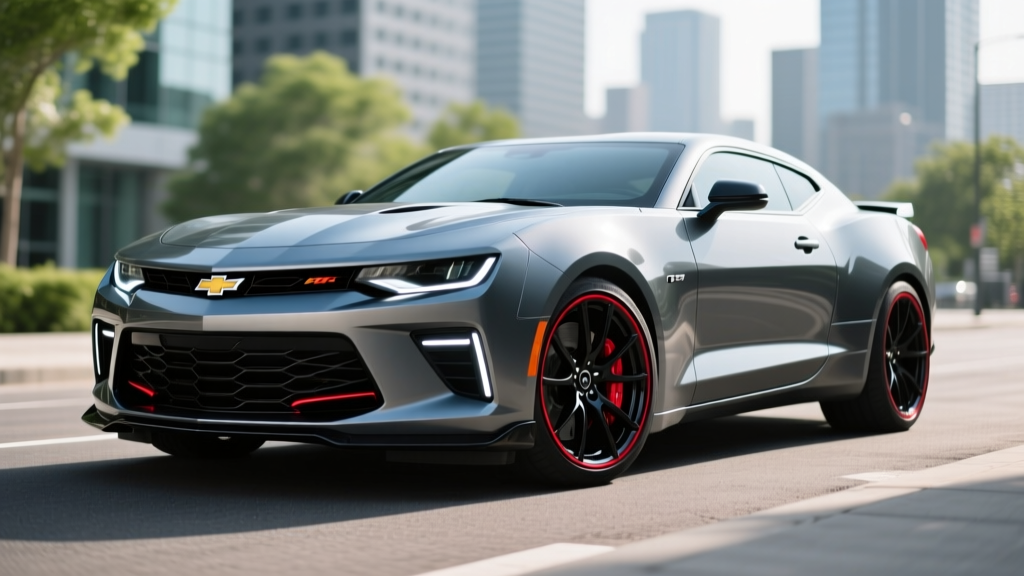
As of early 2026, Chevrolet has not announced an electric Camaro. The gas-powered sixth-generation Camaro ended production in January 2024, and GM has not confirmed a direct battery-electric successor. What GM has confirmed is an electric performance future built on its Ultium platform — and the closest thing to a spiritual electric Camaro you can buy today is the 2026 Chevrolet Blazer EV SS (up to 557 HP, ~310-mile EPA range, starting around $56,000) or the Cadillac Lyriq-V. If you're specifically searching for a new electric Camaro, here's what actually exists, what's rumored, and what you should consider instead.
Why Chevy Killed the Gas Camaro — and What Comes Next
The Camaro's discontinuation wasn't about electrification alone — it was about sales. The Camaro moved roughly 32,000 units in its final year, a fraction of its 2016 peak. Meanwhile, the Mustang Mach-E proved that a storied pony-car nameplate can transition to electric without destroying brand equity, at least commercially. Ford's gamble gave GM a roadmap — and a competitive prod.
GM CEO Mary Barra and executive VP Mark Reuss have repeatedly signaled that performance EVs are a priority. The Ultium platform underpins everything from the GMC Hummer EV (up to 830 HP) to the Blazer EV SS. The hardware for a low-slung, rear-drive-biased electric coupe exists. What's missing is an official product reveal.
Industry analysts, including those at Motor Trend, have reported that GM is evaluating an electric two-door performance car that could wear the Camaro badge — but as of 2026, it remains unconfirmed. Any specs circulating online are speculative.
What an Electric Camaro Would Need to Compete
If GM greenlights a new electric Camaro, it would enter a segment with formidable benchmarks. Here's what the competitive landscape looks like with concrete numbers:
| Spec | Tesla Model 3 Performance | Ford Mustang Mach-E GT | 2024 Camaro SS (Final Gas) | Blazer EV SS (Closest GM EV) |
|---|---|---|---|---|
| 0-60 mph | 2.9 sec | 3.5 sec | 4.0 sec | ~3.4 sec (est.) |
| Horsepower | 510 HP | 480 HP | 455 HP | 557 HP |
| EPA Range | 315 mi | 292 mi | ~370 mi (16-gal tank) | ~310 mi (est.) |
| Starting MSRP | $54,990 | $59,995 | $44,495 (2024 final) | ~$56,000 |
| Fuel/Energy Cost per Mile | ~$0.04–$0.06 | ~$0.04–$0.06 | ~$0.14–$0.18 | ~$0.04–$0.06 |
The math is clear: any electric Camaro would need to deliver sub-4-second 0-60 times, 300+ miles of EPA range, and a price under $55,000 to compete. The Ultium platform can deliver the performance. The pricing is the harder engineering challenge.
Real Costs: EV Performance Car vs. Gas Muscle Car
Let's compare what owning a performance EV actually costs versus a gas equivalent, using the Mustang Mach-E GT and the final-generation Camaro SS as proxies. This is the closest apples-to-apples comparison until a real electric Camaro arrives.
| 5-Year Ownership Cost | Mach-E GT (EV) | Camaro SS (Gas) |
|---|---|---|
| Purchase Price (base) | $59,995 | $44,495 |
| Federal Tax Credit (§30D) | Up to $7,500 (if eligible*) | $0 |
| Effective Purchase | ~$52,495 | $44,495 |
| Fuel/Energy (60,000 mi) | ~$2,700 (home charging)** | ~$9,600 (premium @ $3.80/gal, 19 MPG) |
| Maintenance (5 yr) | ~$1,800 | ~$3,900 |
| Insurance (5 yr avg.) | ~$11,500 | ~$9,800 |
| Total 5-Year Cost | ~$68,495 | ~$67,795 |
* §30D credit eligibility depends on MSRP caps ($55,000 for sedans, $80,000 for SUVs/trucks), buyer income limits ($150K single / $300K joint for new vehicles), and battery critical-mineral sourcing. The Mach-E GT's MSRP exceeds the sedan cap, so it may qualify under the SUV classification — verify at IRS.gov.
** Assumes 80% home Level 2 charging at $0.14/kWh national average; public DC fast charging costs significantly more (~$0.35-$0.48/kWh).
The takeaway: the EV breaks even or slightly wins on total cost over five years despite the higher sticker, primarily through fuel and maintenance savings. But the gap is narrow for performance models, and insurance premiums on EVs remain 15-25% higher on average due to repair complexity and parts costs.
What First-Time EV Buyers Need to Know Before Going Electric
If you're drawn to the idea of an electric Camaro — or any performance EV — here are the ownership realities that spec sheets don't surface:
Home Charging Is Non-Negotiable for Most Owners
Over 80% of EV charging happens at home. A Level 2 home charger (240V, 32-48 amps / 7.7-11.5 kW) adds roughly 25-35 miles of range per hour and fully replenishes a ~85 kWh battery overnight. Installation typically costs $1,200-$2,800 including the charger unit ($400-$700), electrical labor, and permits — but can exceed $4,000 if your panel needs a 200-amp upgrade.
If you live in an apartment, lack a garage, or rely exclusively on public charging, the ownership math changes dramatically. Public DC fast charging at networks like Electrify America or EVgo costs roughly $0.35-$0.48/kWh — nearly matching what you'd pay for gas per mile in a fuel-efficient car.
Real-World Range Is Not the EPA Sticker
A performance EV rated at 310 miles EPA will realistically deliver:
- ~260-280 miles in mixed highway driving at 70-80 mph
- ~200-230 miles in freezing temperatures (below 30°F) due to battery chemistry limitations and cabin heating demands
- ~240-260 miles during spirited driving (hard acceleration drains the pack faster than the EPA test cycle assumes)
This isn't a flaw — it's physics. But it matters if your commute or road-trip plans assume the sticker number.
DC Fast Charging Slows Above 80%
A performance EV may advertise "peak 200 kW" DC fast charging. That peak rate applies only between roughly 10-50% state of charge. Above 80%, the charge curve tapers sharply to protect battery longevity — dropping to 40-50 kW or less. A "10-80% in 22 minutes" claim is realistic; "10-100% in 25 minutes" is not.
Battery Warranties Are Stronger Than Most Buyers Realize
Federal law mandates that EV batteries carry a minimum warranty of 8 years / 100,000 miles (10 years / 150,000 miles in CARB states like California, New York, and others). GM's Ultium batteries carry an 8-year/100,000-mile warranty with a capacity-retention threshold of 70%. Real-world degradation data from similar NMC packs shows roughly 8-12% capacity loss over 100,000 miles — meaning a 310-mile EV would still deliver ~275 miles after a decade of typical use.
Myths vs. Facts: Performance EVs
| Common Myth | Fact (With Data) |
|---|---|
| "EV batteries need replacing every 5 years" | Modern NMC and LFP packs are engineered for 1,500-3,000 charge cycles. At 300 miles per cycle, that's 450,000-900,000 miles before reaching 70-80% capacity. Most packs outlast the car. (fueleconomy.gov) |
| "Electric cars are slow after the initial torque burst" | The Tesla Model 3 Performance hits 0-60 in 2.9 seconds and sustains a 162 mph top speed. The Lucid Air Sapphire does 0-60 in 1.89 seconds. EVs don't "run out of breath" — single-speed gearboxes simply trade top-end gearing for acceleration. |
| "Every EV qualifies for the $7,500 tax credit" | Under current §30D rules, vehicles must meet MSRP caps, buyer income thresholds, and North American battery-mineral sourcing requirements. Many EVs qualify for $0-$3,750 depending on the sourcing phase-out. Always check IRS.gov before purchasing. |
| "You can't road-trip an EV" | The U.S. now has over 7,500 DC fast-charging stations with 350 kW-capable chargers along major interstates. A 300-mile EV with 20-minute 10-80% charging can cover 600 miles in a day with two stops — comparable to gas-car breaks for food and rest. |
| "EVs are worse for the environment because of battery mining" | Lifecycle analyses from Argonne National Laboratory show EVs produce 50-70% fewer lifetime emissions than gas equivalents on the current U.S. grid — and the grid is getting cleaner every year. Battery recycling (Redwood Materials, Li-Cycle) is scaling rapidly. |
What to Buy Right Now If You Want an Electric Muscle Car
Since a new electric Camaro doesn't exist yet, here's a practical decision framework for buyers who want performance, electric propulsion, and American-brand heritage:
If-Then EV Performance Buyer Guide
- Choose the Tesla Model 3 Performance ($54,990) if you prioritize the fastest acceleration (2.9s 0-60), the Supercharger network, and the lowest cost per mile — and don't need a coupe body style or heritage badge.
- Choose the Ford Mustang Mach-E GT ($59,995) if brand heritage matters, you want crossover practicality (30.5 cu ft cargo), and you're comfortable with Ford's BlueCruise Level 2 hands-free highway driving on compatible routes.
- Choose the Chevrolet Blazer EV SS (~$56,000) if you want the closest thing GM currently offers to an electric muscle car — 557 HP, aggressive styling, and Ultium platform architecture that previews what an electric Camaro would use.
- Choose the Hyundai Ioniq 5 N ($67,500) if you want the most engaging driver's EV on the market — simulated gear shifts, N e-Shift software, track-capable thermal management, and 641 HP with N Grin Boost.
- Wait for an official electric Camaro announcement if the badge itself is non-negotiable, you don't need a car in the next 12-18 months, and you're comfortable with GM's product timeline remaining unconfirmed.
Charging Performance EVs: What the Numbers Actually Mean
Performance EVs typically carry larger batteries (80-100 kWh usable) and support faster peak DC charging rates. Here's how charging levels translate to real-world convenience:
| Charging Level | Power (kW) | Miles Added per Hour | Best Use Case |
|---|---|---|---|
| Level 1 (120V household) | 1.2-1.9 kW | 3-5 mi/hr | Emergency / overnight trickle |
| Level 2 (240V home) | 7.7-11.5 kW | 25-38 mi/hr | Daily home charging |
| DC Fast (150 kW) | Up to 150 kW | ~500+ mi/hr (peak) | Road trips, 10-80% in ~25 min |
| DC Fast (350 kW) | Up to 250-350 kW* | ~800+ mi/hr (peak) | Road trips, 10-80% in ~18 min |
* Few EVs can accept a sustained 350 kW. The vehicle's onboard charge controller determines the actual peak — a 200 kW-capable car at a 350 kW charger still charges at 200 kW max. Peak rates are sustained for only a portion of the charge curve.
For a performance EV with a ~90 kWh battery, a full Level 2 home charge from 10% to 100% takes roughly 8-10 hours — ideal for overnight replenishment. DC fast charging from 10% to 80% takes 18-28 minutes depending on the vehicle's peak acceptance rate and battery preconditioning.
Frequently Asked Questions
Will Chevy make an electric Camaro?
GM has not officially confirmed an electric Camaro as of early 2026. Executives have signaled that performance EVs are part of the brand's future on the Ultium platform, but no product announcement, timeline, or pricing has been released. Any specifications found online are speculative.
Is the Chevy Blazer EV SS basically an electric Camaro?
Not in body style — the Blazer EV SS is a two-row crossover SUV, not a coupe. But in spirit, its 557 HP, SS performance tuning, and aggressive design language make it the closest GM currently offers to an electric muscle car experience. It rides on the same Ultium platform an electric Camaro would likely use.
How much would an electric Camaro cost if it's released?
Based on GM's current Ultium pricing architecture and competitive positioning against the Tesla Model 3 Performance ($54,990) and Mustang Mach-E GT ($59,995), a reasonable estimate for an electric Camaro SS-equivalent would be $50,000-$60,000. A higher-performance variant (comparable to the former ZL1) could exceed $70,000. These are estimates only — no official pricing exists.
Do performance EVs qualify for the federal tax credit?
Eligibility under IRS §30D depends on three factors: (1) the vehicle's MSRP must not exceed $55,000 for sedans or $80,000 for SUVs/trucks/vans, (2) the buyer's adjusted gross income must fall below $150,000 (single) or $300,000 (married filing jointly), and (3) the battery must meet critical-mineral and component sourcing thresholds that tighten annually. As of 2026, many EVs qualify for a partial credit ($3,750) rather than the full $7,500 due to sourcing requirements. The credit can be transferred to the dealer at point of sale as a purchase-price reduction. Always verify eligibility at IRS.gov before purchasing.
Can I daily-drive a performance EV in cold weather?
Yes, but expect 20-30% range reduction in sustained sub-freezing temperatures. A 310-mile EPA-rated performance EV may deliver 210-250 miles in winter conditions. Mitigations include preconditioning the battery while plugged in (which warms the pack using grid power rather than battery energy), using seat/steering-wheel heaters instead of cabin heat, and planning charging stops with a 20% buffer. Most modern EVs, including those on GM's Ultium platform, include heat pumps that reduce winter efficiency losses compared to older resistive-heating systems.