Quick Answer: Which New Cadillac Electric SUV Is Right for You?
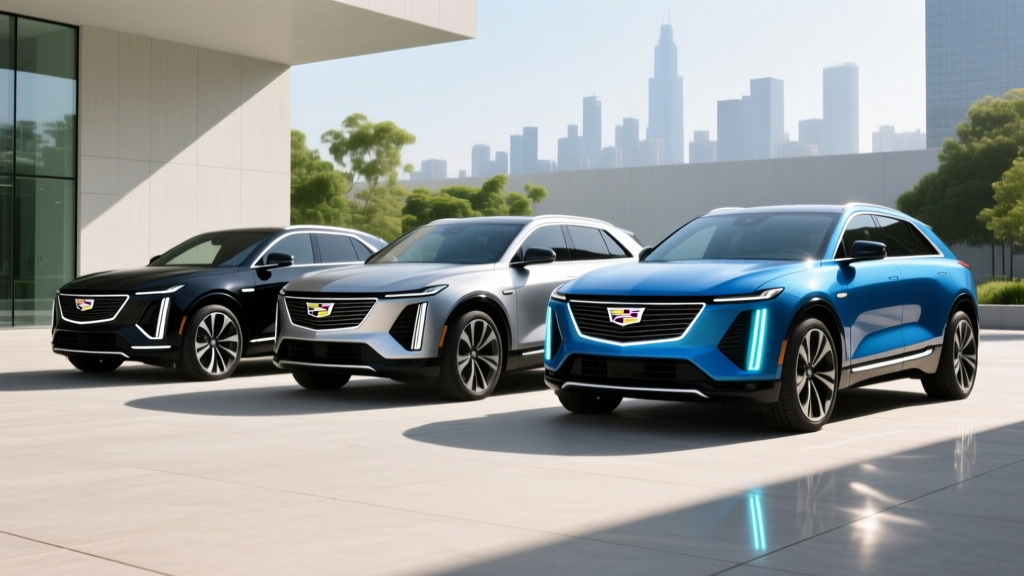
Cadillac's 2026 electric lineup includes three Ultium-platform SUVs: the Lyriq (midsize, 314-mile EPA range, from ~$51,490), the Optiq (compact, ~300-mile range, from ~$47,990), and the Vistiq (three-row flagship, ~300-mile range, from ~$64,990). If you want the best value-to-range ratio and proven charging hardware, the Lyriq is the safest pick. If you need three rows or want a more affordable entry point, the Vistiq or Optiq fill those roles — but expect real-world highway range to drop 15–20% below EPA estimates across all three.
The 2026 Cadillac EV Lineup at a Glance
Cadillac has committed fully to the GM Ultium battery platform, and by the 2026 model year the brand fields a complete electric SUV trio. Each model shares the same modular battery architecture (NMC chemistry, 12-module layout) but differs in pack size, motor configuration, and vehicle mass — all of which directly affect range, charging speed, and driving dynamics.
| Spec | 2026 Lyriq | 2026 Optiq | 2026 Vistiq |
|---|---|---|---|
| EPA Range (max) | 314 mi | ~300 mi (est.) | ~300 mi (est.) |
| Battery (usable) | 102 kWh (NMC) | ~85 kWh (NMC) | ~102 kWh (NMC) |
| Peak DC Charge | 190 kW | ~150 kW (est.) | 190 kW |
| 10–80% DC Time | ~33 min | ~30 min (est.) | ~35 min |
| Level 2 Rate | 19.2 kW | 11.5 kW | 19.2 kW |
| 0–60 mph | 4.6 s (AWD) | ~5.5 s (AWD est.) | ~5.0 s (AWD) |
| Horsepower | 500 hp (AWD) | ~350 hp (est.) | ~500 hp (AWD) |
| Base MSRP | $51,490 | $47,990 | $64,990 |
| Battery Warranty | 8 yr / 100,000 mi | 8 yr / 100,000 mi | 8 yr / 100,000 mi |
Source: EPA fueleconomy.gov and Cadillac official specifications. Optiq and Vistiq figures marked "est." are preliminary and subject to final EPA certification.
Real-World Range Reality Check
The Lyriq's 314-mile EPA rating is measured under mixed city/highway conditions at moderate temperatures. In real-world testing at sustained 70 mph highway speeds, expect 255–275 miles before the low-battery warning. In sub-freezing weather (below 32°F), range can drop an additional 15–25% due to cabin heating demands and reduced battery chemistry efficiency — putting realistic winter highway range closer to 210–240 miles. The Vistiq, being heavier, will trend toward the lower end of these estimates despite sharing a similar battery pack.
Charging Speeds and Infrastructure: What You'll Actually Experience
All three Cadillac EVs use the NACS (North American Charging Standard) connector natively, which means direct access to the Tesla Supercharger network — currently the most reliable public DC fast-charging infrastructure in the U.S. This is a significant practical advantage over CCS-only vehicles that must rely on Electrify America or EVgo.
| Charging Level | Power | Lyriq (mi/hr added) | Optiq (mi/hr est.) | Vistiq (mi/hr est.) |
|---|---|---|---|---|
| Level 1 (120V) | ~1.4 kW | ~4 mi/hr | ~4 mi/hr | ~4 mi/hr |
| Level 2 (240V home) | 19.2 kW / 11.5 kW | ~52 mi/hr | ~34 mi/hr | ~52 mi/hr |
| DC Fast (peak) | 190 kW / 150 kW | ~195 mi in 30 min | ~150 mi in 30 min | ~180 mi in 30 min |
The Charging Curve Matters More Than Peak kW
Cadillac advertises 190 kW peak DC charging for the Lyriq and Vistiq. But peak rate is only sustained between roughly 10–40% State of Charge (SoC). Above 60%, the charge rate tapers significantly — often dropping below 80 kW — to protect battery longevity. This means the 10–80% time of ~33 minutes is not linear: the first 50% charges in about 15 minutes, while the final 30% (60–80%) takes nearly 18 minutes. If you're road-tripping, plan stops around 20–60% SoC for the fastest throughput, and skip charging past 80% unless you need the range to reach your next stop.
For home charging, the Lyriq and Vistiq support 19.2 kW Level 2, which requires a 100-amp dedicated circuit and a hardwired wall connector. The Optiq's 11.5 kW rate works on a more common 60-amp circuit. Expect home installation costs of $800–$2,500 depending on whether your electrical panel needs an upgrade. Always consult a licensed electrician for final specifications.
Lyriq vs. Optiq vs. Vistiq: Side-by-Side Ownership Costs
Comparing a new Cadillac electric SUV against a gas alternative — say the Cadillac XT5 (starting ~$46,000, 23 MPG combined) or XT6 (starting ~$51,000, 21 MPG combined) — reveals where EV ownership saves money and where it costs more.
| Cost Factor | Lyriq AWD ($55,990) | XT5 AWD (~$50,000) |
|---|---|---|
| Purchase Price | $55,990 | $50,000 |
| Federal Tax Credit (§30D) | Up to $7,500* | $0 |
| Effective Price | ~$48,490* | $50,000 |
| Fuel/Energy (5 yr, 15k mi/yr) | ~$4,200 (electric) | ~$10,500 (gas @ $3.50/gal) |
| Maintenance (5 yr) | ~$1,800 | ~$3,500 |
| Insurance (5 yr avg) | ~$11,000 | ~$9,500 |
| 5-Year Total Cost | ~$65,490 | ~$73,500 |
*Tax credit eligibility depends on buyer income, MSRP caps, battery sourcing, and point-of-sale transfer rules under IRS §30D. Consult a tax professional for your specific situation. Insurance estimates based on national averages; EV premiums tend to run 10–20% higher.
The Lyriq's ~$8,000 five-year savings over the XT5 comes primarily from energy and maintenance reductions. EVs eliminate oil changes, transmission fluid, and exhaust-system repairs. Brake wear is dramatically reduced thanks to regenerative braking. However, higher insurance premiums and the upfront cost premium partially offset these gains. If you don't qualify for the federal credit, the payback period extends significantly.
Federal Tax Credit: What Cadillac EVs Actually Qualify For
Under current IRS §30D rules, the §30D New Clean Vehicle Credit offers up to $7,500, but eligibility is not guaranteed for every buyer or every trim. Here's what determines whether you'll receive it:
- MSRP Cap: SUVs must be priced at or below $80,000. All Lyriq, Optiq, and Vistiq trims currently fall under this cap.
- Income Limits: Modified adjusted gross income (MAGI) must not exceed $150,000 (single), $225,000 (head of household), or $300,000 (joint filers).
- Battery Sourcing: A percentage of critical minerals and battery components must be sourced from the U.S. or free-trade-agreement countries. GM's Ultium batteries have progressively met these thresholds, but verify current-year compliance on the IRS qualified vehicles list.
- Point-of-Sale Transfer: You can transfer the credit to the dealer at purchase for an immediate price reduction, rather than waiting to claim it on your tax return.
- Final Assembly: Vehicle must undergo final assembly in North America — all Cadillac EVs qualify.
The credit is split into two halves: $3,750 for meeting the critical-minerals requirement and $3,750 for the battery-components requirement. A vehicle meeting only one requirement qualifies for $3,750. Always check the latest IRS qualified vehicle list before purchasing, as sourcing compliance can change between model years.
Common Misconceptions About Cadillac EVs
| Myth | Fact |
|---|---|
| "Cadillac EVs can't road-trip because charging is too slow." | The Lyriq adds ~195 miles in 30 minutes at a 190 kW charger. On the Tesla Supercharger network (15,000+ U.S. stations), route planning is practical for most corridors. |
| "The battery will need replacing in 5 years." | GM's Ultium NMC batteries carry an 8-year/100,000-mile warranty against degradation below ~70% capacity. Industry data shows typical degradation of 8–12% over 8 years under normal use. |
| "EVs are worse in winter." | Range drops 15–25% in freezing temperatures — this is real and should inform your purchase. However, preconditioning the battery while plugged in mitigates charging-speed loss, and the heat pump (standard on Lyriq) reduces cabin-heating energy draw. |
| "I need a Tesla to use Superchargers." | All 2026 Cadillac EVs use NACS natively. No adapter required. You access the full Supercharger network directly. |
| "Home charging requires a full electrical overhaul." | Many homes with 200-amp panels can support a Level 2 charger on an existing circuit. The Optiq's 11.5 kW requirement is compatible with a standard 60-amp breaker. Panel upgrades ($1,500–$3,500) are only needed in older homes with 100-amp service. |
First-Time EV Buyer: What You Need to Know Before Committing
If this is your first electric vehicle, the ownership experience differs from gas cars in several practical ways that don't always appear in marketing materials:
Home Charging Is the Foundation
Over 80% of EV charging happens at home. If you have a garage or dedicated parking spot with access to a 240V outlet (or the ability to install one), daily EV ownership is effortless — you wake up with a "full tank" every morning. If you rely entirely on public charging or apartment-level access, the convenience equation changes dramatically. Before buying, confirm your parking situation supports Level 2 charging.
Plan for Your Actual Driving Pattern
The average American drives 37 miles per day. Even with real-world range reductions, any Cadillac EV covers a week of commuting on a single charge. But if you regularly drive 200+ miles one-way, or tow (the Lyriq is rated for 1,500 lbs; the Vistiq for up to 4,000 lbs), your effective range shrinks further. Towing can reduce range by 30–50%.
Maintenance Is Minimal but Not Zero
EVs still need tire rotations (EVs wear tires faster due to instant torque and heavier weight), cabin air filter replacements, brake fluid checks, and windshield washer fluid. Budget roughly $300–$400 per year for routine maintenance — about half what a comparable gas SUV costs.
Resale Value Is Still Evolving
EV depreciation has been steeper than gas vehicles in recent years, partly due to rapid battery-tech improvements and aggressive price cuts by Tesla. Cadillac EVs have held value reasonably well, but expect 45–55% depreciation over 5 years — slightly worse than a comparably priced XT5. This gap may narrow as the market matures.
Decision Framework: Which Cadillac EV Should You Buy?
Choose the Lyriq if:
- You want the best-proven range (314 mi EPA) and fastest charging (190 kW) in the lineup
- You're a two-row SUV buyer who values a premium interior and 33-inch LED display
- Your budget is $50,000–$65,000 before incentives
- You road-trip 3+ times per year and need reliable DC fast charging
Choose the Optiq if:
- You want the most affordable entry into Cadillac's EV lineup (~$47,990)
- You primarily commute under 50 miles daily and rarely road-trip
- Your home electrical panel is limited to a 60-amp circuit (11.5 kW charging)
- You prefer a smaller, more maneuverable SUV for urban driving
Choose the Vistiq if:
- You need three rows of seating for family or passengers
- You want the XT6 replacement with electric powertrain benefits
- Your budget allows $65,000–$80,000 and you value maximum cargo/passenger space
- You need higher towing capacity (up to 4,000 lbs)
Consider a Cadillac PHEV or gas model instead if:
- You lack reliable home or workplace charging access
- You regularly drive in extreme cold (below 0°F) with no garage
- You tow heavy loads (5,000+ lbs) frequently
- You live in a rural area with limited public DC fast-charging infrastructure
ADAS and Driver Assistance: Super Cruise Reality
SAE Level 2 — Driver Supervision Required. Cadillac's Super Cruise is a Level 2 driver-assistance system. It provides hands-free driving on over 400,000 miles of pre-mapped divided highways, but the driver must remain attentive. An infrared camera monitors your eye gaze and will issue escalating warnings — then disengage — if you look away from the road. This is not autonomous driving. You are legally and operationally responsible for the vehicle at all times.
Super Cruise is available on the Lyriq and Vistiq (standard on higher trims, optional on base). It works well on interstates and is genuinely useful for long highway stretches, reducing fatigue significantly. However, it does not function on unmapped roads, in construction zones with altered lane markings, or in heavy precipitation that obscures sensors. The Optiq is expected to offer Super Cruise as an option on select trims.
What Super Cruise Does NOT Do
- Navigate city streets or stoplights autonomously
- Handle construction zones or temporary lane shifts reliably
- Operate without driver attention monitoring
- Replace the driver in any legal or practical sense
- Function on roads not included in GM's HD map database
FAQ: New Cadillac Electric SUV Questions Answered
Are Cadillac EVs reliable compared to gas models?
GM's Ultium platform is now in its third model year, and early reliability data from the Lyriq shows fewer powertrain-related complaints than comparable gas SUVs. EVs have far fewer moving parts — no transmission, no exhaust, no fuel system. However, software-related issues (infotainment glitches, charging communication errors) have been reported in some 2024–2025 Lyriqs. GM has addressed most via over-the-air updates. Long-term battery reliability data beyond 100,000 miles is still accumulating.
Can I charge a Cadillac EV at a Tesla Supercharger?
Yes. All 2026 Cadillac EVs use the NACS connector natively — the same connector used by Tesla. You can pull up to any Supercharger stall, plug in directly, and charge without an adapter. The Tesla app or in-car navigation (on Cadillac's system) will show available stalls and pricing.
How much does it cost to charge a Cadillac Lyriq at home?
At the U.S. average residential electricity rate of ~$0.17/kWh, fully charging the Lyriq's 102 kWh battery costs approximately $17.34. For a typical daily commute of 37 miles (consuming ~12 kWh), the cost is about $2.04 per day — roughly equivalent to $1.00–$1.50 per gallon of gasoline. Annual home charging cost for 15,000 miles of driving is approximately $840, versus $2,100+ for gas at $3.50/gallon.
What happens if the battery degrades significantly?
GM warrants the Ultium battery for 8 years or 100,000 miles against capacity loss below a specified threshold (typically 60–70% of original capacity, depending on the specific warranty terms). If degradation exceeds this threshold within the warranty period, GM will repair or replace the battery at no cost. Out-of-warranty replacement costs for a 102 kWh pack currently range from $12,000–$18,000 including labor, though prices are expected to decline as battery costs fall industry-wide.
Is the Cadillac Lyriq eligible for the full $7,500 federal tax credit?
Eligibility depends on your income, the vehicle's MSRP, and current battery-sourcing compliance. As of early 2026, certain Lyriq trims qualify for the full $7,500 credit, while others may qualify for $3,750 depending on critical-mineral sourcing percentages. The point-of-sale transfer option allows you to apply the credit as an immediate dealer discount rather than waiting for tax filing. Verify current eligibility on the IRS qualified vehicles page before purchasing.
How does the Cadillac Lyriq compare to the BMW iX or Audi Q8 e-tron?
The Lyriq undercuts both on price (starting $51,490 vs. $75,000+ for the iX and $70,000+ for the Q8 e-tron) while offering competitive range. The BMW iX xDrive50 achieves ~324 miles EPA but costs significantly more. The Audi Q8 e-tron offers ~285 miles EPA and 170 kW peak charging. The Lyriq's NACS connector and Supercharger access give it a practical charging-infrastructure advantage over both European competitors, which rely on CCS and the Electrify America network. If budget is a primary concern, the Lyriq delivers luxury EV ownership at a meaningfully lower entry point.