The Short Answer on NEV Electric Vehicles
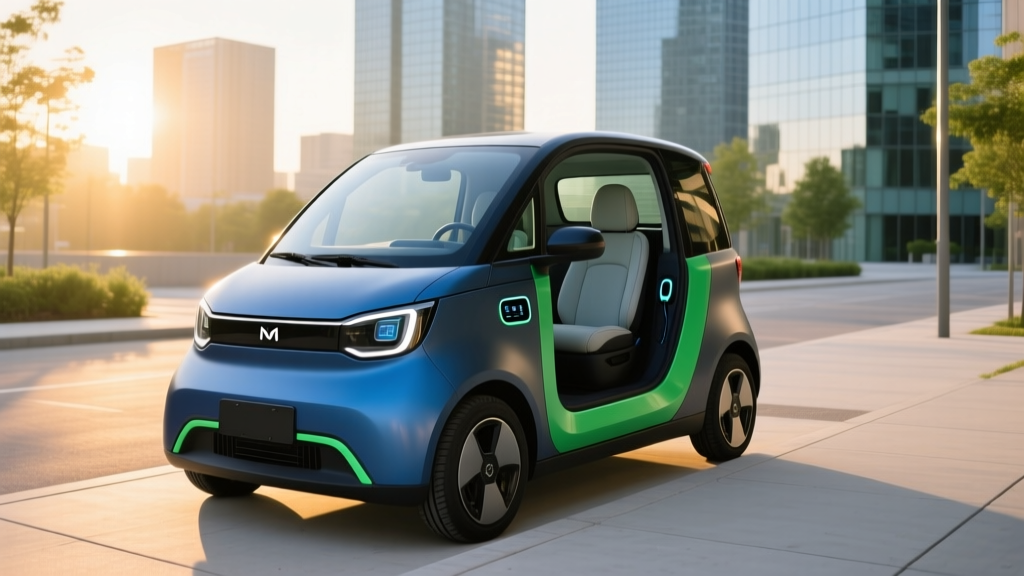
A Neighborhood Electric Vehicle (NEV) is a federally regulated, street-legal, low-speed electric vehicle limited to a top speed of 25 mph. NEVs are best suited for short trips on roads with speed limits of 35 mph or less — think grocery runs, campus commutes, or gated-community errands. They typically offer 30–60 miles of range on a full charge, cost between $8,000 and $20,000, and charge from a standard 120V household outlet in 6–8 hours. However, NEVs lack highway capability, crash-test ratings comparable to full-size cars, and the range or climate control needed for longer or colder commutes. If your daily driving stays under 20 miles on low-speed roads and you want minimal operating costs, a NEV can work. If you need highway access, real cargo space, or year-round comfort in cold climates, a full-size EV or PHEV is the better tool.
What Exactly Is a NEV Electric Vehicle?
A NEV — formally called a Low-Speed Vehicle (LSV) under Federal Motor Vehicle Safety Standard (FMVSS) No. 500 — is a four-wheeled electric vehicle whose top speed is greater than 20 mph but not greater than 25 mph. The National Highway Traffic Safety Administration (NHTSA) regulates them, but they are exempt from most of the crashworthiness standards that full-size passenger cars must meet. That means no mandatory airbags, no crumple-zone testing, and no electronic stability control requirement.
What NEVs must have, by federal law:
- Headlamps, turn signals, and tail lamps
- Stop lamps and reflex reflectors
- An exterior mirror on the driver's side and an interior rearview mirror
- A parking brake
- A windshield (glazed, but not necessarily automotive-grade laminated glass)
- A Vehicle Identification Number (VIN)
- Seat belts for all designated seating positions
Popular NEV brands include GEM (formerly Global Electric Motorcars, now owned by Waev), Club Car, and various Chinese-manufactured models sold under names like Tomberlin or ICON. Most seat two to four passengers, though some six-passenger models exist for resort and campus use.
NEV vs. Full-Size EV: A Numbers-Based Comparison
The table below compares a typical 2025–2026 NEV (based on GEM e2/e4 specs and similar LSVs) against an entry-level full-size EV, the 2026 Chevrolet Equinox EV 2LT (one of the most affordable mainstream EVs on the market).
| Attribute | Typical NEV (e.g., GEM e4) | 2026 Chevrolet Equinox EV 2LT |
|---|---|---|
| Base MSRP | $12,000–$16,000 | ~$33,600 (before incentives) |
| EPA Range | 30–60 miles (varies; not all NEVs are EPA-certified) | 319 miles (EPA est.) |
| Top Speed | 25 mph (federally limited) | ~115 mph (electronically limited) |
| Battery Capacity | ~6–15 kWh (typically lead-acid or small lithium pack) | 85 kWh usable (NMC lithium-ion) |
| Charging Method | Standard 120V outlet; 6–8 hours to full | Level 2 (11.5 kW, ~8 hrs); DC fast charge up to 150 kW (10–80% in ~30 min) |
| Street-Legal Roads | Roads posted ≤ 35 mph (varies by state/local ordinance) | All public roads including highways |
| Crash Testing (NHTSA/IIHS) | None required under FMVSS 500 | NHTSA 5-star rated; IIHS tested |
| Climate Control | Basic heater (optional); no A/C on most base models | Full HVAC with heat pump |
| Cargo Space | ~4–10 cu ft (rear bed or small trunk) | 26.4 cu ft (rear seats up); 63.5 cu ft (seats folded) |
| Federal Tax Credit (§30D) | Not eligible — does not meet §30D vehicle requirements | Up to $7,500 if MSRP, income, and battery-sourcing rules are met (point-of-sale transfer available) |
| Insurance (avg. annual) | $300–$600 (specialty LSV policies) | $1,400–$2,200 (varies by state and driver) |
The gap is stark. A NEV costs a fraction of a full EV upfront and is cheap to insure and operate, but it exists in a fundamentally different transportation category. You're trading range, safety, speed, and comfort for simplicity and low cost.
Real Costs of NEV Ownership: Purchase, Charging, and Maintenance
| Cost Category | NEV (Annual Est.) | Full-Size EV (Annual Est.) | Gas Car (Annual Est.) |
|---|---|---|---|
| Purchase Price | $12,000–$16,000 | $33,000–$50,000+ | $28,000–$40,000 |
| Fuel / Electricity | $60–$120 (at $0.15/kWh, ~500 mi/mo) | $480–$720 (at $0.15/kWh, ~1,000 mi/mo) | $1,500–$2,100 (at $3.50/gal, 25 MPG, ~1,000 mi/mo) |
| Maintenance | $100–$250 (tires, brake pads, battery check) | $200–$400 (tires, cabin filter, wipers) | $500–$900 (oil, filters, belts, spark plugs) |
| Insurance | $300–$600 | $1,400–$2,200 | $1,200–$1,800 |
| Battery Replacement (eventual) | $2,000–$5,000 (lead-acid every 3–5 yrs; lithium longer) | $0 under warranty (8 yr / 100,000 mi federally mandated); $8,000–$15,000 out-of-warranty | N/A |
| Registration / Title | $20–$100 (varies by state; some states have reduced LSV fees) | $100–$300 (some states add EV registration surcharges of $50–$225) | $100–$250 |
A NEV's operating cost is genuinely low. Charging a 10 kWh battery from empty to full at the national average residential rate of roughly $0.16/kWh costs about $1.60 — for 30–40 miles of range. That translates to roughly 4–5 cents per mile in energy cost, compared to about 14 cents per mile for a 25 MPG gas car at $3.50/gallon.
The hidden cost is battery replacement. Many lower-cost NEVs still use lead-acid batteries, which typically last 3–5 years (roughly 500–800 charge cycles) before capacity drops significantly. A full lead-acid pack replacement runs $2,000–$3,500. Lithium-ion-equipped NEVs cost more upfront but offer 1,500–3,000+ cycles and may last the life of the vehicle. Always ask what battery chemistry a NEV uses before buying.
Where NEVs Are Street-Legal (and Where They Aren't)
Federal law permits NEVs on roads with speed limits of 35 mph or less, but states and municipalities can further restrict or expand where they're allowed. As of 2026:
- Permissive states (e.g., Florida, Arizona, California, Texas): NEVs are broadly allowed on roads up to 35 mph, and some localities allow crossings at higher-speed intersections with proper signage.
- Restrictive states (e.g., New York, Massachusetts): Additional equipment requirements or local bans may limit NEV use. Some cities prohibit them on certain streets entirely.
- Planned communities & campuses: NEVs thrive in gated communities, university campuses, military bases, and resort areas where roads are private or low-speed by design. The Villages, Florida — one of the largest retirement communities in the U.S. — has an estimated 60,000+ NEVs in daily use.
Before purchasing, check your state's DMV or department of transportation for LSV/NEV registration requirements. You will typically need a valid driver's license, vehicle insurance, a VIN, and a title — just like a regular car.
Real-World Ownership Considerations
Climate and Range
NEV battery packs are small, and most lack active thermal management. In cold weather (below 40°F), expect range losses of 25–40%, similar to or worse than full-size EVs, because the small battery has less buffer and lead-acid chemistry is especially temperature-sensitive. A NEV rated at 40 miles in warm weather may deliver only 24–30 miles in a 30°F winter morning. If you live in a cold climate, a lithium-ion NEV with an optional cabin heater is strongly preferable — but the heater itself will cut range further.
Charging Access
The good news: virtually every NEV charges from a standard 120V household outlet (Level 1). You do not need a dedicated 240V circuit or an electrician. Plug it into a garage outlet overnight, and it's full by morning. The downside is speed — a full charge typically takes 6–8 hours, which is fine for daily use but means you can't "top up" quickly mid-day if you've drained the battery.
Safety Reality
This is the most important limitation to internalize. NEVs are not crash-tested to passenger-car standards. In a collision with a full-size vehicle — even at 25 mph — the NEV's lightweight frame (typically 1,200–2,000 lbs) and minimal crumple structure put occupants at a severe disadvantage. NEVs make sense only when your routes avoid high-speed traffic. If you regularly cross busy arterials or share roads with trucks and SUVs traveling at 35+ mph, a full-size EV or PHEV is a dramatically safer choice.
Driving Patterns That Fit a NEV
A NEV works well when all of the following are true:
- Your daily round-trip driving is under 20 miles
- Your routes are on roads posted at 35 mph or below
- You have a second vehicle (or alternative transport) for highway trips, longer errands, and inclement weather
- You have off-street parking with access to a 120V outlet
- You live in a mild or warm climate, or accept reduced winter range
Common NEV Misconceptions — Myth vs. Fact
| Myth | Fact |
|---|---|
| "NEVs qualify for the $7,500 federal EV tax credit." | No. The IRS §30D credit requires the vehicle to have four wheels, a GVWR under 14,000 lbs, a battery of at least 7 kWh, and be manufactured by a qualified OEM meeting sourcing and MSRP caps. Most NEVs fail the battery-capacity or manufacturer-qualification requirements. Always verify on IRS.gov. |
| "A NEV is just a golf cart." | No. Golf carts are not federally regulated as motor vehicles and are not street-legal on public roads in most jurisdictions. NEVs are federally classified LSVs with required safety equipment and a VIN, making them registrable and insurable for street use. |
| "NEVs are safe because they're slow." | Low speed doesn't eliminate risk. NEVs share roads with vehicles weighing 3,000–6,000 lbs. Without crash structures, airbags, or stability control, a side-impact or rear-end collision at even 20 mph can cause serious injury. |
| "NEV batteries last as long as full EV batteries." | Not usually. Full-size EV batteries (NMC or LFP) are warranted for 8 years/100,000 miles and often last 15+ years with gradual degradation. Lead-acid NEV batteries typically need replacement every 3–5 years. Lithium NEV batteries last longer but still lack the thermal management of full EV packs. |
| "I can drive a NEV on any road." | Federal law limits NEVs to roads with speed limits of 35 mph or less, and states can further restrict them. Driving a NEV on a 45 mph road is illegal and dangerous. |
Decision Framework: Is a NEV Right for You?
Choose a NEV Electric Vehicle If:
- You live in a low-speed community, retirement village, campus, or small town with roads posted ≤ 35 mph
- Your daily driving is under 20 miles round-trip
- You already own or have access to a full-size vehicle for highway and longer trips
- You want to minimize purchase price, insurance, and per-mile energy cost
- You have a garage or covered parking with a standard 120V outlet
- You live in a warm or moderate climate (or accept winter limitations)
Choose a Full-Size EV or PHEV Instead If:
- You need to drive on roads posted above 35 mph or access highways
- Your daily commute exceeds 25–30 miles
- You need crash-test-rated occupant protection, airbags, and modern ADAS features
- You live in a cold climate and need reliable year-round range and heating
- You need cargo space for groceries, kids' gear, or luggage
- This will be your only vehicle
- You want federal tax credit eligibility (up to $7,500 under §30D for qualifying new EVs, or up to $4,000 for qualifying used EVs under §25E)
For buyers who want EV benefits without range limitations, a plug-in hybrid like the 2026 Toyota RAV4 Prime (42 miles electric-only, 94 MPGe combined per fueleconomy.gov) offers a practical bridge — electric for local errands, gas for highway trips, and no range anxiety.
Frequently Asked Questions
Do I need a driver's license to operate a NEV?
Yes, in virtually every state. Because NEVs are registered motor vehicles with VINs, you need a valid driver's license, insurance, and registration to drive one on public roads. Some states allow restricted permits for low-speed vehicles, but a standard license is the norm.
Can I drive a NEV in the rain or winter?
Most enclosed NEVs (like the GEM e-series) have windshields, wipers, and optional heaters, so light rain and cool weather are manageable. However, NEVs lack the ground clearance, weight, and traction control of full-size vehicles, making them unsuitable for snow, ice, or heavy rain. Range drops significantly in cold temperatures.
How fast can a NEV go, and can I modify it to go faster?
Federal law caps NEV top speed at 25 mph. Modifying a NEV to exceed 25 mph reclassifies it as a full motor vehicle, which then must meet all FMVSS crash and emissions standards — something no NEV is engineered to satisfy. Doing so is illegal and voids insurance.
Are NEVs eligible for any tax credits or incentives?
Generally, no. NEVs do not qualify for the federal §30D clean vehicle credit. Some states or local utilities offer small rebates for low-speed or off-road electric vehicles, but these are uncommon and vary by jurisdiction. Check your state energy office or utility provider for any local programs.
What's the difference between a NEV and a golf cart?
Golf carts are designed for golf courses and private property. They lack the federally mandated safety equipment (headlamps, turn signals, mirrors, VIN, seat belts) required for street use. A NEV meets FMVSS 500 standards and is street-legal on qualifying roads. Some "street-legal golf carts" are actually reclassified NEVs — always verify the vehicle has a proper LSV classification and VIN before purchasing.
How long does a NEV battery last?
Lead-acid NEV batteries typically last 3–5 years (500–800 cycles) before significant capacity loss. Lithium-ion NEV batteries can last 8–12 years (1,500–3,000+ cycles). Replacement costs range from $2,000–$5,000 for lead-acid packs and $4,000–$8,000+ for lithium, depending on the model and capacity.
For authoritative information on NEV federal regulations, consult NHTSA's FMVSS No. 500. For EV tax credit eligibility on full-size vehicles, reference the IRS Clean Vehicle Credits page. For range and efficiency data on comparable full-size EVs, use fueleconomy.gov.