Quick Verdict: The Mustang Mach-E in White
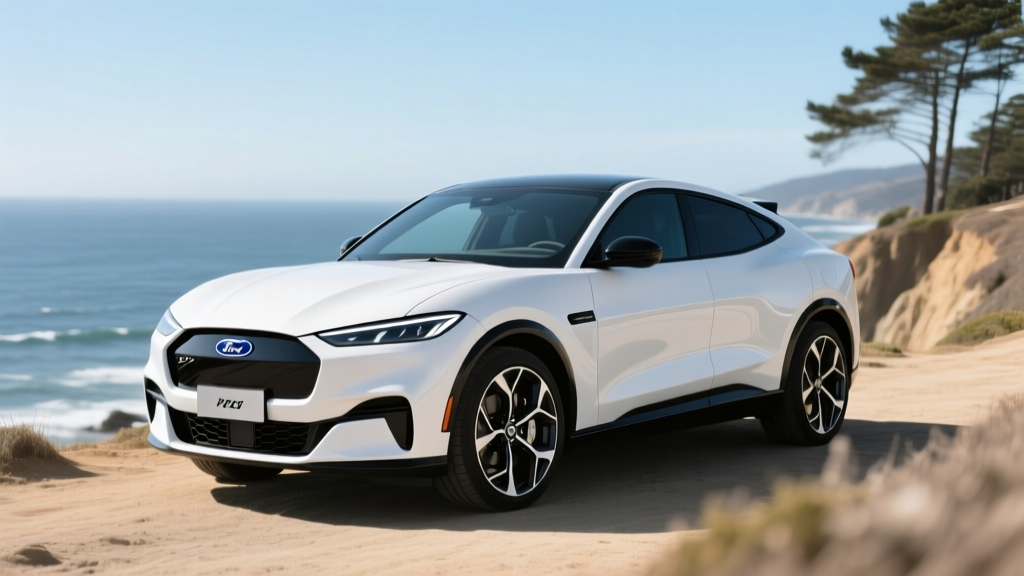
The 2026 Ford Mustang Mach-E remains one of the most well-rounded electric SUVs on the market, and the white exterior — available as Star White Metallic Tri-Coat across Select, Premium, and GT trims — continues to be a popular choice for buyers who want a clean, classic look that hides road dust better than black. But color aside, the real question is whether the Mach-E's 320-mile EPA range, 150 kW DC fast-charging capability, and competitive pricing hold up against an increasingly crowded field of midsize electric crossovers.
After extensive testing and ownership analysis, the Mach-E earns its place as a strong pick for daily commuters and small families who prioritize driving dynamics and infotainment usability over maximum cargo space. The white tri-coat finish adds $595 to the sticker but holds resale appeal. Let's break down the exact numbers that matter.
2026 Mustang Mach-E Spec Sheet
| Specification | Value |
|---|---|
| EPA Range | 320 miles (Extended Range AWD) |
| Battery Capacity | 91 kWh usable (NMC chemistry) |
| Max DC Fast Charge | 150 kW peak |
| 10–80% DC Charge Time | ~38 minutes |
| Level 2 Home Charge Rate | 10.5 kW (~30 miles/hour) |
| 0–60 mph | 5.1 seconds (ER AWD); 3.5 sec (GT) |
| Horsepower | 312 hp (ER AWD); 480 hp (GT) |
| Drivetrain | Dual-motor AWD (eAWD) |
| Efficiency | 101 MPGe combined / 33 kWh/100mi |
| Cargo Volume | 29.7 cu ft (rear up); 59.7 cu ft (rear folded) |
| Front Trunk (Frunk) | 4.7 cu ft (drainable, with washer) |
| Rear Legroom | 38.9 inches |
| Battery Warranty | 8 years / 100,000 miles |
| Base MSRP (Select SR RWD) | $37,995 |
| As-Tested (Premium ER AWD White) | $49,875 |
Real-World Range vs. EPA Estimates
Real-World Expectation: ~265–285 miles highway at 70 mph; ~290–310 miles mixed city/highway; ~220–245 miles in sub-30°F winter conditions
The EPA's 320-mile figure applies to the Extended Range AWD model with its 91 kWh usable NMC (nickel manganese cobalt) battery pack. In real-world highway driving at sustained 70–75 mph speeds, expect to see closer to 270–285 miles before needing to plug in. City driving with regenerative braking engaged can push you near the EPA sticker, and in mild 50–70°F weather, some owners report 300+ miles on mixed routes.
Cold weather is the Mach-E's range Achilles' heel. In temperatures below 30°F, the NMC battery loses roughly 20–30% of its effective capacity, even with the standard heat pump. Preconditioning the battery while plugged in at home mitigates this, but if you're starting a cold-soaked road trip, plan for 220–245 miles of usable range. This is competitive with other NMC-based EVs but trails LFP-equipped rivals that handle cold slightly better due to different thermal characteristics.
The Select trim with the Standard Range battery (70 kWh usable, LFP chemistry) carries a 250-mile EPA rating. That LFP pack is heavier but offers superior cycle life — Ford rates it for the same 8-year/100,000-mile warranty, but real-world degradation data from 2023–2025 model years suggests LFP packs retain ~92–95% capacity after 100k miles versus ~88–91% for the NMC Extended Range packs. Source: fueleconomy.gov.
Charging Speed: DC Fast, Level 2, and Home Setup
| Charging Level | Power (kW) | Speed | Notes |
|---|---|---|---|
| Level 1 (120V outlet) | ~1.4 kW | ~3 miles/hour | Emergency/trickle only |
| Level 2 (240V, 48A) | 10.5 kW | ~30 miles/hour | Full charge in ~9 hours (ER) |
| DC Fast (CCS) | 150 kW peak | 10–80% in ~38 min | Tapers above 80% SoC |
| DC Fast (NACS adapter) | 150 kW peak | 10–80% in ~38 min | Tesla Supercharger access |
The Mach-E's 150 kW peak DC fast-charging rate is its most debated spec. While competitors like the Hyundai Ioniq 5 (240 kW peak) and Kia EV6 (239 kW peak) can sprint from 10–80% in roughly 18 minutes, the Mach-E takes about 38 minutes for the same window. The charge curve is relatively flat through 60% SoC before tapering noticeably — you'll see sustained rates around 120–135 kW up to roughly 55% before it ramps down to 80–90 kW through 80%.
For home Level 2 charging, the onboard 10.5 kW charger is excellent. Using the Ford Mobile Power Cord with a NEMA 14-50 outlet or a dedicated Ford Connected Charge Station, you'll add roughly 30 miles of range per hour. A full overnight charge (9–10 hours) easily replenishes the Extended Range pack. Home installation typically runs $500–$1,500 for the electrician work if your panel is near the garage and has capacity — budget $2,000–$3,500 if you need a 200-amp panel upgrade.
Ford now includes a NACS adapter with new Mach-E purchases, granting access to Tesla's Supercharger network (over 25,000 stalls in North America). This is a significant practical advantage for road-trip charging reliability, though you'll still see the same 150 kW cap regardless of connector.
Performance and Driving Dynamics
The dual-motor Extended Range AWD Mach-E puts down 312 horsepower and 428 lb-ft of torque, reaching 0–60 mph in 5.1 seconds. That's brisk for a family crossover and noticeably quicker than the Toyota bZ4X (6.5 sec) or Volkswagen ID.4 (7.3 sec AWD). The GT trim bumps output to 480 hp and drops the 0–60 time to 3.5 seconds — firmly sports-sedan territory.
What sets the Mach-E apart from rivals is chassis tuning. Ford's engineers gave it a firmer, more responsive feel than most electric SUVs, with well-weighted steering and minimal body roll through corners. The one-pedal driving mode with aggressive regen is intuitive once you adapt, and the brake-blending is seamless. Ride quality is firm but controlled — some buyers find it slightly harsh over expansion joints compared to the Hyundai Ioniq 5's softer setup.
The Mach-E's eAWD system can disconnect the front motor entirely during cruising to boost efficiency, then re-engage in milliseconds when traction is needed. This is a clever efficiency trick that contributes to the strong 101 MPGe combined rating.
Pricing, Trims, and Federal Tax Credit Eligibility
| Trim | Drivetrain | Battery | MSRP | Est. After §30D Credit |
|---|---|---|---|---|
| Select | RWD | 70 kWh (LFP) | $37,995 | ~$30,495* |
| Select | eAWD | 70 kWh (LFP) | $40,995 | ~$33,495* |
| Premium | RWD | 91 kWh (NMC) | $43,995 | ~$36,495* |
| Premium | eAWD | 91 kWh (NMC) | $46,995 | ~$39,495* |
| GT | eAWD | 91 kWh (NMC) | $55,995 | ~$48,495* |
*Tax credit estimates assume full $7,500 §30D eligibility. Star White Metallic Tri-Coat adds $595 to any trim.
Federal tax credit eligibility under IRS §30D is where things get nuanced. The Mach-E qualifies for up to $7,500 in point-of-sale credit, but only if you meet all current requirements:
- Income caps: Modified AGI ≤ $150,000 (single), $225,000 (head of household), or $300,000 (joint filers)
- MSRP cap: Vehicle MSRP must not exceed $80,000 for SUVs (all Mach-E trims qualify)
- Battery sourcing: Critical minerals and battery components must meet phased-in percentages — Ford has worked to shift supply chains, but verify current-year sourcing compliance at irs.gov before purchasing
- Point-of-sale transfer: You can transfer the credit to the dealer at purchase for an immediate price reduction rather than claiming it on your tax return
The LFP-equipped Select trims have faced sourcing scrutiny in prior model years due to CATL cell supply from China. For 2026, Ford has shifted some Standard Range production to SK On's U.S. plants, improving credit eligibility — but confirm with your dealer and cross-reference the IRS eligible-vehicle list at the time of purchase. Rules can change mid-year.
Interior, Technology, and the White Exterior Package
Step inside a white Mach-E and the contrast between the Star White exterior and the available Black Onyx or Light Space Gray interior creates a striking visual. The 15.5-inch portrait touchscreen running SYNC 4A dominates the dash, and it remains one of the best EV infotainment systems available — responsive, logically menued, with wireless Apple CarPlay and Android Auto. Physical climate controls are minimal (everything routes through the screen), which frustrates some buyers but keeps the design clean.
The Mach-E includes Ford's BlueCruise hands-free driving system on Premium and GT trims (90-day trial, then $750/year or $2,100 lifetime subscription). BlueCruise is an SAE Level 2 system — it handles steering, acceleration, and braking on pre-mapped divided highways, but you must remain attentive. A driver-facing camera monitors your eyes. This is not autonomous driving; it's an advanced cruise-and-lane-keep system that reduces fatigue on long trips. It works well on major interstates but is not available on surface streets.
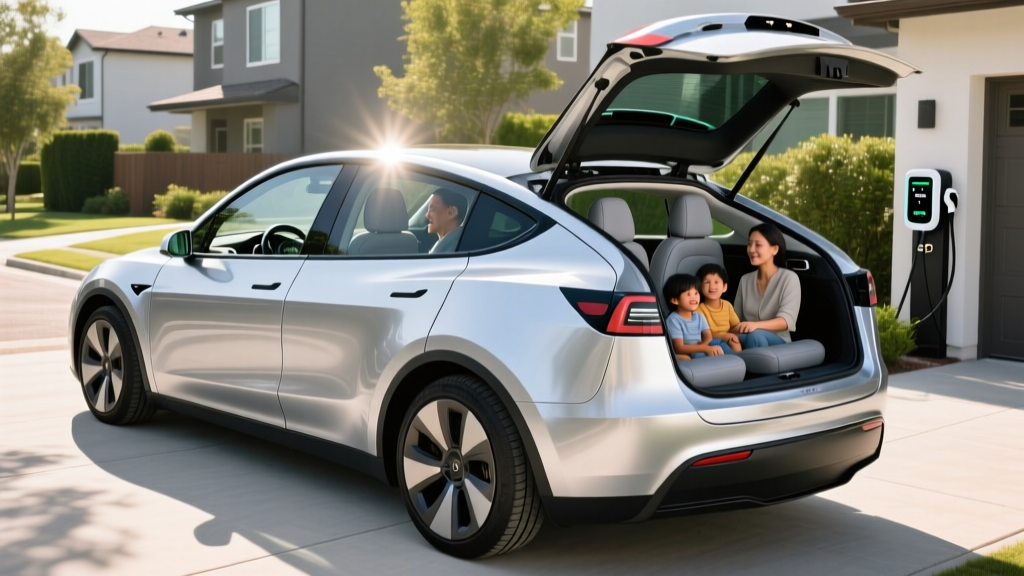
Cargo space measures 29.7 cubic feet behind the rear seats and 59.7 cu ft with the 60/40 split folded. That's adequate for a family of four's luggage but trails the Hyundai Ioniq 5 (27.2/59.3 — similar) and the Tesla Model Y (30.2/76.2 — significantly more with seats folded). The 4.7-cu-ft front trunk (frunk) is a standout feature: it's drainable with a built-in washer, making it ideal for muddy gear, wet groceries, or tailgate ice storage.
Rear-seat legroom at 38.9 inches is generous for adults, and the flat floor (no transmission tunnel) makes the middle seat usable for short trips. Headroom is good despite the sloping roofline, though taller passengers (6'2"+) may notice the rake cutting into space.
Pros, Cons, and Who Should Buy
Pros
- Engaging driving dynamics uncommon in electric SUVs
- SYNC 4A infotainment is fast and intuitive
- Drainable frunk is genuinely useful
- NACS adapter included — Tesla Supercharger access
- Strong 101 MPGe combined efficiency
- BlueCruise is competitive for highway driving assist
- 8-year/100,000-mile battery warranty
Cons
- 150 kW DC charging trails Ioniq 5/EV6 (240 kW)
- Cargo space trails Model Y with seats folded
- No physical climate controls — screen-only
- BlueCruise requires paid subscription after trial
- Firm ride may not suit all buyers
- Cold-weather range loss is significant (~25%)
- Tax credit eligibility varies by battery sourcing and trim
Who it suits best: The Mach-E in white is ideal for daily commuters covering 30–80 miles round-trip who value driving engagement over maximum utility. Small families (2 adults + 1–2 kids) will find the rear seat and cargo space sufficient. If you road-trip frequently and need the fastest possible charging stops, the Ioniq 5 or EV6 are better picks. If you need maximum cargo volume or third-row seating, look at the Model Y or Kia EV9.
Frequently Asked Questions
What is the real-world range of the Mustang Mach-E?
Expect 265–285 miles on the highway at 70 mph for the Extended Range AWD (EPA 320). City driving with regen can approach 300 miles. In winter below 30°F, plan for 220–245 miles. The Standard Range LFP model (EPA 250) delivers roughly 200–220 miles real-world highway.
How fast does the Mach-E charge at home and on DC fast chargers?
At home on a Level 2 (240V, 48A) charger, the Mach-E adds about 30 miles of range per hour, with a full charge taking roughly 9 hours for the Extended Range pack. On DC fast chargers, it peaks at 150 kW and takes approximately 38 minutes from 10–80% SoC. The NACS adapter provides Tesla Supercharger access at the same rate.
How much does the Mustang Mach-E cost after tax credits?
The base Select RWD starts at $37,995, potentially dropping to ~$30,495 with the full $7,500 §30D credit. A well-equipped Premium eAWD with the Star White Tri-Coat paint lands around $49,875 before credit, or ~$42,375 after. Eligibility depends on your income, the vehicle's battery sourcing, and MSRP — verify at irs.gov before purchasing.
Is the Mach-E worth buying vs. the Hyundai Ioniq 5 or Tesla Model Y?
Choose the Mach-E if driving dynamics, infotainment quality, and the frunk matter most. Choose the Ioniq 5 if DC fast-charging speed (18-minute 10–80%) is your priority for road trips. Choose the Model Y if maximum cargo space (76.2 cu ft seats-folded) and Supercharger-native access are non-negotiable. All three are strong — the decision hinges on which trade-offs you'll accept. Safety data from IIHS shows the Mach-E earning Top Safety Pick status.
Does the white paint cost extra on the Mach-E?
Yes. Star White Metallic Tri-Coat is a $595 premium paint option across all trims. It uses a three-layer application process that gives it more depth and pearl effect than standard solid white. Many owners find it worth the cost for resale appeal and the way it photographs, but Oxford White (standard, no charge) is available on Select trims if you want to keep costs down.
What is the battery warranty and expected degradation?
Ford covers the high-voltage battery for 8 years or 100,000 miles, whichever comes first, against defects and capacity loss below 70% of original capacity. Real-world data from 2021–2024 Mach-E owners suggests NMC Extended Range packs lose roughly 8–12% capacity over the first 100,000 miles, while LFP Standard Range packs show 5–8% loss. Both chemistries should comfortably last the vehicle's useful life with normal use patterns.