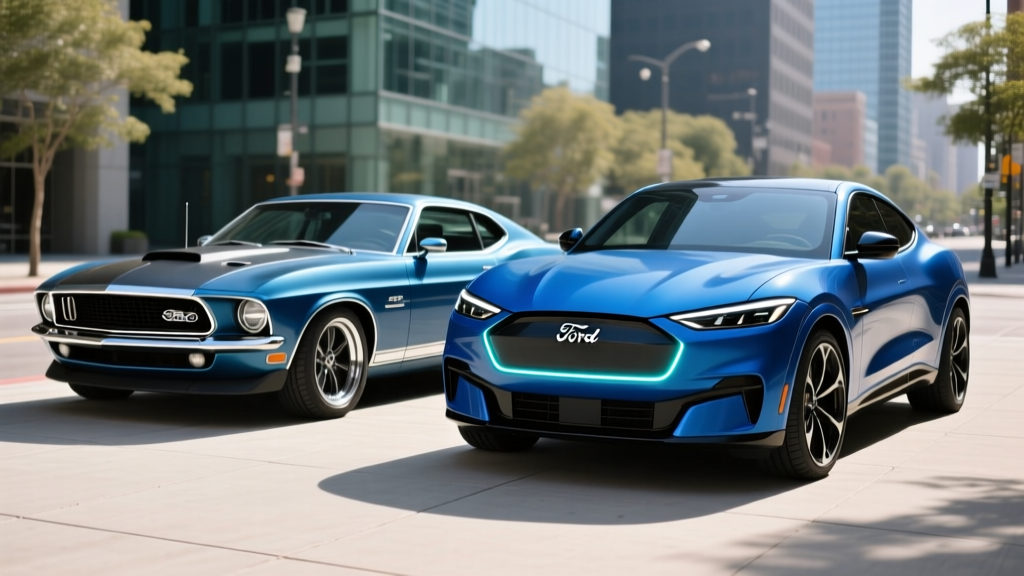
Two Mustangs, Two Eras: Why the 1969 Mach 1 Still Matters to EV Buyers
Search forums, auction results, or restoration shops and you'll find the Mustang Mach 1969 model year remains one of the most sought-after muscle cars in history. Over 72,000 units sold that year, with the 428 Cobra Jet V8 producing 335 horsepower and running the quarter-mile in the low 14-second range. Fast-forward to today, and Ford has borrowed that spirit — and a variation of that name — for its all-electric Mustang Mach-E.
The question every enthusiast and pragmatic buyer asks: does the Mach-E honor the legacy of the original Mustang Mach 1969 Mach 1, or is it just marketing? This review examines the 2026 Mustang Mach-E across every metric that matters — range, charging, performance, price, and tax-credit eligibility — while drawing direct comparisons to the car that started the nameplate.
The short verdict: the Mach-E GT Performance Edition produces 480 hp (vs. the '69's 335), hits 60 mph in 3.3 seconds, and costs less to fuel per mile than the original Mach 1 did in 1969 adjusted for inflation. But the story is more nuanced than a spec sheet.
2026 Mustang Mach-E: Full Spec Sheet at a Glance
| Spec | Select (RWD) | Premium (AWD) | GT Perf. Edition |
|---|---|---|---|
| EPA Range | 320 mi | 290 mi | 280 mi |
| Battery (usable) | 75.7 kWh (LFP) | 91 kWh (NMC) | 91 kWh (NMC) |
| Horsepower | 266 hp | 346 hp | 480 hp |
| 0-60 mph | 6.1 sec | 5.0 sec | 3.3 sec |
| Drivetrain | RWD (single motor) | AWD (dual motor) | AWD (dual motor) |
| Max DC Fast Charge | 150 kW | 150 kW | 150 kW |
| 10-80% DC Time | ~36 min | ~41 min | ~41 min |
| Level 2 Home Rate | 10.5 kW (~30 mi/hr) | 10.5 kW (~30 mi/hr) | 10.5 kW (~30 mi/hr) |
| MPGe (combined) | 105 MPGe | 98 MPGe | 84 MPGe |
| Base MSRP | $43,995 | $49,995 | $62,995 |
Sources: EPA Fueleconomy.gov, Ford Motor Company. Specs reflect 2026 model year. MSRP excludes destination charge.
Real-World Range: What the EPA Sticker Doesn't Tell You
EPA Estimate: 280-320 miles (depending on trim and drivetrain)
Real-World Highway (70-80 mph): Expect ~230-265 miles
Cold Weather (below 32°F): Expect ~185-220 miles (25-35% reduction)
The Select RWD with its 75.7 kWh LFP (lithium iron phosphate) battery achieves a 320-mile EPA rating — impressive for a crossover at this price point. But EPA tests include substantial city driving, where regenerative braking recovers energy. On a sustained 75 mph highway run, the Mach-E typically delivers 230-265 miles before needing a charge.
Cold weather is where the real gap shows. The Mach-E uses a resistive heating element on lower trims (the GT gets a heat pump), and in sub-freezing temperatures, range drops 25-35%. A 320-mile Select becomes a ~210-mile car on a January highway trip in Minnesota. Preconditioning the battery while plugged in at home recovers some of this loss — always precondition before a DC fast-charge stop to also improve charge speed.
The LFP chemistry in the Select trim trades energy density for longevity: LFP batteries degrade more slowly and tolerate regular 100% charging, unlike NMC packs which Ford recommends keeping between 20-90% for daily use.
Charging Speed: DC Fast and Home Level 2 Breakdown
| Charging Level | Power (kW) | Rate (mi/hr added) | Notes |
|---|---|---|---|
| Level 1 (120V outlet) | ~1.4 kW | ~3 mi/hr | Emergency/trickle only |
| Level 2 (240V, 48A) | 10.5 kW | ~30 mi/hr | Full overnight charge (~9-10 hrs) |
| DC Fast Charge | Peak 150 kW | ~170 mi/hr (peak) | 10-80% in ~36-41 min |
The Mach-E's 150 kW peak DC fast-charge rate is its most debated specification. Competitors like the Hyundai Ioniq 5 and Kia EV6 peak at 240-250 kW on 800V architectures, achieving 10-80% in roughly 18 minutes. The Mach-E's 41-minute 10-80% window is noticeably slower — a real factor on road trips where you'll spend roughly double the time at each charging stop.
The charge curve matters too. The Mach-E peaks near 150 kW only between roughly 15-40% state of charge, then tapers progressively. From 60-80%, you're typically seeing 50-70 kW. This means the advertised 10-80% time is an average, not a sustained rate. Plan road-trip stops to charge from 10-60% (where the curve is strongest) rather than waiting to 80%.
At home, the Ford Mobile Power Cord with a 240V NEMA 14-50 outlet delivers 10.5 kW, adding roughly 30 miles of range per hour. A full charge from 10% takes about 9-10 hours — easily handled overnight. Ford's Connected Charge Station (hardwired, ~$800 for equipment) provides the same rate but with integrated cable management and scheduling through the FordPass app.
Performance: 1969 Mach 1 vs. 2026 Mach-E GT
Here's where the generational comparison gets interesting. The 1969 Mustang Mach 1 with the 428 Cobra Jet produced 335 hp (gross rating — modern SAE net would be closer to 290 hp) and ran 0-60 mph in approximately 5.5-6.0 seconds. The 2026 Mach-E GT Performance Edition generates 480 hp and 634 lb-ft of torque, reaching 60 mph in 3.3 seconds.
The Mach-E GT's instant torque delivery makes the comparison even more stark. A V8 needs to build revs; dual electric motors deliver maximum torque from 0 RPM. In real-world passing and merging, the Mach-E GT feels dramatically quicker than the numbers suggest — the 1969 Mach 1 was a straight-line king for its era, but the electric pony car has moved the goalposts.
That said, the base Select RWD at 266 hp and 6.1 seconds to 60 is the efficiency champion and still brisk for daily driving. The AWD Premium at 346 hp and 5.0 seconds splits the difference. For buyers who want the Mach 1 spirit without the GT's range and price penalty, the Premium AWD is the sweet spot.
Pricing, Tax Credits, and What You'll Actually Pay
| Trim | Base MSRP | MSRP Cap (§30D) | Max Federal Credit | Est. After Credit |
|---|---|---|---|---|
| Select RWD | $43,995 | Under $80,000 SUV cap ✓ | Up to $7,500* | ~$36,495* |
| Premium AWD | $49,995 | Under $80,000 SUV cap ✓ | Up to $7,500* | ~$42,495* |
| GT Perf. Edition | $62,995 | Under $80,000 SUV cap ✓ | Up to $7,500* | ~$55,495* |
*Federal tax credit subject to IRS §30D eligibility. Buyer income caps apply ($150K single / $300K joint AGI). Battery sourcing and critical-mineral requirements may reduce credit to $3,750 or $0 depending on supply-chain compliance. Point-of-sale transfer available at participating dealers. Verify current-year rules with a tax professional.
All Mach-E trims fall under the $80,000 MSRP cap for SUVs under §30D. However, the full $7,500 credit requires meeting both critical-mineral and battery-component sourcing requirements. As of 2026, Ford has been working to localize battery supply chains, but the exact credit amount varies by production batch and model year. The point-of-sale transfer option — where the dealer applies the credit as a down-payment reduction — is available if the dealer is registered with the IRS Energy Credits portal.
State incentives stack on top: California's CVRP, Colorado's innovative motor vehicle credit, and various utility rebates can further reduce effective cost. Check fueleconomy.gov and your state energy office for current programs.
Cargo, Comfort, and Daily Livability
The Mach-E offers 29.7 cubic feet of cargo space behind the rear seats and 59.7 cu ft with the rear seats folded — competitive with the Toyota RAV4 and slightly less than the Hyundai Ioniq 5's 56.2 cu ft max. The front trunk (frunk) adds 4.7 cu ft of lockable, drainable storage — useful for charging cables, gym bags, or a cooler on road trips.
Interior dimensions are generous: 43.3 inches of front legroom and 38.9 inches of rear legroom accommodate tall adults in both rows. The 15.5-inch vertical touchscreen running Ford's SYNC 4A system dominates the dash, with wireless Apple CarPlay and Android Auto standard across all trims. Physical buttons are minimal — climate controls are integrated into the screen, which some drivers find distracting.
The available BlueCruise hands-free driving system (SAE Level 2) covers over 130,000 miles of divided highways in the US and Canada. Unlike Tesla's Autopilot, BlueCruise uses a driver-facing camera to monitor eye attention and allows true hands-off operation on approved roads. It costs $2,100 to add (or $75/month via subscription) and represents one of the more polished Level 2 systems available — though the driver must remain engaged and ready to take over at all times.
Pros, Cons, and Who Should Buy the Mach-E
- GT Performance Edition: 480 hp, 3.3-sec 0-60 — supercar territory
- LFP battery option (Select) supports daily 100% charging with slower degradation
- BlueCruise hands-free driving among the best Level 2 systems
- FordPass app and charging network access (Tesla Superchargers via adapter)
- Competitive starting price for the Select RWD at ~$44K
- 150 kW DC fast-charge peak lags 800V competitors (240-250 kW)
- Real-world highway range ~15-20% below EPA sticker
- Cold-weather range loss significant without heat pump (base trims)
- Touchscreen-heavy interface lacks physical climate knobs
- Rear visibility compromised by sloping roofline
- Commuters: Select RWD's 320-mi EPA range and low running costs make it ideal for 40-80 mile round trips with home charging.
- Performance enthusiasts: GT Perf. Edition delivers the Mach 1 spirit with modern tech and instant torque.
- Families: Adequate rear-seat space and cargo for two kids + gear; BlueCruise reduces highway fatigue.
- Not ideal for: Frequent long-distance road trippers (slower charging) or extreme cold-climate drivers (significant range loss).
Warranty and Long-Term Ownership
Ford covers the Mach-E's battery and electric powertrain for 8 years or 100,000 miles, whichever comes first, with a capacity-retention threshold of 70% state of health. The bumper-to-bumper warranty is 3 years/36,000 miles. This is industry-standard — matching Hyundai, Kia, and Tesla's battery coverage terms.
Long-term battery degradation data for the Mach-E's NMC packs is still maturing (the model launched for 2021), but early fleet data suggests roughly 5-8% capacity loss over the first 100,000 miles under normal use. The LFP pack in the Select trim is expected to degrade more slowly, based on chemistry characteristics — a meaningful advantage for high-mileage drivers or those who regularly charge to 100%.
Battery replacement cost out of warranty: Ford has not published a flat rate, but industry estimates for a 91 kWh NMC pack replacement run $15,000-$22,000 including labor. The 75.7 kWh LFP pack would be somewhat less. This is a long-tail risk — most owners will sell or trade before facing it — but worth understanding.
Frequently Asked Questions
What is the real-world range of the Mustang Mach-E?
EPA ratings range from 280 miles (GT Performance Edition AWD) to 320 miles (Select RWD). In real-world highway driving at 70-80 mph, expect 230-265 miles. In cold weather below freezing, plan for 185-220 miles. Always precondition the battery before long trips to maximize range and charging speed.
How fast does the Mach-E charge at home and on the road?
At home on a 240V Level 2 charger, the Mach-E charges at 10.5 kW, adding roughly 30 miles per hour — a full overnight charge. On DC fast chargers, it peaks at 150 kW, achieving 10-80% in approximately 36-41 minutes depending on trim. This is slower than 800V competitors (Hyundai Ioniq 5, Kia EV6 at ~18 min) but adequate for most road trips with planning.
Does the 2026 Mustang Mach-E qualify for the federal EV tax credit?
All trims fall under the §30D $80,000 SUV MSRP cap, making them potentially eligible for up to $7,500. However, the actual credit depends on battery-sourcing and critical-mineral requirements, buyer income limits ($150K single / $300K joint AGI), and current-year IRS rules. The credit can be transferred at point of sale at registered dealers. Verify with irs.gov and a tax professional.
Is the Mach-E worth buying vs. the Tesla Model Y or Hyundai Ioniq 5?
The Mach-E wins on driving dynamics, BlueCruise polish, and Ford dealer service accessibility. The Tesla Model Y wins on Supercharger network convenience, efficiency, and software. The Hyundai Ioniq 5 wins on charging speed (240 kW, 10-80% in ~18 min) and interior space. If charging speed is your top priority, the Ioniq 5 is the stronger pick. If you want a more engaging drive and hands-free highway cruising, the Mach-E holds its own.
How does the Mach-E compare to the 1969 Mustang Mach 1?
The 1969 Mach 1's 428 Cobra Jet produced 335 hp and ran 0-60 in ~5.5-6.0 seconds. The 2026 Mach-E GT Performance Edition produces 480 hp and hits 60 mph in 3.3 seconds with instant electric torque. The original Mach 1 gets roughly 10-12 mpg; the Mach-E Select achieves 105 MPGe combined. Different eras, different technologies — but the performance lineage is real.
What are the biggest drawbacks of the Mach-E?
The 150 kW peak DC charging rate is the Mach-E's most significant competitive disadvantage — it adds roughly 15-20 minutes per road-trip stop vs. 800V competitors. Cold-weather range loss is pronounced without a heat pump (not standard on base trims). The touchscreen-dominant interior lacks physical controls for climate, which some drivers find frustrating. And the sloping rear roofline compromises cargo height and rear visibility.