Quick Verdict: Performance Meets Practicality
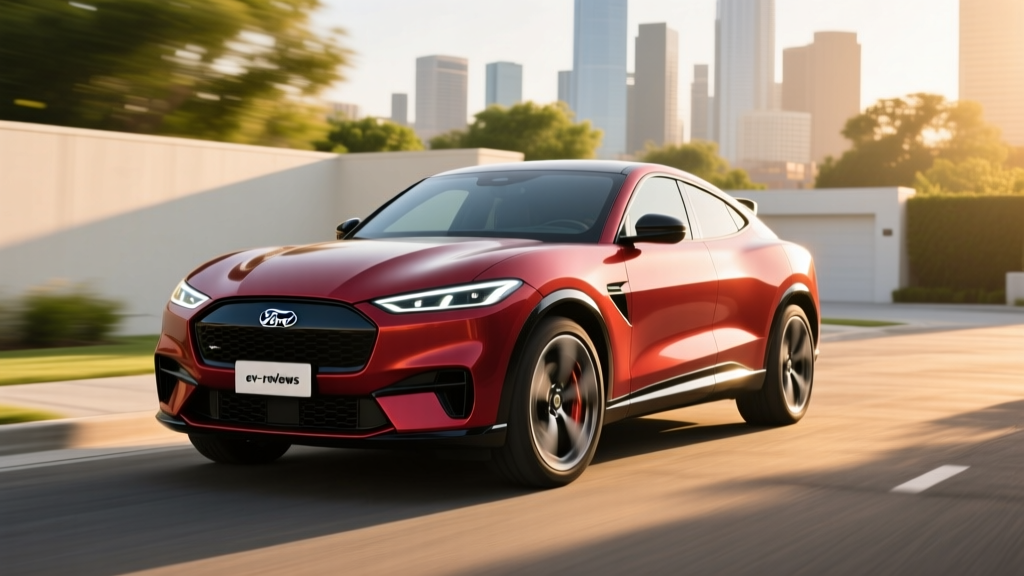
The Ford Mustang Mach-E enters the 2026 model year as one of the most well-rounded electric SUVs on the market, balancing sports-sedan acceleration with crossover utility. While the Mustang Mach-E top speed is electronically limited to 111 mph on most trims (130 mph on the GT), the real story is its 0-60 mph sprint — as quick as 3.5 seconds in GT form — and its competitive 320-mile EPA range on the Extended Range RWD model. After a major battery and powertrain refresh for 2025, the 2026 Mach-E carries forward with NMC lithium-ion packs, improved DC fast-charging speeds, and BlueCruise hands-free driving capability. Starting at $39,995, it undercuts many rivals while still qualifying for partial or full federal tax credit depending on your income and the vehicle's battery-sourcing compliance.
Mustang Mach-E Top Speed and Performance Specs
Buyers searching for the Mustang Mach-E top speed should know it varies by trim. Ford electronically governs the Select and Premium trims to 111 mph, while the GT Performance Edition raises the limiter to 130 mph. In practice, most EV owners never approach these figures — what matters more is the instant torque and passing power available at legal highway speeds.
| Trim | Drivetrain | Horsepower | lb-ft Torque | 0-60 mph | Top Speed |
|---|---|---|---|---|---|
| Select (Standard Range) | RWD | 266 hp | 317 | 6.1 sec | 111 mph |
| Premium Extended Range | RWD | 290 hp | 317 | 5.5 sec | 111 mph |
| Premium Extended Range | AWD (Dual Motor) | 346 hp | 428 | 4.8 sec | 111 mph |
| GT | AWD (Dual Motor) | 480 hp | 600 | 3.8 sec | 130 mph |
| GT Perf. Edition | AWD (Dual Motor) | 480 hp | 634 | 3.5 sec | 130 mph |
The dual-motor AWD powertrain uses a permanent-magnet synchronous motor on the rear axle and an induction motor up front, allowing Ford to disconnect the front motor during light-load cruising for efficiency gains. The GT's 634 lb-ft of torque (Performance Edition) is supercar territory, delivered instantly with no transmission lag. On a freeway on-ramp, the Mach-E GT pulls from 45 to 80 mph with the urgency of a vehicle costing twice as much.
EPA Range vs. Real-World Expectations
EPA Estimated (Premium Extended Range RWD): 320 miles
Real-World Highway (70-75 mph, mild weather): ~260–280 miles
Real-World Highway (30°F, winter): ~210–240 miles
Real-World City/Mixed (moderate climate): ~290–310 miles
Source: EPA data via fueleconomy.gov; real-world estimates based on aggregated owner testing and independent EV range evaluations.
The Mach-E's range story depends heavily on which battery and drivetrain you choose. The Standard Range pack (75.7 kWh total / ~70 kWh usable) nets 247–250 miles EPA depending on trim. The Extended Range pack (91.0 kWh total / ~85.5 kWh usable) pushes the RWD Premium to 320 miles EPA — the lineup's best figure.
Both packs use NMC (nickel-manganese-cobalt) lithium-ion chemistry, which offers higher energy density than LFP but is more sensitive to sustained 100% state-of-charge storage. For daily driving, Ford recommends setting the charge limit to 80–90% and only charging to 100% before long trips. NMC cells degrade slightly faster than LFP if routinely held at high SoC, but Ford's battery management system includes a top-end buffer to mitigate this.
In cold weather, expect a 20–30% range reduction at highway speeds. The Mach-E includes a battery preconditioning system — activate it via the navigation system when routing to a DC fast charger, and the pack will warm to optimal temperature for faster charging. Without preconditioning in sub-40°F conditions, peak charge rates can be cut in half.
Charging Speed: DC Fast, Level 2, and Level 1
| Charging Level | Power / Rate | Connector | Time / Miles Added |
|---|---|---|---|
| Level 1 (120V household) | ~1.4 kW | NACS (native) | ~3–4 miles per hour |
| Level 2 (240V home, 48A) | 11.5 kW | NACS | ~30 miles per hour; 10–100% in ~9 hours (ER) |
| Level 2 (240V home, 32A) | 7.7 kW | NACS | ~20 miles per hour; 10–100% in ~12 hours (ER) |
| DC Fast Charge (peak) | 150 kW (SR) / 170 kW (ER) | NACS | 10–80% in ~36 min (ER) |
Ford transitioned the Mach-E to the NACS (North American Charging Standard) connector starting with the 2025 model year, meaning 2026 models charge natively at Tesla Supercharger stations without an adapter. This is a major practical advantage: Tesla's Supercharger network remains the most reliable and widely distributed DC fast-charging infrastructure in the U.S., with over 25,000 stalls nationally.
On a 150–170 kW DC fast charger, the Extended Range pack peaks near 170 kW but sustains that rate only up to roughly 55% SoC before tapering. The 10–80% charge takes approximately 36 minutes — respectable but not class-leading. Competitors like the Hyundai Ioniq 5 (peak 240 kW, 10–80% in ~18 minutes) charge significantly faster on 800V architecture. The Mach-E uses a conventional 400V electrical architecture, which limits peak charge rate but keeps manufacturing costs lower.
For home charging, the onboard charger accepts up to 11.5 kW on a 48-amp Level 2 circuit. This requires a dedicated 60-amp breaker and 6-gauge wire — budget $800–$1,500 for a professional installation if your panel has capacity. On a standard 32-amp Level 2 unit (like the Ford Mobile Power Cord on a 240V outlet), expect ~20 miles of range per hour of charging, which still replenishes a full day's driving overnight.
Efficiency: MPGe and kWh per 100 Miles
According to EPA data on fueleconomy.gov, the 2026 Mach-E Extended Range RWD achieves:
- Combined MPGe: 101 MPGe
- Energy consumption: 33 kWh per 100 miles
- City: 105 MPGe | Highway: 93 MPGe
The AWD Premium Extended Range drops to 94 MPGe combined (36 kWh/100 mi), and the GT falls further to 84 MPGe combined (40 kWh/100 mi). At a national average electricity rate of $0.17/kWh, the ER RWD costs roughly $5.61 per 100 miles to fuel — compared to approximately $12.50 for a 28-mpg gas crossover at $3.50/gallon. The efficiency gap widens in city driving, where regenerative braking recovers energy that a gas vehicle wastes as heat.
Pricing, Trims, and Federal Tax Credit Eligibility
| Trim | Base MSRP | Est. As-Tested* | §30D Credit Eligibility** |
|---|---|---|---|
| Select Standard Range RWD | $39,995 | $41,500 | Up to $7,500 (subject to sourcing) |
| Premium Extended Range RWD | $45,495 | $48,000 | Up to $7,500 (subject to sourcing) |
| Premium Extended Range AWD | $48,495 | $51,000 | Up to $7,500 (subject to sourcing) |
| GT Extended Range AWD | $55,995 | $59,500 | Up to $7,500 (subject to sourcing) |
| GT Perf. Edition AWD | $59,995 | $63,500 | Up to $7,500 (subject to sourcing) |
*As-tested includes destination charge (~$1,395) and common options. **Check current rules at IRS.gov §30D.
- MSRP cap: SUVs must be ≤ $80,000 (all Mach-E trims qualify)
- Buyer income cap: AGI ≤ $150,000 (single) / $300,000 (joint)
- Battery sourcing: Critical minerals and battery components must meet escalating domestic-content thresholds — credit may be $3,750 or $7,500 depending on compliance
- Point-of-sale transfer: You can transfer the credit to the dealer for an upfront price reduction at purchase
- Always verify current-year rules with a tax professional before purchasing
The Mach-E's pricing positions it aggressively against the Tesla Model Y, Hyundai Ioniq 5, and Volkswagen ID.4. The Select trim at $39,995 undercuts the Model Y Long Range by several thousand dollars, and with the full $7,500 credit applied at point of sale, effective pricing drops to the low $30,000s for the base model — exceptional value for a 266-hp electric crossover with 250 miles of range.
Cargo Space, Interior, and Standout Technology
The Mach-E offers 29.7 cubic feet of cargo space behind the rear seats and 59.7 cubic feet with the rear seats folded — competitive with compact gas crossovers. The front trunk (frunk) adds 4.7 cubic feet of lockable, drainable storage — useful for charging cables, groceries, or wet gear. Rear-seat legroom measures 38.9 inches, adequate for adults on longer trips.
Inside, the centerpiece is a 15.5-inch vertical touchscreen running Ford's SYNC 4A software with wireless Apple CarPlay and Android Auto. The interface is responsive, though the climate controls are integrated into the touchscreen rather than physical buttons — a common complaint among traditionalists. A 10.2-inch digital instrument cluster sits behind the steering wheel.
BlueCruise (Ford's Level 2 hands-free driving system) is available on divided highways mapped in Ford's database. On compatible roads, the system allows hands-off driving while the driver-monitoring camera confirms your eyes remain on the road. Note: BlueCruise is SAE Level 2 — you must remain alert and ready to take over at all times. It is not self-driving. The system works well on long interstate stretches but disengages at construction zones and unmapped interchanges.
Other tech highlights include Ford Co-Pilot360 2.0 (automatic emergency braking, lane-keeping, blind-spot monitoring, rear cross-traffic alert), a Bang & Olufsen premium audio system on Premium and GT trims, and over-the-air software updates that have added features like phone-as-a-key and improved regen profiles since launch.
Warranty Coverage
Ford backs the Mach-E with a competitive warranty package:
- Battery: 8 years / 100,000 miles (retains ≥70% capacity)
- Electric powertrain components: 8 years / 100,000 miles
- Bumper-to-bumper: 3 years / 36,000 miles
- Corrosion perforation: 5 years / unlimited miles
The 70% capacity retention threshold is standard for the industry. Based on long-term data from earlier Mach-E model years and similar NMC packs in the broader Ford EV lineup, most owners report degradation of 5–8% over the first 60,000 miles — well within warranty limits. Battery replacement cost out of warranty is estimated at $12,000–$18,000 depending on pack size, though full replacements remain rare.
Pros, Cons, and Who Should Buy
- GT Performance Edition: 3.5-sec 0-60, supercar acceleration
- Native NACS connector — direct Tesla Supercharger access
- Up to 320 miles EPA range (ER RWD)
- Competitive pricing with §30D credit eligibility
- BlueCruise hands-free highway driving
- Drainable frunk for practical storage
- Spacious rear seat and cargo area
- DC fast charging peaks at 170 kW — slower than 800V rivals
- Top speed limited to 111 mph (non-GT trims)
- Climate controls buried in touchscreen
- NMC chemistry requires mindful SoC management vs. LFP
- No third-row seating option
- GT trims sacrifice range for performance (~260 mi EPA)
- Daily commuters: Select or Premium RWD — low running costs, 250–320 mi range, comfortable ride
- Performance enthusiasts: GT or GT Performance Edition — 480 hp, 3.5-sec 0-60, adaptive dampers
- Families (2-row SUV): Premium AWD — good cargo space, BlueCruise for road trips, AWD security
- NOT ideal for: Heavy towing (max 2,200 lbs), three-row family needs, or buyers needing the fastest DC charging available
Frequently Asked Questions
What is the Mustang Mach-E top speed?
The 2026 Mustang Mach-E top speed is electronically limited to 111 mph on Select and Premium trims, and 130 mph on GT and GT Performance Edition trims. The GT Performance Edition also delivers the quickest 0-60 mph time at 3.5 seconds with 480 hp and 634 lb-ft of torque.
What is the real-world range of the Mustang Mach-E?
The EPA rates the Extended Range RWD at 320 miles, but expect 260–280 miles in real-world highway driving at 70–75 mph, and 210–240 miles in cold winter conditions (below 30°F). City and mixed driving in moderate weather gets closer to the EPA sticker, around 290–310 miles, thanks to regenerative braking.
How fast does the Mach-E charge at home and on DC fast chargers?
On a 48-amp Level 2 home charger (11.5 kW), the Extended Range pack adds about 30 miles per hour and fully charges in roughly 9 hours. On a DC fast charger, the ER pack peaks at 170 kW and charges from 10–80% in approximately 36 minutes. Always precondition the battery via navigation routing before DC fast charging in cold weather.
Does the 2026 Mustang Mach-E qualify for the federal EV tax credit?
The Mach-E qualifies for up to $7,500 under IRS §30D, but eligibility depends on battery-sourcing compliance (critical minerals and component thresholds), your adjusted gross income (≤$150,000 single / ≤$300,000 joint), and the vehicle's MSRP (all trims fall under the $80,000 SUV cap). The credit can be transferred to the dealer at point of sale for an immediate price reduction. Verify current-year rules at IRS.gov and consult a tax professional.
Is the Mach-E worth buying over the Tesla Model Y or Hyundai Ioniq 5?
Choose the Mach-E if you want a more traditional crossover driving feel, native NACS Supercharger access, BlueCruise, and competitive pricing starting under $40K. Choose the Model Y if you prioritize charging speed, software ecosystem, and Supercharger network maturity. Choose the Ioniq 5 if ultra-fast 800V DC charging (18-min 10–80%) and distinctive design matter most. The Mach-E's blend of performance, range, and value makes it a strong all-rounder — particularly the Premium Extended Range RWD at ~$45,495 before credits.