Quick Verdict: The Mustang Mach-E in 2026
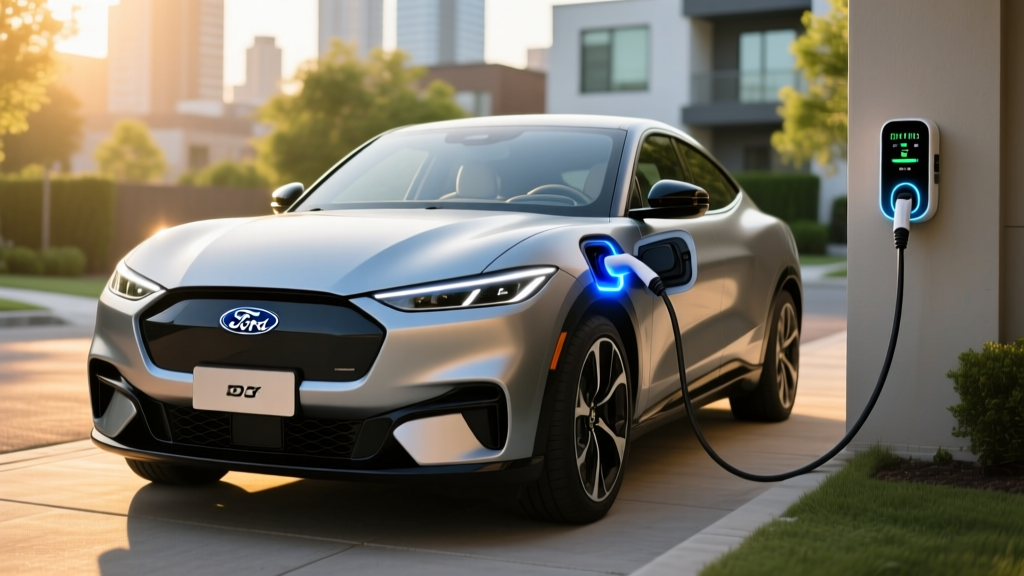
The Ford Mustang Mach-E has matured from a controversial nameplate into one of the most well-rounded electric crossovers on the market. For 2026, Ford continues to refine the formula with the extended-range battery, updated BlueCruise capabilities, and the NACS charge port that opens access to Tesla's Supercharger network without an adapter. If you're searching for a practical, comfortable EV that can handle daily commuting and occasional road trips, the Mach-E deserves a serious look — but it's not without trade-offs worth examining before you sign.
| Spec | Select (RWD) | Premium AWD | GT |
|---|---|---|---|
| EPA Range | 250 mi | 290 mi (Ext. Range) | 280 mi (Ext. Range) |
| Battery (usable) | 70 kWh (LFP) | 91 kWh (NMC) | 91 kWh (NMC) |
| Horsepower | 266 hp | 346 hp | 480 hp |
| 0-60 mph | 6.3 sec | 5.1 sec | 3.3 sec |
| DC Fast Charge (peak) | 115 kW | 150 kW | 150 kW |
| 10-80% DC Time | ~38 min | ~41 min | ~41 min |
| Level 2 Home Charge | 10.5 kW (~30 mi/hr) | 10.5 kW (~30 mi/hr) | 10.5 kW (~30 mi/hr) |
| MPGe (combined) | 105 MPGe | 98 MPGe | 86 MPGe |
| Base MSRP | $39,995 | $48,995 | $57,995 |
Range and Efficiency: EPA Sticker vs. Reality
Real-World Expectation: 240–265 miles on highway trips at 70-80 mph; 200–230 miles in freezing temperatures with cabin heat running.
The headline number — 290 miles on the Premium Extended Range — is achievable in moderate weather with mixed city/highway driving where regenerative braking recaptures energy. But EPA estimates from fueleconomy.gov blend driving cycles that don't fully represent sustained highway travel or extreme temperatures.
In real-world highway testing at 75 mph, expect the Extended Range AWD model to deliver roughly 245–265 miles before the battery buffer kicks in. Cold weather (below 30°F) imposes a 15–25% penalty depending on whether you precondition the battery and cabin while still plugged in. The standard-range LFP Select model, rated at 250 miles EPA, realistically delivers 200–220 miles on the highway.
Efficiency varies by trim: the RWD Select achieves 105 MPGe combined (roughly 32 kWh/100 mi), while the GT's performance tuning drops that to 86 MPGe (~39 kWh/100 mi). For context, the Hyundai Ioniq 5 RWD returns 114 MPGe, and the Tesla Model Y Long Range AWD returns 111 MPGe — the Mach-E sits in the middle of this competitive set.
Charging Speed: DC Fast Charge and Home Level 2
Charging is where buyers should pay close attention. The Mach-E's peak DC fast-charge rate of 150 kW (Extended Range) is adequate but not class-leading. Competitors like the Hyundai Ioniq 5 (peak 240 kW) and Kia EV6 (peak 238 kW) charge considerably faster on compatible infrastructure.
| Charging Level | Power | Speed (approx.) | Use Case |
|---|---|---|---|
| Level 1 (120V) | ~1.4 kW | ~3-4 mi/hr | Emergency / trickle |
| Level 2 (240V home) | 10.5 kW | ~30 mi/hr | Daily overnight charging |
| DC Fast Charge | Peak 150 kW | 10-80% in ~41 min | Road trips |
A critical detail about the charge curve: the Mach-E peaks near 150 kW only between roughly 15–35% state of charge. It tapers to ~100 kW by 55% and drops further to ~50 kW above 80%. This means the published 10-80% time of 41 minutes is realistic, but charging to 100% on DC will add another 35–45 minutes — plan accordingly on road trips and aim to hop between chargers at 80% rather than waiting for a full fill.
For 2026, the Mach-E ships with the NACS (North American Charging Standard) port, giving native access to Tesla Supercharger stalls (now opened to non-Tesla vehicles via the Ford charging network). This eliminates the need for a CCS-to-NACS adapter that early Mach-E owners had to carry. On Electrify America and other CCS-only networks, Ford provides an adapter.
At home, the onboard 10.5 kW charger means a full charge from 10% takes roughly 8.5 hours on a 48-amp Level 2 circuit — easily achievable overnight. A Level 2 home installation typically runs $800–$2,000 depending on panel capacity and run length to your garage (licensed electrician required).
Performance, Drivetrain, and Ride Quality
The Mach-E lineup spans a wide performance envelope. The base Select RWD makes 266 hp and hits 60 mph in 6.3 seconds — brisk for daily commuting and merging. The Premium AWD steps up to 346 hp and 5.1 seconds, which is genuinely quick for a family crossover.
The GT variant is the performance flagship: 480 hp, 3.3-second 0-60 times, and MagneRide adaptive dampers that firm up in Unbridled Extend drive mode. It's a thrilling drive, but the GT's 280-mile EPA range and 86 MPGe efficiency mean you're paying a measurable price at the charger for that performance.
Ride quality across the lineup is compliant and well-damped, though the Mach-E's sport-tuned suspension transmits more road imperfections than the softer-riding Hyundai Ioniq 5. Steering is precise and communicative for an EV crossover. The low center of gravity from the floor-mounted battery pack gives it confident cornering manners that belie its 4,700-pound curb weight.
Interior, Cargo, and Technology
The Mach-E's cabin is dominated by a 15.5-inch portrait touchscreen running Ford's SYNC 4A system with wireless Apple CarPlay and Android Auto. The screen handles climate controls, navigation, and vehicle settings — there are few physical buttons. Some buyers appreciate the clean look; others find touchscreen-only HVAC adjustments distracting while driving.
Space is generous for a midsize crossover:
- Cargo behind rear seats: 29.7 cu ft
- Cargo with rear seats folded: 59.7 cu ft
- Front trunk (frunk): 4.7 cu ft — useful for charging cables or a small bag
- Rear legroom: 38.9 inches — comfortable for adults on longer trips
- Front headroom: 40.4 inches
Compared to the Tesla Model Y (30.2 cu ft cargo, 76.2 cu ft folded), the Mach-E gives up some utility — if maximum cargo volume is your priority, the Model Y wins. But the Mach-E's interior materials, seat comfort, and noise insulation are noticeably better than the Model Y's minimalist cabin.
On the driver-assist front, the Mach-E offers Ford's BlueCruise hands-free highway driving system on compatible divided highways (over 130,000 miles of mapped roads as of 2026). BlueCruise is an SAE Level 2 system — meaning the driver must remain attentive and keep eyes on the road, monitored by a driver-facing camera. It handles lane centering, adaptive cruise, and lane changes competently, but this is not autonomous driving. You are the driver at all times.
Pricing, Trims, and Federal Tax Credit Eligibility
The 2026 Mach-E lineup starts at $39,995 for the Select RWD and climbs to $57,995 for the GT. A well-equipped Premium AWD Extended Range — the sweet-spot trim for most buyers — lands around $48,995 before options and destination.
| Trim | Base MSRP | §30D Credit (est.) | Effective Price |
|---|---|---|---|
| Select RWD | $39,995 | Up to $3,750–$7,500* | $32,495–$36,245 |
| Premium AWD Ext. Range | $48,995 | Up to $3,750–$7,500* | $41,495–$45,245 |
| GT Ext. Range AWD | $57,995 | Up to $3,750–$7,500* | $50,495–$54,245 |
*Credit amount depends on battery sourcing and critical-mineral requirements under IRS §30D rules. The Mach-E qualifies for at least the $3,750 critical-minerals half; the full $7,500 requires meeting both the battery-component and critical-minerals thresholds, which vary by model year and production batch. Starting in 2024, buyers can transfer the credit to the dealer as a point-of-sale discount — confirm eligibility at purchase.
Income caps apply: Modified adjusted gross income must not exceed $150,000 (single), $225,000 (head of household), or $300,000 (joint). The Mach-E's MSRP falls under the $80,000 SUV cap, so it clears the vehicle-price limit.
Warranty, Ownership Costs, and Long-Term Outlook
Ford backs the Mach-E with a competitive warranty package:
- Battery: 8 years / 100,000 miles (retains ≥70% capacity)
- Electric powertrain components: 8 years / 100,000 miles
- Bumper-to-bumper: 3 years / 36,000 miles
The 70% capacity retention threshold at 8 years is industry-standard, matching Hyundai, Kia, and Tesla. Real-world degradation data from early 2021–2023 Mach-E owners suggests most Extended Range (NMC) packs lose 5–8% capacity over the first 60,000 miles, with the curve flattening afterward. The LFP pack in the Select trim typically shows even less degradation thanks to LFP's superior cycle life — a meaningful advantage for high-mileage drivers and rideshare use.
Insurance costs run 10–20% higher than a comparably priced gas crossover, which is typical for EVs. Maintenance costs are significantly lower: no oil changes, no transmission fluid, and regenerative braking extends pad life substantially. Ford recommends a cabin air filter replacement and tire rotation at standard intervals.
Charging cost depends on your electricity rate. At the US average of ~$0.16/kWh, fully charging the 91 kWh Extended Range battery at home costs roughly $14.50 — compared to $45–$55 for a tank of gas in a similar ICE crossover at 25 MPG. Over 5 years at 12,000 miles/year, home charging saves approximately $6,000–$8,000 in fuel costs versus a gas equivalent.
How It Compares: Mach-E vs. Key Competitors
The Mach-E competes in a crowded segment. Here's how it stacks up against the two most common cross-shops:
| Spec | Mach-E Premium AWD ER | Model Y LR AWD | Ioniq 5 Limited AWD |
|---|---|---|---|
| EPA Range | 290 mi | 320 mi | 266 mi |
| Battery | 91 kWh (NMC) | ~75 kWh (NMC) | 77.4 kWh (NMC) |
| Peak DC Charge | 150 kW | 250 kW | 238 kW |
| 10-80% DC Time | ~41 min | ~25 min | ~18 min |
| 0-60 mph | 5.1 sec | 4.8 sec | 5.0 sec |
| Cargo (rear seats up) | 29.7 cu ft | 30.2 cu ft | 27.2 cu ft |
| Base MSRP (comparable) | $48,995 | $47,990 | $52,600 |
| Efficiency | 98 MPGe | 111 MPGe | 98 MPGe |
Choose the Mach-E if: You prioritize ride comfort, interior quality, and a more traditional car-buying experience through a Ford dealer. The NACS port now gives you Supercharger access, closing one of Tesla's historic advantages.
Choose the Model Y if: Maximum range, fastest charging, and the Supercharger network are your top priorities. The Tesla's 250 kW peak charge rate and 320-mile range make road trips meaningfully easier.
Choose the Ioniq 5 if: DC fast-charging speed is critical (18-minute 10-80% times) and you value the 800V architecture. The Ioniq 5 sacrifices some range and cargo space for dramatically faster charging.
Pros
- Comfortable ride and well-insulated cabin
- NACS port for native Supercharger access (2026)
- Strong performance across the lineup
- BlueCruise hands-free driving on mapped highways
- LFP battery option (Select) for superior longevity
- Qualifies for partial or full §30D federal tax credit
Cons
- DC charging speed trails Ioniq 5 and Model Y
- Real-world highway range noticeably below EPA sticker
- Cargo volume smaller than Model Y
- Touchscreen-heavy interface lacks physical climate buttons
- GT trim's efficiency penalty is steep
- Insurance premiums above ICE crossover average
Who the Mustang Mach-E Suits Best
The Mach-E is best suited for commuters and small families who want a comfortable, well-built EV with enough range for daily driving and weekend trips within a 200-mile radius. The Premium AWD Extended Range hits the sweet spot: 290 miles EPA, all-weather capability, and a price point that — with the federal credit — can dip below $42,000 effective.
It's less ideal for frequent long-distance road trippers who prioritize minimum charging time. The 150 kW peak charge rate means you'll spend 40+ minutes at chargers where an Ioniq 5 driver finishes in 18 minutes. If you regularly drive 300+ miles between stops, the Tesla Model Y's range and charging speed advantage becomes a meaningful quality-of-life difference.
For towing, the Mach-E is rated up to 2,300 pounds with the Premium AWD — adequate for a small utility trailer or a pair of dirt bikes, but not a camper. If you need serious tow capacity, look at the Ford F-150 Lightning or Rivian R1S.
Frequently Asked Questions
What is the real-world range of the Mustang Mach-E?
Expect 240–265 miles on highway trips in moderate weather for the Extended Range AWD (290 mi EPA). In freezing temperatures, plan for 200–230 miles. The Select RWD (250 mi EPA) delivers roughly 200–220 highway miles in real-world conditions.
How fast does the Mach-E charge at home and on DC fast chargers?
On a Level 2 home charger (10.5 kW), expect ~30 miles of range per hour, with a full charge in about 8.5 hours. On DC fast chargers, the Extended Range model peaks at 150 kW and charges from 10-80% in approximately 41 minutes. The standard-range LFP model peaks at 115 kW.
Does the 2026 Mustang Mach-E qualify for the federal EV tax credit?
Yes — the Mach-E qualifies for at least $3,750 under the critical-minerals requirement of IRS §30D, and potentially the full $7,500 depending on battery-component sourcing at time of manufacture. Buyer income caps apply ($150K single / $300K joint), and the MSRP must be under $80,000 (SUV cap). The credit can be applied as a point-of-sale rebate through the dealer. Always verify current eligibility with your tax professional and the IRS clean vehicle credit page.
Is the Mach-E worth buying over the Tesla Model Y?
It depends on your priorities. The Mach-E offers superior ride comfort, better interior materials, and a traditional dealer experience. The Model Y wins on range (320 vs. 290 mi), charging speed (250 vs. 150 kW peak), and cargo space. With the NACS port, the Mach-E now accesses Superchargers, narrowing one of Tesla's key advantages.
What are the biggest drawbacks of the Mustang Mach-E?
Slower DC charging than Korean competitors (Ioniq 5, EV6), real-world highway range that falls 10–15% short of the EPA estimate, a touchscreen-centric interior that lacks physical climate controls, and higher insurance costs than gas equivalents. The GT trim's performance comes with a significant efficiency penalty.
Does the Mach-E have a frunk?
Yes — a 4.7 cu ft front trunk, useful for storing the mobile charge cord, a small bag, or groceries. It includes a drain plug, so you can use it as a makeshift cooler for tailgating.
What battery chemistry does the Mach-E use?
The Select (standard range) uses an LFP (lithium iron phosphate) battery — known for longer cycle life and better tolerance for daily 100% charging. The Premium and GT (extended range) use NMC (nickel manganese cobalt) chemistry, which offers higher energy density but benefits from charging to 80-90% for daily use to minimize degradation.