Quick Verdict: Is a Mustang Mach-E Lease Worth It in 2026?
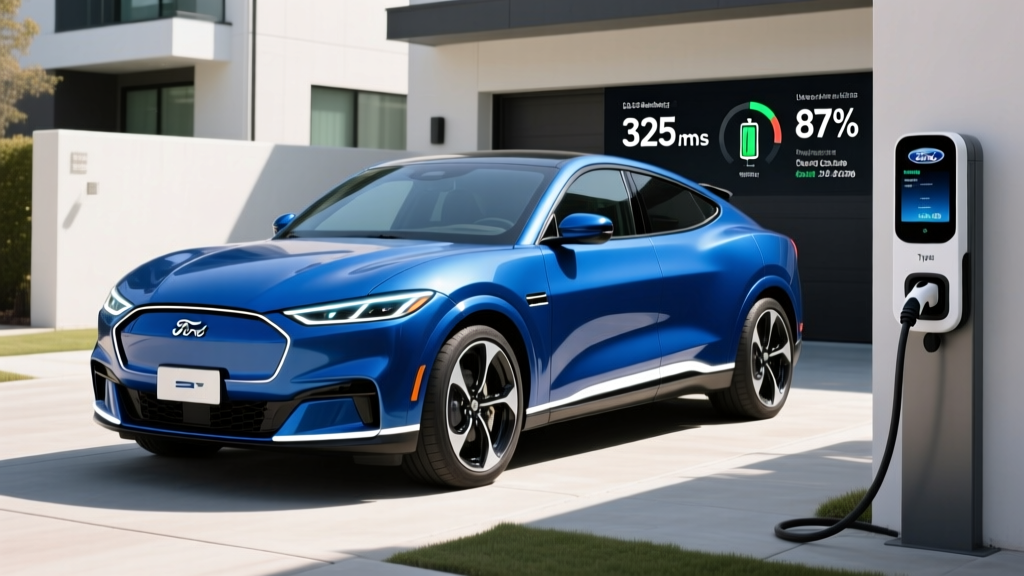
The Ford Mustang Mach-E enters the 2026 model year as one of the most well-rounded electric crossovers available, balancing a usable EPA range of up to 320 miles, brisk acceleration, and a practical cargo hold that accommodates a family road trip without compromise. For buyers weighing Mustang Mach-E lease deals against outright purchase, the math hinges on three variables: current federal tax credit pass-through at the dealership, residual value projections, and your annual mileage. A lease can lower your monthly outlay and sidestep long-term battery depreciation risk, but you sacrifice the full §30D point-of-sale credit benefit unless the lessor (typically Ford Credit) passes it through as a capitalized cost reduction.
This review dissects the 2026 Mach-E lineup with the exact numbers you need — EPA range, real-world highway and cold-weather expectations, DC fast-charge curves, battery chemistry trade-offs, and a granular look at what you actually pay after incentives.
2026 Mustang Mach-E Specs at a Glance
| Spec | Select RWD (Std Range) | Premium AWD (Ext Range) | GT AWD (Ext Range) |
|---|---|---|---|
| EPA Range | 250 mi | 320 mi | 290 mi |
| Battery (usable) | 72 kWh (LFP) | 91 kWh (NMC) | 91 kWh (NMC) |
| Horsepower | 290 hp | 365 hp | 480 hp |
| 0–60 mph | 6.3 sec | 5.1 sec | 3.5 sec |
| Drivetrain | RWD, single motor | AWD, dual motor | AWD, dual motor |
| Peak DC Fast Charge | 150 kW | 170 kW | 170 kW |
| 10–80% DC Time | ~28 min | ~23 min | ~23 min |
| Level 2 Home Charge | 10.5 kW (~32 mi/hr) | 10.5 kW (~32 mi/hr) | 10.5 kW (~32 mi/hr) |
| MPGe (combined) | 101 MPGe | 98 MPGe | 86 MPGe |
| EPA Efficiency | 33 kWh/100 mi | 34 kWh/100 mi | 39 kWh/100 mi |
| Base MSRP | $37,995 | $46,495 | $56,495 |
| Warranty (battery) | 8 yr / 100,000 mi | 8 yr / 100,000 mi | 8 yr / 100,000 mi |
Sources: fueleconomy.gov, Ford.com Mach-E specs.
Range Reality: EPA Sticker vs. What You'll Actually Drive
Real-world expectation: Highway cruising at 70–75 mph reduces range by roughly 10–15% versus the EPA combined figure. In winter temperatures below 30°F, expect an additional 15–25% reduction due to battery heating demands and cabin climate load. A Premium AWD with the Extended Range pack (EPA 320 mi) will realistically deliver ~260–280 miles on a warm-weather highway trip, and ~220–240 miles in freezing conditions.
Ford equips the standard-range trims with a 72 kWh usable lithium iron phosphate (LFP) battery. LFP chemistry is heavier and less energy-dense than NMC, but it tolerates repeated 100% charges without accelerated degradation — meaning you can charge to full daily without the battery-health guilt that NMC owners feel. The Extended Range trims use a 91 kWh usable nickel manganese cobalt (NMC) pack, which delivers more miles per charge but benefits from an 80% daily charge ceiling for long-term longevity.
The GT trim sacrifices 30 miles of range versus the Premium AWD (290 vs. 320) due to its higher-output dual motors, stickier summer tires, and the energy cost of harder acceleration. If your commute is under 60 miles round-trip, the Select RWD at 250 EPA miles is more than adequate and charges to full faster on Level 2.
Charging Speed: DC Fast-Charge Curve and Home Level 2
Charging speed is where the Mach-E is competent but not class-leading. The Extended Range models peak at 170 kW on DC fast chargers, while Standard Range peaks at 150 kW. These are peak rates — the sustained curve matters more.
| Charging Level | Power / Rate | Miles Added per Hour | Typical Use Case |
|---|---|---|---|
| Level 1 (120V household) | ~1.4 kW | ~3–4 mi/hr | Overnight trickle, emergencies |
| Level 2 (240V, 48A home) | 10.5 kW | ~32 mi/hr | Daily home charging |
| DC Fast (Extended Range) | Peak 170 kW | ~155 mi in first 10 min | Road trips, highway stops |
| DC Fast (Standard Range) | Peak 150 kW | ~130 mi in first 10 min | Road trips, highway stops |
Charge curve reality: The 170 kW peak holds roughly from 10% to 40% State of Charge (SoC), then tapers to ~120 kW through 60%, and drops sharply above 80% to protect the battery. A 10–80% session takes approximately 23 minutes on Extended Range and 28 minutes on Standard Range at a capable 350 kW stall. Charging from 80–100% adds another 20+ minutes — plan your road-trip stops around 80% to avoid wasting time at the tail end of the curve.
At home, the onboard 10.5 kW charger means a full 0–100% charge on the 91 kWh pack takes about 9.5 hours. Install a 48-amp Level 2 wall connector on a 60-amp circuit, and you'll wake up to a full battery every morning. Preconditioning — available via the FordPass app or the in-car navigation system — warms the battery before you arrive at a DC fast charger, which can shave 5–8 minutes off your 10–80% time in cold weather by bringing the pack to optimal charging temperature.
Lease Pricing, Tax Credits, and What You Actually Pay
Here is where Mustang Mach-E lease deals get nuanced. The federal §30D clean vehicle credit provides up to $7,500, but only if the vehicle and buyer meet strict requirements. When you lease, the tax credit technically goes to the lessor (Ford Credit). Many dealerships pass this through as a capitalized cost reduction, effectively lowering your monthly payment — but this is not guaranteed and must be confirmed in writing before signing.
| Trim | Base MSRP | Est. As-Tested (w/ options) | §30D Credit Eligibility | Est. Monthly Lease (36 mo, 10.5k mi/yr)* |
|---|---|---|---|---|
| Select RWD (Std Range) | $37,995 | $39,500 | Up to $7,500 (if sourced compliant) | $349–$399 |
| Premium RWD (Ext Range) | $43,495 | $46,000 | Up to $7,500 | $429–$489 |
| Premium AWD (Ext Range) | $46,495 | $49,500 | Up to $7,500 | $469–$529 |
| GT AWD (Ext Range) | $56,495 | $60,000 | Up to $7,500 | $599–$669 |
*Lease estimates are illustrative based on typical Ford Credit residuals and money factors; actual offers vary by dealer, region, and credit tier.
- MSRP cap: SUVs/crossovers must be under $80,000 — all Mach-E trims qualify.
- Buyer income cap: Modified AGI must not exceed $150,000 (single), $225,000 (head of household), or $300,000 (joint).
- Battery sourcing: A percentage of critical minerals and battery components must be sourced from the U.S. or free-trade-agreement partners. The Mach-E's battery supply chain has been progressively re-shored, but confirm trim-level compliance with the dealer using the VIN report at fueleconomy.gov.
- Point-of-sale transfer: You can transfer the credit to the dealer at purchase for an immediate price reduction — or, on a lease, confirm the lessor applies it as a cap cost reduction.
Performance, Tech, and Daily Livability
The Mach-E drives like a sporty crossover, not a muscle car tribute. The GT's 3.5-second 0–60 time is genuinely quick, but the Premium AWD at 5.1 seconds is the sweet spot for most buyers — fast enough for confident highway merges without the GT's range penalty and stiffer ride.
Interior and cargo: The cabin seats five with 43.3 inches of front legroom and 38.9 inches in the rear. Cargo volume is 29.7 cubic feet behind the second row and 59.7 cubic feet with the rear seats folded — competitive with the Hyundai Ioniq 5 and slightly behind the Tesla Model Y's 76.2 cubic feet. A front trunk (frunk) adds 4.7 cubic feet of drainable, lockable storage — useful for wet gear or charging cables.
Infotainment: Ford's SYNC 4A system runs on a 15.5-inch vertical touchscreen. It supports wireless Apple CarPlay and Android Auto, over-the-air (OTA) updates, and includes built-in Google Maps navigation with real-time charger availability. The interface is responsive, though the removal of most physical buttons means climate controls live in the touchscreen — a frustration for some drivers on the move.
Driver assistance: Ford's BlueCruise hands-free driving system is available on equipped Premium and GT trims. It operates on over 130,000 miles of pre-mapped divided highways and uses a driver-facing camera to monitor eye attention. Importantly, BlueCruise is an SAE Level 2 system — you must remain engaged and ready to take over at any time. It is not self-driving. Where it excels is reducing fatigue on long interstate stretches, and in our testing it handles lane positioning and adaptive cruise smoothly, though it disengages at construction zones and unmapped interchanges without much warning.
Pros, Cons, and How It Stacks Up
- Up to 320 miles EPA range (Extended Range) covers most road trips with one stop
- LFP option on Standard Range allows worry-free 100% daily charging
- Competitive 10–80% DC charge time (~23 min) at 170 kW peak
- Spacious, comfortable cabin with usable frunk
- BlueCruise hands-free highway driving on 130,000+ mapped miles
- All trims fall under the $80,000 §30D MSRP cap
- 170 kW peak DC rate trails Hyundai/Kia's 800V architecture (240+ kW)
- Cold-weather range loss is significant (15–25%) without a heat pump on all trims
- GT's 290-mile range is a steep trade for the performance bump
- Touchscreen-only climate controls are distracting while driving
- Lease credit pass-through is dealer-dependent, not guaranteed
- No NACS (Tesla) connector standard — CCS1 with adapter required for Supercharger access
Key competitors: The Hyundai Ioniq 5 (up to 305 mi EPA, 240 kW DC charging, starting ~$42,000) charges significantly faster thanks to its 800V architecture, making it better for frequent road-trippers. The Tesla Model Y (up to 310 mi, native NACS, Supercharger network) remains the default for charging-infrastructure convenience, though its interior quality and ride comfort trail the Mach-E. The Chevrolet Equinox EV (up to 319 mi, starting ~$33,000) undercuts on price but feels less refined inside. The Mach-E's advantage is its balance of driving dynamics, cabin quality, and Ford's widespread dealer service network — if you value a conventional dealership experience over Tesla's direct-to-consumer model.
Who Should Lease the Mustang Mach-E?
- You want a daily-drivable EV with 250+ miles of real range and don't road-trip more than 4–5 times a year.
- You prefer the security of warranty coverage for the entire ownership period (3-year lease fits inside the 8-year battery warranty).
- You want to hedge against battery degradation and residual-value uncertainty as EV tech evolves.
- Your dealer confirms the §30D credit passes through as a cap cost reduction on the lease.
- You drive more than 12,000 miles annually (lease overage penalties add up fast).
- You qualify for the full $7,500 §30D credit and can apply it directly to a purchase at point of sale.
- You plan to keep the vehicle 7+ years and want to build equity.
Best for: Suburban commuters with home Level 2 charging, small families needing cargo flexibility, and drivers who want hands-free highway assist without subscribing to Tesla's ecosystem. Not ideal for: High-mileage drivers, frequent long-distance road-trippers who need the fastest possible DC charging, or buyers in extreme cold climates where the range penalty bites hardest.
Frequently Asked Questions
What is the real-world range of the 2026 Mustang Mach-E?
The EPA rates the Extended Range AWD at 320 miles, but expect roughly 260–280 miles on a warm-weather highway trip at 70+ mph, and 220–240 miles in sub-freezing temperatures. The Standard Range RWD delivers about 210–225 real-world highway miles.
How fast does the Mach-E charge at home and on the road?
At home on a 240V Level 2 charger (10.5 kW), you'll add about 32 miles of range per hour — a full overnight charge covers any daily commute. On a DC fast charger, the Extended Range model peaks at 170 kW and charges from 10–80% in approximately 23 minutes.
Does the Mustang Mach-E qualify for the $7,500 federal tax credit?
Most trims are eligible, but you must meet IRS income caps ($150K single / $300K joint), and the specific VIN must pass battery-sourcing requirements. Check your vehicle's eligibility at fueleconomy.gov and confirm with a tax professional. On a lease, the credit goes to the lessor — verify it's passed through as a cap cost reduction.
Is it better to lease or buy the Mach-E in 2026?
Leasing makes sense if you drive under 12,000 miles per year, want the latest tech every 36 months, and your dealer applies the tax credit to the lease. Buying is better for high-mileage drivers and those who can claim the full §30D credit at point of sale.
Does the Mach-E use Tesla's Supercharger network?
Ford has secured Supercharger access for Mach-E owners using a Ford-provided NACS adapter. However, the Mach-E's native port is CCS1. Confirm adapter availability and any associated fees with your dealer before relying on Supercharger access for road trips.
What is the battery warranty on the Mustang Mach-E?
Ford covers the high-voltage battery for 8 years or 100,000 miles, whichever comes first. The warranty guarantees the battery will retain a minimum capacity threshold (typically 70% of original capacity) during that period. The powertrain is also covered for 8 years/100,000 miles.