Quick Verdict: A Luxury Cruiser With Serious Power
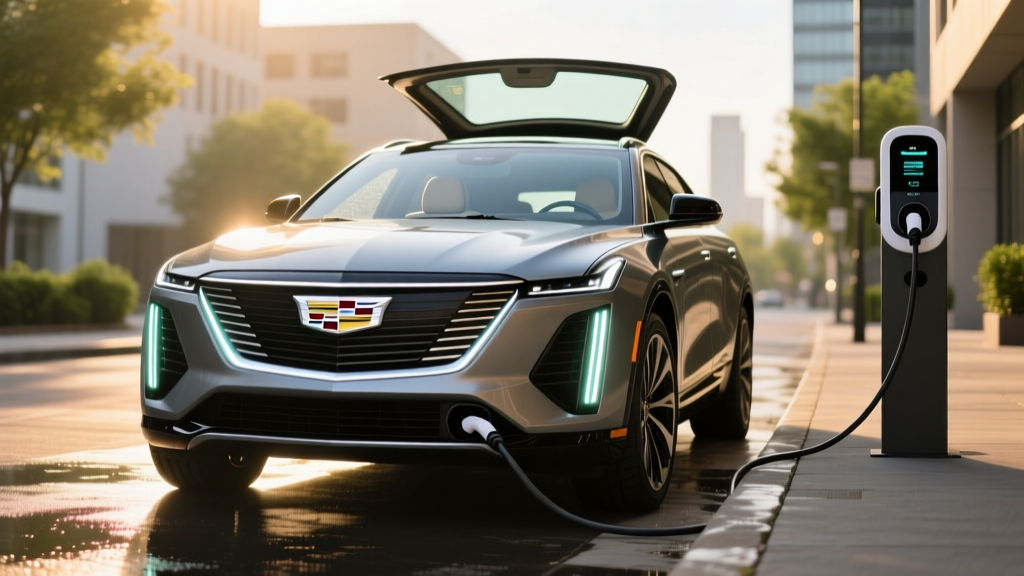
The 2026 Cadillac Lyriq occupies a specific niche: a premium electric SUV that prioritizes highway comfort, cabin refinement, and increasingly potent powertrain options. For buyers searching for Cadillac Lyriq hp figures, the 2026 lineup delivers a wide spread — from 340 horsepower in the single-motor rear-wheel-drive models up to 615 horsepower in the high-performance Lyriq-V. This review breaks down every trim's output, real-world range expectations, charging behavior, and whether the Lyriq still qualifies for federal incentives under current IRS §30D rules.
| Spec | Luxury RWD | Sport AWD | Lyriq-V (Performance) |
|---|---|---|---|
| Horsepower | 340 hp | 500 hp | 615 hp |
| Torque | 325 lb-ft | 450 lb-ft | 650 lb-ft |
| Drivetrain | RWD (single motor) | AWD (dual motor) | AWD (dual motor, V-tuned) |
| 0-60 mph | 6.35 sec | 4.6 sec | 3.3 sec (est.) |
| Battery (usable) | 102 kWh (NMC) | 102 kWh (NMC) | 102 kWh (NMC) |
| EPA Range | 314 mi | 307 mi | 280 mi (est.) |
| MPGe (combined) | 89 MPGe | 88 MPGe | ~82 MPGe (est.) |
| Efficiency | 38 kWh/100 mi | 38 kWh/100 mi | ~41 kWh/100 mi |
| Max DC Fast Charge | 190 kW | 190 kW | 190 kW |
| 10-80% DCFC Time | ~33 min | ~33 min | ~33 min |
| Level 2 Home Rate | 11.5 kW (~31 mi/hr) | 11.5 kW (~31 mi/hr) | 11.5 kW (~31 mi/hr) |
| Base MSRP | $58,590 | $62,990 | $73,990 |
Cadillac Lyriq HP and Performance Breakdown
The horsepower story of the 2026 Lyriq is really three stories, depending on which powertrain you select.
Luxury and Premium Luxury (RWD) — 340 hp
The entry point uses a single rear-mounted permanent-magnet motor producing 340 horsepower and 325 lb-ft of torque. This is adequate for daily driving and highway merging, with a 0-60 time of roughly 6.35 seconds. The single-motor setup also maximizes range, returning an EPA-estimated 314 miles — the highest in the lineup. If you're not chasing sub-4-second sprints, this powertrain is the efficiency sweet spot.
Sport and Premium Sport (AWD) — 500 hp
Adding a front motor creates a dual-motor all-wheel-drive system with a combined 500 hp and 450 lb-ft. The 0-60 drops to 4.6 seconds, and the AWD traction advantage is tangible in rain and light snow. Range dips only slightly to 307 miles EPA, a 7-mile penalty that most buyers will accept for the added grip and acceleration.
Lyriq-V (Performance AWD) — 615 hp
Cadillac's V-Series performance division has turned its attention to the Lyriq, producing a track-tuned dual-motor setup rated at 615 hp and 650 lb-ft. The estimated 0-60 time of 3.3 seconds puts it in the territory of a Tesla Model X Plaid or BMW iX M60. This comes at a range cost — expect roughly 280 miles EPA — and a significant price premium. The Lyriq-V also features a sport-tuned adaptive suspension, larger brakes, and a unique V-Mode drive setting that sharpens throttle response and steering weight.
Real-World Range: What to Actually Expect
EPA sticker (RWD): 314 miles
Real-world highway (70-75 mph, moderate climate): ~260–280 miles
Cold weather (below 30°F, highway): ~210–240 miles
City / mixed driving with regen: ~285–310 miles
The Lyriq's 102 kWh usable NMC battery is large, but the SUV's 5,700+ lb curb weight and 38 kWh/100 mi consumption rate mean highway speeds erode range faster than city driving. In EPA testing, the RWD model achieves 89 MPGe combined. Expect the real-world highway figure to land around 260-280 miles in temperate conditions, with cold weather reducing that by another 15-20% due to battery heating demands and cabin climate load. The Lyriq does not offer a standard heat pump on all trims — verify your configuration, as resistance heating in cold climates will compound range loss.
Charging Speed: DC Fast Charge and Home Level 2
Charging capability is where the Lyriq reveals both strengths and a notable limitation versus some competitors.
| Charging Level | Power / Rate | Miles Added Per Hour | Notes |
|---|---|---|---|
| Level 1 (120V household) | ~1.4 kW | ~3-4 mi/hr | Emergency/trickle only |
| Level 2 (240V home) | 11.5 kW (48A) | ~31 mi/hr | Full charge in ~9 hours |
| DC Fast Charge (CCS/NACS) | Peak 190 kW | — | 10-80% in ~33 min |
| DC Fast Charge (above 80%) | Tapers to ~50-60 kW | — | 80-100% adds ~20+ min |
Understanding kW vs kWh: kW (kilowatts) measures the rate of energy flow — think of it as how fast water comes out of a hose. kWh (kilowatt-hours) measures total energy stored — the size of the bucket. The Lyriq's 102 kWh battery is the bucket; the 190 kW peak charge rate is how fast you can fill it.
The charge curve matters. The Lyriq peaks at 190 kW only in the 10-30% state-of-charge window. As the battery fills, the rate tapers — by 60% you'll see roughly 120-130 kW, and above 80% it drops significantly to protect cell longevity. Plan road-trip stops around 10-80% sessions of roughly 33 minutes at a reliable 150+ kW DC fast charger. Charging from 80-100% is best reserved for overnight Level 2 sessions at home.
Connector note: For 2026, Cadillac has transitioned the Lyriq to the NACS (Tesla-style) charge port, granting access to Tesla Supercharger V3/V4 stations via native plug. CCS adapters are no longer required, though older CCS stations remain compatible with an adapter included in the vehicle.
Pricing, Trims, and Federal Tax Credit Eligibility
| Trim | Base MSRP | As-Tested (typical options) | §30D Credit Eligible? |
|---|---|---|---|
| Luxury RWD | $58,590 | $61,000–$64,000 | Partial — see below |
| Premium Luxury RWD | $63,590 | $67,000–$72,000 | Partial — see below |
| Sport AWD | $62,990 | $66,000–$71,000 | Partial — see below |
| Premium Sport AWD | $67,590 | $72,000–$78,000 | Partial — see below |
| Lyriq-V | $73,990 | $78,000–$85,000 | Likely ineligible (MSRP cap) |
Federal §30D Tax Credit: The Details
The Lyriq's tax credit situation in 2026 requires careful attention. Under current IRS §30D rules, several conditions must be met simultaneously:
- MSRP cap: SUVs must have a base MSRP at or below $80,000. Most Lyriq trims clear this, but the Lyriq-V at $73,990 base may exceed the cap once destination and mandatory options push it above $80,000.
- Buyer income limits: Modified adjusted gross income must not exceed $300,000 (married filing jointly), $225,000 (head of household), or $150,000 (single).
- Battery sourcing requirements: The credit is split into two $3,750 halves — one for critical minerals sourcing and one for battery component manufacturing. As of 2026, the Lyriq's Ultium battery (built in the U.S. at GM's Tennessee and Michigan plants) qualifies for the battery component half ($3,750). Critical mineral sourcing compliance varies by production batch — verify with your dealer using the VIN-specific lookup on fueleconomy.gov.
- Point-of-sale transfer: Eligible buyers can transfer the credit to the dealer at purchase, reducing the purchase price directly rather than waiting for a tax refund.
Bottom line: Most Lyriq RWD and AWD trims are likely eligible for at least $3,750 (battery component half), and potentially the full $7,500 depending on critical mineral sourcing for your specific vehicle. Always confirm with your dealer and a tax professional before relying on credit amounts in your purchase decision.
Interior Space, Cargo, and Daily Practicality
The Lyriq is a midsize two-row SUV, competing with the BMW iX, Genesis Electrified GV70, and Tesla Model X in exterior footprint but offering a more traditional luxury cabin layout.
- Cargo volume: 28.0 cu ft behind the second row; 60.9 cu ft with the rear seats folded
- Rear legroom: 39.6 inches — generous for two adults on longer trips
- Front legroom: 44.3 inches
- Frunk (front trunk): None — the Lyriq does not offer a front storage compartment, a missed opportunity given the packaging flexibility of a dedicated EV platform
The absence of a frunk is a recurring complaint among owners. That space is occupied by HVAC and power electronics, but competitors like the Ford Mustang Mach-E and Rivian R1S manage front trunks. For a luxury buyer hauling golf bags or luggage for four, the 28 cu ft rear cargo area is adequate but not class-leading — the BMW iX offers 35.5 cu ft behind its second row.
Technology, Infotainment, and Driver Assistance
The Lyriq's cabin centerpiece is a 33-inch LED display that spans the driver cluster and infotainment touchscreen in a single curved panel. The Google Built-In operating system provides native Google Maps navigation, Google Assistant voice control, and Play Store apps — useful for finding chargers and pre-conditioning routes.
Super Cruise (Level 2 Hands-Free Driving)
Super Cruise is a Level 2 driver-assistance system, not a self-driving feature. It provides hands-free operation on mapped divided highways (over 400,000 miles of compatible roads in the U.S. and Canada as of 2026) but requires continuous driver attention. An infrared camera monitors eye gaze, and the system will issue escalating warnings and eventually disengage if the driver looks away. You remain legally responsible for the vehicle at all times.
In practice, Super Cruise is among the best Level 2 systems available. It handles lane centering, adaptive cruise, and even automated lane changes on highways with confidence. However, it does not function on surface streets, in construction zones, or in severe weather — and it will disengage abruptly if road markings are faded or the driver's attention drifts.
- Navigate city streets, intersections, or stoplights
- Handle construction zones or temporary lane shifts reliably
- Operate without driver supervision — eyes must remain on the road
- Replace an attentive driver — you are liable for all vehicle actions
Notable Drawbacks
- No frunk — cargo space is rear-only
- Rear visibility — thick C-pillars create blind spots; the digital rear camera mirror helps but takes getting used to
- Infotainment learning curve — the Google-based system is powerful but menu-heavy; climate controls are buried in the touchscreen on some trims
- 190 kW DC fast-charge ceiling — competitive but behind the 250+ kW rates of Hyundai/Kia E-GMP vehicles and the 270 kW capability of some Porsche/Audi platforms
Pros and Cons
- Quiet, refined ride quality that rivals German competitors
- Up to 615 hp in Lyriq-V — genuine performance-SUV acceleration
- 314-mile EPA range (RWD) is competitive in the luxury midsize segment
- Super Cruise is a top-tier Level 2 highway assist system
- U.S.-built Ultium battery supports partial or full §30D tax credit
- NACS charge port provides native Supercharger access in 2026
- No front trunk (frunk) limits cargo versatility
- 190 kW peak DC charge rate trails some competitors
- Rear visibility hampered by styling; relies on digital camera mirror
- Lyriq-V pricing pushes near or above §30D MSRP cap
- No third-row option — families needing 3 rows must look elsewhere
- Cold-weather range loss can be significant without a standard heat pump on all trims
Who Should Buy the 2026 Cadillac Lyriq?
Choose the Lyriq RWD (340 hp) if: You want maximum range (314 mi), a comfortable daily commuter, and the best shot at the full $7,500 tax credit. Ideal for couples or small families who prioritize cabin quietness over sporty driving.
Choose the Lyriq AWD (500 hp) if: You need all-wheel drive for inclement weather, want confident highway passing power, and can accept a 7-mile range trade-off. The best all-around configuration for most buyers.
Choose the Lyriq-V (615 hp) if: Performance is a priority and you want a sub-3.5-second 0-60 luxury SUV without buying a Tesla. Accept the range penalty (~280 mi) and verify tax credit eligibility before committing — the MSRP may exceed the §30D cap.
Look elsewhere if: You need a third row (Kia EV9, Rivian R1S), the fastest possible DC charging (Hyundai Ioniq 5, Porsche Macan EV), or a frunk for gear storage.
Warranty and Ownership Costs
Cadillac backs the Lyriq with a competitive warranty package:
- Battery & powertrain: 8 years / 100,000 miles (whichever comes first), with a capacity retention threshold of 60% — if the battery degrades below 60% of original capacity within the warranty period, GM will repair or replace it.
- Bumper-to-bumper: 4 years / 50,000 miles
- Corrosion: 6 years / unlimited miles
- Roadside assistance: 6 years / 70,000 miles
For a vehicle in the $60,000-$85,000 range, the 8-year battery warranty is standard for the segment. The 60% retention threshold is less generous than some competitors who guarantee 70% — worth noting for long-term ownership planning.
Frequently Asked Questions
What is the real-world range of the Cadillac Lyriq?
The EPA rates the RWD Lyriq at 314 miles and the AWD at 307 miles. In real-world highway driving at 70-75 mph, expect 260-280 miles in moderate temperatures. Cold weather (below 30°F) can reduce range to 210-240 miles, especially if the cabin heater is running without a heat pump. City driving with regenerative braking recovers more energy and can approach the EPA sticker figure.
How fast does the Cadillac Lyriq charge at home and on the road?
At home on a Level 2 (240V, 48A) charger, the Lyriq accepts up to 11.5 kW, adding roughly 31 miles of range per hour — a full charge from empty takes about 9 hours, easily accomplished overnight. On DC fast chargers, it peaks at 190 kW, reaching 10-80% in approximately 33 minutes under optimal conditions. The charge rate tapers significantly above 80% to protect battery health.
Does the 2026 Cadillac Lyriq qualify for the federal EV tax credit?
Most Lyriq trims are eligible for at least $3,750 of the §30D federal tax credit (the battery component half), and potentially the full $7,500 depending on critical mineral sourcing for your specific VIN. Eligibility also depends on your income (under $300,000 married filing jointly), and the Lyriq-V may exceed the $80,000 MSRP cap for SUVs. Always verify with the dealer and consult IRS guidelines before purchasing.
How much horsepower does the Cadillac Lyriq have?
The 2026 Cadillac Lyriq hp figures vary by trim: the single-motor RWD produces 340 hp, the dual-motor AWD produces 500 hp, and the performance-oriented Lyriq-V produces 615 hp. All trims use GM's Ultium battery platform with a 102 kWh usable NMC battery pack.
Is the Cadillac Lyriq worth buying vs. the BMW iX or Tesla Model X?
The Lyriq competes on cabin luxury, ride comfort, and Super Cruise capability rather than outright performance or charging speed. If you value a traditional luxury experience, quiet highway cruising, and hands-free driving on mapped highways, the Lyriq is a strong choice. If maximum cargo space, faster DC charging, or third-row seating are priorities, the BMW iX (more cargo) or Tesla Model X (falcon doors, Supercharger network) may serve better. The Lyriq's price point — especially after a potential $3,750-$7,500 credit — makes it one of the more attainable luxury electric SUVs.
Does the Lyriq have a heat pump for cold weather?
Heat pump availability varies by trim and option package for the 2026 model year. Some Lyriq configurations use resistance heating, which draws more energy from the battery in cold weather and contributes to greater range loss. Confirm with your dealer whether your specific build includes a heat pump — it's a meaningful efficiency upgrade if you live in a climate with sustained below-freezing winters.