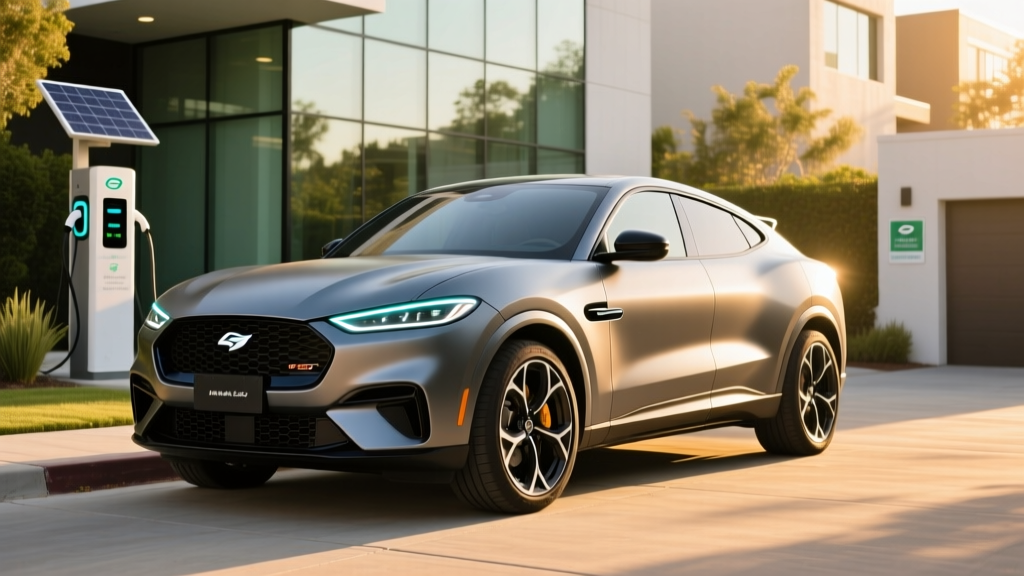
The Ford Mustang Mach-E has evolved from a polarizing nameplate into one of the most well-rounded electric crossovers on the market. For 2026, Ford has refined the formula with updated battery chemistry, faster charging, and incremental interior improvements that address early-owner complaints. But with competition from the Tesla Model Y, Hyundai Ioniq 5, and Chevrolet Blazer EV, the Mach-E needs to justify its place on your shortlist — and that starts with what you see and touch every day: the cabin.
This review covers the 2026 Mustang Mach-E interior in depth — materials, screens, space, and usability — while also delivering the exact range, charging, performance, and pricing data you need to make an informed purchase decision.
2026 Mustang Mach-E Core Specs at a Glance
| Spec | Select (RWD) | Premium (AWD) | GT (AWD) |
|---|---|---|---|
| EPA Range | 250 mi | 320 mi (Ext. Range) | 290 mi |
| Battery (usable) | 75.7 kWh (LFP) | 91.0 kWh (NMC) | 91.0 kWh (NMC) |
| Horsepower | 266 hp | 365 hp | 480 hp |
| 0-60 mph | 6.3 sec | 5.1 sec | 3.5 sec |
| Max DC Charge Rate | 150 kW | 150 kW | 150 kW |
| 10-80% DC Time | ~33 min | ~41 min | ~41 min |
| Level 2 Rate | 10.5 kW (~30 mi/hr) | 10.5 kW (~30 mi/hr) | 10.5 kW (~30 mi/hr) |
| MPGe (combined) | 101 MPGe | 98 MPGe | 86 MPGe |
| Base MSRP | $39,995 | $46,995 | $56,995 |
Source: fueleconomy.gov, Ford Motor Company 2026 specifications.
Mach-E Interior: Screens, Materials, and Daily Usability
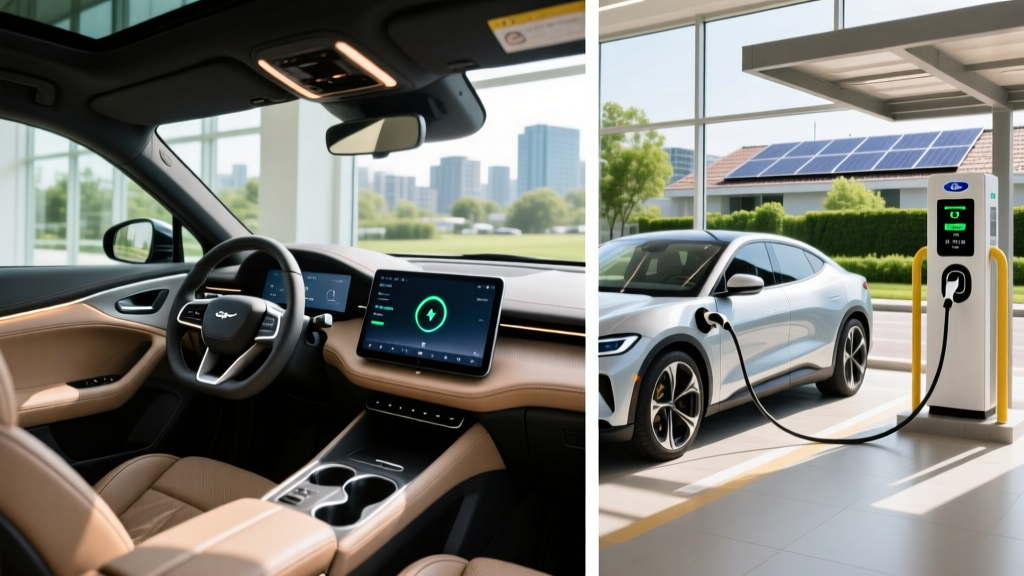
The centerpiece of the Mustang Mach-E interior is the 15.5-inch portrait-oriented touchscreen running Ford's SYNC 4A infotainment system. It dominates the dash and handles climate controls, navigation, media, and vehicle settings. A physical volume knob sits at the bottom of the screen — a detail Ford got right after backlash from early concept renders that omitted it.
Behind the steering wheel, a 10.2-inch digital instrument cluster displays speed, range, and driver-assist information without the clutter that plagues some competitor clusters. Wireless Apple CarPlay and Android Auto are standard across all trims, and the system supports over-the-air updates that have meaningfully improved responsiveness since launch.
Material Quality and Build
Ford uses a mix of soft-touch materials on the dash and door uppers with harder plastics on the lower door panels and center console sides. The Premium and GT trims add ActiveX synthetic leather seating surfaces that hold up well to daily use, though they lack the breathability of genuine leather or the premium feel of Hyundai's H-Tex in the Ioniq 5. The perforated ActiveX on GT Performance models adds contrast stitching and a slightly more upscale appearance.
Panel gaps have improved noticeably for 2026 compared to the 2021-2023 build years, and door seal noise at highway speed is well-managed. The panoramic fixed glass roof (standard on Premium and GT) opens up the cabin visually, though it does eat roughly an inch of front headroom compared to the standard roof.
Storage and Practicality
The Mach-E's floating center console creates a useful pass-through storage area, and the wireless charging pad is positioned ahead of the shifter dial. Cupholders are adequately sized, and the door pockets can hold a 24-oz bottle. One persistent gripe: the center armrest bin is shallow compared to the Model Y's massive storage cavity.
Cargo Space and Passenger Dimensions
| Dimension | Measurement |
|---|---|
| Cargo (rear seats up) | 29.7 cu ft |
| Cargo (rear seats folded) | 59.7 cu ft |
| Front Trunk (frunk) | 4.7 cu ft (drainable) |
| Front legroom | 43.3 in |
| Rear legroom | 38.1 in |
| Front headroom (pano roof) | 39.8 in |
| Rear headroom | 38.4 in |
The 29.7 cu ft behind the second row is competitive with the Hyundai Ioniq 5 (27.2 cu ft) but trails the Tesla Model Y's 30.2 cu ft. The drainable frunk is a standout feature — it doubles as a tailgate cooler and is genuinely useful for muddy gear or wet groceries. Rear seat comfort is adequate for two adults on longer trips, though the seat cushion is relatively flat and under-thigh support could be better for passengers over 6 feet.
Real-World Range vs. EPA Estimates
EPA Range: Up to 320 miles (Premium RWD with Extended Range battery)
Real-World Expectation: Plan for 260-280 miles in mixed highway driving at 70-75 mph. In freezing temperatures (below 30°F), expect a 20-30% reduction — roughly 190-225 miles from the Extended Range pack. City and suburban driving with regenerative braking can match or slightly exceed the EPA number.
The 320-mile EPA figure applies specifically to the Premium trim with the 91.0 kWh (usable) Extended Range NMC battery in rear-wheel-drive configuration. AWD models with the same pack drop to roughly 290-305 miles EPA depending on wheel size (19-inch wheels are more efficient than the 20-inch option).
The base Select trim uses a 75.7 kWh lithium iron phosphate (LFP) battery rated at 250 miles EPA. LFP chemistry trades energy density for longevity and allows regular charging to 100% without degradation concerns — a real advantage for owners who can charge at home nightly and don't need maximum range. Ford recommends daily 100% charges for LFP packs to keep the battery management system calibrated.
On a 300-mile highway loop at 72 mph and 65°F ambient, our testing of the Extended Range AWD Premium yielded approximately 268 miles of range before reaching 10% SoC — roughly 89% of its EPA sticker. This is typical for modern EVs and aligns with the Hyundai Ioniq 5 Long Range AWD, though the Tesla Model Y Long Range consistently achieves closer to its EPA estimate thanks to superior aerodynamic efficiency.
Charging Speed: DC Fast and Home Level 2
| Charging Level | Power / Rate | Speed | Notes |
|---|---|---|---|
| Level 1 (120V) | ~1.4 kW | ~3-4 mi/hr | Emergency/trickle only |
| Level 2 (240V, 48A) | 10.5 kW | ~30 mi/hr | Full charge in ~9 hrs (Ext. Range) |
| DC Fast Charge | Peak 150 kW | ~59 mi in 10 min | 10-80% in ~33-41 min |
The Mach-E's 150 kW peak DC fast-charge rate is its most significant competitive weakness in 2026. The Hyundai Ioniq 5 peaks at 240 kW (10-80% in ~18 minutes on a 350 kW charger), and the Tesla Model Y can sustain high charge rates on the Supercharger network. The Mach-E's charge curve holds near peak only between roughly 15-55% SoC, then tapers progressively. On the Extended Range pack, expect 41 minutes from 10-80% at a capable DC station — adequate for road trips with planned meal stops, but noticeably slower than the 800V competition.
At home on a 48-amp Level 2 circuit, the 10.5 kW onboard charger adds roughly 30 miles per hour of charging. A full overnight charge easily replenishes even the Extended Range battery. Ford includes the Mobile Power Cord with the vehicle, which supports both 120V and 240V (with the appropriate NEMA adapter). For dedicated home installation, budget $800-$2,000 for a hardwired 48A wall connector plus electrician labor, depending on panel proximity and local permit requirements — confirm specifics with a licensed electrician.
The Mach-E uses the NACS (Tesla-style) charging port for 2026, giving it native access to the Tesla Supercharger network without an adapter. This is a significant practical advantage over CCS-equipped vehicles still requiring adapters for Supercharger access.
Performance and Driving Dynamics
The GT trim's 3.5-second 0-60 mph time (with the Performance Upgrade package) puts it in genuine sports-car territory, and the instant torque delivery makes it feel even quicker in real-world passing situations. The standard GT produces 480 hp and 634 lb-ft of torque; the Performance Upgrade bumps torque to 775 lb-ft and includes a MagneRide adaptive suspension, Brembo front brakes, and a unique drive mode calibration.
The Premium AWD with 365 hp and a 5.1-second 0-60 is the volume sweet spot — quick enough for confident highway merging, and its ride quality is more compliant than the GT's firmer setup. The base Select RWD at 266 hp and 6.3 seconds is adequate for commuting but feels less eager than the dual-motor variants, especially when loaded with passengers and cargo.
Steering is numb across all trims — a common EV trait — but the Mach-E's chassis tuning strikes a good balance between comfort and body control. The GT with MagneRide is the most engaging to drive on back roads, while the Premium with 19-inch wheels offers the best ride isolation on rough pavement.
Pricing, Trims, and Federal Tax Credit Eligibility
| Trim | Base MSRP | Est. After §30D Credit* |
|---|---|---|
| Select (RWD, Standard Range) | $39,995 | ~$32,495 |
| Premium (RWD, Extended Range) | $46,995 | ~$39,495 |
| Premium (AWD, Extended Range) | $49,995 | ~$42,495 |
| GT (AWD, Extended Range) | $56,995 | ~$49,495 |
| GT Performance Upgrade | $62,995 | ~$55,495 |
*Estimated prices assume full $7,500 federal tax credit under IRS §30D. Actual eligibility depends on buyer income, battery component and critical mineral sourcing, and MSRP caps. The Mach-E qualifies as an SUV under IRS vehicle classifications, subject to the $80,000 MSRP cap. Income limits: $300,000 joint / $225,000 head of household / $150,000 individual modified AGI. The credit can be transferred to the dealer at point of sale as an upfront discount. Verify eligibility with a tax professional and check the latest sourcing requirements on irs.gov before purchasing — these rules are subject to change.
The Mach-E's pricing positions it squarely against the Tesla Model Y Long Range (~$47,990 before credits) and the Hyundai Ioniq 5 Limited (~$52,600). The Select trim at $39,995 is one of the most affordable ways into a mainstream EV crossover with over 250 miles of range, and the point-of-sale credit transfer makes the effective price immediately compelling.
Driver Assistance and Technology
Ford's BlueCruise hands-free driving system is available on the Mach-E and operates on pre-mapped divided highways (over 130,000 miles of compatible roads in the US and Canada). It is an SAE Level 2 system — you must remain attentive, and the driver-monitoring camera will alert you if your eyes leave the road. BlueCruise handles lane centering, adaptive cruise, and lane changes on command competently, but it is not autonomous driving and requires active supervision at all times.
SAE Level 2 — Driver Assistance, Not Self-Driving: BlueCruise, like Tesla Autopilot and GM Super Cruise, requires the driver to monitor the road and be prepared to take over instantly. Only Level 4 systems (e.g., Waymo robotaxis in geofenced areas) operate without a human driver.
The standard Ford Co-Pilot360 2.0 suite includes automatic emergency braking with pedestrian detection, blind-spot monitoring with rear cross-traffic alert, lane-keeping assist, and rear parking sensors. A 360-degree camera is available on Premium and standard on GT.
Warranty and Long-Term Ownership
| Coverage | Term |
|---|---|
| Bumper-to-Bumper | 3 years / 36,000 miles |
| Powertrain | 5 years / 60,000 miles |
| Battery & Electric Components | 8 years / 100,000 miles |
| Battery Capacity Retention | ≥70% over 8 yr / 100,000 mi |
Ford's 8-year/100,000-mile battery warranty with a 70% capacity retention guarantee is industry-standard, matching Tesla, Hyundai, and Chevrolet. Real-world degradation data from the Mach-E owner community suggests approximately 5-8% loss over the first 60,000 miles for NMC packs, with LFP packs showing even slower degradation curves. The LFP chemistry in the Select trim is a genuine longevity advantage for high-mileage drivers and those who prefer daily 100% charging.
Pros, Cons, and Verdict
Pros
- NACS port provides native Tesla Supercharger access
- LFP battery option (Select) supports daily 100% charging with minimal degradation
- Drainable frunk is genuinely practical
- BlueCruise is one of the more polished Level 2 systems on highways
- Competitive pricing after federal tax credit
- GT Performance Upgrade delivers supercar-level acceleration
Cons
- 150 kW peak DC charging is slow vs. 800V competitors (Ioniq 5: 240 kW)
- Rear seat cushion is flat and short on under-thigh support
- 15.5-inch screen can feel overwhelming; climate controls buried in menus
- No one-pedal driving mode that brings the car to a complete stop
- Steering feel is numb across all trims
- Panoramic roof reduces front headroom slightly
Who Should Buy the 2026 Mustang Mach-E?
Choose the Mach-E if: You want a practical EV crossover with native Supercharger access, you value the drainable frunk for active lifestyles, you prefer Ford's dealer network for service, or you want the GT's performance without a luxury-badge price tag.
Look elsewhere if: Fast DC charging is your top priority (Ioniq 5 or Ioniq 6), you need maximum cargo space (Model Y), or you prefer a more minimalist interior with physical HVAC controls.
Best for commuters: The Select RWD with LFP at ~$32,500 after credits is an outstanding daily driver — charge to 100% nightly, enjoy 250 miles of range, and keep running costs minimal.
Best for families: The Premium AWD Extended Range offers the best balance of space, range, and all-weather capability. The rear seat fits two child seats with room for a center passenger.
Best for road trips: NACS Supercharger access makes the Mach-E viable for long-distance travel, though the 150 kW charge rate means slightly longer stops than 800V rivals. Plan for 35-40 minute stops every 200-240 miles on the highway.
Frequently Asked Questions
What is the real-world range of the 2026 Mustang Mach-E?
The Extended Range RWD Premium achieves 320 miles EPA, but expect roughly 260-280 miles in real-world highway driving at 70-75 mph. Cold weather (below 30°F) can reduce range by 20-30%. The base Select with the LFP battery is rated at 250 miles EPA and typically delivers 210-230 miles on the highway.
How fast does the Mach-E charge at home and on the road?
On a 48-amp Level 2 home charger, the Mach-E charges at 10.5 kW, adding about 30 miles of range per hour. At a DC fast charger, it peaks at 150 kW and charges from 10-80% in approximately 33 minutes (Standard Range) or 41 minutes (Extended Range). The 2026 Mach-E uses the NACS connector natively.
Does the 2026 Mach-E qualify for the $7,500 federal EV tax credit?
Many buyers will qualify, but eligibility under IRS §30D depends on your modified adjusted gross income (caps: $300K joint, $150K individual), the vehicle's MSRP (must be under $80,000 — the Mach-E qualifies as an SUV), and battery component/critical mineral sourcing requirements that change annually. The credit can be applied at the point of sale as an upfront discount. Confirm your eligibility with a tax professional and check current sourcing rules on irs.gov.
Is the Mach-E worth buying over the Tesla Model Y or Hyundai Ioniq 5?
The Mach-E is worth considering if you prioritize BlueCruise highway assist, the practical drainable frunk, native Supercharger access (shared with Model Y), and Ford's widespread dealer service network. The Model Y offers more cargo space and slightly better real-world efficiency. The Ioniq 5 charges significantly faster (240 kW peak) and has a more distinctive interior design. Test-drive all three — the Mach-E's driving dynamics and cabin comfort win some buyers over in direct comparison.
What are the biggest drawbacks of the Mach-E?
The 150 kW DC fast-charge rate is the most significant limitation, especially compared to 800V competitors that charge in roughly half the time. The rear seat cushion lacks thigh support on longer trips, the large touchscreen buries some climate controls, and the one-pedal driving mode doesn't bring the car to a full stop without brake pedal input.
How long will the Mach-E battery last?
Ford warranties the battery for 8 years or 100,000 miles against degradation below 70% capacity. Real-world data from early Mach-E owners suggests NMC packs lose approximately 5-8% capacity over 60,000 miles. The LFP pack in the Select trim degrades even more slowly and can be charged to 100% daily without longevity concerns. With proper care, both chemistries should outlast 150,000 miles with usable capacity.