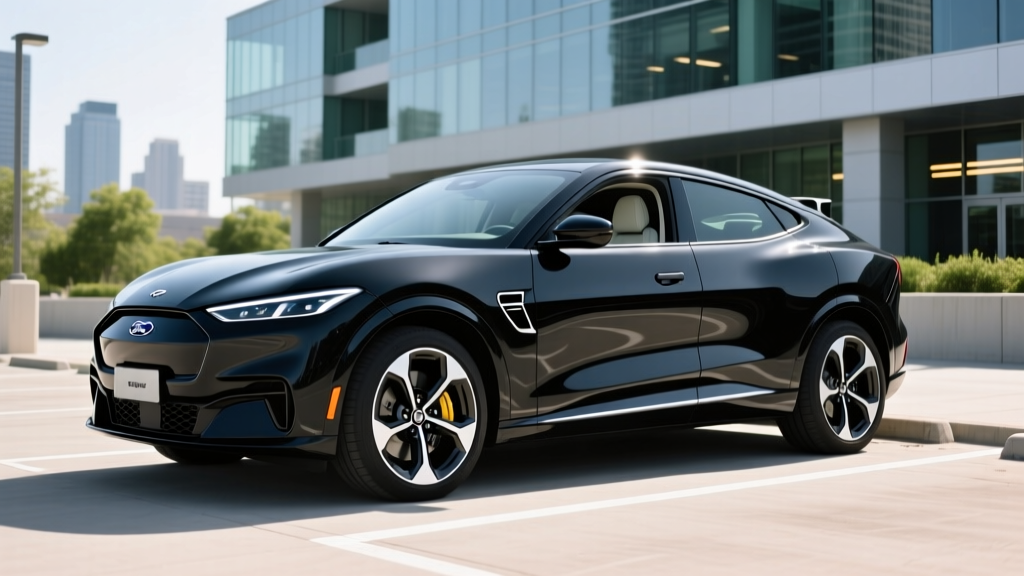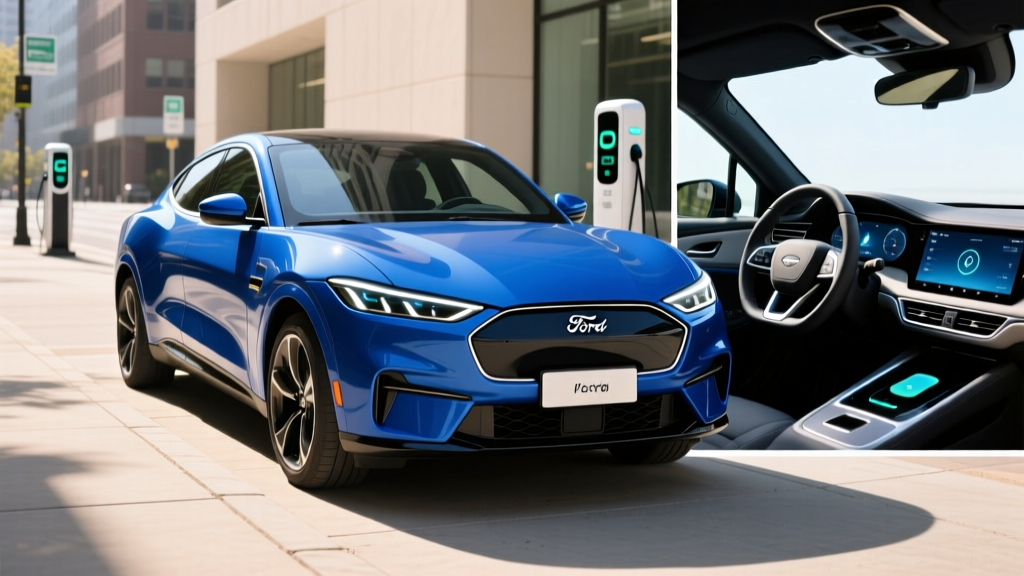
If you've seen the Ford Mustang Mach-E on the road and wondered, is the Mustang Mach-E fully electric? — the answer is an unambiguous yes. The Mach-E is a battery-electric vehicle (BEV) with no gasoline engine, no range extender, and zero tailpipe emissions. It runs exclusively on electricity stored in a lithium-ion battery pack and is recharged by plugging in.
But confirming it's a true EV is only the beginning. What matters to buyers in 2026 is how far it actually goes on a charge, how quickly it replenishes at a DC fast charger, whether it qualifies for the federal tax credit, and how it stacks up against rivals like the Tesla Model Y, Hyundai Ioniq 5, and Kia EV6. This review covers every number you need.
Ford Mustang Mach-E: 2026 Spec Snapshot
| Specification | Select RWD (Std Range) | Premium AWD (Ext Range) | GT (Ext Range) |
|---|---|---|---|
| Powertrain | RWD, single motor | AWD, dual motor | AWD, dual motor |
| Horsepower | 266 hp | 346 hp | 480 hp |
| 0–60 mph | ~6.1 sec | ~4.8 sec | ~3.5 sec |
| Battery (usable) | 70 kWh (LFP) | 91 kWh (NMC) | 91 kWh (NMC) |
| EPA Range | 250 mi | 320 mi | 280 mi |
| MPGe (combined) | 105 MPGe | 101 MPGe | 88 MPGe |
| Efficiency | 32 kWh/100mi | 33 kWh/100mi | 38 kWh/100mi |
| Max DC Charge Rate | 115 kW | 150 kW | 150 kW |
| 10–80% DC Time | ~33 min | ~36 min | ~36 min |
| Level 2 Home Rate | 10.5 kW (~30 mi/hr) | 10.5 kW (~30 mi/hr) | 10.5 kW (~30 mi/hr) |
| Base MSRP | $39,995 | $48,995 | $56,995 |
Sources: fueleconomy.gov, Ford Motor Company 2026 specification sheets. MSRP excludes destination charge (~$1,395).
Real-World Range vs. the EPA Sticker
The 91 kWh Extended Range battery in the Premium RWD configuration achieves the highest EPA rating at 320 miles. AWD and GT trims trade range for traction and power, dropping to 290–300 mi and 280 mi respectively. The Standard Range Select RWD starts at 250 mi.
Real-world expectation: In mixed highway driving at 70–75 mph, expect roughly 260–275 miles from the Extended Range AWD. In winter conditions (below 30°F), range can drop 15–25%, bringing a 320-mi EPA vehicle down to approximately 240–270 miles depending on cabin heat usage and whether you precondition. City driving with regenerative braking often meets or slightly exceeds the EPA number.
The Mach-E Extended Range uses an NMC (nickel manganese cobalt) battery chemistry, which offers higher energy density — more kWh in the same physical pack — making it well-suited for buyers who prioritize maximum range. The Standard Range models switched to LFP (lithium iron phosphate) chemistry, which sacrifices some energy density but gains longer cycle life, greater thermal stability, and the ability to routinely charge to 100% without accelerated degradation.
This LFP vs. NMC split is important: if you charge at home nightly and want a commuter car you can plug in and forget, LFP is forgiving. If you need every possible mile for road trips, NMC in the Extended Range pack is the play — just follow Ford's recommendation to charge to 80% daily and save 100% for trips.
Charging Speed: DC Fast and Home Level 2
Charging speed is where Mach-E ownership either clicks or frustrates. Here's the full picture:
| Charging Level | Power / Rate | Miles Added per Hour | Notes |
|---|---|---|---|
| Level 1 (120V household) | ~1.4 kW | ~3–4 mi/hr | Emergency/trickle only |
| Level 2 (240V home) | 10.5 kW (48A) | ~30 mi/hr | Full charge in ~9–10 hours (Extended Range) |
| DC Fast (Standard Range) | Peak 115 kW | ~180 mi in 30 min | 10–80% in ~33 min |
| DC Fast (Extended Range) | Peak 150 kW | ~200 mi in 30 min | 10–80% in ~36 min |
Understanding the charge curve: The Mach-E Extended Range peaks at 150 kW, but only in the lower portion of the state-of-charge (SoC) window — roughly 10–40%. Above 50%, the rate tapers progressively. By 80%, you're typically pulling 60–80 kW. This is why the 10–80% time of ~36 minutes is longer than the peak rate alone would suggest. On a road trip, plan for 35–40 minute stops at 150+ kW chargers (Electrify America, EVgo, or Tesla Superchargers with the Magic Dock NACS adapter).
Ford provides a NACS (North American Charging Standard) port on 2025+ Mach-E models, granting native access to the Tesla Supercharger network — currently the most reliable DC fast-charging infrastructure in the U.S. This is a significant ownership advantage over CCS-only competitors still relying on adapters.
Home charging reality: At 10.5 kW on a Level 2 home charger (requiring a 60-amp circuit and hardwired installation by a licensed electrician), you'll add roughly 30 miles of range per hour. An overnight session of 8–10 hours fully replenishes even the Extended Range pack. Expect home installation costs of $800–$2,000 depending on your electrical panel's capacity and the run length from panel to garage.
Performance, Handling, and Daily Driving
The Mach-E lineup spans a wide performance envelope. The base Select RWD with 266 hp is adequate for commuting — 0–60 in about 6.1 seconds — but the real draw is the GT trim at 480 hp and a 3.5-second 0–60, which puts it in sports-car territory while still offering crossover utility.
All trims feature a low center of gravity thanks to the floor-mounted battery pack, and the steering is surprisingly direct for a crossover. The GT with the Performance Upgrade (available on GT trims) includes MagneRide adaptive dampers and a Brembo brake package that handles repeated hard stops well.
Drivetrain configurations:
- RWD (single rear motor): Best efficiency, longest range, adequate for dry/warm climates
- AWD (dual motor): Adds a front motor for traction — essential for snow-belt states. Costs ~15–20 miles of range vs. RWD equivalents
- GT (dual motor, performance-tuned): Maximum power with a sport-tuned suspension
One-pedal driving mode is available and effective, allowing most daily driving without touching the brake pedal. Regen strength is adjustable through three levels in the drive settings.
Pricing, Trims, and Federal Tax Credit
| Trim | Base MSRP | Est. After §30D Credit | Eligible? |
|---|---|---|---|
| Select RWD (Std Range) | $39,995 | ~$32,495 | Yes — qualifies under $80K MSRP cap |
| Select AWD (Std Range) | $42,995 | ~$35,495 | Yes |
| Premium RWD (Ext Range) | $46,495 | ~$38,995 | Yes |
| Premium AWD (Ext Range) | $48,995 | ~$41,495 | Yes |
| GT (Ext Range AWD) | $56,995 | ~$49,495 | Yes |
| Rally (Ext Range AWD) | $59,995 | ~$52,495 | Yes |
Federal tax credit eligibility (§30D): The 2026 Mustang Mach-E is assembled in Cuautitlán, Mexico, and its battery sourcing has evolved since launch. Ford has worked to qualify the Mach-E under the critical minerals and battery component requirements of the IRS §30D clean vehicle credit. As of early 2026, multiple Mach-E configurations qualify for up to $7,500, which can be applied as a point-of-sale reduction at the dealer — meaning you don't need to wait until tax filing to benefit.
- ✔ Vehicle MSRP under $80,000 (SUVs/crossovers) — all Mach-E trims qualify
- ✔ Buyer adjusted gross income: ≤$150K single / ≤$225K head of household / ≤$300K joint
- ✔ Battery components and critical minerals must meet phased-in sourcing thresholds (confirm with dealer for specific VIN)
- ✔ Vehicle must be new, purchased for personal use in the U.S.
- ✔ Credit is applied at point of sale or claimed on IRS Form 8936
Rules change periodically. Confirm eligibility for your specific VIN at fueleconomy.gov and consult a tax professional.
Interior, Cargo, and Technology
Passenger space: The Mach-E seats five comfortably. Front legroom is 43.3 inches; rear legroom is 38.9 inches — competitive with the Model Y and slightly better than the Ioniq 5 in the second row. Headroom is generous thanks to the absence of a transmission tunnel.
Cargo capacity:
- Behind rear seats: 29.7 cu ft
- Rear seats folded: 59.7 cu ft
- Front trunk (frunk): 4.7 cu ft — useful for charging cables or a small grocery run
The frunk includes a drain plug, so it doubles as a tailgate cooler for outdoor events — a small but appreciated feature.
Infotainment: The Mach-E's centerpiece is a 15.5-inch vertical touchscreen running Ford's SYNC 4A system. It supports wireless Apple CarPlay and Android Auto, over-the-air (OTA) software updates, and includes a physical volume dial embedded at the bottom of the screen. The interface is responsive, though some owners report occasional lag when switching between navigation and media.
Driver assistance: Ford Co-Pilot360 2.0 is standard across all trims and includes adaptive cruise control with stop-and-go, lane centering, evasive steering assist, and intersection assist. The available BlueCruise system enables hands-free driving on pre-mapped divided highways (SAE Level 2 — you must remain attentive and keep your eyes on the road). BlueCruise is typically included for a trial period, after which it requires a subscription (~$75/year or $2,200 for a multi-year plan).
Pros, Cons, and the Verdict
✔ Pros
- Up to 320 miles EPA range (Premium RWD Extended Range)
- Native NACS port — direct Tesla Supercharger access
- Strong federal tax credit eligibility (up to $7,500 point-of-sale)
- GT trim delivers 480 hp and 3.5-sec 0–60
- Spacious rear seat (38.9" legroom) and practical frunk
- Competitive Level 2 home charging at 10.5 kW
- LFP option for Standard Range (longer cycle life, 100% charging friendly)
✘ Cons
- DC fast charging peaks at 150 kW — slower than Hyundai Ioniq 5 (350 kW peak)
- 10–80% charge time of ~36 min lags behind 800V competitors
- BlueCruise subscription cost after trial period
- Some SYNC 4A interface lag reported by owners
- Assembled in Mexico — some buyers prefer U.S. production
- No rear wiper on early model years (added in later refreshes)
Who Should Buy the Mustang Mach-E?
Choose the Mach-E Select (Standard Range, LFP) if: You commute under 50 miles daily, charge at home nightly, and want a durable battery you can charge to 100% without worry. After the $7,500 credit, it's a compelling ~$32,500 electric crossover.
Choose the Mach-E Premium (Extended Range, AWD) if: You take regular road trips, live in a cold-weather state, and want the 320-mile buffer. The NACS port and Supercharger access make long-distance travel significantly easier than CCS-only rivals.
Choose the Mach-E GT if: You want genuine sports-car acceleration (3.5 sec 0–60) with crossover practicality and don't mind trading ~40 miles of range for 480 hp.
Look elsewhere if: You frequently drive 400+ mile routes and want the fastest possible DC charging — the Hyundai Ioniq 5 (800V architecture, 350 kW peak, ~18 min 10–80%) will get you back on the road faster. Or if you need three-row seating, consider the Kia EV9.
Warranty and Long-Term Ownership
Ford backs the Mach-E with a competitive warranty package:
- Bumper-to-bumper: 3 years / 36,000 miles
- Powertrain: 5 years / 60,000 miles
- Battery & electric components: 8 years / 100,000 miles (capacity retention above 70%)
The 8-year/100,000-mile battery warranty is standard across the industry (mandated by the EPA for emissions-related components, which EV batteries fall under). Ford's 70% capacity retention threshold is typical — if your battery degrades below 70% of its original capacity within the warranty period, Ford will repair or replace it. Real-world degradation data from Mach-E owners suggests most vehicles retain 90%+ capacity after 50,000 miles, with LFP packs showing particularly flat degradation curves.
Insurance and maintenance: EV insurance premiums for the Mach-E average 10–15% higher than comparable gas crossovers, though this varies by state and driver profile. Maintenance costs are significantly lower — no oil changes, no transmission fluid, and regenerative braking extends pad life to 100,000+ miles in many cases.
Frequently Asked Questions
Is the Ford Mustang Mach-E fully electric?
Yes. The Mustang Mach-E is a 100% battery-electric vehicle (BEV). It has no gasoline engine, no hybrid system, and no range extender. It is powered entirely by its lithium-ion battery pack and must be plugged in to recharge.
What is the real-world range of the Mustang Mach-E?
The EPA rates the best-configured Mach-E (Premium RWD, Extended Range) at 320 miles. In real-world highway driving at 70–75 mph, expect approximately 260–275 miles. In cold weather (below 30°F), range can drop to 240–270 miles due to battery chemistry and cabin heating demands.
How fast does the Mustang Mach-E charge?
On a DC fast charger, the Extended Range model peaks at 150 kW and charges from 10–80% in approximately 36 minutes. At home on a Level 2 charger (10.5 kW), it adds about 30 miles of range per hour, with a full charge taking roughly 9–10 hours.
Does the Mustang Mach-E qualify for the federal EV tax credit?
As of 2026, multiple Mach-E trims qualify for up to $7,500 under the IRS §30D clean vehicle credit, subject to buyer income limits ($150K single / $300K joint), the $80,000 MSRP cap (all trims qualify), and battery-sourcing requirements. The credit can be applied at the point of sale. Always verify your specific VIN's eligibility at fueleconomy.gov before purchasing.
Is the Mustang Mach-E worth buying vs. the Tesla Model Y?
The Mach-E and Model Y are closely matched. The Mach-E wins on interior material quality, rear-seat comfort, and (for many buyers) a more traditional crossover aesthetic. The Model Y wins on charging speed (V3 Superchargers at 250 kW), cargo volume, and software integration. If Supercharger network access is your top priority, the Mach-E's native NACS port now gives it equivalent access, narrowing Tesla's historical advantage.
What's the difference between the Standard Range and Extended Range battery?
The Standard Range pack is 70 kWh usable with LFP (lithium iron phosphate) chemistry — slightly less range but longer cycle life and the ability to charge to 100% routinely. The Extended Range pack is 91 kWh usable with NMC chemistry — more range but Ford recommends limiting daily charges to 80% to preserve longevity.
Can I tow with the Mustang Mach-E?
Yes, with the available tow package. Maximum towing capacity is 2,300 lbs (Extended Range AWD) — sufficient for a small utility trailer or a pair of dirt bikes, but not a full-size camper. Towing significantly reduces range; expect a 30–40% range reduction when towing near maximum capacity.