Quick Verdict: The Mustang Mach-E AWD at a Glance
The Ford Mustang Mach-E AWD remains one of the most balanced electric crossovers on the market in 2026. It doesn't chase headline-grabbing range or performance numbers the way a Tesla Model Y Performance or Hyundai Ioniq 5 might, but it delivers where most buyers actually live: comfortable daily commuting, usable fast-charging speeds, a well-built interior, and Ford's widespread dealer network for service. The dual-motor all-wheel-drive layout gives it confident traction in rain and snow, while the available Extended Range battery pushes EPA estimates past 300 miles.
This review covers the 2026 Mustang Mach-E AWD across all trims — Select, Premium, and GT — with exact specs, real-world range expectations, charging data, and a clear look at whether the federal tax credit applies to your purchase.
Full Specifications: 2026 Mustang Mach-E AWD
| Spec | Select AWD (Std Range) | Premium AWD (Ext Range) | GT AWD (Ext Range) |
|---|---|---|---|
| EPA Range | 250 mi | 320 mi | 290 mi |
| Battery (usable) | 72 kWh (LFP) | 91 kWh (NMC) | 91 kWh (NMC) |
| Horsepower | 266 hp | 346 hp | 480 hp |
| Torque | 430 lb-ft | 430 lb-ft | 634 lb-ft |
| 0–60 mph | 5.8 sec | 5.1 sec | 3.5 sec |
| Drivetrain | Dual-motor AWD | Dual-motor AWD | Dual-motor AWD (eAWD) |
| Max DC Fast Charge | 150 kW | 150 kW | 150 kW |
| 10–80% DCFC Time | ~34 min | ~41 min | ~41 min |
| Level 2 Home Charge | 10.5 kW (~30 mi/hr) | 10.5 kW (~30 mi/hr) | 10.5 kW (~30 mi/hr) |
| MPGe (combined) | 101 MPGe | 98 MPGe | 86 MPGe |
| kWh/100 mi | 33 | 34 | 39 |
| Base MSRP | $43,995 | $51,995 | $62,995 |
| Battery Warranty | 8 yr / 100,000 mi | 8 yr / 100,000 mi | 8 yr / 100,000 mi |
Source: fueleconomy.gov and Ford Motor Company official specifications. MSRP excludes destination charge (~$1,395).
Real-World Range: What the EPA Number Doesn't Tell You
EPA Sticker: 320 miles (Premium AWD Extended Range)
Real-World Expectation: ~260–285 mi on mixed highway driving in mild weather; ~220–245 mi in sustained cold (below 32°F); ~240–260 mi at steady 75–80 mph highway speeds in summer.
The EPA combined cycle blends city and highway driving at moderate speeds with climate control at 72°F. In practice, the Mach-E AWD Extended Range performs well in city and suburban driving — regenerative braking recovers significant energy in stop-and-go traffic, and the heat pump (standard on Extended Range trims) reduces winter HVAC energy draw compared to resistive heating.
However, highway efficiency is where most EVs lose ground. At a steady 75 mph, the Mach-E AWD Extended Range typically returns between 2.8 and 3.1 miles per kWh, translating to roughly 255–280 miles before the battery buffer engages. In cold weather (teens to low 30s°F), expect a 20–30% range reduction if you're heating the cabin aggressively — the heat pump mitigates this somewhat, but physics wins in deep cold.
For the Standard Range AWD with its 72 kWh LFP pack, the 250-mile EPA figure is tighter. Real-world highway range in mild conditions hovers around 205–220 miles. This is adequate for most commutes but requires more planning on road trips exceeding 200 miles between charging stops.
Charging Speed and Infrastructure
| Charging Level | Power | Connector | Rate (Approx.) | Notes |
|---|---|---|---|---|
| Level 1 (120V) | 1.4 kW | NACS (native) | ~3 mi/hr | Emergency/trickle only |
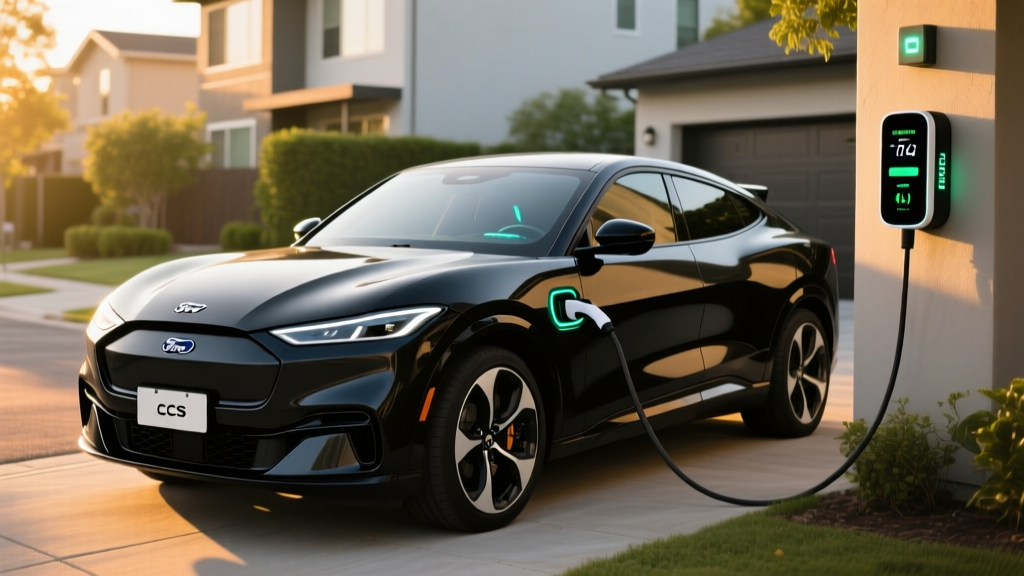
| Level 2 (240V home) | 10.5 kW | NACS | ~30 mi/hr | Full charge overnight (~10 hr for Ext Range) |
| DC Fast Charge | 150 kW peak | NACS (native) | ~180 mi in 30 min (10–80%) | Tapers significantly above 80% SoC |
Ford transitioned the Mach-E to the North American Charging Standard (NACS) port beginning with the 2025 model year, eliminating the need for a CCS-to-NACS adapter at Tesla Superchargers. This is a significant practical advantage in 2026, as the Tesla Supercharger network remains the most reliable and widely available DC fast-charging infrastructure in the US.
The 150 kW peak DC fast-charge rate is the Mach-E's most common criticism. Competitors like the Hyundai Ioniq 5 (peak 240 kW on 800V architecture) and the Kia EV6 (also 800V) can add range substantially faster — a 10–80% charge in roughly 18 minutes versus the Mach-E's 34–41 minutes. On a road trip, that difference compounds: two charging stops means an extra 30–40 minutes total compared to an 800V rival.
The charge curve on the Extended Range NMC battery holds near peak power from roughly 10–45% state of charge, then tapers progressively. Above 80%, charging slows dramatically — Ford's battery management system prioritizes long-term battery health over rapid top-offs. If you need to charge from 80–100% at a DC fast charger, expect that final 20% to take nearly as long as the 10–80% session.
For home charging, the 10.5 kW onboard charger is competitive. A full charge from empty on a 48-amp Level 2 circuit takes approximately 9–10 hours for the Extended Range pack. Most owners who charge nightly from 30–80% will see a full replenishment in 5–6 hours, which is easily manageable with off-peak electricity rates.
Performance and Driving Dynamics
The dual-motor AWD system provides torque to all four wheels with no mechanical linkage between axles — the front and rear motors are independently controlled. This allows the Mach-E AWD to shift torque distribution in milliseconds, improving traction on wet roads and light snow without the efficiency penalty of a traditional mechanical AWD system.
The GT trim's 480 hp and 634 lb-ft of torque deliver genuinely quick acceleration — the 3.5-second 0–60 mph time puts it in sports-car territory. The GT also includes MagneRide adaptive dampers, a sport-tuned suspension, and larger Brembo front brakes. However, the GT's 39 kWh/100 mi efficiency is the worst in the lineup, and its 290-mile EPA range reflects that thirst.
For most buyers, the Premium AWD Extended Range offers the best balance: 346 hp is more than adequate for highway merging and passing, the ride quality is composed, and the 320-mile EPA range gives genuine road-trip flexibility. The steering is weighted well but doesn't communicate at the level of a Porsche Macan EV — this is a comfortable cruiser, not a sports car despite the Mustang badge.
Pricing, Trims, and Federal Tax Credit Eligibility
| Trim | Base MSRP | Destination | Total Before Credit | Est. §30D Credit | Effective Price |
|---|---|---|---|---|---|
| Select AWD (Std Range) | $43,995 | $1,395 | $45,390 | $3,750–$7,500* | $37,890–$41,640 |
| Premium AWD (Ext Range) | $51,995 | $1,395 | $53,390 | $3,750–$7,500* | $45,890–$49,640 |
| GT AWD (Ext Range) | $62,995 | $1,395 | $64,390 | $3,750–$7,500* | $56,890–$60,640 |
*Credit amount depends on battery component and critical-mineral sourcing compliance under IRS §30D rules. The full $7,500 requires meeting both the battery-component ($3,750) and critical-minerals ($3,750) requirements. Partial credit of $3,750 applies if only one requirement is satisfied. Eligibility also depends on buyer income caps and MSRP limits.
§30D Federal Tax Credit Requirements (2026):
- MSRP cap: SUVs/crossovers must be under $80,000 — all Mach-E AWD trims qualify.
- Buyner income cap: AGI must not exceed $150,000 (single), $225,000 (head of household), or $300,000 (married filing jointly).
- Battery sourcing: Battery components must be manufactured or assembled in North America; critical minerals must be sourced from the US or a free-trade-agreement partner. Ford has been progressively re-shoring supply chains, but exact compliance varies by production batch.
- Point-of-sale transfer: As of 2024, the credit can be transferred to the dealer at purchase, reducing your out-of-pocket cost immediately rather than waiting for a tax refund.
- Verification: Always check the specific VIN on the IRS portal before purchase. Consult a tax professional for your individual situation.
The Standard Range Select AWD with its LFP battery may face different sourcing requirements than the NMC Extended Range variants, as LFP cells have historically been sourced from Chinese manufacturers (primarily CATL). Ford has been working to qualify LFP packs under §30D, but buyers should verify credit eligibility for their specific build at the time of purchase.
Interior, Cargo, and Technology
The Mach-E's interior is one of its stronger selling points compared to some competitors. Materials quality in the Premium and GT trims is genuinely upscale — soft-touch surfaces, synthetic suede accents, and well-damped switchgear. The Select trim uses more hard plastics but still feels solidly assembled.
Cargo volume:
- Behind rear seats: 29.7 cu ft
- Rear seats folded: 59.7 cu ft
- Front trunk (frunk): 4.7 cu ft (drainable, useful for wet gear or groceries)
Passenger space:
- Front legroom: 43.3 inches
- Rear legroom: 38.9 inches
- Front headroom: 40.4 inches
- Rear headroom: 38.2 inches
Rear-seat space is competitive with the Tesla Model Y and slightly more generous than the Hyundai Ioniq 5 in legroom, though the Ioniq 5's flat floor gives middle-seat passengers an advantage. The Mach-E's sloping roofline reduces rear headroom for taller passengers compared to boxier competitors.
The infotainment system runs Ford's SYNC 4A on a vertically oriented 15.5-inch touchscreen. Wireless Apple CarPlay and Android Auto are standard. The interface is responsive and logically organized, though some climate controls are buried in submenus. Ford's BlueCruise hands-free driving system (SAE Level 2) is available on divided highways — it's competent for long-distance cruising but requires driver attention at all times and does not make the vehicle autonomous.
Pros and Cons: The Honest Assessment
Pros
- Native NACS port — direct Tesla Supercharger access without adapter
- Comfortable, well-built interior with strong cargo utility
- Competitive real-world range on Extended Range trims (260–285 mi highway)
- Heat pump standard on Extended Range — better cold-weather efficiency
- BlueCruise hands-free highway driving is well-calibrated
- Extensive Ford dealer network for service and warranty work
- Drainable frunk is genuinely useful
- All trims under the $80,000 MSRP cap for §30D credit
Cons
- 150 kW peak DC charging is slow vs. 800V competitors (Ioniq 5, EV6, Macan EV)
- Standard Range LFP battery may limit federal tax credit eligibility
- GT trim sacrifices significant range and efficiency for performance
- Rear headroom is tight for passengers over 6'2"
- No 800V architecture planned — charging speed unlikely to improve in this generation
- Base price has climbed steadily; Select AWD now over $43,000 before incentives
Who Should Buy the Mustang Mach-E AWD?
Choose the Mach-E AWD if:
- You live in a region with real winters and need confident AWD traction
- You want Tesla Supercharger access but prefer a traditional crossover driving position and interior
- You prioritize ride comfort and cabin quietness over maximum charging speed
- You need 29+ cu ft of cargo space with a usable frunk
- You want a mainstream brand with a nearby dealer for service
Look elsewhere if:
- You take frequent 400+ mile road trips and want the fastest possible charging (consider Ioniq 5 or EV6)
- You need third-row seating (consider Kia EV9 or Rivian R1S)
- You want maximum range per dollar (consider Tesla Model Y Long Range AWD)
- You need a flat rear floor for three-across child seats (consider Ioniq 5)
Warranty and Long-Term Ownership
Ford covers the Mach-E's high-voltage battery and electric powertrain components for 8 years or 100,000 miles, whichever comes first. The battery warranty guarantees the pack will retain at least 70% of its original capacity during that period. If degradation exceeds 30%, Ford will repair or replace the battery at no cost.
The bumper-to-bumper limited warranty is 3 years / 36,000 miles, which is average for the segment. Ford's NMC battery chemistry (Extended Range trims) has demonstrated relatively mild degradation in real-world fleet data — most owners report 3–6% capacity loss after 60,000 miles, which is within normal expectations for liquid-cooled NMC packs.
The LFP battery in the Standard Range trim has a different degradation profile. LFP chemistry is known for superior cycle life and less capacity fade over time, but it also has lower energy density (hence the smaller 72 kWh pack) and performs less well in extreme cold without preconditioning. LFP packs also prefer to be charged to 100% regularly, unlike NMC which benefits from staying between 20–80% for daily use.
Frequently Asked Questions
What is the real-world range of the Mustang Mach-E AWD?
The EPA rates the Premium AWD Extended Range at 320 miles combined. In real-world mixed highway driving at moderate temperatures, expect 260–285 miles. In sustained cold weather (below 32°F), plan for 220–245 miles. The Standard Range AWD delivers roughly 205–220 real-world highway miles.
How fast does the Mustang Mach-E AWD charge?
DC fast charging peaks at 150 kW, with a 10–80% session taking approximately 34 minutes (Standard Range) or 41 minutes (Extended Range). At home on a 240V Level 2 charger (10.5 kW), expect roughly 30 miles of range per hour of charging, or a full overnight charge in 9–10 hours for the Extended Range battery.
Does the Mustang Mach-E AWD qualify for the federal EV tax credit?
All trims fall under the $80,000 SUV MSRP cap. However, the full $7,500 credit depends on meeting both battery-component and critical-mineral sourcing requirements under IRS §30D. The Extended Range NMC variants have stronger North American supply-chain compliance, while the Standard Range LFP battery may only qualify for $3,750 (partial credit) depending on production batch. Buyer income caps also apply. Always verify your specific VIN on the IRS portal before purchase.
Is the Mustang Mach-E AWD worth buying vs. the Tesla Model Y or Hyundai Ioniq 5?
The Mach-E AWD trades peak charging speed and maximum range for a more traditional, comfortable crossover experience with strong build quality and native Supercharger access. If charging speed is your top priority, the Ioniq 5 (800V, ~18 min 10–80%) wins. If you want the most range and the lowest price, the Model Y Long Range AWD is hard to beat. The Mach-E sits in the middle — a compelling all-rounder with the best dealer support network of the three.
What are the biggest drawbacks of the Mach-E AWD?
The 150 kW DC fast-charge ceiling is the most significant limitation. On road trips with multiple charging stops, you'll spend 15–20 more minutes per stop compared to 800V competitors. The rising base price is also a concern — the Select AWD now starts above $43,000 before any incentives, which narrows its value proposition against aggressively priced rivals.
How does the Mach-E AWD handle in snow and ice?
The dual-motor eAWD system provides excellent traction in winter conditions. Combined with standard all-season tires (or optional winter tires), the Mach-E AWD is one of the more capable electric crossovers in snow. The heat pump on Extended Range trims also helps preserve range when running cabin heat, which is critical in cold climates.
What battery chemistry does the Mach-E AWD use?
The Standard Range AWD uses a 72 kWh LFP (lithium iron phosphate) battery, which offers longer cycle life and better tolerance for 100% daily charging. The Extended Range AWD and GT use a 91 kWh NMC (nickel manganese cobalt) pack, which provides higher energy density and better cold-weather performance but benefits from being kept between 20–80% for daily use.
For the latest EPA ratings and efficiency data, see the official listing at fueleconomy.gov. For current federal tax credit eligibility, consult the IRS Clean Vehicle Credits page and verify your VIN before purchase.