Quick Verdict: The Mach-E Matures Into a Well-Rounded Electric Crossover
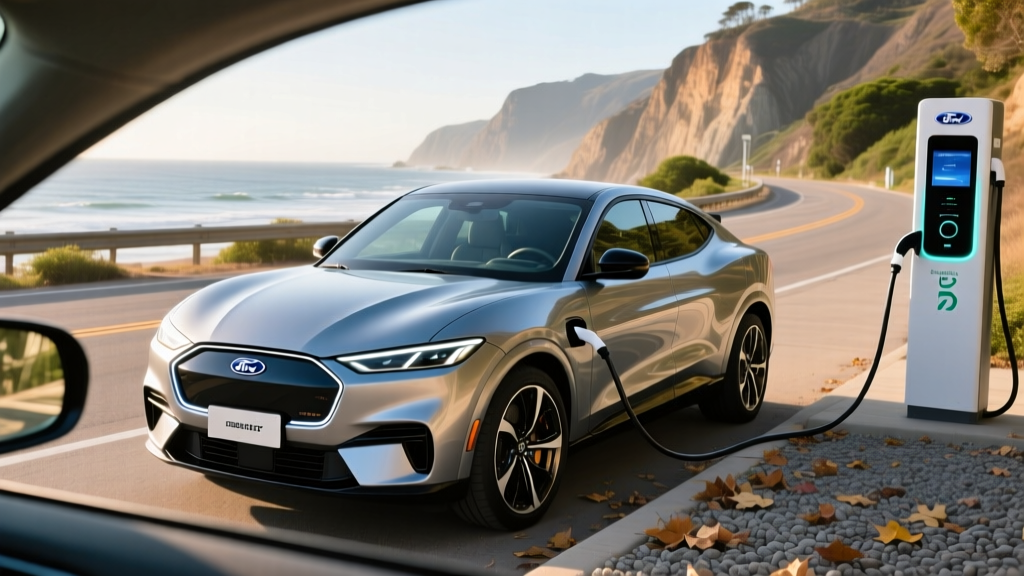
The Ford Mustang Mach-E enters the 2026 model year as one of the most established entries in the electric crossover segment. After years of iterative software updates, battery refinements, and the addition of the NACS charge port as standard equipment, the Mach-E has settled into its identity: a practical, engaging-to-drive family EV that prioritizes usable range and charging convenience over headline-grabbing performance numbers. With EPA-estimated range stretching up to 320 miles on the Extended Range RWD configuration, DC fast-charging speeds up to 150 kW, and access to Tesla's Supercharger network via the native NACS port, the 2026 Mach-E makes a compelling case for buyers cross-shopping the Tesla Model Y, Hyundai Ioniq 5, and Chevrolet Blazer EV.
But the Mach-E isn't without trade-offs. Its DC fast-charging speed trails rivals like the Ioniq 5's 800-volt architecture, rear-seat headroom is tighter than some competitors, and Ford's BlueCruise driver-assist system—while competent—requires a subscription after the initial trial period. Let's break down exactly what you're getting, what it costs, and whether the Mach-E belongs on your shortlist.
Range, Battery, and Real-World Efficiency
The 2026 Mustang Mach-E is offered with two battery packs across multiple drivetrain configurations. The Standard Range pack is a 72 kWh (usable) lithium-ion unit using NMC (nickel manganese cobalt) chemistry, while the Extended Range pack bumps usable capacity to 91 kWh, also NMC. Ford does not offer an LFP (lithium iron phosphate) option in the Mach-E lineup, meaning buyers should follow the 80% daily charge recommendation for long-term battery health rather than routinely charging to 100%.
| Specification | SR RWD | ER RWD | ER AWD | GT (AWD) |
|---|---|---|---|---|
| Battery (usable kWh) | 72 kWh NMC | 91 kWh NMC | 91 kWh NMC | 91 kWh NMC |
| EPA Range | ~230 mi | ~320 mi | ~290 mi | ~270 mi |
| Horsepower | 266 hp | 290 hp | 346 hp | 480 hp |
| 0-60 mph | ~5.8 sec | ~5.5 sec | ~4.8 sec | ~3.5 sec |
| MPGe (combined) | ~100 MPGe | ~104 MPGe | ~98 MPGe | ~84 MPGe |
| Drivetrain | RWD (single motor) | RWD (single motor) | AWD (dual motor) | AWD (dual motor) |
| Base MSRP | ~$42,000 | ~$46,000 | ~$49,000 | ~$60,000 |
Real-World Range: What to Actually Expect
EPA Sticker: Up to 320 miles (Extended Range RWD)
Highway driving (70-75 mph): Expect roughly 250-270 miles before needing to charge. The Mach-E's aerodynamic profile helps, but EV efficiency drops noticeably at sustained highway speeds.
Cold weather (below 32°F): Plan for 20-30% range reduction. A 320-mile EPA rating can fall to 220-250 miles in freezing temperatures without preconditioning. Using the Mach-E's heat pump (standard on 2026 models) and preconditioning the battery while plugged in will mitigate losses.
City/commuter driving: You'll meet or slightly exceed the EPA estimate thanks to regenerative braking and lower average speeds.
Efficiency on the Extended Range RWD model sits at approximately 104 MPGe combined, translating to about 32 kWh per 100 miles. That's competitive with the Model Y Long Range but a few points behind the Hyundai Ioniq 5's class-leading efficiency. On the GT trim, aggressive tuning and heavier curb weight drop efficiency to roughly 84 MPGe—a meaningful difference if you prioritize range over acceleration.
Charging Speed: DC Fast, Level 2, and Home Setup
For 2026, Ford equips every Mach-E with a native NACS (North American Charging Standard) charge port, eliminating the need for the CCS-to-NACS adapter that early adopters relied on. This gives Mach-E owners direct access to Tesla's Supercharger network—the most extensive and reliable DC fast-charging infrastructure in the U.S.—without any intermediary hardware.
| Charging Level | Power / Rate | Speed (Miles Added) | Notes |
|---|---|---|---|
| Level 1 (120V household) | ~1.4 kW | ~3-4 mi/hr | Emergency/trickle only; full charge takes days |
| Level 2 (240V home/public) | 10.5 kW (onboard charger) | ~30-35 mi/hr | Full ER charge in ~9-10 hours; SR in ~7 hours |
| DC Fast Charge (peak) | 150 kW max | ~59 mi in 10 min (Ford est.) | 10-80% in ~45 minutes; tapers significantly above 80% |
The Mach-E's 150 kW peak DC fast-charging rate is its most debated specification. While adequate for most road-trip scenarios—adding roughly 150-180 miles of range in a 30-minute stop—it falls well short of the Hyundai Ioniq 5's 240 kW peak (enabled by its 800-volt architecture, which achieves 10-80% in about 18 minutes). On a 300-mile road trip, the Mach-E will require slightly longer charging stops, typically 40-50 minutes for a 10-80% session, compared to the Ioniq 5's sub-20-minute pit stops.
The charge curve matters more than peak numbers suggest. The Mach-E sustains roughly 130-150 kW between 10-50% state of charge, then tapers to approximately 80-90 kW through 70%, and drops further to 40-50 kW above 80%. This taper is typical of NMC batteries in 400-volt architectures, and it means charging past 80% at a DC fast charger is rarely time-efficient. Set your charge limit to 80% on road trips and top off at your destination or next stop.
For home Level 2 charging, the Mach-E's 10.5 kW onboard charger is a strong point. Connected to a 48-amp Level 2 wall connector on a 60-amp circuit, you'll add roughly 30-35 miles of range per hour—enough to fully replenish the Extended Range battery overnight. Home installation of a Level 2 charger typically costs $500-$2,000 depending on panel proximity, conduit runs, and whether your electrical panel needs an upgrade to 200 amps. Consult a licensed electrician for a site-specific quote.
Performance, Driving Dynamics, and Daily Usability
The Mach-E's driving experience remains one of its strongest selling points. Ford's chassis tuning delivers responsive steering, minimal body roll, and a ride quality that balances comfort with engagement—a rarity in the electric crossover class. The GT trim's 480 horsepower and 3.5-second 0-60 time provide genuine sports-car acceleration, while the more affordable RWD models still deliver confident merging and passing power.
One-pedal driving is available via a dedicated button on the center console, and the regenerative braking system is well-calibrated—strong enough for daily commuting without being abrupt. The Mach-E also offers a "Whisper," "Engage," and "Unbridled" drive mode system that adjusts throttle response, steering weight, and even simulated engine sounds (which most owners disable within the first week).
Cargo and Passenger Space
Interior practicality is solid but not class-leading:
- Rear cargo volume: 29.7 cu ft (behind second row); 59.7 cu ft (second row folded)
- Front trunk (frunk): 4.7 cu ft — small but useful for charging cables or a soft bag
- Rear legroom: 38.9 inches — adequate for adults, though the sloping roofline cuts headroom for passengers over 6 feet
- Front legroom: 43.3 inches — generous and comfortable for long drives
Compared to the Tesla Model Y, the Mach-E gives up roughly 6 cu ft of rear cargo space and a couple of inches of rear headroom. If maximum cargo utility is your priority, the Model Y or Hyundai Ioniq 5 (with its flat floor and boxier profile) may serve you better. For a couple or small family, the Mach-E's dimensions are more than sufficient.
Pricing, Trims, and Federal Tax Credit Eligibility
The 2026 Mustang Mach-E lineup spans four primary trims, with pricing that positions it competitively in the mid-$40,000 to low-$60,000 range before incentives:
| Trim | Base MSRP | Est. After §30D Credit* | Key Features |
|---|---|---|---|
| Select (SR RWD) | ~$42,000 | ~$34,500 | Base model, 230 mi range, 15.5" touchscreen |
| Premium (ER RWD) | ~$48,000 | ~$40,500 | 320 mi range, panoramic roof, upgraded audio |
| California Route 1 (ER AWD) | ~$50,000 | ~$42,500 | AWD, unique styling, all-weather package |
| GT (AWD) | ~$60,000 | ~$52,500 | 480 hp, MagneRide suspension, sport seats |
*Tax credit estimates assume full eligibility under IRS §30D rules. Actual credit amounts vary.
Does the 2026 Mach-E Qualify for the Federal EV Tax Credit?
The federal EV tax credit under IRS §30D can provide up to $7,500 for eligible buyers purchasing a new qualifying EV. However, eligibility is not automatic—it depends on multiple factors that change periodically:
- MSRP cap: SUVs (including the Mach-E) must have an MSRP at or below $80,000. All 2026 Mach-E trims clear this threshold.
- Buyer income limits: Modified adjusted gross income (MAGI) must not exceed $150,000 (single), $225,000 (head of household), or $300,000 (joint filers).
- Battery sourcing requirements: The credit splits into two halves ($3,750 each): one tied to critical minerals sourcing and one to battery component manufacturing. As of 2026, vehicles with battery components or critical minerals from "foreign entities of concern" (FEOC) may lose partial or full eligibility. Ford has worked to North American-ize its supply chain, but confirm current eligibility on fueleconomy.gov before purchasing.
- Point-of-sale transfer: Eligible buyers can now transfer the credit to the dealer at purchase, reducing the out-of-pocket price immediately rather than waiting to claim it on their tax return.
Because sourcing rules tighten annually and are subject to regulatory updates, always verify your specific eligibility with a tax professional and the latest IRS guidance before finalizing a purchase.
Tech, Driver Assists, and Notable Drawbacks
The Mach-E's interior centers on a massive 15.5-inch portrait-oriented touchscreen running Ford's SYNC 4A infotainment system. The interface is responsive, supports wireless Apple CarPlay and Android Auto, and includes over-the-air (OTA) update capability. Physical buttons are minimal—climate controls are integrated into the touchscreen via a strip at the bottom of the display, which some drivers find distracting while in motion.
Ford's BlueCruise hands-free driver-assist system is available on equipped trims and operates on over 130,000 miles of pre-mapped divided highways. BlueCruise is an SAE Level 2 system, meaning the driver must remain attentive and ready to take over at any moment—it is not autonomous driving. In practice, BlueCruise performs well for highway cruising, with smooth lane centering and confident adaptive cruise control. However, it requires a paid subscription after the initial complimentary trial (typically 90 days to 2 years depending on trim and promotion), which adds $75/month or $800/year to ownership costs.
BlueCruise Limitations
BlueCruise is a Level 2 driver-assist system, not a self-driving feature. It operates only on pre-mapped divided highways. You must keep your eyes on the road (a driver-monitoring camera enforces this). It does not handle construction zones, unmapped roads, inclement weather, or complex urban driving. You are legally and physically responsible for the vehicle at all times.
Pros
- Up to 320 miles EPA range (ER RWD) — sufficient for most road trips
- Native NACS port — direct Supercharger access without adapter
- Engaging driving dynamics with responsive steering
- Strong Level 2 home charging (10.5 kW / ~32 mi/hr)
- Competitive pricing after tax credits
- Heat pump standard for cold-weather efficiency
Cons
- 150 kW DC fast-charging peak trails 800V rivals (Ioniq 5, EV6)
- BlueCruise requires ongoing subscription after trial
- Rear headroom limited by coupe-like roofline
- Climate controls embedded in touchscreen
- No LFP battery option (NMC requires 80% daily charge limit)
- Frunk is small (4.7 cu ft) compared to some competitors
Warranty and Long-Term Ownership
Ford backs the 2026 Mach-E's battery and electric powertrain components with an 8-year / 100,000-mile warranty, which is standard for the industry and matches competitors like Hyundai, Tesla, and Chevrolet. The warranty covers battery capacity degradation below 70% of original capacity—if your battery falls below that threshold within the warranty period, Ford will repair or replace it.
The bumper-to-bumper limited warranty covers 3 years / 36,000 miles. For buyers concerned about long-term battery health, NMC chemistry in the Mach-E has shown moderate degradation curves in real-world data: owners typically report 5-8% capacity loss over the first 100,000 miles, which is within normal expectations. Following best practices—avoiding frequent DC fast charging, keeping daily SoC between 20-80%, and preconditioning in extreme temperatures—will help maximize battery longevity.
According to IIHS testing, the Mach-E has earned strong safety ratings, and NHTSA provides additional crash-test data for reference.
Who Should Buy the 2026 Mustang Mach-E?
Choose the Mach-E If:
- You want a well-rounded electric crossover with engaging driving dynamics and proven reliability
- Supercharger access matters to you, and you prefer a native NACS port over using adapters
- Your daily commute is under 100 miles round-trip, and you road-trip 3-5 times per year
- You value a traditional automotive dealership experience for service and support
Look Elsewhere If:
- Fastest possible DC charging is a priority (consider the Ioniq 5 or EV6 with 800V architecture)
- You need maximum rear cargo space (the Model Y or Kia EV9 offer more)
- You prefer an LFP battery for its longevity and 100% daily charging tolerance (consider the Tesla Model Y Standard Range)
- You want the longest possible range without stopping (the Lucid Gravity or Rivian R1S exceed 350+ miles)
Frequently Asked Questions
What is the real-world range of the 2026 Mustang Mach-E?
The EPA rates the Extended Range RWD model at approximately 320 miles. In real-world highway driving at 70-75 mph, expect 250-270 miles. In cold weather (below freezing), plan for 220-250 miles unless you precondition the battery while plugged in. City and commuter driving will closely match or slightly exceed the EPA estimate.
How fast does the Mach-E charge at home and on the road?
At home on a Level 2 (240V, 48-amp) charger, the Mach-E adds roughly 30-35 miles of range per hour, fully charging the Extended Range battery in about 9-10 hours. On DC fast chargers, it peaks at 150 kW, achieving a 10-80% charge in approximately 45 minutes. Charging slows significantly above 80%, so plan stops around the 80% mark for efficiency.
How much does the 2026 Mach-E cost after the federal tax credit?
Base pricing starts around $42,000 for the Select SR RWD trim and reaches approximately $60,000 for the GT. If you qualify for the full $7,500 federal tax credit under IRS §30D (subject to income, MSRP, and battery-sourcing rules), effective pricing drops to roughly $34,500-$52,500 depending on trim. Always verify current eligibility on fueleconomy.gov and with a tax professional.
Is the Mach-E worth buying versus the Tesla Model Y or Hyundai Ioniq 5?
The Mach-E offers a strong balance of range, driving engagement, and Supercharger access. The Model Y provides more cargo space, slightly better efficiency, and a more extensive proprietary service network. The Ioniq 5 charges significantly faster (10-80% in ~18 minutes) and offers a more distinctive design. The Mach-E is the right pick if you value traditional dealership service, engaging handling, and competitive range without compromising on charging-network access.
Does the 2026 Mach-E qualify for the $7,500 federal EV tax credit?
All 2026 Mach-E trims fall under the $80,000 MSRP cap for SUVs. Eligibility then depends on your income (MAGI limits apply), the vehicle's battery component and critical-mineral sourcing compliance, and whether you purchase new (not leased). Because sourcing rules evolve, check the latest qualification list on fueleconomy.gov and consult a tax professional before relying on the credit in your purchase decision.
What is the battery warranty on the Mach-E?
Ford provides an 8-year / 100,000-mile warranty on the battery and electric powertrain components, covering capacity loss below 70% of original capacity. This is industry-standard and matches most competitors.