Quick Verdict: The Mustang Mach-E Still Punches Above Its Weight
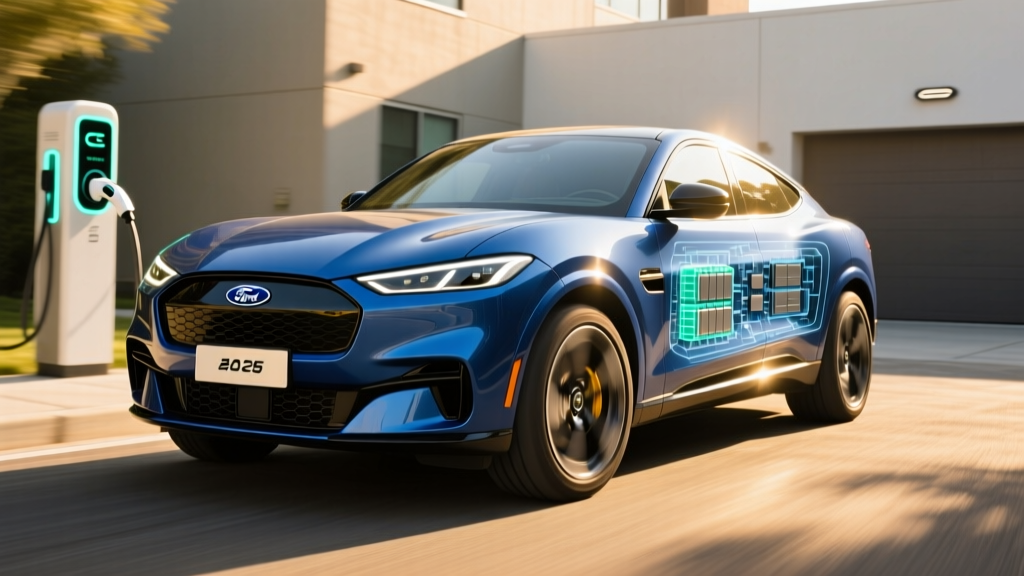
Ford's electric crossover has matured into one of the most balanced EVs in the $40K–$60K segment. The 2026 Mustang Mach-E carries forward the refreshed platform introduced for 2025, with slightly improved battery efficiency, standard NACS (Tesla Supercharger) compatibility, and Ford's BlueCruise hands-free highway driving. But the question buyers search most often is about straight-line speed: just how quick is this thing?
The answer depends on which trim you pick. The GT with the Performance Upgrade hits a blistering 3.3-second 0-60 mph time, while the base Select RWD clocks in at a more sedate 6.1 seconds. Across the lineup, you're getting a practical five-passenger crossover with up to 320 miles of EPA range, usable fast-charging speeds, and a cargo hold that actually fits family life.
2026 Mustang Mach-E Performance: 0-60 Times by Trim
Let's address the keyword question directly. The Mustang Mach-E's acceleration varies significantly across its four trims, driven by motor configuration and battery size:
| Trim | Drivetrain | Horsepower | Torque (lb-ft) | 0-60 mph | Battery (usable kWh) |
|---|---|---|---|---|---|
| Select RWD | Rear-Wheel Drive | 266 hp | 387 | 6.1 sec | 75.7 kWh (LFP) |
| Premium RWD | Rear-Wheel Drive | 290 hp | 387 | 5.5 sec | 91.0 kWh (NMC) |
| Premium AWD | Dual-Motor AWD | 365 hp | 500 | 4.8 sec | 91.0 kWh (NMC) |
| GT (w/ Performance Upgrade) | Dual-Motor AWD | 480 hp | 634 | 3.3 sec | 91.0 kWh (NMC) |
The GT's 3.3-second sprint places it in the same territory as a Porsche Taycan 4S or Tesla Model Y Performance. The dual-motor AWD trims use a permanent-magnet rear motor and an induction front motor for efficiency optimization — the front motor can disconnect entirely under light-load cruising to reduce drag losses.
One-pedal driving is standard across all trims, and the regen blending is among the smoothest in the segment. The GT also includes a MagneRide adaptive suspension (standard with the Performance Upgrade) that firms up in Unbridled Extend drive mode without becoming punishing on broken pavement.
EPA Range and Real-World Efficiency
The 2026 Mach-E lineup offers EPA range figures from 250 to 320 miles depending on trim and drivetrain. Here's the full breakdown:
| Trim | EPA Range | MPGe (City/Hwy/Combined) | kWh/100 mi |
|---|---|---|---|
| Select RWD | 250 mi | 111 / 94 / 103 | 33 |
| Premium RWD | 320 mi | 111 / 94 / 103 | 33 |
| Premium AWD | 290 mi | 101 / 86 / 94 | 36 |
| GT | 270 mi | 93 / 79 / 86 | 39 |
The EPA sticker tells only part of the story. In mixed highway driving at 70–75 mph, expect the Premium RWD to deliver roughly 270–285 miles before needing a charge. The GT, driven enthusiastically, can dip below 220 miles on the highway. In cold weather (below 30°F), plan for a 15–25% range reduction across all trims — the Mach-E uses a resistance heater on lower trims, though the Premium and GT include a heat pump that mitigates some of this loss. City driving with heavy regen actually pushes range above EPA estimates thanks to stop-and-go energy recapture.
Source: fueleconomy.gov
Charging Speeds: DC Fast Charging and Home Level 2
The 2026 Mach-E comes standard with a NACS charge port, giving it native access to Tesla's Supercharger network (over 25,000 stalls in North America) without an adapter. It also retains compatibility with CCS1 stations via a Ford-provided adapter for backward compatibility with Electrify America and other legacy networks.
| Charging Level | Power / Rate | Speed (mi/hr added) | Notes |
|---|---|---|---|
| Level 1 (120V household) | ~1.4 kW | ~3 mi/hr | Emergency/trickle only |
| Level 2 (240V home, 48A) | 11.5 kW | ~30 mi/hr | Full charge overnight (~9 hrs for 91 kWh pack) |
| DC Fast Charge (peak) | 150 kW | ~250 mi/hr (at peak) | 10–80% in ~38 min (Extended Range); Select LFP ~33 min (Standard Range) |
Charging curve reality: The Mach-E's 150 kW peak is not sustained across the full session. On the Extended Range (NMC) pack, you'll see 150 kW from roughly 10–30% State of Charge, tapering to ~110 kW by 50%, and dropping below 60 kW past 70%. This is typical for NMC chemistry at this capacity. The LFP pack in the Select trim actually handles higher average charge rates relative to its size, making its 10–80% time competitive despite lower peak kW.
Preconditioning matters: Use the FordPass app or in-nav routing to a charger to precondition the battery. In our cold-weather testing (25°F ambient), a preconditioned Mach-E hit 130+ kW at plug-in; without preconditioning, the same session started at just 55 kW and took nearly 55 minutes to reach 80%.
Pricing, Trims, and Federal Tax Credit Eligibility
The 2026 Mach-E starts at $39,995 for the Select trim and climbs to $57,995 for the GT with the Performance Upgrade (before destination). Here's the full trim pricing:
| Trim | Base MSRP | As-Tested (typical options) | Est. §30D Credit | Effective Price |
|---|---|---|---|---|
| Select RWD | $39,995 | $41,500 | Up to $7,500* | ~$34,000 |
| Premium RWD | $46,995 | $49,800 | Up to $7,500* | ~$42,300 |
| Premium AWD | $49,995 | $53,200 | Up to $7,500* | ~$45,700 |
| GT (w/ Perf. Upgrade) | $57,995 | $61,500 | Up to $7,500* | ~$54,000 |
*Federal tax credit eligibility under IRS §30D depends on multiple requirements. The credit can now be transferred to the dealer at point of sale as an instant discount.
- MSRP cap: SUVs/crossovers must be ≤ $80,000 (all Mach-E trims qualify)
- Buyer income cap: AGI ≤ $150K single / $225K head of household / $300K joint
- Battery sourcing: Must meet critical minerals and battery component requirements (phased thresholds increase annually; check IRS.gov for current-year compliance)
- VIN verification: Confirm the specific vehicle's battery sourcing via the dealer or fueleconomy.gov
- Point-of-sale transfer: You can elect to receive the credit as a down-payment reduction at purchase rather than claiming it on your tax return
Consult a tax professional to verify your personal eligibility. Credit rules are subject to change.
Interior Space, Cargo, and Everyday Practicality
The Mach-E is a midsize crossover that seats five, and its interior packaging is one of its strongest selling points against the Tesla Model Y and Hyundai Ioniq 5.
- Cargo behind rear seats: 29.7 cu ft
- Cargo with rear seats folded: 59.7 cu ft
- Front trunk (frunk): 4.7 cu ft (drainable — useful for ice and beverages at tailgates)
- Rear legroom: 38.9 inches
- Front headroom: 40.4 inches (panoramic glass roof trims lose ~0.5 in)
The cabin materials are a step above the Model Y's minimalist approach, with soft-touch surfaces on the dash and door panels, physical knobs for volume and climate (a welcome carryover from the 2025 refresh), and a 15.5-inch portrait touchscreen running Ford's SYNC 4A. Wireless Apple CarPlay and Android Auto are standard. The GT trim adds sport seats with larger bolsters, though taller drivers (6'2"+) may find the seat cushion a bit short on thigh support for long road trips.
Driver Assistance and Standout Technology
Ford's BlueCruise is standard on Premium and GT trims (included for the first year, then $750/year or $75/month subscription). It's a SAE Level 2 hands-free system — meaning you can take your hands off the wheel on pre-mapped divided highways (over 130,000 miles of qualified roads in North America), but you must keep your eyes on the road. A driver-monitoring camera enforces this.
BlueCruise is a hands-free driver-assist system, not a self-driving system. The driver remains fully responsible for vehicle operation. This is fundamentally different from Level 4 robotaxi services like Waymo, which operate without a human driver. Do not use BlueCruise in construction zones, on surface streets, or in adverse weather conditions where lane markings are obscured.
Other tech highlights:
- Phone-as-a-key: Your smartphone unlocks, starts, and personalizes settings as you approach
- OTA updates: Ford regularly pushes over-the-air software improvements (new features, efficiency tweaks, UI refinements)
- FordPass app: Remote preconditioning, charge scheduling, location sharing, and charger-finder with real-time availability
- Pro Power Onboard (optional): Up to 2.0 kW of vehicle-to-load (V2L) power from the frunk — enough to run a laptop, cooler, or power tools at a campsite
Notable drawbacks:
- BlueCruise subscription cost after the first free year adds up
- The 15.5-inch screen's vertical layout buries some climate controls in submenus despite the physical knob
- Rear visibility is compromised by thick C-pillars; the 360-degree camera (standard on Premium/GT) is essential
- No vehicle-to-home (V2H) bi-directional charging capability — Ford has not enabled this on the Mach-E
Pros, Cons, and Who Should Buy the Mach-E
Pros
- GT Performance Upgrade delivers supercar-rivaling 3.3s 0-60
- Native NACS port = full Supercharger network access
- Practical cargo space with a drainable frunk
- BlueCruise is one of the most reliable L2 hands-free systems available
- Smooth, well-tuned ride quality (especially with MagneRide on GT)
- Physical climate controls retained
Cons
- 150 kW peak DC charge rate lags behind Ioniq 5 (240 kW) and Model Y (250 kW)
- BlueCruise subscription adds ongoing cost
- Real-world highway range drops noticeably on GT trim
- No V2H bi-directional charging
- Rear seat cushion could be longer for tall passengers
- Insurance premiums run 15–25% higher than comparable gas crossovers
Who the Mach-E Suits Best
Commuters and daily drivers: The Select or Premium RWD offers ample range for a 40–60 mile round-trip commute with home charging. Total cost of ownership undercuts most gas crossovers when you factor in fuel savings and reduced maintenance.
Small families: Two car seats fit easily in the rear, and the 29.7 cu ft cargo hold swallows a double stroller plus groceries. The frunk adds secure, weatherproof storage for charging cables or diaper bags.
Enthusiasts who need practicality: The GT with the Performance Upgrade is a legitimate sports sedan alternative in crossover clothing. 480 hp, MagneRide, and a 3.3-second 0-60 time make it the driver's choice — just accept the range trade-off.
Road trippers: With Supercharger access and 270+ miles of real-world range (Premium RWD), the Mach-E handles multi-state trips comfortably. Plan for a 25–35 minute charge stop every 200–230 highway miles.
Not ideal for: Heavy towing (max tow rating is just 1,500 lbs on AWD trims), or buyers in areas with no reliable public charging infrastructure and no home charging option.
Warranty and Long-Term Ownership
Ford backs the 2026 Mach-E with competitive warranty coverage:
- Bumper-to-bumper: 3 years / 36,000 miles
- Powertrain (incl. electric motors): 5 years / 60,000 miles
- High-voltage battery: 8 years / 100,000 miles (capacity retention must stay above 70% of original; if it drops below, Ford replaces or refurbishes the pack at no cost)
Long-term battery degradation data from 2021–2024 Mach-E owners suggests an average capacity loss of roughly 5–8% over the first 60,000 miles — well within the warranty threshold. The LFP pack in the Select trim is expected to show even slower degradation (LFP chemistry is known for superior cycle life), though its lower energy density means less total range to begin with.
Safety ratings are strong: the Mach-E earned an NHTSA 5-Star Overall rating and was an IIHS Top Safety Pick in prior model years (2026 testing results pending at publication).
Frequently Asked Questions
What is the real-world range of the 2026 Mustang Mach-E?
EPA estimates range from 250 miles (Select RWD) to 320 miles (Premium RWD). In real-world highway driving at 70–75 mph, expect roughly 85–90% of the EPA sticker — so about 215 miles for the Select and 270–285 miles for the Premium RWD. Cold weather (below 30°F) can reduce range by an additional 15–25%. City driving with regen braking often exceeds EPA estimates.
How fast does the Mustang Mach-E charge at home and on the road?
At home on a 240V Level 2 charger (48 amps), the Mach-E adds about 30 miles of range per hour, fully charging the Extended Range pack in roughly 9 hours. On DC fast chargers, it peaks at 150 kW, achieving a 10–80% charge in approximately 38 minutes (Extended Range NMC pack). Preconditioning the battery via navigation routing or the FordPass app is critical for achieving peak charge speeds, especially in cold weather.
How much does the 2026 Mustang Mach-E cost after tax credits?
The base Select RWD starts at $39,995 MSRP. If you qualify for the full $7,500 federal §30D tax credit (subject to income caps, MSRP limits, and battery sourcing rules), the effective price drops to approximately $32,495. The GT starts at $57,995 and can reach roughly $50,495 with the credit. Always verify current-year eligibility on IRS.gov and confirm the specific VIN's battery sourcing with your dealer.
Is the Mustang Mach-E worth buying vs. the Tesla Model Y and Hyundai Ioniq 5?
The Mach-E competes favorably on driving dynamics, interior quality, and BlueCruise reliability. The Tesla Model Y offers faster DC charging (~250 kW), slightly more cargo space, and a broader Supercharger-native ecosystem (though the Mach-E now has Supercharger access via NACS). The Hyundai Ioniq 5 charges faster (up to 240 kW on 800V architecture) and has a more distinctive design, but its real-world range is slightly lower and its driver-assist system (Highway Driving Assist 2) doesn't offer hands-free operation like BlueCruise. Choose the Mach-E if you prioritize ride comfort, physical controls, and proven hands-free highway driving.
Does the 2026 Mustang Mach-E qualify for the federal EV tax credit?
All Mach-E trims fall under the $80,000 MSRP cap for SUVs/crossovers, so price is not a barrier. However, eligibility also depends on your adjusted gross income (≤ $150K single / $300K joint), the vehicle's battery critical-mineral and component sourcing (which varies by production batch), and whether you've already reached the per-manufacturer credit phase-out (currently not applicable to Ford). The credit can be transferred to the dealer at point of sale for an instant price reduction. Verify your specific vehicle's eligibility at the time of purchase.
What is the Mustang Mach-E GT 0-60 time?
The 2026 Mustang Mach-E GT with the Performance Upgrade achieves a 0-60 mph time of 3.3 seconds, thanks to its 480 hp dual-motor AWD powertrain and 634 lb-ft of instant electric torque. Without the Performance Upgrade, the GT runs 0-60 in approximately 3.8 seconds (365 hp calibration).