The Short Answer: Is a BMW All-Electric Vehicle Right for You?
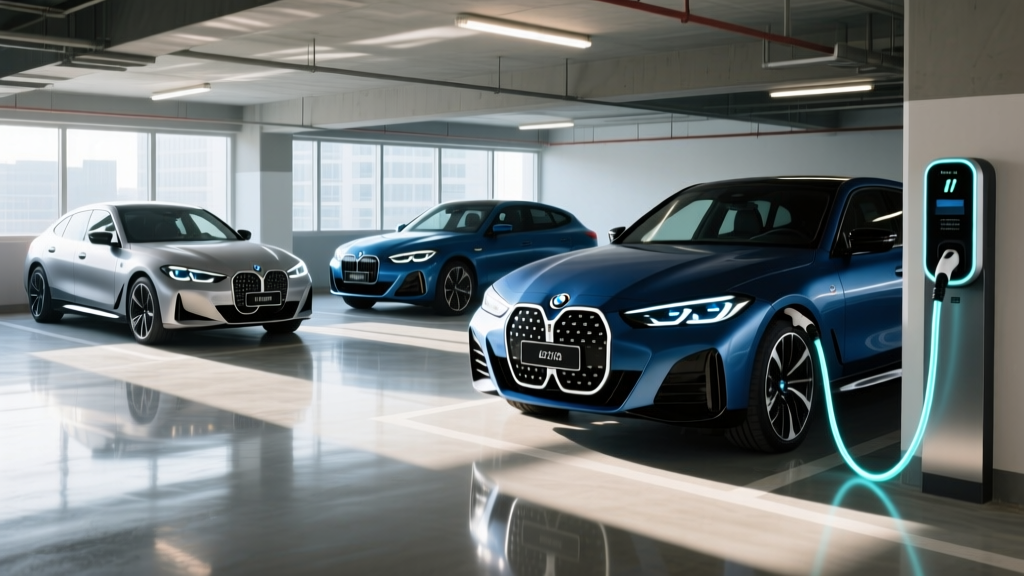
BMW's 2026 all-electric lineup spans five core models — the i4 Gran Coupe, i5 sedan, i7 luxury flagship, iX SUV, and the newly arriving Neue Klasse iX3 — with EPA ranges from 250 to 318 miles and base MSRPs from roughly $52,000 to $105,000+. If you have access to Level 2 home charging, drive under 300 miles daily, and value driving dynamics paired with premium interiors, a BMW all-electric model is a strong contender. However, BMW EVs currently do not qualify for the full $7,500 federal §30D tax credit due to battery-sourcing and MSRP-cap restrictions on several trims, which affects total cost of ownership versus rivals that do. Real-world range in cold weather or sustained highway driving drops 15–25% below EPA stickers — plan accordingly.
BMW's 2026 All-Electric Lineup at a Glance
BMW has committed heavily to electrification under its "Neue Klasse" architecture while continuing to refine models built on the flexible CLAR platform. Here's the current roster with verified specs. Note: kWh measures battery energy capacity (how far you can go); kW measures charging power (how fast you refill).
| Model | Trim | Battery (kWh, usable) | EPA Range | Peak DC Charge (kW) | 10–80% Time | 0–60 mph | HP | Base MSRP |
|---|---|---|---|---|---|---|---|---|
| i4 Gran Coupe | eDrive40 | 81.5 (NMC) | 307 mi | 205 kW | ~31 min | 5.5s | 335 | $52,200 |
| i4 Gran Coupe | M50 | 81.5 (NMC) | 270 mi | 205 kW | ~31 min | 3.7s | 536 | $67,300 |
| i5 Sedan | eDrive40 | 81.2 (NMC) | 295 mi | 205 kW | ~30 min | 5.7s | 335 | $66,800 |
| i5 Sedan | M60 | 81.2 (NMC) | 256 mi | 205 kW | ~30 min | 3.7s | 593 | $84,100 |
| i7 Sedan | xDrive60 | 101.7 (NMC) | 318 mi | 195 kW | ~34 min | 4.5s | 536 | $105,700 |
| iX SUV | xDrive50 | 105.2 (NMC) | 324 mi | 195 kW | ~35 min | 4.4s | 516 | $87,250 |
| iX SUV | M60 | 105.2 (NMC) | 296 mi | 195 kW | ~35 min | 3.6s | 610 | $108,900 |
| iX3 (Neue Klasse) | 50 xDrive (announced) | ~95 (est., NMC Gen6) | ~310 mi (est.) | ~250 kW (est.) | ~22 min (est.) | TBD | TBD | ~$65,000 (est.) |
Sources: fueleconomy.gov, BMW USA product pages. iX3 figures are preliminary estimates for the upcoming Neue Klasse platform; final EPA certification pending.
Real-World Range Reality Check
EPA sticker vs. what you'll actually see: The i4 eDrive40's 307-mile EPA rating assumes mixed driving at moderate temperatures. On a sustained 75 mph highway run in 35°F weather, expect roughly 230–250 miles before needing to charge. In warm city driving with regenerative braking, you may exceed the EPA number slightly. BMW's thermal management system with heat pump (standard on i5, i7, iX) helps mitigate cold-weather losses compared to older EVs, but physics still applies — cold batteries charge slower and consume more energy for cabin heating.
BMW All-Electric vs. Gas and Hybrid: The Numbers
The most common question from shoppers cross-referencing a BMW all-electric model against the gas-powered 3 Series, 5 Series, or X5 is simple: does the math work? Here's a five-year cost projection comparing the i4 eDrive40 against its closest internal-combustion sibling, the 430i Gran Coupe, and the 330e plug-in hybrid.
| Cost Factor (5 years) | i4 eDrive40 (EV) | 430i Gran Coupe (Gas) | 330e PHEV |
|---|---|---|---|
| Base MSRP | $52,200 | $49,800 | $52,900 |
| Federal Tax Credit (§30D) | $0–$3,750* | $0 | $3,750–$7,500* |
| Fuel/Energy (15k mi/yr) | $3,400 (electric, $0.14/kWh avg) | $9,750 ($3.25/gal, 30 mpg) | $5,800 (mixed) |
| Maintenance | $1,800 | $4,500 | $4,000 |
| Insurance (avg) | $12,500 | $10,000 | $10,500 |
| Estimated Depreciation | $22,000 | $18,000 | $20,000 |
| 5-Year Total Cost | ~$67,900–$71,650 | ~$82,050 | ~$75,700–$79,450 |
*Tax credit eligibility depends on battery critical-mineral sourcing, buyer income caps ($150k single/$300k joint), and MSRP limits ($55k sedans/$80k SUVs/vans). The i4 eDrive40 at $52,200 may qualify for partial credit; the i5, i7, and iX exceed sedan MSRP caps. Verify current-year rules at IRS.gov §30D.
The takeaway: The i4 wins on operating costs — saving roughly $6,350 in fuel and $2,700 in maintenance over five years. But higher insurance premiums (~$500/year more) and steeper depreciation on luxury EVs narrow the gap. If you drive more than 15,000 miles annually, the savings widen substantially. If you drive less than 10,000, the gas or PHEV alternative may be more economical.
Charging the BMW All-Electric Fleet: Home and Public
Every current BMW EV uses a NACS (Tesla-style) charge port starting with 2025 model-year production, with CCS1 adapters available for older stock. Here's what charging actually looks like in practice:
| Level | Power (kW) | Miles Added per Hour | Typical Use Case |
|---|---|---|---|
| Level 1 (120V outlet) | 1.4 kW | ~4–5 mi/hr | Overnight trickle; emergency only |
| Level 2 (240V, 48A home) | 11.5 kW | ~33–38 mi/hr | Daily home charging; full overnight refill |
| DC Fast Charge | Up to 205 kW (i4/i5) / 195 kW (i7/iX) | ~180–200 mi in 15 min (peak) | Road trips; 10–80% in ~30–35 min |
Home Charging Installation: What to Budget
A Level 2 home setup is nearly essential for BMW EV ownership unless you have reliable workplace or public charging. Here's a realistic cost breakdown:
| Item | Low End | High End | Notes |
|---|---|---|---|
| Level 2 charger (BMW Wallbox or ChargePoint Home Flex) | $400 | $750 | 48A recommended for BMW's 11 kW onboard charger |
| Electrical panel upgrade (100A → 200A) | $0 (if sufficient) | $3,500 | Older homes often need this; get a licensed electrician's assessment |
| Wiring & labor (50A circuit, 40–80 ft run) | $800 | $2,500 | Varies by distance from panel to garage |
| Permits | $50 | $300 | Required in most jurisdictions |
| Total installed | $1,250 | $7,050 | Average: ~$2,500 for homes with adequate panels |
The Charging Curve Reality
BMW advertises "up to 205 kW" DC fast charging on the i4 and i5 — but that's a peak rate, not a sustained one. In real-world testing, the i4 holds roughly 190–205 kW from 10% to about 35% State of Charge, then tapers progressively: ~150 kW at 50%, ~100 kW at 65%, and below 50 kW past 80%. This is why BMW quotes 10–80% times (~31 minutes) rather than 0–100%. On road trips, plan stops around the 10–80% window for maximum efficiency. Charging from 80–100% can add another 25+ minutes — skip it unless you need every mile for the next leg.
Common BMW EV Misconceptions, Corrected
| Myth | Fact |
|---|---|
| "BMW EVs get the full $7,500 federal tax credit." | Most BMW EVs exceed the §30D MSRP cap ($55,000 for sedans, $80,000 for SUVs). The i4 eDrive40 base qualifies on price but must meet critical-mineral and battery-component sourcing requirements, which vary by production batch. The i5, i7, and iX are above MSRP caps. Always check the IRS qualified vehicle list before purchasing. |
| "The battery will need replacement in 5 years." | BMW provides an 8-year/100,000-mile battery warranty guaranteeing at least 70% capacity retention. Independent fleet data shows NMC batteries in thermally managed BMWs losing approximately 8–12% capacity over 100,000 miles. Full replacements (rarely needed) cost $15,000–$22,000 out of warranty. |
| "I can't take a BMW EV on road trips." | With NACS access to the Tesla Supercharger network (17,000+ stalls in North America) plus Electrify America and other CCS networks via adapter, BMW EVs have among the best public-charging access of any non-Tesla brand. A 400-mile trip in an i4 requires one ~25-minute charge stop. |
| "BMW's driver-assist is self-driving." | BMW's Driving Assistant Professional is an SAE Level 2 system — it combines adaptive cruise and lane-centering but requires continuous driver supervision. BMW's Highway Assistant (available on i5/i7/iX) allows hands-off driving at up to 85 mph on divided highways with eyes-on monitoring, but this remains Level 2, not autonomous. |
| "Cold weather makes BMW EVs unusable." | Cold reduces range 15–25% and slows charging speeds until the battery warms. BMW's preconditioning feature (activated via the iDrive navigation route or app) heats the battery before you arrive at a DC charger, partially mitigating speed loss. Owners in Minnesota and Norway report reliable year-round use with adjusted expectations. |
SAE Automation Level: What BMW Actually Offers
BMW Highway Assistant = SAE Level 2. The vehicle handles steering, acceleration, and braking on qualifying highways, but you must keep your eyes on the road (monitored by an interior camera). You are legally and practically the driver at all times. This is fundamentally different from SAE Level 4 robotaxi services like Waymo, which operate without any human driver in geofenced areas. Never treat Level 2 as "self-driving."
Ownership Realities: What First-Time BMW EV Buyers Should Know
Insurance Costs Are Higher
BMW EVs carry insurance premiums 15–25% above their gas equivalents due to higher repair costs (specialized high-voltage components, aluminum body panels, calibration-intensive ADAS sensors). Expect $2,200–$3,000/year for an i4 and $3,000–$4,200/year for an iX, depending on your profile. Get quotes before committing — insurers like Geico, Progressive, and BMW's own insurance partner vary significantly.
Maintenance Is Genuinely Lower
No oil changes, no spark plugs, no transmission fluid. BMW EVs still require cabin air filter replacement (~$150/2 years), brake fluid flushes (~$180/2 years), tire rotations, and wiper fluid. Regenerative braking dramatically extends pad life — many owners report 80,000+ miles on original brake pads. BMW's included maintenance program covers 3 years/36,000 miles on the i4 and i5.
Tire Wear Is Real
EVs are heavier and deliver instant torque, accelerating tire wear by 20–30% versus gas counterparts. Budget for replacement tires every 30,000–40,000 miles. BMW-spec EV tires (often Michelin Pilot Sport EV or Pirelli P Zero Elect) run $250–$400 per corner. Choose EV-optimized tires with low rolling resistance to preserve range.
Depreciation: The Luxury EV Challenge
Luxury EVs depreciate faster than mass-market models. The i4 currently retains approximately 55–60% of its value after 3 years, compared to ~65% for the gas 4 Series. Rapid technology advancement, price cuts from competitors, and battery-health uncertainty drive this. Leasing can be a smart hedge — BMW frequently offers aggressive lease deals that factor in residual risk.
Decision Framework: Which BMW All-Electric Model Fits You?
Choose Based on Your Situation
Choose the i4 eDrive40 if: You want the most affordable entry into BMW's electric lineup, commute under 60 miles daily, and value 300+ mile range for weekend trips. Best value in the lineup at $52,200 before incentives.
Choose the i4 M50 if: You want M-car performance (536 hp, 3.7s 0–60) without the M4 CSL price tag, and can accept 270 miles of range as a tradeoff for acceleration.
Choose the i5 eDrive40 if: You need 5 Series space and comfort for rear-seat passengers, want a premium daily driver with 295 miles of range, and budget around $67,000. Note: exceeds the §30D sedan MSRP cap.
Choose the i7 xDrive60 if: You're cross-shopping a Mercedes EQS or Porsche Taycan, want the ultimate luxury EV sedan with 318 miles of range, theater-screen rear entertainment, and don't flinch at $105,700+.
Choose the iX xDrive50 if: You need an electric family SUV with 324 miles of range, spacious interior, all-wheel drive, and can budget $87,250+. Best all-around BMW EV for families.
Wait for the Neue Klasse iX3 if: You want next-gen 800V architecture with faster charging (~250 kW), a more affordable price point (~$65,000 estimated), and can hold off until late 2026/2027 availability.
Skip a BMW EV entirely if: You lack any access to home or workplace Level 2 charging, regularly drive 350+ miles between stops in rural areas with sparse DC infrastructure, or need a vehicle under $40,000. Consider a Chevrolet Equinox EV, Hyundai Ioniq 5, or a Toyota RAV4 PHEV instead.
Frequently Asked Questions
Does any BMW all-electric model qualify for the $7,500 federal tax credit?
It depends on the specific model, trim, production date, and your income. The i4 eDrive40's base MSRP of $52,200 falls under the $55,000 sedan cap, but it must also meet critical-mineral and battery-component sourcing thresholds set by IRS §30D rules, which change periodically. The i5, i7, and iX all exceed MSRP caps and are ineligible regardless of sourcing. Buyer income must be under $150,000 (single) or $300,000 (joint). The credit can now be transferred to the dealer at point of sale as a price reduction. Always verify eligibility on the IRS qualified vehicle list and consult a tax professional before relying on credit assumptions.
How does BMW's NACS adoption affect my charging options?
Starting with 2025 model-year production, BMW equips new EVs with the NACS (North American Charging Standard) port, granting native access to Tesla Supercharger stalls. This is a major practical advantage — Tesla's network is the most reliable and widespread DC fast-charging infrastructure in North America. For older BMW EVs with CCS1 ports, BMW offers a NACS adapter. You can also use Electrify America, EVgo, and ChargePoint DC stations with the appropriate connector.
What's the real cost to charge a BMW EV at home?
At the US average residential electricity rate of ~$0.16/kWh (per EIA data), fully recharging an i4's 81.5 kWh battery from empty costs roughly $13.04. In practice, most owners charge from 20–80% daily, costing $7–$8. If you have access to time-of-use rates and charge overnight at off-peak rates ($0.08–$0.10/kWh), costs drop to $6–$8 for a full charge. Compare this to $55–$65 for a tank of premium gas in a comparable BMW.
Is BMW's battery warranty adequate?
BMW covers the high-voltage battery for 8 years or 100,000 miles against defects and excessive capacity loss (below 70% State of Health). This is industry-standard and matches most competitors. California and states adopting CARB rules may require 10-year/150,000-mile coverage. Real-world degradation data from European iX3 fleets suggests 8–10% capacity loss at 100,000 miles — well within warranty thresholds.
Should I lease or buy a BMW EV?
Leasing is compelling for BMW EVs for three reasons: (1) BMW often subsidizes leases aggressively, effectively passing through a $7,500 credit even on models that wouldn't qualify for a buyer under §30D — a provision of the IRA allows lessors to claim the commercial clean vehicle credit. (2) Depreciation risk is transferred to BMW Financial Services. (3) You can upgrade to newer battery/charging technology every 3 years. The downside: no equity buildup and mileage restrictions (typically 10,000–15,000/year). If you drive high miles or plan to keep the car 7+ years, buying may still be preferable.