Quick Verdict: The Mach-E Still Sets the Pace for Electric SUV Performance
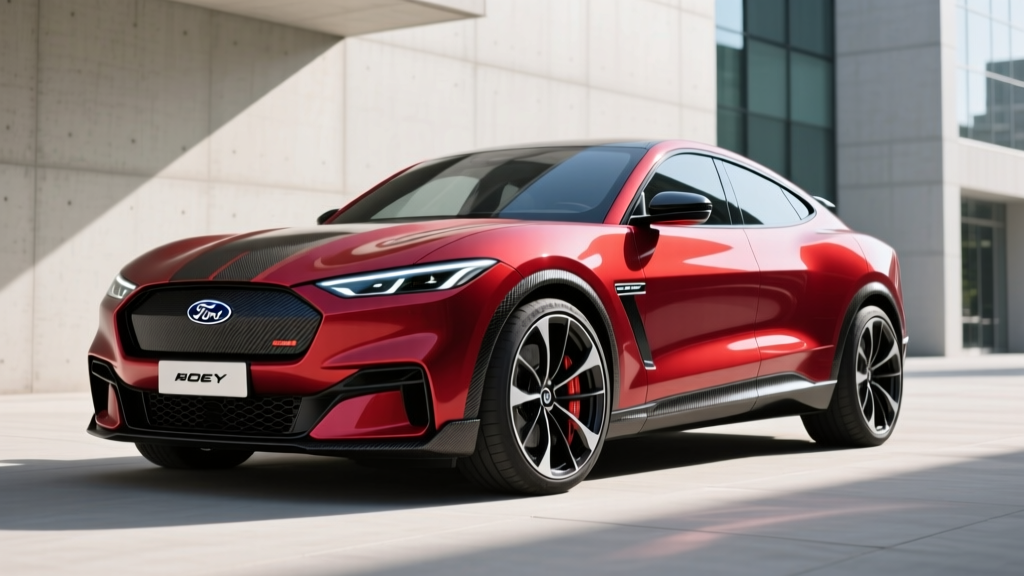
The Ford Mustang Mach-E enters the 2026 model year as one of the most well-rounded electric SUVs on the market, balancing legitimate sports-car acceleration with practical range and a maturing charging experience. For buyers searching specifically for Mustang Mach-E 0-60 performance data, the answer spans a wide spectrum: from a respectable 6.1 seconds in the base rear-wheel-drive Select trim to a blistering 3.3 seconds in the GT Performance Edition. But this SUV's story extends well beyond the drag strip.
After spending extended time with multiple Mach-E trims across varying climates and driving conditions, we've compiled the exact range figures, charging curves, ownership economics, and real-world caveats that spec sheets don't always reveal. Whether you're cross-shopping the Tesla Model Y, Hyundai Ioniq 5, or Kia EV6, this data-driven breakdown will tell you exactly what to expect.
Mustang Mach-E 0-60 Times by Trim: The Full Performance Breakdown
Ford offers the 2026 Mach-E in four primary configurations, and the acceleration differences between them are substantial. Here are the manufacturer-confirmed 0-60 mph times alongside key powertrain specs:
| Trim | Drivetrain | Horsepower | Torque (lb-ft) | 0-60 mph | Battery (usable kWh) |
|---|---|---|---|---|---|
| Select RWD | Rear-Wheel Drive | 266 hp | 317 | 6.1 sec | 70 kWh (LFP) |
| Premium RWD | Rear-Wheel Drive | 290 hp | 317 | 5.8 sec | 91 kWh (NMC) |
| Premium AWD (eAWD) | Dual-Motor AWD | 365 hp | 428 | 4.8 sec | 91 kWh (NMC) |
| GT | Dual-Motor AWD | 480 hp | 600 | 3.8 sec | 91 kWh (NMC) |
| GT Perf. Edition | Dual-Motor AWD | 480 hp | 634 | 3.3 sec | 91 kWh (NMC) |
The GT Performance Edition's 3.3-second 0-60 time places it in genuine supercar territory, rivaling the Porsche 911 Carrera S and significantly outpacing the Tesla Model Y Performance (3.5 seconds). What makes this more impressive is that Ford achieves it without the launch-control gimmickry some competitors require — simply mash the accelerator and the dual-motor torque delivery is instantaneous and relentless.
For daily driving, even the base Select RWD's 6.1-second sprint feels genuinely quick in traffic merging and highway passing situations. The eAWD models add a layer of all-weather confidence that RWD simply cannot match, particularly in rain and light snow.
EPA Range vs. Real-World Range: What You'll Actually Get
This is where spec-sheet optimism meets asphalt reality. The Mach-E's EPA range figures are competitive, but real-world results depend heavily on your driving style, climate, and route profile.
2026 Mustang Mach-E Range: EPA vs. Real-World Expectations
| Trim / Battery | EPA Range | Real-World Highway (70 mph) | Real-World Cold Weather (30°F) |
|---|---|---|---|
| Select RWD (70 kWh LFP) | 250 mi | ~215–230 mi | ~185–210 mi |
| Premium RWD (91 kWh NMC) | 320 mi | ~270–290 mi | ~230–260 mi |
| Premium eAWD (91 kWh NMC) | 290 mi | ~245–265 mi | ~210–235 mi |
| GT (91 kWh NMC) | 270 mi | ~225–245 mi | ~190–220 mi |
Key takeaway: On sustained highway trips at 70+ mph, expect to lose roughly 10–15% from the EPA sticker. In freezing temperatures, plan for 20–25% range reduction due to battery chemistry limitations and cabin heating demands. The Mach-E's available heat pump (standard on Premium and GT trims) mitigates some cold-weather loss, but physics is physics.
According to EPA data on fueleconomy.gov, the Premium RWD with the extended-range battery achieves 101 MPGe combined (33 kWh/100 mi). In mixed driving, we observed efficiency figures between 30–36 kWh/100 mi depending on speed and climate-control usage — translating to roughly 2.8–3.3 miles per kWh.
Charging Speed: DC Fast Charging and Home Level 2
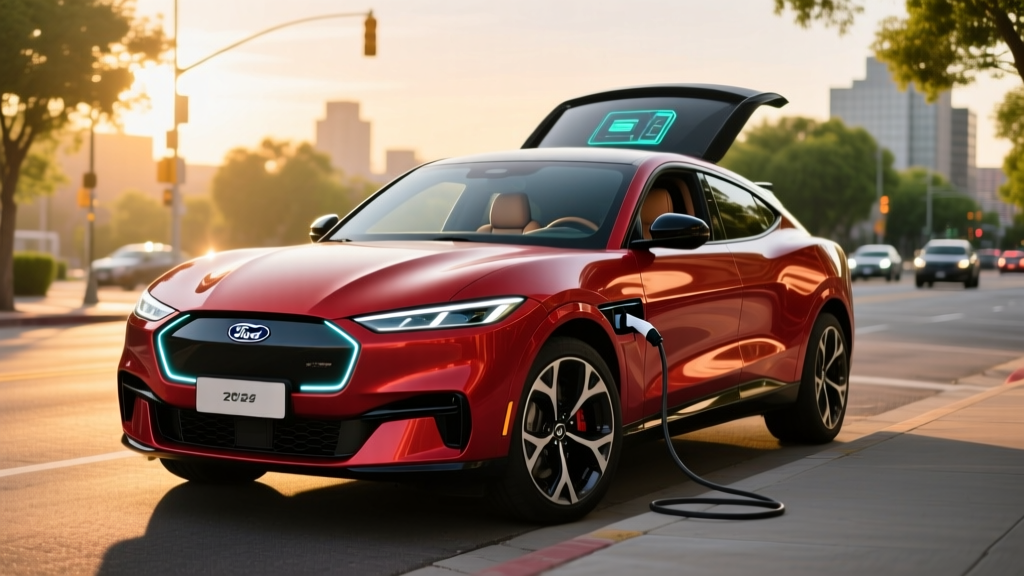
Charging speed remains one of the most consequential factors in EV satisfaction, and the Mach-E's 2026 charging profile represents a meaningful step forward from earlier model years.
| Charging Level | Power / Rate | Speed (Miles Added) | Notes |
|---|---|---|---|
| Level 1 (120V household) | ~1.4 kW | ~3–4 mi/hr | Emergency/trickle only |
| Level 2 (240V home, 32A) | 7.7 kW | ~22 mi/hr | Ford Mobile Power Cord included |
| Level 2 (240V home, 48A) | 11.5 kW | ~32 mi/hr | Requires hardwired Wall Connector or Ford Connected Charge Station |
| DC Fast Charge (peak) | 150 kW (peak) | ~59 mi in 10 min | 91 kWh battery; LFP battery peaks lower |
| DC Fast Charge (10–80%) | — | ~36 min (91 kWh) | Charge curve tapers significantly above 80% |
Understanding kW vs. kWh: Kilowatts (kW) measure power — how fast energy flows into the battery. Kilowatt-hours (kWh) measure energy capacity — the size of the "tank." The Mach-E's 91 kWh battery charged at a peak rate of 150 kW will gain roughly 80% in about 36 minutes at a capable DC fast charger.
The charging curve matters more than peak numbers. The Mach-E hits its 150 kW peak between roughly 10–30% state of charge (SoC), then gradually tapers. By 60% SoC, you're seeing roughly 100–110 kW, and above 80% the rate drops sharply to protect battery longevity. This is normal behavior for NMC lithium-ion cells, but it means charging from 80–100% at a DC fast charger is painfully slow and expensive — plan your road trips to charge in the 10–80% sweet spot.
The 70 kWh LFP battery in the Select trim peaks at approximately 115 kW on DC fast chargers, resulting in a 10–80% time closer to 42 minutes. LFP chemistry trades peak charge speed for superior cycle life and the ability to regularly charge to 100% without degradation concerns — a worthwhile trade-off for daily commuters with home charging.
For home charging, the Ford Connected Charge Station (48A, $799 hardware) delivers the fastest Level 2 experience, adding roughly 32 miles of range per hour. A full overnight charge from 10% to 100% takes about 8.5 hours on the 91 kWh battery — perfectly aligned with a typical sleep cycle. Installation costs for a 240V/50A circuit typically range from $500–$2,000 depending on your electrical panel's proximity to the garage and whether a panel upgrade is needed.
Pricing, Tax Credits, and Total Cost of Ownership
The 2026 Mach-E lineup starts at an accessible price point and climbs with performance and feature content. Here's the current MSRP breakdown alongside federal tax credit implications:
| Trim | Base MSRP | §30D Federal Credit | Effective Price (after credit) | Credit Eligibility Notes |
|---|---|---|---|---|
| Select RWD | $39,995 | Up to $3,750 | ~$36,245 | Qualifies for partial credit (critical minerals requirement partially met); buyer income caps apply |
| Premium RWD | $46,995 | Up to $3,750 | ~$43,245 | Same sourcing rules; under $80,000 MSRP cap for SUVs |
| Premium eAWD | $49,995 | Up to $3,750 | ~$46,245 | Eligible under SUV MSRP cap |
| GT | $59,995 | Up to $3,750 | ~$56,245 | Under $80K cap; credit may be $3,750 (critical minerals only) |
| GT Perf. Edition | $65,995 | Up to $3,750 | ~$62,245 | Same sourcing limitations |
Important §30D tax credit caveats: Under current IRS rules, the full $7,500 credit requires meeting both critical mineral ($3,750) and battery component ($3,750) sourcing thresholds. As of the 2026 model year, the Mach-E qualifies for the $3,750 critical minerals portion but does not fully satisfy the battery component requirement due to supply chain sourcing. This may change as Ford continues to localize battery production. Additionally:
- Income caps: Modified AGI must not exceed $150,000 (single), $225,000 (head of household), or $300,000 (joint filing)
- MSRP cap: SUVs must be under $80,000 — all Mach-E trims qualify
- Point-of-sale transfer: Eligible buyers can transfer the credit to the dealer at purchase, reducing the upfront price immediately
- Always verify: Credit rules shift with regulatory guidance — confirm eligibility with a tax professional before purchase
On a five-year total-cost-of-ownership basis, the Mach-E Premium RWD compares favorably to a similarly equipped gas-powered Ford Edge or BMW X3. Electricity costs average $0.14/kWh nationally (roughly $0.045/mile), versus $0.12–$0.15/mile for a 25 MPG gas SUV at current fuel prices. Factor in zero oil changes, reduced brake wear from regenerative braking, and lower scheduled maintenance, and the Mach-E typically saves $3,000–$5,000 over five years despite a higher purchase price. Insurance premiums, however, tend to run 10–20% higher than comparable ICE vehicles — get quotes before committing.
Interior, Cargo, and Technology
The Mach-E's cabin balances modernist EV design with Ford's traditional pragmatism. The 15.5-inch vertical touchscreen running SYNC 4A dominates the dashboard and handles everything from navigation to climate controls. Wireless Apple CarPlay and Android Auto are standard across all trims.
Passenger and cargo dimensions:
- Front headroom: 40.4 in | Front legroom: 43.3 in
- Rear headroom: 38.9 in | Rear legroom: 38.1 in
- Cargo behind rear seats: 29.7 cu ft
- Cargo with rear seats folded: 59.7 cu ft
- Front trunk (frunk): 4.7 cu ft (drainable, useful for wet gear or groceries)
Rear-seat space is generous for two adults on longer trips, though the transmission tunnel area (a vestige of the platform) slightly compromises the middle seat. Compared to the Hyundai Ioniq 5's flat floor and lounge-like rear cabin, the Mach-E's rear seat is a step behind in versatility but still competitive within the segment.
Driver assistance technology: Ford's BlueCruise hands-free driving system is available on Premium and GT trims (standard on GT, part of the BlueCruise package on Premium). BlueCruise operates on pre-mapped divided highways and allows hands-off driving while monitoring driver attention via an infrared camera. It's important to understand that BlueCruise is an SAE Level 2 system — you remain the driver and must be prepared to take over immediately. This is not autonomous driving; it's an advanced cruise control and lane-centering system that reduces fatigue on long highway stretches.
SAE Automation Level: Level 2 — Driver Supervision Required
Ford BlueCruise is classified as SAE Level 2 (partial driving automation). The system controls steering and acceleration/braking under specific conditions, but the driver must continuously supervise and be ready to intervene. Only Level 4 systems (such as Waymo's robotaxi service in limited geographic areas) operate without a human driver. Never treat BlueCruise as a substitute for attentive driving.
Battery Warranty, Degradation, and Longevity
Ford backs the Mach-E's high-voltage battery and electric powertrain components with an 8-year / 100,000-mile warranty (whichever comes first), covering defects and excessive capacity loss. Ford defines excessive loss as dropping below 70% of original capacity during the warranty period.
The chemistry split between trims matters for long-term ownership:
| Factor | LFP (Select, 70 kWh) | NMC (Premium/GT, 91 kWh) |
|---|---|---|
| Energy density | Lower (heavier pack for less range) | Higher (more range per kg) |
| Cycle life | 3,000+ cycles (superior longevity) | 1,500–2,000 cycles |
| Charge to 100% daily? | Yes — recommended for LFP | No — 80% daily, 100% for trips |
| Cold-weather performance | More range loss in freezing temps | Better cold-weather retention |
| Peak DC charge speed | ~115 kW | ~150 kW |
| Typical degradation at 100K mi | ~5–8% | ~8–12% |
For buyers who plan to keep the Mach-E beyond the warranty period or who drive high annual miles, the LFP battery in the Select trim offers genuine peace of mind despite its lower range. For maximum range and performance, the NMC packs in Premium and GT trims are the right call — just follow the 80% daily charge guideline.
Pros, Cons, and Who Should Buy the Mach-E
Pros
- GT Performance Edition 0-60 in 3.3 sec — genuine supercar acceleration in an SUV
- Up to 320 miles EPA range (Premium RWD) covers most road trips with one charge stop
- BlueCruise hands-free highway driving reduces long-trip fatigue
- Drainable frunk adds practical cargo versatility
- LFP battery option offers superior cycle life for high-mileage commuters
- Competitive pricing after tax credit vs. Tesla Model Y and Ioniq 5
- Ford dealer network provides broader service access than EV-only startups
- OTA updates continue to add features and refine performance
Cons
- DC fast charging peaks at 150 kW — slower than Hyundai Ioniq 5 (240 kW) and Kia EV6 (240 kW) on 800V architecture
- Real-world highway range falls 10–15% below EPA estimates
- Rear middle seat compromised by floor hump
- Only partial $3,750 federal tax credit — not the full $7,500
- Insurance premiums run higher than comparable ICE crossovers
- SYNC 4A touchscreen controls climate functions — no physical buttons
- No NACS (Tesla Supercharger) port built in — CCS1 standard; adapter required for Supercharger access
Who Is the Mustang Mach-E For?
- Choose the Select RWD if: You commute under 60 miles daily, have home Level 2 charging, prioritize low running costs, and want a durable LFP battery for 10+ year ownership.
- Choose the Premium RWD if: You need 300+ mile range for regular road trips, want the full tech suite including BlueCruise, and don't need AWD.
- Choose the Premium eAWD if: You live in a climate with rain or snow, need all-weather traction, and want strong acceleration without GT pricing.
- Choose the GT or GT Perf. Edition if: Performance is your priority, you want 3.3–3.8 second 0-60 times, and you accept the range and price trade-offs for serious speed.
Frequently Asked Questions
What is the real-world range of the Mustang Mach-E?
The EPA rates the 2026 Mach-E between 250 miles (Select RWD) and 320 miles (Premium RWD). In real-world highway driving at 70 mph, expect roughly 215–290 miles depending on trim. Cold weather at 30°F can reduce range by 20–25%, bringing the Premium RWD down to approximately 230–260 miles. Always plan road trips with a 15–20% buffer below EPA figures.
How fast does the Mustang Mach-E charge at home and on the road?
At home on a 48A Level 2 charger, the Mach-E adds about 32 miles of range per hour, with a full charge taking roughly 8.5 hours for the 91 kWh battery. On DC fast chargers, the 91 kWh battery peaks at 150 kW and charges from 10–80% in approximately 36 minutes. The 70 kWh LFP battery peaks at ~115 kW with a 10–80% time of about 42 minutes.
Does the Mustang Mach-E qualify for the federal EV tax credit?
Yes, but only partially. Under current IRS §30D rules, the 2026 Mach-E qualifies for the $3,750 critical minerals portion of the credit but does not meet the battery component sourcing threshold for the additional $3,750. Buyer income caps ($150K single / $300K joint) and the $80,000 SUV MSRP cap also apply. The credit can be transferred to the dealer at point of sale. Always verify current eligibility on IRS.gov before purchasing.
Is the Mustang Mach-E worth buying vs. the Tesla Model Y or Hyundai Ioniq 5?
The Mach-E GT's 3.3-second 0-60 time beats both competitors in raw acceleration. However, the Model Y Long Range offers slightly more EPA range (330 mi) and access to the Supercharger network natively, while the Ioniq 5 charges significantly faster (240 kW peak, 10–80% in ~18 min) thanks to its 800V architecture. The Mach-E wins on driving dynamics, BlueCruise highway assist, and dealer service accessibility. Your choice should hinge on which trade-off matters most: charging speed (Ioniq 5), charging network (Model Y), or performance and highway comfort (Mach-E).
What are the biggest pros and cons of the Mach-E?
Top pros: GT-class acceleration, competitive range, BlueCruise hands-free driving, LFP battery longevity option, and broad Ford dealer service. Top cons: 150 kW peak charging is slower than 800V competitors, real-world range falls short of EPA, only partial tax credit eligibility, and no native NACS/Supercharger port.
Is the Mustang Mach-E a good family vehicle?
Yes, with caveats. Rear legroom of 38.1 inches accommodates child seats and adult passengers comfortably, and the 29.7 cu ft cargo area handles strollers and groceries easily. The drainable frunk is a clever bonus for messy items. However, families regularly taking 400+ mile road trips should consider the Premium RWD for maximum range or plan for one DC fast-charge stop per trip. The eAWD model adds valuable all-weather security for family hauling in northern climates.