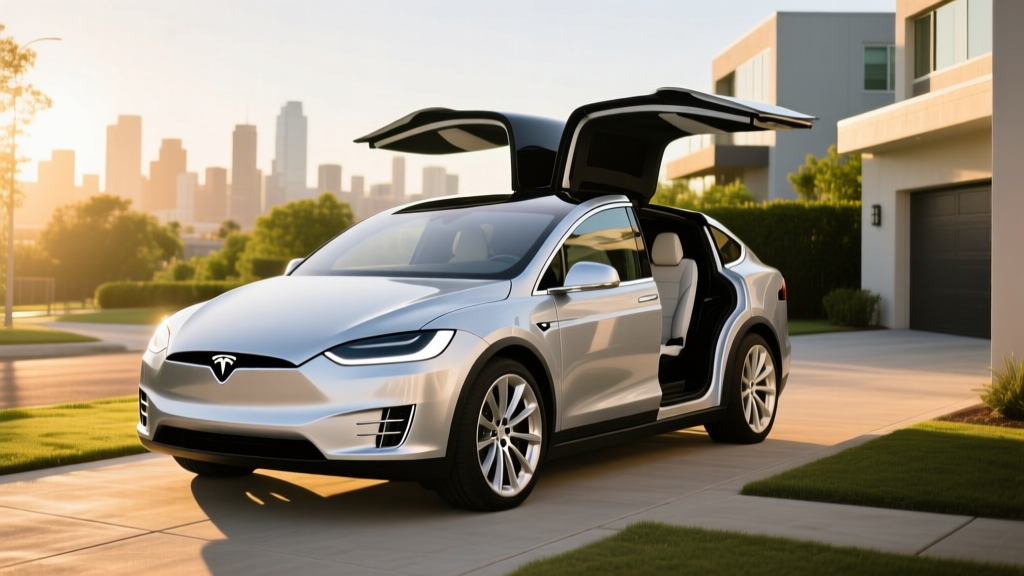
When buyers search for the most expensive electric cars, they are usually weighing two very different questions: whether a six-figure EV delivers measurable advantages in range, charging speed, and daily usability over a $50,000 alternative, and whether the total cost of ownership justifies the premium. The short answer is nuanced — flagship EVs in 2026 do offer class-leading efficiency (Lucid Air Grand Touring's ~4.5 mi/kWh), brutal acceleration (Tesla Model S Plaid's 1.99-second 0-60), and 800V+ architectures that unlock 270–350 kW DC fast charging. But they also carry steep insurance premiums, accelerated depreciation curves, and zero eligibility for the federal §30D tax credit due to MSRP and income caps.
Quick Answer: Are Flagship EVs Worth the Premium?
The most expensive electric cars in 2026 range from ~$95,000 (Porsche Taycan 4S) to over $250,000 (Rolls-Royce Spectre, Lotus Eletre R). They justify their cost through three measurable advantages: efficiency leadership (Lucid Air achieves 146 MPGe combined vs. industry average of ~110 MPGe), charging architecture (Porsche Taycan Turbo GT sustains 270+ kW longer than most 400V rivals), and performance density (1,020–1,234 HP with sub-2.5s 0-60). But for buyers without daily driving needs beyond 300 miles, a $55,000 Hyundai Ioniq 6 delivers 361 miles of EPA range at a fraction of the insurance and depreciation cost.
The Flagship EV Landscape: What $100K+ Buys in 2026
The luxury EV segment has stratified into three distinct tiers: efficiency-focused grand tourers (Lucid Air, Mercedes EQS), performance sedans (Tesla Model S Plaid, Porsche Taycan Turbo GT), and ultra-luxury SUVs/coupes (Rolls-Royce Spectre, Lotus Eletre, BMW iX M60). Each tier solves a different ownership equation.
| Model | Base MSRP | EPA Range | Battery (kWh) | Peak DC kW | 10-80% Time | 0-60 mph | HP |
|---|---|---|---|---|---|---|---|
| Lucid Air Grand Touring | $125,600 | 516 mi | 112 (NMC) | 300 kW | ~20 min | 3.0s | 819 |
| Lucid Air Sapphire | $249,000 | 427 mi | 118 (NMC) | 300 kW | ~22 min | 1.89s | 1,234 |
| Tesla Model S Plaid | $108,490 | 396 mi | 100 (NMC) | 250 kW | ~27 min | 1.99s | 1,020 |
| Porsche Taycan Turbo GT | $230,000 | 305 mi | 105 (NMC, 800V) | 320 kW | ~18 min | 2.1s | 1,092 |
| Mercedes EQS 580 SUV | $127,350 | 330 mi | 108.4 (NMC) | 200 kW | ~31 min | 4.4s | 536 |
| Rolls-Royce Spectre | $413,000 | 291 mi | 102 (NMC) | 195 kW | ~34 min | 4.4s | 577 |
| Lotus Eletre R | $151,900 | 315 mi (est.) | 112 (NMC, 800V) | 350 kW | ~20 min | 2.9s | 905 |
Real-world range caveat: EPA figures assume mixed city/highway driving at moderate temperatures. Expect 15-25% range reduction at sustained highway speeds (75+ mph) and 20-35% loss in sub-freezing climates without preconditioning. The Lucid Air Grand Touring's 516-mile EPA sticker translates to roughly 400-440 real-world highway miles in 70°F weather, and closer to 320-360 miles in 20°F conditions.
Cost of Ownership: The Numbers Behind the Sticker Price
Flagship EVs are not simply "expensive cars that happen to be electric" — they carry ownership cost structures that diverge sharply from mainstream EVs and internal-combustion luxury vehicles. Insurance is the most immediate shock: a Tesla Model S Plaid averages $4,200-$5,800 annually (vs. $1,800-$2,400 for a Model 3), while the Lucid Air Sapphire can exceed $7,000/year due to limited repair networks and carbon-fiber bodywork. Depreciation is equally punishing — luxury EVs historically lose 45-60% of value over three years, compared to 30-40% for a Toyota RAV4 Hybrid.
| Cost Category | Lucid Air GT ($125K) | Tesla Model 3 LR ($52K) | BMW 540i Gas ($65K) |
|---|---|---|---|
| Purchase Price (after incentives) | $125,600 (no §30D credit) | $52,090 (no §30D credit, MSRP cap) | $65,000 |
| 5-Year Depreciation (est.) | $62,800 (50%) | $20,800 (40%) | $26,000 (40%) |
| Insurance (5 years) | $24,000 | $9,500 | $11,000 |
| Energy/Fuel (5 years, 75K mi) | $5,400 (home L2, $0.14/kWh) | $4,200 (home L2) | $11,250 (25 MPG, $3.75/gal) |
| Maintenance (5 years) | $2,800 | $1,500 | $6,500 |
| Total 5-Year Cost | $220,600 | $88,090 | $119,750 |
The charging math: A Lucid Air Grand Touring with its 112 kWh battery costs roughly $15.68 to charge from 10-80% at home (78.4 kWh × $0.20/kWh national average). At a DC fast charger like Electrify America ($0.48/kWh), that same session costs $37.63. For a driver covering 15,000 miles annually at 4.2 mi/kWh efficiency, annual home-charging cost is ~$714; exclusive DCFC use pushes that to ~$1,714. The EPA's fueleconomy.gov database provides model-specific MPGe and kWh/100mi figures for precise calculations.
Charging Infrastructure Reality: 800V vs. 400V Architecture
The most expensive electric cars differentiate themselves not just on peak kW ratings, but on sustained charging performance. Porsche's 800V Taycan architecture maintains 270+ kW from 10-55% state of charge before tapering, while most 400V systems (including Tesla's) peak briefly at 250 kW then drop to 150-180 kW by 50% SoC. This translates to real-world time savings: a Taycan Turbo GT adds ~180 miles of range in 15 minutes at a 350 kW charger, while a Model S Plaid adds ~150 miles in the same window.
Common Misconceptions About Flagship EVs
| Myth | Fact |
|---|---|
| "More expensive EVs always have longer range" | The $249K Lucid Air Sapphire (427 mi) has 89 miles less EPA range than the $125K Air Grand Touring (516 mi). Performance tuning, wider tires, and higher-output motors reduce efficiency. |
| "Peak kW charging speed is sustained" | A 300 kW peak rating typically lasts 3-5 minutes before thermal management and battery chemistry force taper. Average 10-80% speed is often 60-70% of peak. |
| "All luxury EVs qualify for the $7,500 federal tax credit" | Zero flagship EVs over $55K (sedans) or $80K (SUVs) qualify for §30D due to MSRP caps. Buyer income limits ($150K single / $300K joint) exclude most purchasers regardless of vehicle eligibility. |
| "Expensive EVs don't depreciate" | Luxury EVs depreciate faster than mainstream EVs. A 2023 Lucid Air Dream Edition lost ~55% of value by 2025, vs. ~35% for a Tesla Model 3 over the same period. |
Home Charging Access: The Hidden Prerequisite
Flagship EV ownership assumes reliable Level 2 home charging — a 240V, 40-80A circuit delivering 9.6-19.2 kW. Without it, the ownership experience degrades sharply. A Lucid Air's 112 kWh battery requires 11-12 hours on a 48A Level 2 charger (11.5 kW) to refill from 10-80%; relying solely on public DCFC networks adds 2-4 hours weekly for a 15,000-mile/year driver and triples annual charging costs.
Installation reality: A typical 60A Level 2 home charger installation costs $1,200-$3,500 (equipment + electrician + permit), but older homes may require a $2,500-$5,000 electrical panel upgrade from 100A to 200A service. Condo/apartment dwellers without dedicated parking face a structural barrier — public charging infrastructure in 2026 remains insufficient for daily flagship EV use, with Electrify America and EVgo experiencing 15-20% downtime rates at many stations.
Decision Framework: Who Should Buy a $100K+ EV?
Choose a Flagship EV If:
- You prioritize efficiency leadership: Lucid Air Grand Touring's 146 MPGe combined saves ~$400/year vs. a Tesla Model S (124 MPGe) and ~$1,200/year vs. a BMW i7 (98 MPGe) at 15,000 miles annually.
- You need 800V fast-charging for road trips: Porsche Taycan's sustained 270 kW charging adds 20-30 minutes of range advantage over 400V rivals on 500+ mile journeys.
- You have home Level 2 charging and drive 10,000-20,000 miles/year: The $5,000-$7,000 annual fuel savings vs. a gas V8 luxury sedan (18-22 MPG) partially offsets the EV's higher purchase price over 5 years.
- You value performance density: 1,000+ HP with instant torque delivery and sub-2.5s 0-60 times are unachievable in internal-combustion vehicles under $500,000.
Choose a Mainstream EV ($40K-$60K) If:
- Your daily driving is under 80 miles: A Hyundai Ioniq 5 ($42K, 303 mi range) or Tesla Model 3 ($39K, 341 mi) covers 95% of use cases with lower insurance ($1,800-$2,400/year) and depreciation (35-40% over 3 years).
- You lack reliable home charging: Mainstream EVs' lower battery capacities (75-82 kWh vs. 100-118 kWh) make public DCFC reliance more practical and affordable.
- You plan to keep the vehicle 7+ years: Flagship EV depreciation curves are steepest in years 1-3; mainstream EVs hold value better long-term.
- You qualify for the §30D tax credit: Vehicles under $55K MSRP (sedans) or $80K (SUVs) with eligible buyers can access $7,500 point-of-sale credits, effectively reducing a $45K Ioniq 5 to $37,500. Verify current IRS §30D eligibility rules before purchasing.
First-Time EV Buyer Considerations
For buyers transitioning from internal-combustion vehicles to a six-figure EV, three non-obvious factors dominate the ownership experience:
1. Preconditioning is non-negotiable for fast charging. Flagship EVs like the Taycan and Lucid Air use battery thermal management to precondition cells to 85-95°F before DC fast charging. Without preconditioning (activated via navigation to a charger or manual app command), peak charging speed drops 30-50%. In 30°F weather, an un-preconditioned Lucid Air might peak at 150 kW instead of 300 kW, doubling 10-80% charge time.
2. Regenerative braking profiles vary dramatically. Tesla's one-pedal driving mode (strong regen up to 0.3g deceleration) differs from Porsche's blended approach (regen + friction brakes, 0.15g max). Buyers accustomed to engine braking in gas cars often prefer Tesla's aggressive regen; those seeking a traditional luxury feel gravitate toward Porsche/Mercedes tuning.
3. Tire costs are 2-3× higher than gas equivalents. A Lucid Air's 19-21" low-rolling-resistance tires cost $350-$500 per corner and last 20,000-30,000 miles due to the vehicle's 5,000+ lb weight and instant torque. A BMW 540i's tires cost $180-$250 per corner and last 35,000-45,000 miles.
Frequently Asked Questions
Do any expensive electric cars qualify for the federal tax credit?
No. The IRS §30D tax credit imposes MSRP caps of $55,000 for sedans and $80,000 for SUVs/trucks. Every vehicle in this guide exceeds those limits. Additionally, buyer income caps ($150K single / $300K joint) and battery-sourcing requirements further restrict eligibility. Some buyers may qualify for used-EV credits (up to $4,000) on 2-3 year old flagship models, but the vehicle must still meet MSRP caps at original sale.
How does cold weather affect flagship EV range?
All EVs lose 20-35% range in sub-freezing temperatures due to battery chemistry (lithium-ion internal resistance increases) and cabin heating demands. A Lucid Air Grand Touring's 516-mile EPA range drops to ~340-380 miles at 20°F. Vehicles with heat pumps (Lucid, Tesla, Porsche) recover 5-10% efficiency vs. resistive heaters. Preconditioning the battery and cabin while plugged in mitigates 40-50% of cold-weather loss.
Is insurance really that much higher for luxury EVs?
Yes. A Tesla Model S Plaid averages $4,200-$5,800 annually (vs. $1,800-$2,400 for a Model 3) due to higher repair costs, limited body-shop networks for aluminum/carbon-fiber structures, and elevated theft rates. The Lucid Air Sapphire can exceed $7,000/year. Always obtain insurance quotes before purchasing — premiums vary 30-50% by ZIP code and driving history.
What's the real-world charging speed vs. the advertised peak kW?
Peak kW is sustained for 3-5 minutes at low state of charge (10-25%), then tapers as the battery fills. A Porsche Taycan Turbo GT's 320 kW peak averages ~240 kW over a 10-80% session, yielding an 18-minute charge time. A Tesla Model S Plaid's 250 kW peak averages ~180 kW, resulting in a 27-minute session. Charging curve data from Edmunds and independent EV testers provides model-specific taper profiles.
Should I wait for solid-state batteries before buying a flagship EV?
Solid-state batteries (promising 20-30% energy density gains and 10-minute charging) are announced for limited 2027-2028 production in vehicles like the Toyota bZ5X and Nissan concepts, but mainstream availability in luxury EVs is unlikely before 2030. Current NMC lithium-ion chemistry in flagship EVs offers 85-90% capacity retention at 100,000 miles (warrantied by most manufacturers for 8 years/100,000 miles). If you need a vehicle in 2026, waiting for solid-state is impractical; if your purchase timeline is 2029+, it may be worth monitoring.
The most expensive electric cars in 2026 deliver measurable advantages in efficiency, charging architecture, and performance — but they also demand specific ownership conditions (home Level 2 charging, high annual mileage, tolerance for steep depreciation) to justify their premiums. For buyers whose needs align with those conditions, vehicles like the Lucid Air Grand Touring and Porsche Taycan Turbo GT represent the current state of EV engineering. For everyone else, the $40K-$60K mainstream EV segment delivers 85-90% of the utility at 30-40% of the total cost.