The Tesla Model S Plaid occupies a singular position in the EV market: a four-door sedan that posts supercar acceleration numbers while delivering nearly 400 miles of EPA-estimated range. For 2026, the Plaid remains Tesla's flagship performance sedan, leveraging tri-motor all-wheel drive, a 100 kWh battery pack, and a 320 kW peak DC fast-charge rate. But beyond the headline-grabbing Model S Plaid quarter mile times, what does daily ownership actually look like? This review covers real-world range, charging behavior, pricing after federal incentives, and whether the Plaid justifies its six-figure price against the Lucid Air Sapphire and Porsche Taycan Turbo GT.
2026 Tesla Model S Plaid: Core Specifications
| Specification | Value |
|---|---|
| EPA Range | 396 miles (19" wheels) / 359 miles (21" wheels) |
| Battery Capacity | ~100 kWh usable (Panasonic 4680 cells, NMC chemistry) |
| Drivetrain | Tri-motor AWD (1 front, 2 rear carbon-sleeved rotors) |
| Horsepower | 1,020 hp |
| 0–60 mph | 1.99 seconds (with rollout subtracted) |
| Quarter Mile | ~9.23 seconds @ 152 mph (stock, prepped surface) |
| Top Speed | 200 mph (with Track Pack) |
| Max DC Fast Charge | 320 kW (peak) |
| 10–80% DC Charge Time | ~20 minutes (at V4 Supercharger) |
| Level 2 Home Charging | 11.5 kW / ~34 miles per hour |
| MPGe (Combined) | 116 MPGe (19" wheels) |
| Efficiency | 29 kWh / 100 mi |
| Cargo Volume | 28 cu ft (rear) + 3.1 cu ft (frunk) |
| Base MSRP (2026) | $89,990 (before destination) |
| Battery Warranty | 8 years / 150,000 miles (min 70% retention) |
The Model S Plaid Quarter Mile: What the Numbers Actually Mean
The Model S Plaid quarter mile time of approximately 9.2 seconds at 152 mph places it in elite hypercar territory — roughly on par with a Bugatti Chiron on a prepped surface. Tesla's tri-motor architecture uses one permanent-magnet motor up front and two induction motors in the rear, each with carbon-sleeved rotors that resist expansion at extreme RPMs. The result is sustained power delivery well past 200 mph, not just a hard initial launch.
However, achieving the factory-claimed 1.99-second 0–60 time requires specific conditions: a prepped drag strip surface, drag radial tires (the stock Michelin Pilot Sport 4S tires are street-focused), and a full battery state of charge above 95%. On a typical street surface with standard tires, expect 0–60 times closer to 2.3–2.5 seconds. The quarter mile on unprepped pavement generally lands in the low 9.5-second range.
Track mode, accessible via the 17-inch center touchscreen, adjusts torque vectoring, cooling system aggression, and suspension damping. The available carbon-ceramic brake package ($15,000 Track Pack) is essential for repeated high-speed runs — the standard steel rotors fade noticeably after two or three hot laps.
Real-World Range: EPA Sticker vs. What You'll Actually Get
Real-World Highway (70 mph, 72°F): ~310–330 miles
Real-World Highway (32°F, winter): ~240–270 miles
Real-World City/Mixed: ~350–375 miles
Tesla's EPA range figures for the Model S Plaid are among the highest of any production EV sold in 2026, but real-world results depend heavily on driving style, wheel choice, and ambient temperature. According to fueleconomy.gov, the Plaid achieves 116 MPGe combined with the 19-inch wheel package — a meaningful efficiency advantage over the 21-inch Arachnid wheels, which drop the EPA rating to roughly 109 MPGe.
In highway testing at a steady 70 mph in moderate temperatures, the Plaid typically delivers between 310 and 330 miles before reaching a 10% state of charge. Pushing speeds to 80+ mph or driving aggressively (which, given the car's capability, is tempting) can drop that figure to 270 miles or less. Cold weather compounds the loss: at freezing temperatures with cabin heating active, expect a 25–35% reduction from the EPA sticker, landing around 240–270 miles of usable highway range.
The Model S Plaid uses a heat pump as standard equipment, which recovers waste heat from the drivetrain to warm the cabin more efficiently than resistive heating. This partially mitigates winter range loss compared to EVs without heat pumps, but physics still applies — battery chemistry operates less efficiently below 40°F, and cabin heating remains a substantial energy draw.
Charging Speed and Infrastructure: DC Fast Charge and Home Level 2
| Charging Level | Power (kW) | Miles Added per Hour | Notes |
|---|---|---|---|
| Level 1 (120V household) | ~1.4 kW | ~3–4 mi/hr | Emergency/trickle only |
| Level 2 (240V, 48A Wall Connector) | 11.5 kW | ~34 mi/hr | Full charge in ~9 hours |
| DC Fast Charge (V4 Supercharger) | Up to 320 kW (peak) | ~200 mi in 15 min | 10–80% in ~20 min |
| DC Fast Charge (third-party CCS w/ adapter) | Up to 250 kW | Varies by station | CCS adapter included |
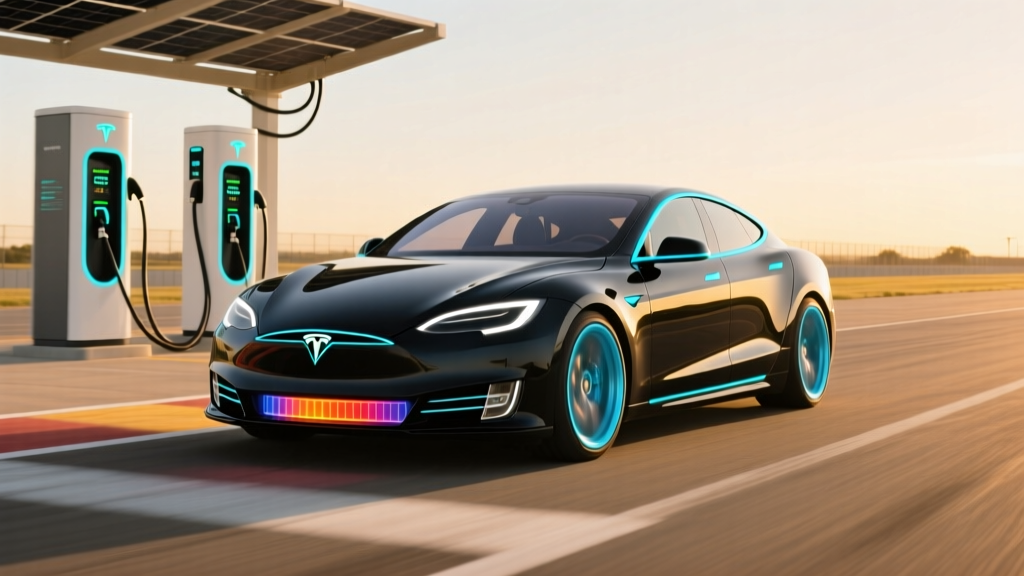
The Model S Plaid supports a peak DC fast-charge rate of 320 kW at Tesla's V4 Supercharger stations, which are now widespread across major U.S. corridors. However, as with all EVs, that peak rate is not sustained across the entire charging session. The Plaid's charge curve is aggressive in the 10–50% state-of-charge window, where it can pull close to 300+ kW, but tapers significantly above 60% and drops sharply past 80% to protect the battery cells. A typical 10–80% session takes approximately 20 minutes at a V4 cabinet; at older V3 Superchargers (capped at 250 kW), expect roughly 27 minutes.
For home charging, Tesla's Wall Connector on a 60-amp circuit delivers 11.5 kW (48 amps continuous), adding roughly 34 miles of range per hour. An overnight charge from 20% to 80% takes about 5–6 hours — perfectly adequate for daily driving. If your home electrical panel supports only a 40-amp circuit (32 amps continuous), you'll see roughly 7.7 kW and about 23 miles per hour, which still covers most daily commutes overnight.
Tesla now includes a CCS adapter in the box, enabling access to Electrify America, EVgo, and other third-party networks. While Tesla's Supercharger network remains the most reliable option, having CCS compatibility adds flexibility for road trips through areas with limited Supercharger coverage.
Pricing, Trims, and Federal Tax Credit Eligibility
| Configuration | MSRP | Destination | Total Before Incentives |
|---|---|---|---|
| Model S Plaid (base) | $89,990 | $1,995 | $91,985 |
| Model S Plaid + Track Pack | $104,990 | $1,995 | $106,985 |
| Model S Plaid + FSD (Supervised) | + $8,000 | — | $99,985 |
The 2026 Tesla Model S Plaid starts at $89,990 before the $1,995 destination charge. The Track Pack, which includes carbon-ceramic brakes, upgraded cooling, and the 200-mph top-speed unlock, pushes the price to roughly $106,985. Adding Full Self-Driving (Supervised) at $8,000 brings a fully loaded Plaid to approximately $114,985.
Short answer: No. Under current IRS rules, the §30D new clean vehicle credit has a manufacturer's suggested retail price (MSRP) cap of $55,000 for sedans. The Model S Plaid, at $89,990, far exceeds this threshold. Additionally, battery-critical-mineral sourcing requirements and buyer income caps ($300,000 joint / $150,000 single) further restrict eligibility. Even Tesla's more affordable models face sourcing-related credit reductions in 2026.
Because the Plaid does not qualify for the federal credit, buyers pay full MSRP. Some states offer separate EV rebates or HOV lane access (California's Clean Air Vehicle decal, for instance), but these vary by jurisdiction and are subject to change. Consult your state's energy office or a tax professional for current local incentives.
Interior, Technology, and Daily Livability
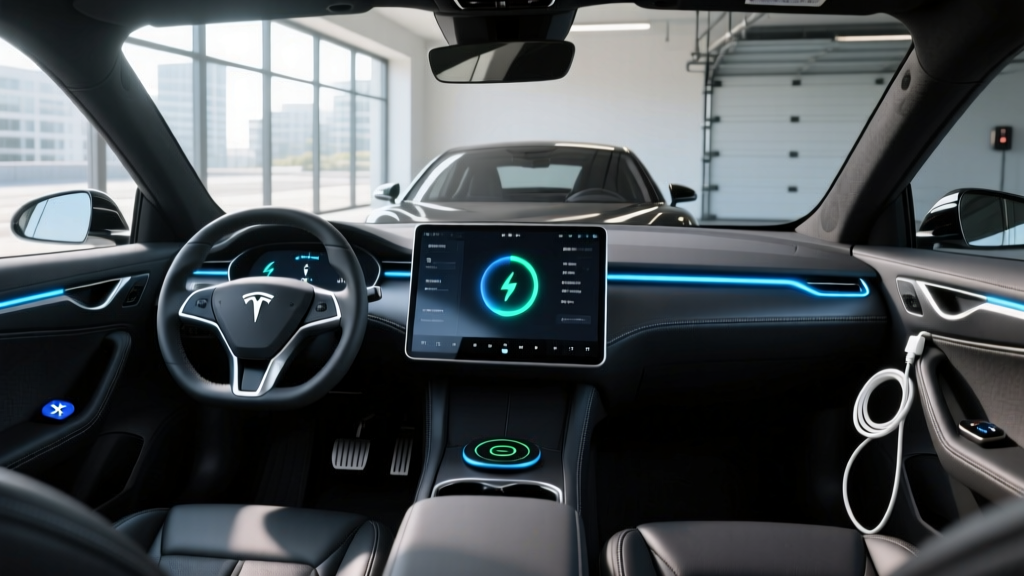
The Model S Plaid's interior is dominated by a 17-inch OLED center touchscreen running Tesla's latest infotainment software, which handles everything from navigation and media to vehicle settings and gaming (yes, you can play Cyberpunk 2077 at a Supercharger). A secondary 8-inch screen for rear passengers controls climate and entertainment. The yoke steering wheel remains standard on the Plaid, though a conventional round wheel is available as a no-cost option.
Passenger space is generous for a performance sedan: front legroom measures 42.7 inches, and rear legroom comes in at 35.4 inches — sufficient for adults on longer trips, though the sloping roofline limits headroom for taller rear passengers. Cargo capacity totals 28 cubic feet in the rear hatch (the liftback design provides excellent access) plus a 3.1-cubic-foot front trunk (frunk).
Tesla's Autopilot comes standard, providing adaptive cruise control and lane-keeping on highways. FSD (Supervised), the $8,000 upgrade, adds automatic lane changes, traffic-light recognition, and navigation-guided on/off-ramp handling. However, it is critical to understand that FSD (Supervised) is an SAE Level 2 driver-assistance system — not self-driving. The driver must maintain active supervision, keep hands on the wheel, and remain prepared to take over at any moment. Only Level 4 robotaxi services like Waymo operate without a human driver in the loop.
Notable drawbacks include the absence of Apple CarPlay and Android Auto (Tesla uses its own system exclusively), panel-gap inconsistencies that persist despite years of criticism, and a ride quality that, while improved with adaptive air suspension, is firmer than luxury competitors like the Mercedes EQS or Lucid Air. Road noise at highway speeds is also more pronounced than expected in a vehicle at this price point.
Model S Plaid vs. the Competition: Is It Worth Buying?
| Spec | Tesla Model S Plaid | Lucid Air Sapphire | Porsche Taycan Turbo GT |
|---|---|---|---|
| Price | $89,990 | $249,000 | $230,000 |
| Horsepower | 1,020 hp | 1,234 hp | 1,019 hp (Launch Control) |
| 0–60 mph | 1.99s | ~2.0s | ~2.1s |
| EPA Range | 396 mi | 427 mi | 269 mi |
| Max DC Charge | 320 kW | 300 kW | 320 kW |
| 10–80% Charge | ~20 min | ~22 min | ~18 min (800V) |
| Supercharger Access | Native | Via adapter | Via adapter |
The Model S Plaid's value proposition is straightforward: it delivers roughly 90% of the Lucid Air Sapphire's performance at less than 40% of the price. The Supercharger network advantage is substantial for road-trippers, and Tesla's over-the-air updates continue to add features years after purchase. However, if build quality, interior luxury, and exclusivity are priorities, the Lucid and Porsche both outclass the Tesla in fit, finish, and dealer-level service support.
Ownership Costs and Warranty
Tesla covers the Model S Plaid's battery and drive unit with an 8-year / 150,000-mile warranty, guaranteeing a minimum of 70% capacity retention over that period. The basic vehicle warranty is 4 years / 50,000 miles. Independent data from long-term Tesla owners suggests that the 4680-cell NMC packs degrade approximately 8–12% over the first 100,000 miles, with the degradation curve flattening significantly after the initial break-in period. A full battery replacement outside of warranty currently runs approximately $20,000–$25,000, though prices have been trending downward.
Insurance premiums for the Plaid are notably higher than for the standard Model S, reflecting the vehicle's performance capability and repair costs. Expect annual premiums in the $3,500–$5,500 range depending on your state, driving record, and coverage level. Electricity costs for charging are dramatically lower than fueling a comparable gas-powered supercar: at the U.S. average residential rate of $0.16/kWh, a full home charge costs roughly $16 and provides 350+ miles — versus $80–$100 for a tank of premium fuel in a gasoline equivalent.
Pros and Cons
- Sub-2-second 0–60 mph; ~9.2-second quarter mile
- 396-mile EPA range is best-in-class for a performance EV
- Native Supercharger network access with 320 kW peak charging
- Spacious liftback cargo area (28 cu ft) plus frunk
- Continuous OTA software updates add new features post-purchase
- Heat pump standard for improved cold-weather efficiency
- No federal §30D tax credit (exceeds $55,000 sedan MSRP cap)
- Yoke steering is polarizing; round wheel optional
- No Apple CarPlay or Android Auto
- Panel gaps and build quality lag behind German competitors
- Insurance premiums significantly above average
- Road noise at highway speeds exceeds luxury expectations
Who Should Buy the Model S Plaid?
- You want supercar acceleration in a practical four-door sedan
- You frequently road-trip and want Supercharger network reliability
- You need 350+ real-world miles of range for long commutes
- You value OTA updates and Tesla's software ecosystem
- Interior luxury and build quality are your top priorities (consider Lucid Air, Mercedes EQS)
- You need a federal tax credit to justify the purchase (look at sub-$55K EVs)
- You want dedicated track capability with dealer-supported service (Porsche Taycan Turbo GT)
- You prefer traditional luxury-dealer ownership experience
Frequently Asked Questions
What is the real-world range of the Tesla Model S Plaid?
The EPA rates the Model S Plaid at 396 miles with 19-inch wheels. In real-world highway driving at 70 mph in moderate temperatures, expect 310–330 miles. In winter conditions, that drops to approximately 240–270 miles due to battery chemistry limitations and cabin-heating energy draw.
How fast does the Model S Plaid charge at home and on the road?
At a V4 Supercharger, the Plaid peaks at 320 kW and charges from 10–80% in roughly 20 minutes. At home on a Level 2 Tesla Wall Connector (11.5 kW), a full charge takes about 9 hours, adding approximately 34 miles of range per hour.
Does the Model S Plaid qualify for the federal EV tax credit?
No. The IRS §30D credit caps eligible sedans at $55,000 MSRP, and the Plaid starts at $89,990. It does not qualify regardless of buyer income or battery sourcing. Some state-level incentives may apply — check your local energy office.
How does the Model S Plaid quarter mile compare to gas supercars?
The Plaid's ~9.2-second quarter mile at 152 mph matches or beats most production gas supercars, including many variants of the Ferrari F8, McLaren 720S, and Lamborghini Huracán. The instant torque delivery of electric motors eliminates the lag inherent in internal-combustion launches.
Is the yoke steering wheel standard?
Yes, the yoke is standard on the Model S Plaid. A conventional round steering wheel is available as a no-cost option at the time of ordering. Aftermarket swaps between the two are possible but may affect warranty coverage.
What is the battery warranty coverage?
Tesla warrants the Model S Plaid's battery and drive unit for 8 years or 150,000 miles, whichever comes first, with a minimum 70% capacity retention guarantee. The basic vehicle limited warranty covers 4 years or 50,000 miles.