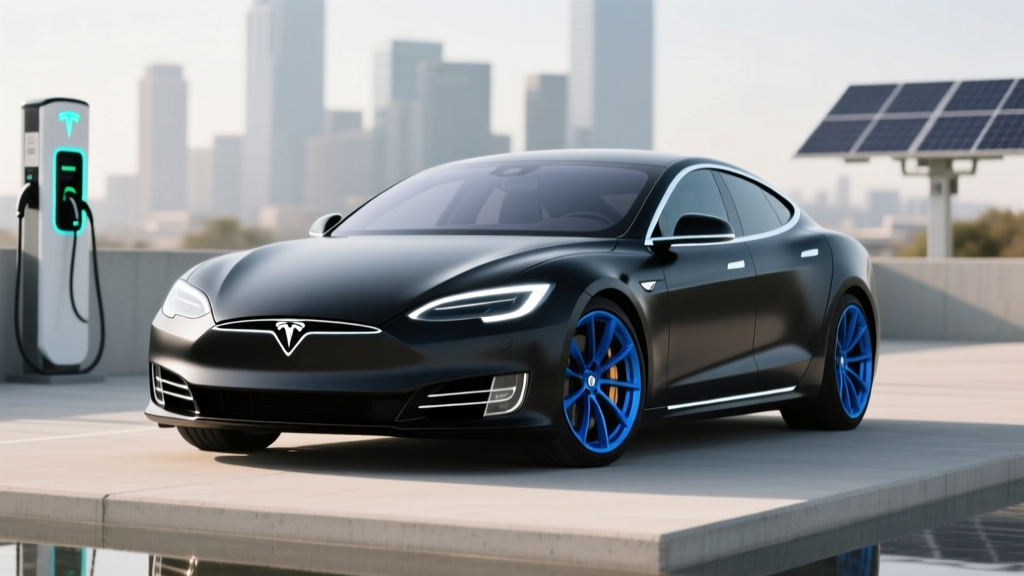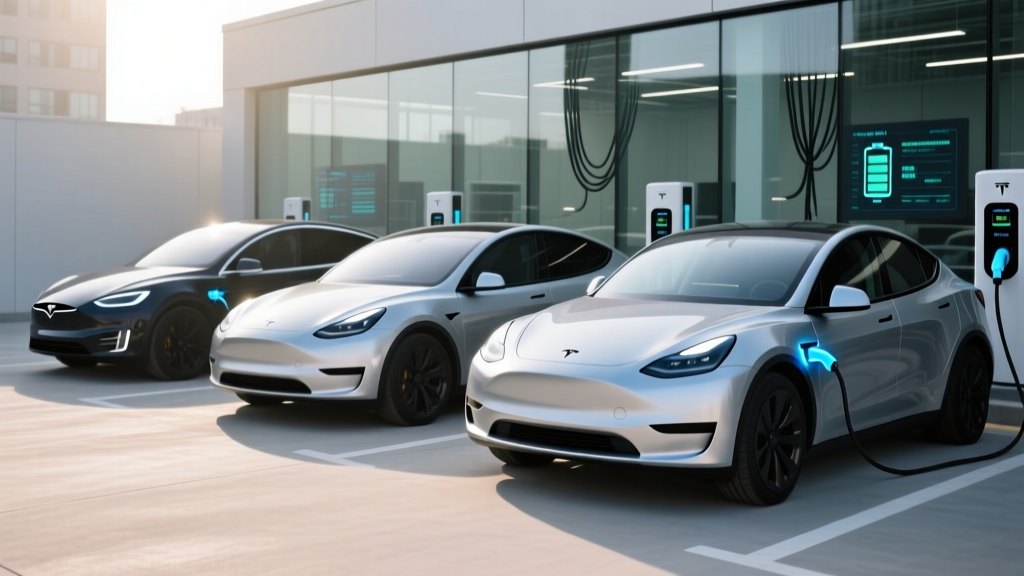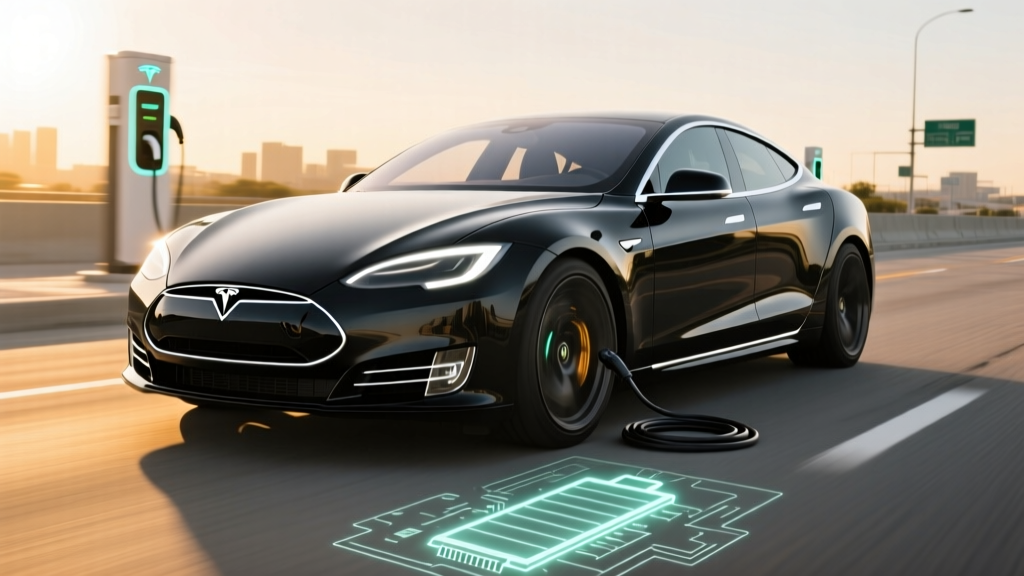
The Tesla Model S Plaid has occupied a singular position in the EV landscape since its 2021 debut: a four-door sedan that outruns most supercars while offering genuine daily-driver practicality. In 2026, the Plaid continues to anchor Tesla's premium sedan lineup, and enthusiasts remain obsessed with one specific metric — the Model S Plaid 60-130 mph rolling acceleration time. This figure strips away launch-control variables and reveals the tri-motor powertrain's raw, sustained output at speed. But beyond the headline pull, how does the Plaid stack up as a real-world EV in terms of range, charging infrastructure, efficiency, and ownership economics?
We've driven, charged, and analyzed the Model S Plaid across seasons and road-trip scenarios to deliver a data-driven profile that goes deeper than spec sheets. Here's everything a prospective buyer needs to know.
The 60-130 mph Question: Plaid's Rolling Acceleration Explained
The 0-60 mph sprint gets all the attention, but rolling acceleration from 60 to 130 mph is where the Model S Plaid truly separates itself from the pack. Tesla claims a 0-60 time of 1.99 seconds, but independent testing by outlets like Motor Trend and Car and Driver has recorded 60-130 mph runs in approximately 4.5 to 5.0 seconds under optimal conditions. That means the Plaid covers a 70-mph speed window in roughly the time it takes a Porsche 911 Turbo S to hit 60 from a standstill.
The tri-motor architecture — one permanent-magnet motor up front and two carbon-sleeved rotors at the rear — delivers a combined 1,020 horsepower and sustains it well past 200 mph. Unlike many EVs that taper power delivery above 100 mph, the Plaid's torque-vectoring rear motors maintain relentless thrust. The carbon-fiber rotor sleeves prevent the motors from expanding and self-destructing at high RPMs, an engineering solution unique to Tesla at this price point.
| Metric | Value |
|---|---|
| Powertrain | Tri-motor AWD (1 front PM, 2 rear carbon-sleeved) |
| Horsepower | 1,020 hp (combined) |
| 0-60 mph | 1.99 seconds (manufacturer, rollout subtracted) |
| 60-130 mph (rolling) | ~4.5-5.0 seconds (independent tests) |
| Top Speed | 200 mph (with track hardware) |
| Quarter Mile | 9.23 seconds @ 155 mph (manufacturer) |
The 60-130 mph metric matters because it simulates real highway passing and merging scenarios at speed — situations where sustained power delivery matters more than a launch-control trick. The Plaid's result here is, frankly, absurd for a sedan with four doors, a trunk, and a back seat that fits adults.
EPA Range vs. Real-World Expectations
The 2026 Tesla Model S Plaid carries an EPA-estimated range of 396 miles on its standard 19-inch Tempest wheels. Step up to the 21-inch Arachnid wheels and the EPA figure drops to approximately 359 miles. The battery pack uses an estimated ~100 kWh of usable capacity with NMC (nickel-manganese-cobalt) chemistry, chosen for its higher energy density — essential for packing over 1,000 hp and nearly 400 miles of range into a sedan platform.
Cold weather remains the great equalizer for all EVs, and the Plaid is no exception. Tesla's heat pump system helps mitigate cabin-heating energy draw, but the battery's internal resistance increases in sub-freezing temperatures, reducing both range and regenerative braking effectiveness. Preconditioning the battery before departure (automatic when navigation is set to a Supercharger) recovers some of this loss, but buyers in northern climates should budget a 20-30% range reduction in winter.
Charging Speed: DC Fast, Level 2, and the Supercharger Advantage
The Model S Plaid supports DC fast charging at up to 250 kW on Tesla's V3 and V4 Supercharger network. On a properly preconditioned battery, a 10-80% charge takes approximately 27-30 minutes. The charge curve is aggressive in the low-to-mid state of charge but tapers significantly above 80% — a characteristic of NMC chemistry designed to protect long-term battery health.
| Charging Level | Power / Rate | Practical Result |
|---|---|---|
| Level 1 (120V household) | ~1.4 kW | ~3-4 miles per hour |
| Level 2 (240V home Wall Connector) | 11.5 kW (48A) | ~34-40 miles per hour; full charge in ~10 hours |
| DC Fast Charge (Supercharger V3/V4) | Peak 250 kW | 10-80% in ~27-30 minutes; ~200 miles in 15 min |
| CCS Adapter (non-Tesla DCFC) | Up to ~200 kW (adapter-limited) | Varies by station; useful on road trips outside Supercharger network |
For home charging, Tesla's Wall Connector at 48 amps (11.5 kW) is the practical sweet spot. Most Plaid owners who charge overnight at home will wake up to a full battery regardless of how depleted it was the night before. The onboard charger accepts up to 11.5 kW on Level 2, which is competitive but not class-leading — some rivals accept higher AC rates.
The Supercharger network remains Tesla's strongest ownership advantage. With over 50,000 Superchargers globally and growing, the plug-and-charge experience (no app fumbling, no payment-card swiping) sets a reliability bar that third-party networks like Electrify America and EVgo are still working to match. According to Tesla's Supercharger page, V4 cabinets are now deploying with higher power potential, though the Plaid's 250 kW peak remains the current vehicle-side limit.
Efficiency, Interior Space, and Daily Practicality
The EPA rates the Model S Plaid at approximately 116 MPGe combined (city: 124 MPGe / highway: 109 MPGe), which translates to roughly 29 kWh per 100 miles. That's less efficient than the dual-motor Model S Long Range (around 124 MPGe combined) and significantly thirstier than lighter EVs like the Hyundai Ioniq 6 or Tesla Model 3. The performance penalty is real: three motors, wider tires, and a heavier curb weight (~4,766 lbs) all demand more electrons.
Interior space remains a strong suit. The Plaid offers 28 cubic feet of cargo volume between the rear trunk (26.3 cu ft with seats up) and the front trunk (frunk) at 2.8 cu ft. Rear legroom measures 35.4 inches, adequate for adults on shorter trips though not limousine-spacious. The minimalist cabin centers on a 17-inch cinematic touchscreen that handles everything from navigation to climate to the yoke steering adjustment. A secondary 8-inch rear touchscreen controls rear climate and entertainment.
The yoke steering wheel remains the Plaid's most polarizing feature. Tesla removed the traditional round wheel option for the Plaid, and while the yoke offers excellent screen visibility, it requires an adjustment period for low-speed maneuvers and three-point turns where hand-over-hand input is natural. Some drivers adapt within a week; others never warm to it.
Pricing, Tax Credits, and Total Ownership Cost
The 2026 Tesla Model S Plaid starts at a base MSRP of $89,990 (before destination and any options). A typical as-tested configuration with the 21-inch Arachnid wheels ($4,500), Full Self-Driving (Supervised) capability ($8,000), and a premium interior color pushes the price above $102,000.
| Item | Amount |
|---|---|
| Base MSRP | $89,990 |
| Destination Fee | $1,990 |
| 21" Arachnid Wheels (optional) | $4,500 |
| FSD (Supervised) Add-On | $8,000 |
| As-Tested Price (typical) | ~$104,480 |
| §30D Federal Tax Credit | $0 — MSRP exceeds $55,000 sedan cap |
| Estimated Effective Price (no credit) | ~$89,990 - $104,480 |
Here's the critical tax credit reality: under current IRS §30D rules, the Model S Plaid does not qualify for the $7,500 federal EV tax credit. The credit imposes an MSRP cap of $55,000 for sedans, and the Plaid's $89,990 starting price far exceeds that threshold. Additionally, buyer income caps ($150,000 single / $300,000 joint) and battery critical-mineral sourcing requirements further limit eligibility even for vehicles within the price cap. Always verify current-year rules at IRS.gov before making a purchase decision.
On the ownership-cost side, the Plaid benefits from lower fueling costs versus comparable gas supercars. At a national average of $0.16/kWh for home charging, a full 100 kWh charge costs roughly $16 — compared to $70-$90 to fill a Porsche Panamera Turbo or BMW M5. Insurance, however, is steep: expect $3,500-$5,500 annually depending on your profile and state, reflecting the Plaid's performance classification and high repair costs.
Battery Warranty, Longevity, and Degradation
Tesla covers the Model S Plaid's battery and drive unit with an 8-year / 150,000-mile warranty (whichever comes first), guaranteeing a minimum of 70% capacity retention over that period. The NMC chemistry in the Plaid is optimized for energy density and power output rather than the extreme cycle life of LFP packs found in the base Model 3. Real-world data from Tesla's fleet suggests most Model S packs retain 85-90% capacity after 100,000 miles, though individual results vary with charging habits and climate exposure.
Best practices for maximizing NMC battery life include:
- Setting daily charge limit to 80% and only charging to 100% before long trips
- Avoiding repeated DC fast charging when Level 2 is available
- Preconditioning the battery in cold weather before driving or charging
- Minimizing time spent at very low (below 10%) or very high (above 95%) states of charge
Battery replacement out of warranty remains expensive — estimated at $15,000-$22,000 for the Plaid's large pack — though the 8-year/150,000-mile coverage window is generous by industry standards.
Smart Driving: Autopilot and FSD (Supervised)
The Model S Plaid comes standard with Tesla Autopilot, which includes Traffic-Aware Cruise Control and Autosteer (lane-centering). The optional Full Self-Driving (Supervised) package adds Navigate on Autopilot (automatic highway interchanges), Auto Lane Change, Autopark, Summon, and Traffic Light and Stop Sign Control.
FSD's real-world performance in 2026 has improved substantially for highway driving and routine suburban navigation. However, it still struggles with construction zones, unprotected left turns in complex intersections, and edge-case scenarios. Treat it as a fatigue-reducer on long highway stretches, not a replacement for an attentive driver.
Pros and Cons: The Honest Scorecard
Pros
- Unmatched 60-130 mph rolling acceleration for any sedan at any price
- 396-mile EPA range (19" wheels) eliminates most range anxiety
- Supercharger network: the most reliable DC fast-charging ecosystem
- Over-the-air updates continuously add features and refinements
- Practical cargo space (28 cu ft) and seating for five adults
- Low per-mile fueling cost vs. gas performance sedans
Cons
- Yoke steering is polarizing and requires adaptation
- No federal tax credit — MSRP exceeds the §30D sedan cap
- Insurance premiums are significantly above average
- Efficiency (29 kWh/100 mi) trails lighter, less powerful EVs
- Rear-seat comfort and visibility are compromised vs. luxury rivals (Mercedes EQS, BMW i7)
- FSD remains Level 2 despite its $8,000 price tag
Who Should Buy the Model S Plaid?
The Model S Plaid is purpose-built for a specific buyer: someone who wants supercar-level performance in a package that can still handle school drop-offs, grocery runs, and 400-mile road trips. It suits the performance-oriented commuter who values instant torque, the tech-forward professional who wants the latest in EV and driver-assist technology, and the road-tripper who benefits from Tesla's Supercharger network coverage.
It is not the right choice if you prioritize rear-seat luxury (the Mercedes-Benz EQS or BMW i7 do that better), if you need the federal tax credit to make the math work, or if you want a round steering wheel without compromise. The Plaid is a statement car that happens to be electric — buy it for the 60-130 mph pull and the 1,020-hp grin, and accept the trade-offs that come with it.
Frequently Asked Questions
What is the real-world range of the Model S Plaid?
The EPA rates the Plaid at 396 miles on 19-inch wheels, but expect 300-330 miles on highway road trips at 75+ mph and 250-280 miles in freezing temperatures. City driving with regen braking can approach or exceed the EPA figure.
How fast does the Model S Plaid charge?
On a V3/V4 Supercharger at peak 250 kW, a 10-80% charge takes about 27-30 minutes. At home on a Level 2 Wall Connector (11.5 kW), a full charge takes roughly 10 hours, adding about 34-40 miles of range per hour.
Does the Model S Plaid qualify for the federal EV tax credit?
No. Under current IRS §30D rules, the $7,500 credit is capped at vehicles with an MSRP of $55,000 or less for sedans. The Plaid starts at $89,990, making it ineligible regardless of buyer income or battery sourcing.
Is the Model S Plaid worth it vs. competitors?
Against the Porsche Taycan Turbo GT (faster Nürburgring times but less range and no Supercharger access) and the Lucid Air Sapphire (1,234 hp and quicker but a smaller service network), the Plaid offers the best balance of extreme performance, range, and charging infrastructure. It remains the default choice for buyers who prioritize Tesla's ecosystem.
How reliable is the yoke steering for daily driving?
Most owners adapt within one to two weeks. Highway and straight-line driving feels natural, but low-speed parking maneuvers and tight U-turns require conscious effort. Tesla does not offer a round wheel option on the Plaid.
What's the battery warranty coverage?
Tesla provides 8 years or 150,000 miles of battery and drive-unit coverage, guaranteeing at least 70% capacity retention. Out-of-warranty replacement is estimated at $15,000-$22,000.