The Real Answer: Tesla Charge Times by Model (2026 Lineup)
Ask "how long does it take a Tesla to charge" and you'll get marketing soundbites. The honest answer depends on four variables: which Tesla model you own, the battery chemistry inside it (LFP vs. NMC), the charger's peak power output in kilowatts (kW), and ambient temperature. Below, we break down exact charge times for every current-production Tesla — the Model 3, Model Y, Model S, and Model X — using data from Tesla's spec sheets, EPA filings, and real-world testing logs.
Before the numbers, one critical distinction: kW (kilowatts) measures power — how fast energy flows into the battery. kWh (kilowatt-hours) measures energy capacity — how much the battery holds. A 250 kW charger doesn't fill a 75 kWh battery in 18 minutes; charge curves taper significantly above 80% state of charge to protect cell health. We'll explain why that matters below.
| Model / Trim | Battery (kWh usable) | Chemistry | Max DC Rate | 10–80% Time | Level 2 Rate | EPA Range |
|---|---|---|---|---|---|---|
| Model 3 RWD | ~60 | LFP | 170 kW | ~30 min | 11.5 kW (44 mi/hr) | 272 mi |
| Model 3 Long Range AWD | ~79 | NMC | 250 kW | ~27 min | 11.5 kW (41 mi/hr) | 341 mi |
| Model 3 Performance | ~79 | NMC | 250 kW | ~27 min | 11.5 kW (41 mi/hr) | 315 mi |
| Model Y Long Range AWD | ~79 | NMC | 250 kW | ~27 min | 11.5 kW (37 mi/hr) | 320 mi |
| Model Y Performance | ~79 | NMC | 250 kW | ~27 min | 11.5 kW (35 mi/hr) | 298 mi |
| Model S Long Range | ~95 | NMC | 250 kW | ~32 min | 11.5 kW (38 mi/hr) | 402 mi |
| Model S Plaid | ~95 | NMC | 250 kW | ~32 min | 11.5 kW (36 mi/hr) | 396 mi |
| Model X Long Range | ~95 | NMC | 250 kW | ~32 min | 11.5 kW (34 mi/hr) | 335 mi |
| Model X Plaid | ~95 | NMC | 250 kW | ~32 min | 11.5 kW (32 mi/hr) | 311 mi |
Sources: Tesla Model S specs, fueleconomy.gov. Times assume battery preconditioned to optimal temperature and a V3 Supercharger or equivalent 250 kW CCS/NACS station.
Charging Speed Deep Dive: Why Peak kW Is Not the Full Story
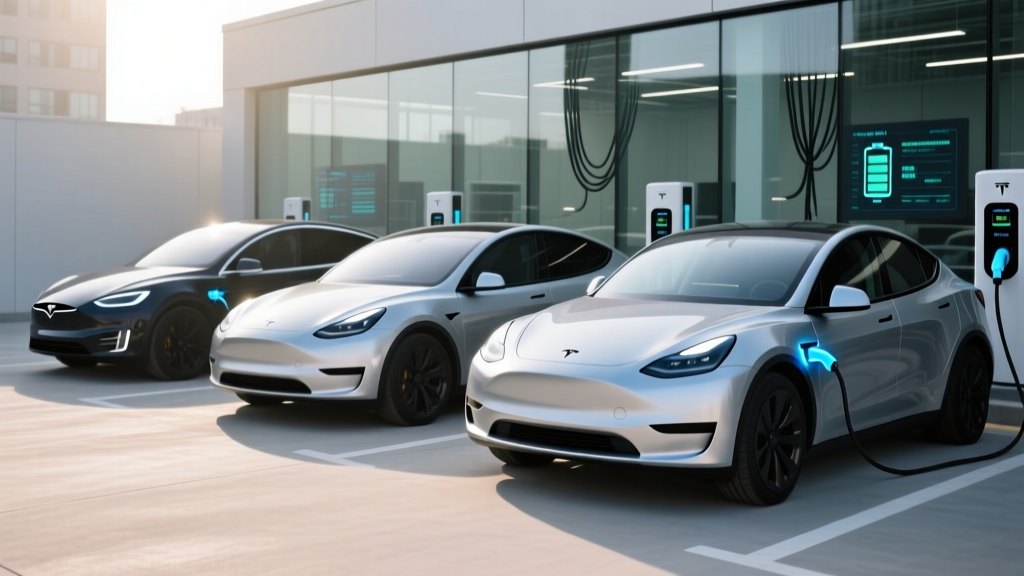
Tesla advertises "up to 250 kW" on V3 Superchargers, and that number is accurate — but only at the peak of the charge curve. Here's what actually happens when you plug in at a 250 kW stall with a preconditioned Model 3 Long Range:
- 10–30% SoC: The battery accepts close to peak power (~230–250 kW), adding roughly 150 miles of range in 10 minutes.
- 30–60% SoC: Power tapers gradually to ~150–180 kW as cell voltage rises and thermal management modulates.
- 60–80% SoC: Further taper to ~80–110 kW. This is where the curve slows noticeably.
- 80–100% SoC: Drastic taper to under 30 kW. Charging from 80–100% can take as long as 10–80%. This is why road-trip strategy focuses on the 10–80% window.
LFP vs. NMC: The Chemistry That Changes Your Charging Routine
The base Model 3 RWD uses a lithium iron phosphate (LFP) battery, while Long Range and Performance trims across the lineup use nickel manganese cobalt (NMC). This isn't just a footnote — it changes how you charge daily.
| Factor | LFP (Model 3 RWD) | NMC (Long Range / Performance) |
|---|---|---|
| Daily charge limit | 100% recommended | 80% recommended for daily use |
| Energy density | Lower (heavier pack for same range) | Higher (more range per kg) |
| Cold-weather performance | More range loss, slower charging in cold | Better cold-weather resilience |
| Longevity / cycle life | Superior — 3,000+ cycles | Good — ~1,500–2,000 cycles |
| DC fast-charge speed | Lower peak (170 kW) | Higher peak (250 kW) |
| Cost | Lower (reflected in base price) | Higher |
The practical upshot: if you own an LFP Model 3 RWD, Tesla recommends charging to 100% regularly (even daily) to keep the battery management system calibrated. With NMC, you set the daily limit to 80% and only charge to 100% before long road trips. LFP owners effectively get more daily usable range from a smaller battery because they can use the full capacity every day.
Real-World Range: What the EPA Sticker Doesn't Tell You
EPA range estimates are tested under controlled conditions that blend city and highway driving at moderate temperatures. Real-world results vary — sometimes significantly.
Model 3 Long Range AWD — EPA 341 mi: Expect ~290–310 mi on a flat highway at 70 mph in mild weather. In winter (below 32°F), plan for 230–270 mi. City driving with regenerative braking can push above 340 mi.
Model Y Long Range AWD — EPA 320 mi: Highway reality is ~265–290 mi; cold weather drops this to ~220–250 mi. The crossover's taller, less aero profile costs it efficiency vs. the Model 3 sedan.
Model S Long Range — EPA 402 mi: The efficiency king. Highway reality ~340–370 mi; cold weather ~290–330 mi. Still the longest-range sedan Tesla sells.
For the Model 3 specifically — Tesla's highest-volume seller — fueleconomy.gov lists combined MPGe at 132 MPGe for the Long Range AWD, which translates to roughly 25 kWh per 100 miles of mixed driving. Highway-only efficiency climbs to ~28–30 kWh/100mi due to aerodynamic drag scaling with the square of speed.
Home Charging: Level 2 Setup, Costs, and Overnight Math
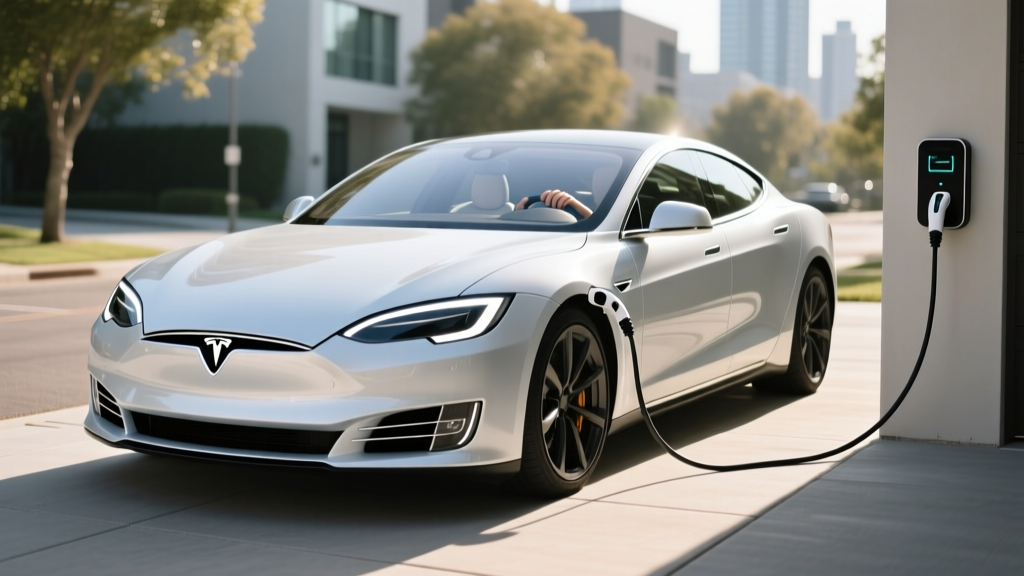
Over 80% of Tesla charging happens at home. Here's what Level 2 home charging looks like across the fleet:
| Setup | Power (kW) | Miles Added per Hour | 8-Hour Overnight Gain | Typical Install Cost |
|---|---|---|---|---|
| Level 1 (120V outlet) | ~1.2 kW | 3–5 mi/hr | 24–40 mi | $0 (existing outlet) |
| Level 2 (240V, 48A Wall Connector) | 11.5 kW | 32–44 mi/hr | 256–352 mi | $500–$2,500 |
| Level 2 (240V, 32A Mobile Connector) | 7.7 kW | 22–30 mi/hr | 176–240 mi | $200–$1,500 |
The Tesla Wall Connector costs ~$475 for the unit itself. Professional electrician installation runs $500–$1,500 if your electrical panel has capacity for a 60A circuit (which supports 48A continuous draw). If you need a panel upgrade from 100A to 200A service, add $1,500–$3,000. Always get a licensed electrician's assessment before committing.
For most owners with a daily commute under 60 miles round-trip, even a 32A Mobile Connector on a NEMA 14-50 outlet recovers a full day's driving in 2–3 hours overnight. The 48A Wall Connector is overkill for daily commuting but invaluable if you arrive home near-empty and need a full battery by morning.
2026 Tesla Pricing, Trims, and Federal Tax Credit Eligibility
| Model / Trim | Base MSRP | Federal §30D Credit | Effective Price |
|---|---|---|---|
| Model 3 RWD | $38,990 | $7,500 (if eligible) | ~$31,490 |
| Model 3 Long Range AWD | $42,990 | $7,500 (if eligible) | ~$35,490 |
| Model 3 Performance | $52,990 | $7,500 (if eligible) | ~$45,490 |
| Model Y Long Range AWD | $44,990 | $7,500 (if eligible) | ~$37,490 |
| Model Y Performance | $51,490 | $7,500 (if eligible) | ~$43,990 |
| Model S Long Range | $79,990 | Not eligible (MSRP cap) | $79,990 |
| Model X Long Range | $79,990 | Not eligible (MSRP cap) | $79,990 |
Prices reflect manufacturer MSRP before destination fees. Tax credit eligibility is subject to IRS §30D rules. Verify current status at irs.gov.
- MSRP cap: Sedans (Model 3) must be under $55,000; SUVs/pickups/vans (Model Y) under $80,000. Model S and Model X exceed the sedan cap.
- Buyer income cap: Modified AGI must not exceed $150,000 (single), $225,000 (head of household), or $300,000 (joint filers).
- Battery sourcing: Critical minerals and battery components must meet escalating domestic/free-trade-partner sourcing thresholds. Tesla's North American supply chain has largely kept Model 3 and Model Y eligible, but always verify the specific VIN on the IRS qualified vehicles list before purchase.
- Point-of-sale transfer: As of 2024+, you can transfer the credit to the dealer at purchase, reducing your out-of-pocket cost immediately rather than waiting for tax filing.
Performance, Cargo, and Daily Livability
Charging speed matters, but so does what you're driving between chargers. Here's how the 2026 lineup stacks up on performance and practicality:
| Model | 0–60 mph | Horsepower | Drivetrain | Cargo (cu ft) | Efficiency (MPGe combined) |
|---|---|---|---|---|---|
| Model 3 RWD | 5.8s | 271 | RWD | 23 (trunk + frunk) | 132 |
| Model 3 LR AWD | 4.2s | 346 | Dual-motor AWD | 23 | 132 |
| Model 3 Performance | 2.9s | 510 | Dual-motor AWD | 23 | 121 |
| Model Y LR AWD | 4.8s | 384 | Dual-motor AWD | 76 (rear seats folded) | 122 |
| Model Y Performance | 3.5s | 456 | Dual-motor AWD | 76 | 115 |
| Model S LR | 3.1s | 670 | Dual-motor AWD | 28 (trunk + frunk) | 124 |
| Model S Plaid | 1.99s | 1,020 | Tri-motor AWD | 28 | 116 |
| Model X LR | 3.8s | 670 | Dual-motor AWD | 88 (seats folded) | 111 |
Standout tech across the fleet: Tesla's 15.4-inch center touchscreen runs all vehicle functions, entertainment (Netflix, YouTube while parked), and navigation with real-time Supercharger routing. Autopilot (SAE Level 2 driver assistance) is standard — it handles adaptive cruise and lane centering but requires hands-on-wheel supervision at all times. Full Self-Driving (Supervised) remains a $8,000 add-on or $99/month subscription and is still not autonomous driving despite the name.
Notable drawbacks: The minimalist interior means no physical stalks on refreshed models (turn signals are steering-wheel buttons), no Apple CarPlay/Android Auto, and the reliance on touchscreen for climate and mirror adjustments frustrates some drivers. Panel gap quality has improved but still draws scrutiny versus legacy luxury brands. Insurance premiums for Teslas run 15–30% above segment averages due to repair costs.
Warranty Coverage: Battery and Powertrain Protection
Tesla's warranty structure is straightforward and competitive with the EV segment:
- Basic vehicle warranty: 4 years / 50,000 miles, whichever comes first.
- Battery & drive unit (Model 3 RWD): 8 years / 100,000 miles, with minimum 70% capacity retention.
- Battery & drive unit (Model 3 LR, Model Y, Model S, Model X): 8 years / 120,000 miles, with minimum 70% capacity retention.
The 70% retention threshold is the industry standard. In practice, Tesla's battery degradation data from fleet telemetry shows most NMC packs retaining ~88–92% capacity at 100,000 miles, with LFP packs showing even slower degradation thanks to their chemistry's superior cycle life. A full battery replacement out of warranty runs $12,000–$16,000 depending on the model — rare but not zero-cost.
Who Should Buy Which Tesla? Decision Framework
Choose the Model 3 RWD if: You commute under 50 miles daily, charge at home overnight, want the lowest entry price (~$31,490 after credit), and value LFP longevity over maximum range. You accept the slower 170 kW DC charge rate because you rarely road-trip.
Choose the Model 3 Long Range AWD if: You take regular road trips and need 341 mi EPA range plus 250 kW fast charging. This is the sweet-spot sedan for mixed commuting and highway travel.
Choose the Model Y Long Range AWD if: You need crossover cargo space (76 cu ft with seats folded), have kids or gear to haul, and want the same fast-charging powertrain as the Model 3 LR in a taller package.
Choose the Model S Long Range if: Budget is flexible, you want 402 mi of range, premium ride quality, and don't need the §30D credit (you're above the income cap or the MSRP disqualifies you).
Choose the Model X if: You need three-row seating (up to 7 passengers), falcon-wing rear doors for tight parking access, and towing capacity up to 5,000 lbs.
Pros and Cons: The Honest Scorecard
Pros
- Supercharger network — still the most reliable DC fast-charging ecosystem in North America
- Class-leading efficiency (kWh/100mi) across the sedan lineup
- Over-the-air updates continuously add features post-purchase
- 250 kW peak charging on LR/Performance trims is among the fastest in the segment
- LFP option on Model 3 RWD offers excellent long-term durability
- Strong resale value relative to most EV competitors
Cons
- Model 3 RWD's 170 kW peak charge rate lags behind Hyundai Ioniq 5/6 (350 kW on 800V architecture)
- No Apple CarPlay or Android Auto — Tesla's ecosystem is closed
- Turn-signal buttons on the steering wheel (refreshed models) are a learning curve
- Insurance costs 15–30% above comparable gas sedans
- Model S/X priced above §30D MSRP cap — no federal credit
- FSD (Supervised) remains SAE Level 2 despite the "self-driving" name
Frequently Asked Questions
How long does it take a Tesla to charge at a Supercharger?
At a V3 Supercharger (250 kW peak), a preconditioned Model 3 Long Range or Model Y Long Range charges from 10–80% in approximately 27 minutes. The Model 3 RWD with its LFP battery and 170 kW peak takes about 30 minutes for the same window. Model S and Model X, with larger ~95 kWh batteries, take roughly 32 minutes.
How long does it take to charge a Tesla at home?
On a 48A Tesla Wall Connector (11.5 kW), a fully depleted Model 3 Long Range (~79 kWh) charges from 0–100% in roughly 8 hours. Most owners arrive home with 40–60% remaining and wake up fully charged in 4–5 hours. A standard 120V household outlet (Level 1) adds only 3–5 miles per hour and is best suited for plug-in hybrids or emergency top-ups.
Does charging to 100% damage the battery?
For NMC batteries (Long Range and Performance trims), regularly charging to 100% accelerates degradation. Tesla recommends an 80% daily limit. For LFP batteries (Model 3 RWD), Tesla recommends charging to 100% at least weekly to calibrate the BMS. Occasional 100% charges before road trips are fine for any chemistry.
Do Teslas charge faster than other EVs?
Tesla's 250 kW peak is competitive but not class-leading. Hyundai/Kia's E-GMP platform (Ioniq 5, Ioniq 6, EV6) supports 350 kW on 800-volt architecture, achieving 10–80% in ~18 minutes. However, Tesla's advantage is the Supercharger network's reliability and density — a 250 kW charger that works every time beats a 350 kW charger that's frequently offline.
Does the Tesla Model 3 qualify for the $7,500 federal tax credit?
The Model 3 RWD and Long Range AWD currently qualify for the full $7,500 §30D credit if the buyer meets income caps ($150K single / $300K joint) and the vehicle's battery sourcing meets current-year thresholds. The Model 3 Performance also qualifies as its MSRP is under the $55,000 sedan cap. Always verify your specific VIN on the IRS qualified vehicles list before purchasing, as eligibility can shift with supply-chain changes.
How much does it cost to charge a Tesla vs. filling a gas car?
At the national average electricity rate of ~$0.17/kWh, fully charging a Model 3 Long Range (79 kWh) at home costs about $13.43 for 341 miles — roughly 3.9 cents per mile. A comparable gas sedan at 30 MPG and $3.30/gallon costs 11 cents per mile. Supercharger pricing varies by location ($0.25–$0.50/kWh), making public charging more expensive but still typically cheaper than gasoline per mile.