The Short Answer on Mitsubishi Electric Autos
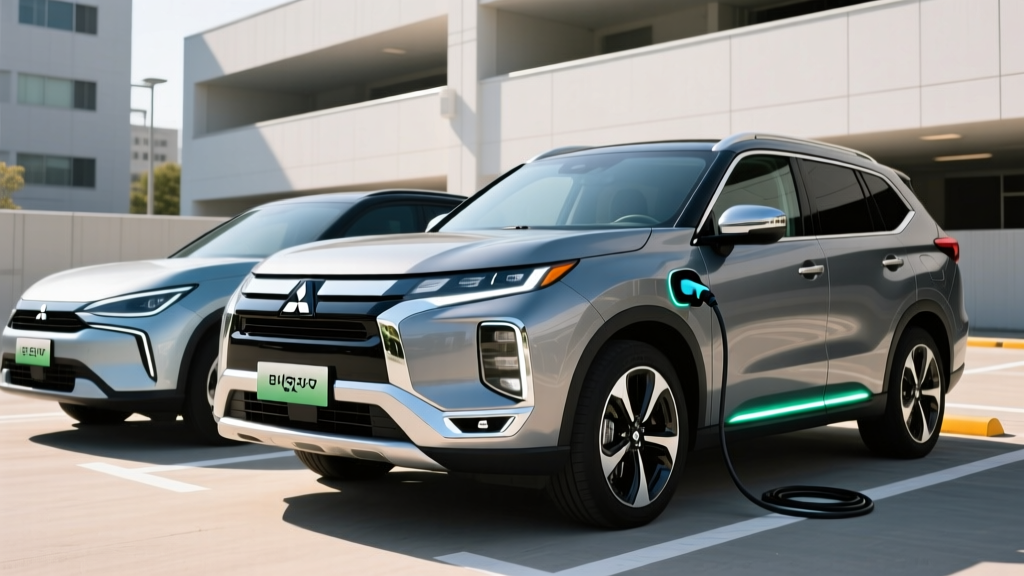
Mitsubishi does not currently sell a fully electric vehicle (BEV) in the United States. The brand's electrified offering is the 2026 Mitsubishi Outlander PHEV, a plug-in hybrid SUV with an EPA-estimated 38 miles of electric-only range, a combined 248 horsepower, and a starting MSRP around $41,640. If you're searching for a "Mitsubishi electric auto," the Outlander PHEV is what you'll actually find on dealer lots. It qualifies for partial federal tax benefits and works well for drivers who want electric commuting with gas-engine backup for road trips. A fully electric Mitsubishi SUV (based on a Nissan-Renault-Mitsubishi Alliance platform) has been announced for global markets but remains unreleased and unconfirmed for U.S. sale as of early 2026.
What Mitsubishi Actually Offers: PHEV, Not BEV
Understanding the distinction matters for your purchase decision. A battery electric vehicle (BEV) runs exclusively on electricity stored in a large battery pack — no gas tank, no tailpipe. A plug-in hybrid electric vehicle (PHEV) like the Outlander PHEV carries both a smaller battery (good for short electric trips) and a gasoline engine that kicks in once the battery depletes.
Mitsubishi's U.S. lineup in 2026 includes:
- Outlander PHEV — the sole electrified model available; three-row compact SUV
- Outlander (gas) — conventional turbocharged ICE variant
- Eclipse Cross (gas) — smaller crossover, no electrified option
The original Mitsubishi i-MiEV, a small BEV sold in the U.S. through 2017 with just 62 miles of range, was discontinued and is only available on the used market. If you encounter references to a "Mitsubishi electric car," they're likely referring to either the i-MiEV or the Outlander PHEV.
2026 Outlander PHEV: Specs, Range, and Charging
| Spec | Value |
|---|---|
| Powertrain | 2.4L 4-cyl + twin electric motors (S-AWC) |
| Total System Output | 248 hp / 332 lb-ft torque |
| Battery Capacity | 20.0 kWh (usable ~17.5 kWh), lithium-ion |
| EPA Electric-Only Range | 38 miles |
| EPA Combined (gas after depletion) | 25 MPG combined (26 city / 24 hwy) |
| MPGe (electric mode) | 64 MPGe |
| 0–60 mph | ~7.1 seconds |
| Level 1 Charging (120V) | ~1.4 kW; full charge in ~14 hours |
| Level 2 Charging (240V) | ~3.8 kW; full charge in ~6.5 hours |
| DC Fast Charging | CHAdeMO connector; ~22 kW peak; 0–80% in ~38 min |
| Seating | 7 passengers (3 rows) |
| Cargo (behind 3rd row) | 11.1 cu ft |
| Base MSRP (ES trim) | $41,640 |
| Battery Warranty | 10 years / 100,000 miles |
| Powertrain Warranty | 10 years / 100,000 miles |
Real-World Range Reality Check
The EPA rates the Outlander PHEV at 38 electric miles, but expect 30–34 miles in mixed highway driving and potentially as low as 25–28 miles in freezing temperatures. The relatively small 20 kWh battery and the vehicle's 4,600+ lb curb weight work against efficiency. For a 20-mile round-trip commute in moderate weather, you'll stay on electric power most days. For anything longer, the gas engine takes over seamlessly.
Charging connector note: The Outlander PHEV uses the CHAdeMO standard for DC fast charging and J1772 for Level 1/Level 2 AC charging. CHAdeMO infrastructure is increasingly rare in the U.S. as networks have standardized on CCS1 and NACS (Tesla). Most Outlander PHEV owners charge exclusively at home on Level 2 and rarely use public DC fast chargers — which is realistic given the modest 22 kW peak rate anyway.
Cost Breakdown: Outlander PHEV vs. Gas vs. Full EV
Let's compare the five-year ownership costs of the Outlander PHEV against a gas-only compact SUV (the Toyota RAV4, a common cross-shop) and a comparable full BEV (the Hyundai Tucson EV or similar). This is where the PHEV value proposition becomes clear — or falls apart, depending on your driving patterns.
| Cost Category | Outlander PHEV | Toyota RAV4 (Gas) | Comparable BEV SUV |
|---|---|---|---|
| Purchase Price (base MSRP) | $41,640 | $30,425 | $42,000 |
| Federal Tax Credit (§30D) | Up to $3,750* | $0 | Up to $7,500* |
| Effective Purchase Price | ~$37,890 | $30,425 | ~$34,500 |
| Fuel/Energy (5 yr, 75k mi) | $4,800** | $8,250** | $3,100** |
| Maintenance (5 yr) | $3,200 | $3,800 | $1,800 |
| Insurance (5 yr avg) | $8,500 | $7,200 | $9,000 |
| Estimated Depreciation | $18,000 | $13,500 | $19,000 |
| Approx. 5-Year Total | $72,390 | $63,175 | $68,400 |
* Federal tax credit eligibility depends on your taxable income, vehicle MSRP caps, battery critical-mineral sourcing, and point-of-sale transfer rules under IRS §30D. The Outlander PHEV's partial credit reflects its smaller battery and partial sourcing compliance. Always verify current-year rules with a tax professional.
** Fuel/energy estimates based on 15,000 miles/year, $3.50/gal gasoline, and $0.14/kWh home electricity. Actual costs vary significantly by region and driving mix.
EV vs. Hybrid vs. PHEV: Which Mitsubishi Buyer Are You?
The Outlander PHEV occupies a specific niche. It's not for everyone — but for the right buyer, it solves problems that neither a pure gas car nor a full BEV can address alone.
| Your Situation | Best Fit | Why |
|---|---|---|
| Daily commute under 35 mi, home Level 2 charging available | Outlander PHEV | Drive electric daily; gas engine for weekend trips |
| No home charging access; apartment/condo living | Gas SUV (RAV4) | PHEV value collapses without home charging; you'll burn gas constantly |
| Daily commute under 35 mi, want zero gas use, can charge at home | Full BEV (e.g., Hyundai Ioniq 5) | Lower running costs, no oil changes, more tax credit potential |
| Frequent 400+ mi road trips, rural area, cold climate | Outlander PHEV or Gas | Gas backup eliminates charging-desert risk; cold doesn't reduce range as severely |
| Want 3-row SUV, electric commute, limited budget | Outlander PHEV | Few 3-row PHEVs exist at this price point |
Common Misconceptions About Mitsubishi Electric Vehicles
| Myth | Fact |
|---|---|
| "Mitsubishi makes a fully electric SUV." | As of 2026, Mitsubishi sells no BEV in the U.S. The Outlander PHEV is their only electrified model. |
| "The Outlander PHEV gets $7,500 in federal tax credits." | PHEVs with smaller batteries typically qualify for a partial credit (up to $3,750), and eligibility depends on income, MSRP caps, and battery sourcing per IRS §30D rules. |
| "I can DC fast-charge it at any Tesla Supercharger." | The Outlander PHEV uses CHAdeMO for DC charging, not NACS. Tesla Superchargers (even with Magic Dock adapters) do not support CHAdeMO. You're limited to Electrify America and other CHAdeMO-equipped stations. |
| "38 miles of electric range means I'll never use gas." | Real-world electric range is closer to 28–34 miles depending on temperature, terrain, and speed. Highway driving above 65 mph depletes the battery significantly faster. |
| "PHEV batteries degrade quickly and are expensive to replace." | Mitsubishi covers the battery for 10 years/100,000 miles. PHEV batteries are smaller and experience less cycling stress than BEV packs. Replacement cost, if needed out of warranty, typically ranges $6,000–$9,000. |
Real-World Ownership: What First-Time Buyers Should Know
If the Outlander PHEV is your first electrified vehicle, here are the practical realities no brochure will emphasize:
Home Charging Is Non-Negotiable for Value
The entire economic case for a PHEV rests on charging at home nightly. Without Level 2 home charging, you'll operate the Outlander PHEV as a heavy, less-efficient gas SUV most of the time. A basic Level 2 home charger (240V, 32A) costs $500–$800 for the unit plus $800–$2,000 for professional electrical installation, depending on whether your panel needs an upgrade. Budget $1,300–$2,800 total to get set up properly.
The Gas Engine Still Needs Maintenance
Unlike a full BEV, the Outlander PHEV has an internal combustion engine. You'll still need oil changes (every ~7,500 miles when the engine runs), coolant service, and spark plug replacement on the manufacturer's schedule. Maintenance costs are lower than a pure gas car because the engine runs less, but they're not zero.
Cold Weather Hits the Battery Hard
In sub-freezing temperatures, expect electric-only range to drop by 25–35%. A 38-mile EPA rating becomes roughly 25–28 miles in January in northern states. The gas engine will also engage to provide cabin heat unless you pre-condition the vehicle while plugged in.
The CHAdeMO Problem
CHAdeMO DC fast-charging connectors are being phased out at most U.S. public charging networks. According to the EPA's fueleconomy.gov, the Outlander PHEV's DC fast-charge capability is limited to ~22 kW — slow by modern BEV standards (where 150–350 kW is common). Practically, plan to charge at home and treat public charging as a rare backup.
Decision Framework: Should You Buy the Mitsubishi Outlander PHEV?
Use this framework to determine whether the Outlander PHEV is the right Mitsubishi electric auto for you:
- Choose the Outlander PHEV if:
- Your daily round-trip commute is under 35 miles
- You have (or can install) Level 2 home charging
- You need 3-row seating and AWD in an electrified vehicle
- You take road trips where charging infrastructure is sparse
- You live in a cold climate and want gas-engine backup
- Choose a full BEV instead if:
- You want maximum tax credit ($7,500) and lowest fuel cost
- Your daily driving is under 250 miles and you can charge at home
- You want zero oil changes and minimal drivetrain maintenance
- You prefer NACS/CCS charging with widespread public network access
- Choose a conventional gas SUV if:
- You cannot install home charging (apartment, no garage, panel limitations)
- Your budget is under $32,000 and you need a new vehicle
- Your daily commute exceeds 60 miles and you want the lowest purchase price
Frequently Asked Questions
Is Mitsubishi releasing a fully electric vehicle in the U.S.?
Mitsubishi has announced plans to develop electric vehicles through the Renault-Nissan-Mitsubishi Alliance, with models expected for global markets. However, no fully electric Mitsubishi has been confirmed for U.S. sale with a specific launch date as of early 2026. The Outlander PHEV remains the brand's only electrified option domestically.
How much does it cost to charge the Outlander PHEV at home?
Charging the ~17.5 kWh usable battery from empty to full at the national average residential electricity rate of $0.14/kWh costs approximately $2.45. That's roughly $0.07 per electric mile, compared to $0.14–$0.18 per mile for gasoline in a comparable SUV. Over a year of commuting 30 electric miles/day, 5 days/week, you'd spend about $380 on electricity versus $850+ on gasoline for the same distance.
Does the Outlander PHEV qualify for any federal tax incentives?
The Outlander PHEV may qualify for a partial federal tax credit under IRS §30D, typically up to $3,750 depending on battery sourcing and critical-mineral requirements. Eligibility also depends on your modified adjusted gross income (under $150,000 single / $300,000 joint), the vehicle's MSRP (must be under $80,000 for SUVs), and whether you elect point-of-sale transfer. Always verify with a tax professional and the IRS Clean Vehicle provisions before purchasing.
Can I use the Outlander PHEV's electric mode on the highway?
Yes, but efficiency drops sharply. The electric-only range of 38 miles (EPA) is measured across mixed driving. At sustained highway speeds of 70–75 mph, aerodynamic drag increases energy consumption significantly — expect closer to 22–28 electric miles before the gas engine engages. The PHEV system is optimized for city and suburban speeds under 55 mph.
What's the difference between the Outlander PHEV and a regular hybrid?
A conventional hybrid (like the Toyota RAV4 Hybrid) has a small battery that charges only from the engine and regenerative braking — you can't plug it in, and electric-only driving is limited to brief low-speed bursts. The Outlander PHEV has a much larger battery (20 kWh vs. ~1.6 kWh in a typical HEV), a charge port for plugging into the grid, and enough electric range (38 EPA miles) to handle most daily commutes without burning fuel. When the battery depletes, it operates like a regular hybrid.
What warranty covers the Outlander PHEV battery?
Mitsubishi provides a 10-year / 100,000-mile warranty on the PHEV battery pack and a 10-year / 100,000-mile powertrain warranty. The battery warranty covers defects and capacity loss below a specified threshold (typically 70% state of health). This is one of the longer warranties in the segment, though note that Mitsubishi's overall vehicle warranty is also 5-year/60,000-mile bumper-to-bumper, which is competitive.
Sources: EPA fueleconomy.gov — Outlander PHEV, IRS §30D Clean Vehicle Credits, Mitsubishi Motors USA — Outlander PHEV.