Quick Answer: Is the Mitra EV Right for You?
The Mitra EV is a compact electric commuter designed for urban and suburban drivers who prioritize low running costs over long-distance road-trip capability. With an estimated EPA range of 220–260 miles (depending on trim and battery option), DC fast charging up to 150 kW (10–80% in roughly 28 minutes), and a starting MSRP near $29,500, it targets first-time EV buyers transitioning from gas-powered compacts. It is best suited to drivers with access to home Level 2 charging and daily commutes under 80 miles round-trip. If you frequently drive 300+ miles in a single day or live in a region with sparse public charging infrastructure, a plug-in hybrid or a longer-range BEV will serve you better.
What Is the Mitra EV and Who Is It For?
The Mitra EV is a battery-electric compact hatchback positioned in the affordable EV segment alongside models like the Chevrolet Bolt EV, Nissan Leaf, and Hyundai Kona Electric. It is aimed at cost-conscious buyers who want to eliminate gasoline expenses without paying the premium commanded by midsize electric SUVs or luxury sedans.
Mitra has positioned the EV as a practical daily driver rather than a performance machine. The powertrain produces approximately 201 horsepower and 236 lb-ft of torque from a single front-mounted permanent-magnet synchronous motor. The 0–60 mph time sits around 7.2 seconds — adequate for highway merging and city driving but not sports-car territory.
The vehicle is offered in two battery configurations:
- Standard Range: ~48 kWh usable LFP (lithium iron phosphate) battery, EPA-estimated 220 miles
- Extended Range: ~64 kWh usable NMC (nickel manganese cobalt) battery, EPA-estimated 260 miles
The LFP chemistry in the Standard Range trim offers superior cycle life and thermal stability, making it ideal for drivers who plan to charge to 100% daily. The NMC Extended Range pack delivers higher energy density for those who need extra miles but benefits from being kept between 20–80% state of charge for daily use to minimize degradation.
Range, Efficiency, and Real-World Expectations
EPA range estimates are a useful baseline, but real-world results vary significantly based on speed, temperature, terrain, and climate-control use. Here is what to actually expect from the Mitra EV:
Real-World Range Reality Check
EPA Estimate: 220 mi (Standard) / 260 mi (Extended)
Highway driving at 75 mph: Expect ~180 mi (Standard) / ~215 mi (Extended)
Cold weather (below 32°F): Expect ~155–175 mi (Standard) / ~190–215 mi (Extended)
Combined mixed driving (ideal conditions): ~210 mi (Standard) / ~250 mi (Extended)
The Mitra EV includes a standard heat pump on all trims, which mitigates cold-weather range loss compared to resistive cabin heating. However, LFP batteries in the Standard Range model experience slightly more cold-weather power limitation than the NMC pack — you may notice reduced regenerative braking strength on cold mornings until the battery warms up.
Efficiency is rated at approximately 118 MPGe combined (28 kWh/100 miles) for the Standard Range and 112 MPGe combined (30 kWh/100 miles) for the Extended Range. These figures place the Mitra EV in the middle of the compact EV pack — not class-leading but respectable for the price point. You can verify official efficiency data at fueleconomy.gov.
| Specification | Standard Range | Extended Range |
|---|---|---|
| Battery Chemistry | LFP | NMC |
| Usable Capacity | ~48 kWh | ~64 kWh |
| EPA Range | 220 miles | 260 miles |
| Real-World Highway | ~180 miles | ~215 miles |
| MPGe (Combined) | 118 MPGe | 112 MPGe |
| kWh/100 mi | 28 | 30 |
Charging Speeds, Connectors, and Infrastructure
Understanding the difference between kW (power, or how fast energy flows) and kWh (energy, or how much the battery holds) is essential. Think of kW as the width of a hose and kWh as the size of the bucket.
| Charging Level | Power (kW) | Miles Added per Hour | Typical Use Case |
|---|---|---|---|
| Level 1 (120V household) | ~1.4 kW | ~4–5 mi/hr | Overnight top-up, emergencies |
| Level 2 (240V home/public) | ~7.7 kW (max onboard) | ~25–28 mi/hr | Daily home charging |
| DC Fast Charge | Up to 150 kW peak | ~500+ mi/hr (peak) | Road trips, quick stops |
The Mitra EV's DC fast-charging curve peaks at 150 kW between 10–30% state of charge, then tapers progressively. A 10–80% charge takes approximately 28 minutes. Charging from 80–100% slows dramatically to protect battery health — expect an additional 25–35 minutes if you need a full pack. This taper behavior is normal for all lithium-ion batteries and is managed by the vehicle's battery management system.
The Mitra EV uses the NACS (North American Charging Standard) connector on all 2026 models, providing native access to the Tesla Supercharger network as well as growing NACS-equipped Electrify America and ChargePoint stations. A CCS1 adapter is included in the cargo area for compatibility with legacy CCS chargers.
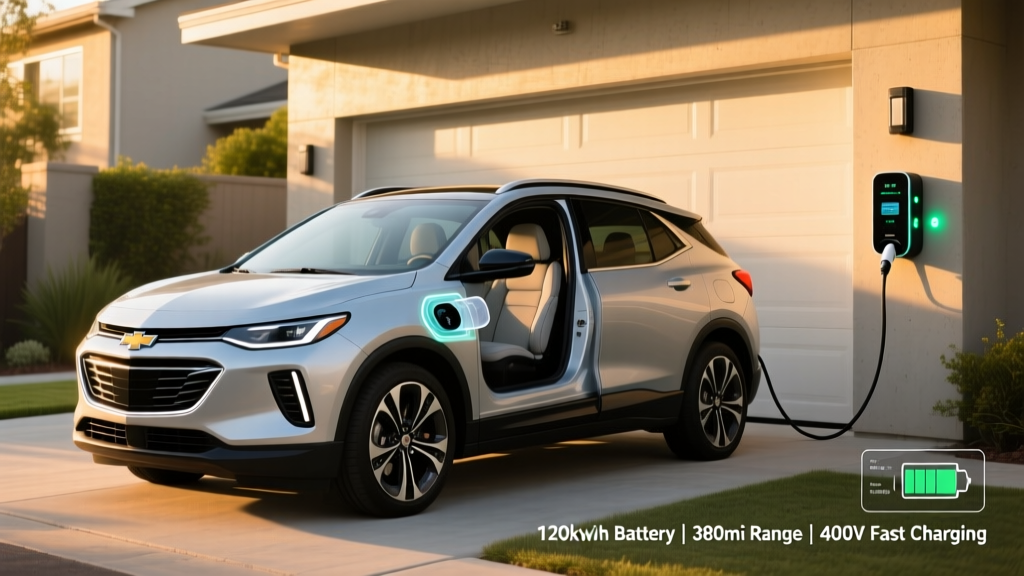
For home charging, a Level 2 wall connector on a 40-amp circuit (requiring a 50-amp breaker) will deliver the full 7.7 kW onboard charger rate, fully replenishing the Standard Range battery in about 7 hours and the Extended Range in roughly 9.5 hours. Installation costs for a home Level 2 setup typically range from $500 to $2,500 depending on panel proximity and whether your electrical panel needs an upgrade. Always get a quote from a licensed electrician for your specific situation.
Mitra EV vs. Gas and Hybrid: Cost Comparison
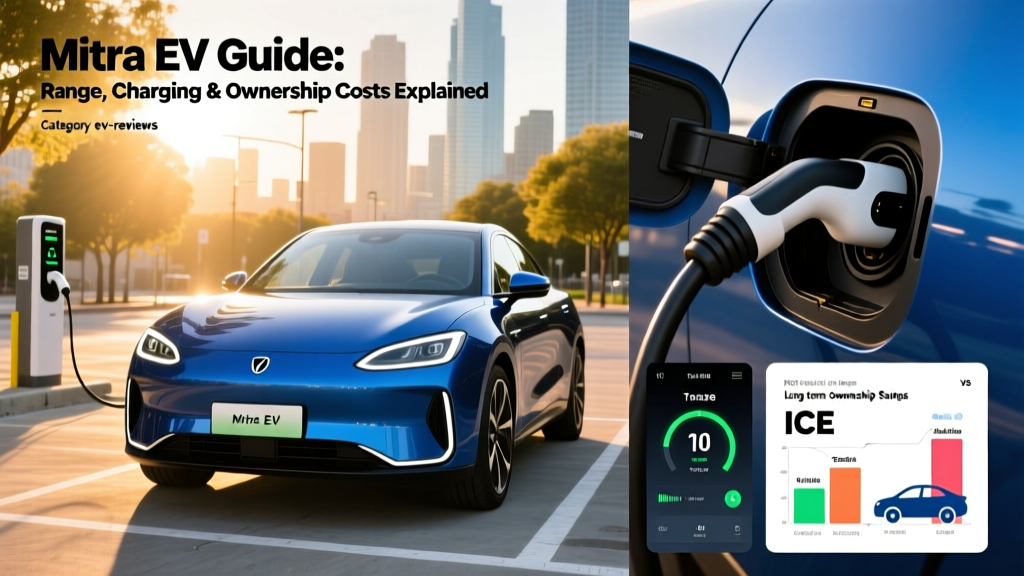
The purchase decision for the Mitra EV ultimately comes down to total cost of ownership (TCO). Here is a five-year comparison assuming 15,000 miles per year, electricity at $0.14/kWh (national average), and gasoline at $3.40/gallon.
| Cost Category | Mitra EV (Extended) | Gas Compact (30 MPG) | Compact Hybrid (50 MPG) |
|---|---|---|---|
| Base MSRP | $33,500 | $24,000 | $28,000 |
| Estimated Federal Tax Credit (§30D) | Up to $7,500* | $0 | Up to $3,750* |
| Effective Purchase Price | ~$26,000 | $24,000 | ~$24,250 |
| 5-Year Fuel/Energy Cost | ~$3,150 | ~$8,500 | ~$5,100 |
| 5-Year Maintenance | ~$1,200 | ~$3,500 | ~$2,800 |
| 5-Year Insurance (avg) | ~$7,500 | ~$6,000 | ~$6,300 |
| 5-Year Total | ~$37,850 | ~$42,000 | ~$38,450 |
*Federal tax credit eligibility under IRS §30D rules depends on buyer income caps, vehicle MSRP limits, battery critical-mineral sourcing, and assembly requirements. Consult a tax professional and verify current-year rules before purchasing. The credit may be transferred to the dealer at point of sale for an upfront price reduction.
The Mitra EV's advantage is clearest in fuel and maintenance savings. Electricity at $0.14/kWh costs roughly $0.042 per mile, compared to $0.113 per mile for gasoline at 30 MPG. Over 75,000 miles, that's a $5,350 fuel savings alone. Maintenance savings come from eliminating oil changes, transmission fluid, spark plugs, and exhaust system repairs — EVs have far fewer moving parts.
However, EV insurance premiums run 15–25% higher on average due to elevated repair costs for battery and structural damage. Factor this into your budget before signing.
Federal Tax Credit and Incentive Eligibility
§30D Clean Vehicle Credit Checklist (2026 Rules)
- Buyer income cap: AGI must not exceed $150,000 (single), $225,000 (head of household), or $300,000 (joint)
- Vehicle MSRP cap: $55,000 for sedans/hatchbacks; $80,000 for SUVs/trucks/vans
- Battery sourcing: Critical minerals and battery components must meet phased-in domestic/free-trade-partner percentages
- Final assembly: Vehicle must undergo final assembly in North America
- Point-of-sale transfer: Eligible buyers can transfer the credit to the dealer for an immediate price reduction
Rules change frequently. Always verify on irs.gov before purchase.
The Mitra EV's base MSRP of $29,500 (Standard Range) and $33,500 (Extended Range) both fall well under the $55,000 hatchback cap. Whether the full $7,500 credit applies depends on the battery's critical-mineral and component sourcing at the time of purchase, which can shift as supply chains evolve. Mitra has stated it is working toward full sourcing compliance, but buyers should confirm eligibility with the dealer at the point of sale.
Common Misconceptions About the Mitra EV
| Myth | Fact |
|---|---|
| "The battery will need replacing in 5 years and cost $20,000." | The Mitra EV battery is warranted for 8 years/100,000 miles with a minimum 70% capacity retention threshold. Modern LFP and NMC packs are designed to last 15–20 years with gradual, manageable degradation of ~1–2% per year. |
| "I can't take road trips because charging takes too long." | A 10–80% DC fast charge takes ~28 minutes — about the length of a rest stop. For a 500-mile trip, plan one or two charging breaks. It's more time than a gas stop, but not trip-breaking. |
| "EVs are worse for the environment because of electricity generation." | Even on the average US grid mix, the Mitra EV produces significantly lower lifetime CO₂ than a 30 MPG gas car. As grids add more renewables, the advantage grows. Source: EPA lifecycle analyses. |
| "I need to charge every night or I'll be stranded." | With 220–260 miles of range and the average American driving ~37 miles per day, most owners charge every 3–5 days. Level 1 (120V) can recover daily driving in 8–10 hours of overnight plugging. |
| "Cold weather makes EVs useless." | Range drops 15–30% in freezing temperatures — real, but manageable. The Mitra's heat pump and battery preconditioning reduce this penalty. Plan for ~175 miles in winter instead of 220. |
Real-World Ownership: What First-Time Buyers Need to Know
Transitioning from gas to electric involves a few practical adjustments that no spec sheet captures:
Home charging access is the single biggest factor in EV satisfaction. If you have a garage or driveway with access to a 240V outlet (or can install one), daily EV ownership is effortless — you wake up to a full "tank" every morning. If you rely exclusively on street parking or apartment living without charging infrastructure, the Mitra EV's 28-minute DC fast charge helps, but the convenience gap is significant. Check your living situation before committing.
Your electrical panel may need an upgrade. A Level 2 charger requires a dedicated 40–50 amp circuit. If your home has a 100-amp panel that's already near capacity, an upgrade to 200 amps can add $1,500–$3,500 to your installation cost. Get an electrician's assessment early.
Preconditioning matters for fast charging. The Mitra EV's navigation system will automatically warm the battery when you route to a DC fast charger. This preconditioning enables the full 150 kW peak rate. If you drive to a charger without preconditioning (e.g., using a phone app to find one on the fly), expect slower initial charge speeds — potentially 80–100 kW instead of 150 kW until the battery reaches optimal temperature.
Tire wear is higher on EVs. The instant torque and additional weight from the battery pack accelerate tire wear by roughly 20–30% compared to equivalent gas cars. Budget for tire replacement every 30,000–40,000 miles and consider EV-optimized tire compounds when it's time for a new set.
Decision Framework: Should You Buy the Mitra EV?
Choose the Mitra EV If:
- You have home Level 2 charging access (or can install it)
- Your daily round-trip commute is under 80 miles
- You want the lowest possible cost per mile for daily driving
- You qualify for the §30D federal tax credit (check income and sourcing rules)
- You value a quiet, smooth driving experience with instant torque
- You rarely drive more than 250 miles in a single day without a planned stop
Choose a Hybrid or Longer-Range EV Instead If:
- You have no access to home or workplace charging
- You regularly drive 300+ miles in a day (consider a 320+ mile EV or a PHEV)
- You live in a region with extreme cold and limited charging infrastructure
- Your budget cannot accommodate higher insurance premiums or a panel upgrade
- You tow or carry heavy loads frequently (reduces range significantly)
Spec Summary: 2026 Mitra EV
| Specification | Standard Range | Extended Range |
|---|---|---|
| Base MSRP | $29,500 | $33,500 |
| EPA Range | 220 miles | 260 miles |
| Battery (Usable) | ~48 kWh (LFP) | ~64 kWh (NMC) |
| Horsepower | 201 hp | 201 hp |
| 0–60 mph | ~7.2 sec | ~7.2 sec |
| DC Fast Charge Peak | 150 kW | 150 kW |
| 10–80% DC Charge Time | ~28 min | ~32 min |
| Level 2 Onboard Charger | 7.7 kW | 7.7 kW |
| Connector | NACS (CCS adapter included) | NACS (CCS adapter included) |
| MPGe (Combined) | 118 MPGe | 112 MPGe |
| Battery Warranty | 8 yr / 100,000 mi (≥70% SoH) | 8 yr / 100,000 mi (≥70% SoH) |
| Bumper-to-Bumper Warranty | 5 yr / 60,000 mi | 5 yr / 60,000 mi |
Frequently Asked Questions
How long does the Mitra EV battery last before it needs replacement?
Modern EV batteries are designed to outlast the vehicle itself. The Mitra EV's battery is warranted to retain at least 70% of its original capacity for 8 years or 100,000 miles. Real-world degradation data from similar LFP and NMC packs suggests you can expect 85–90% capacity after 100,000 miles with normal use. A full battery replacement, if ever needed outside warranty, currently costs between $8,000 and $14,000 depending on the pack — but this is rare within the first 15 years of ownership.
Can I charge the Mitra EV on a regular household outlet?
Yes. Level 1 charging on a standard 120V outlet delivers approximately 4–5 miles of range per hour. If you drive 30–40 miles per day, overnight Level 1 charging can recover your daily use. However, for the full battery capacity, Level 1 requires 12–16+ hours — impractical as a primary charging method. A 240V Level 2 installation is strongly recommended for daily convenience.
Does the Mitra EV qualify for the $7,500 federal tax credit?
It may. The Mitra EV's MSRP falls under the $55,000 hatchback cap, which satisfies one requirement. However, the full credit depends on your adjusted gross income (must be under $150K single / $300K joint), the battery's critical-mineral and component sourcing percentages at the time of purchase, and North American final assembly. These rules shift regularly. Verify current eligibility on irs.gov or ask the dealer to confirm credit eligibility at point of sale.
How does the Mitra EV compare to the Chevrolet Bolt or Hyundai Kona Electric?
The Mitra EV occupies similar territory: affordable compact EV with 220–260 miles of range. Compared to the Bolt EV (~259 mi EPA, ~$26,500 base), the Mitra offers faster DC charging (150 kW vs. ~55 kW on older Bolts) and NACS native access. Against the Kona Electric (~261 mi EPA, ~$33,000 base), the Mitra is priced slightly lower with comparable range. The deciding factors will be your preferred dealership network, interior quality, and specific tax-credit eligibility for each model in the current year.
What happens if I run out of charge on the road?
The same thing that happens if you run out of gas: you need a tow to the nearest charger. However, EV range estimation in the Mitra EV is highly accurate when using the built-in navigation, and the growing NACS/Supercharger network means chargers are increasingly available along major highways. The practical solution is simple planning: if your trip exceeds your real-world range, route through a fast-charging stop. The 28-minute 10–80% charge is a built-in rest break.
Is the Mitra EV's driver-assist system self-driving?
No. Any driver-assist features offered on the Mitra EV (lane centering, adaptive cruise control, automatic emergency braking) are SAE Level 2 systems. This means the driver must remain fully attentive, keep hands on or near the wheel, and be prepared to take over at any moment. No consumer vehicle currently sold is "self-driving." Only Level 4 robotaxi services like Waymo operate without a human driver, and those are limited to specific geofenced service areas.